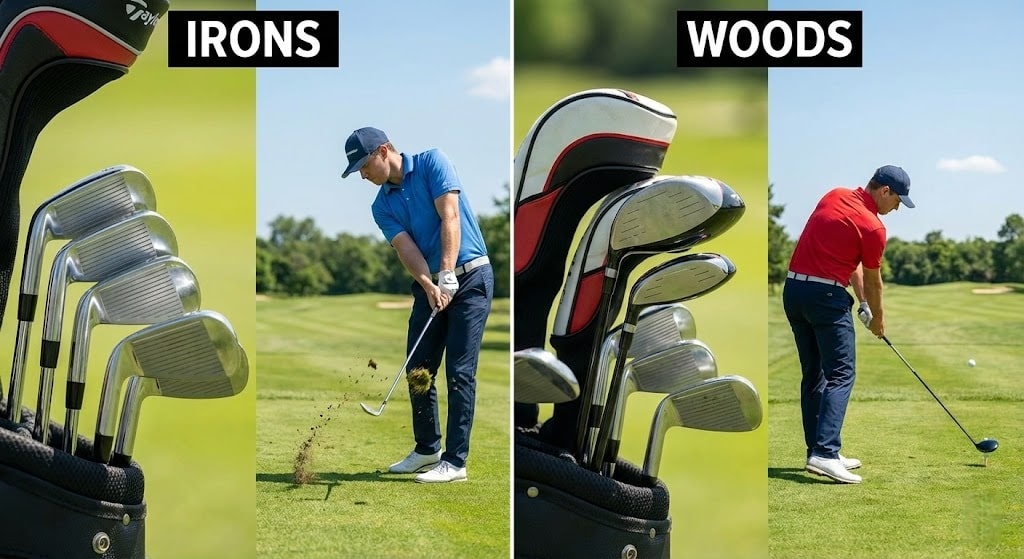
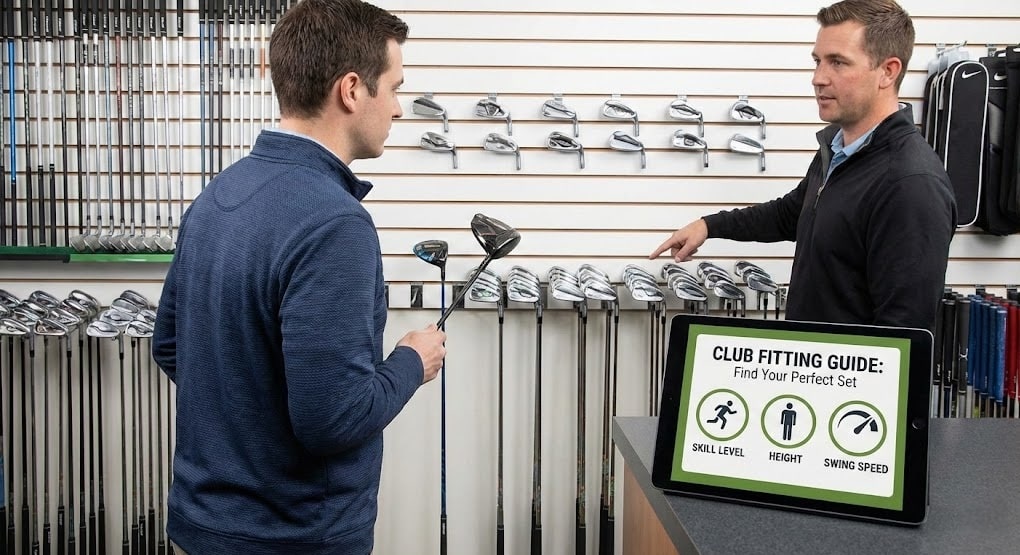
How to Hit a Hybrid Golf Club (It’s Not Like an Iron)

The biggest mistake I see with hybrids is treating them like fairway woods. You shouldn't sweep them; hit down on the ball with a 2-3 degree descending blow, just like your irons. Position the ball two balls behind your lead shoulder, keep your hands slightly ahead at address, and commit to shifting your weight forward through impact. That's the essence of consistent hybrid contact, and the setup details below will lock it in.

Table of Contents

Understanding Hybrid Club Design and Construction

Marketing departments want you to believe that hybrid technology is some kind of space-age wizardry, but here's the truth: the design principles behind these clubs are straightforward engineering that's been improved over two decades.

You're looking at a hollow clubhead, typically titanium or steel, with a low center of gravity positioned deep behind the face. That positioning does the heavy lifting, promoting higher launch with less effort on your part. Carbon composite crowns pull weight even lower, while variable-thickness faces maintain ball speed across mishits. This cup face technology enhances distance even on off-center strikes, making consistent performance achievable for golfers of all skill levels.

The real genius sits at the bottom. That wide, cambered sole glides through rough and tight lies where your long irons would dig and stall. Rails and channels guarantee consistent turf interaction regardless of conditions. This design makes hybrids particularly effective for shots from difficult lies where traditional irons struggle. Many models now feature an adjustable hosel that lets you tweak launch and lie angles to match your swing characteristics.

Setting Up Your Grip and Stance for Hybrid Success

Before you even think about swinging a hybrid, your setup determines whether you'll flush it or chunk it into the turf.

Here's what actually matters: position the ball about two balls behind your lead shoulder, near the inside of your lead heel. This isn't arbitrary; it's where your swing arc naturally bottoms out. This positioning helps you sweep the ball off the turf more effectively, taking advantage of the hybrid's longer bottom design.

Your grip needs to be neutral with firm-but-relaxed pressure. I've seen countless golfers strangle their hybrids, creating arm tension that destroys their tempo. Grip down slightly for better control. A relaxed grip also allows you to control your swing radius, preventing you from topping or thinning your shots.

Now for stance: go narrower than you'd use with long irons. Distribute your weight evenly or favor your lead leg slightly. This narrower stance complements the hybrid's design, which offers more forgiveness than traditional long irons for most amateur golfers. Keep your arms soft and resting naturally, with forearms and clubface aligned parallel to your target line. Skip the excessive wrist hinge at setup; it opens the clubface prematurely.

Mastering the Swing Mechanics and Tempo

Your setup creates the foundation, but the swing itself is where most golfers sabotage their hybrid game with one persistent myth: that you should sweep these clubs like a fairway wood.

Wrong. Hybrids demand a descending blow, about 2-3 degrees down, just like your irons. Hit down, compress the ball, and let the club's design do the heavy lifting. When you execute this properly, expect to take a small divot; this confirms you're making the correct ball-first contact.

Here's what actually works: position the ball opposite the hosel with hands slightly ahead, aligned with your lead thigh. This shaft lean promotes ball-first contact without delofting the club excessively. A common error is taking the club too far inside during the backswing, which destroys your swing path before you even start down.

Your tempo matters similarly. Swing smooth, think short iron rhythm, not driver aggression. Focus on a 3:1 tempo ratio, counting one-two-three on the backswing and one on the downswing to build consistent muscle memory. Hybrids generate distance through design, not brute force. Commit fully to your rotation, let your hips turn completely, and finish balanced. That's the formula.

Executing Shots From Different Lies and Conditions

While your swing mechanics stay consistent, the lie itself dictates everything about setup and execution, and this is where most golfers overthink themselves into disaster.

Here's the truth: you only need three adjustments. For balls sitting down in rough, move the ball behind center and commit to a descending strike, don't decelerate. For tight lies near the green, grip down, keep that clubface flat on the turf, and use a putting-style stroke for bump-and-runs. The hybrid's optimal loft angle of 18-24 degrees provides effective clearance over dense grass varieties like zoysia. For standard full shots, position the ball two to three inches inside your front heel.

The hybrid's low center of gravity does the heavy lifting. Stop trying to scoop the ball airborne. The club's wider sole design naturally prevents digging, allowing you to sweep through various lies with confidence. Keep your hands ahead at address, maintain smooth tempo, and trust the club's built-in forgiveness to handle the ugly lies you'll inevitably face. On par threes, always tee up the ball to give yourself a perfect lie and maximize your chances of achieving the desired trajectory.

Controlling Launch Angle and Ball Trajectory

Most golfers obsess over launch angle without understanding what they're actually chasing, and the confusion costs them twenty yards or more per swing.

Here's what actually matters: your hybrid needs to launch between 12 and 16 degrees. Launch lower and drag kills your carry. Launch higher, and you're hitting moon balls that land soft but short.

The fix starts with your angle of attack. Treat your hybrid like an iron, not a fairway wood. A shallow, sweeping strike produces an ideal launch, while a steep chop drives the ball low. Position the ball slightly forward in your stance, keep your hands ahead at address, and maintain spine tilt away from the target. Placing the ball too far forward encourages an upward attack that sends shots ballooning with no penetrating flight. Getting professionally fitted for your clubs ensures the shaft length and lie angles match your swing characteristics for optimal launch conditions.

Shift your weight forward through impact; hanging back guarantees a low, weak flight every time. Before each shot, visualize the desired ball flight to sharpen your focus and commit to the trajectory you want to produce.

Maximizing Distance and Accuracy With Your Hybrid

Getting the launch angle right puts you halfway to your distance potential, but only halfway. The other half comes down to weight transfer and clubface control at impact.

Here's what actually matters: shift your weight progressively to your lead side through the strike. I see too many golfers hanging back, hoping to scoop the ball into the air. That's a recipe for thin shots and lost yards. Your lead knee should move toward the target during the downswing. This single move prevents the fat and thin shots that kill distance.

Keep your lead wrist flat at impact. A cupped wrist opens the face and sends the ball slicing right. A bowed wrist closes it. Flat gives you square contact and that penetrating flight that optimizes both carry and roll. Pairing proper technique with a shaft matched to your swing speed can reduce shot dispersion by 50% while adding 5-10% more distance.

Frequently Asked Questions

How Many Hybrid Clubs Should I Carry in My Golf Bag?

You should carry two to three hybrids. That's the sweet spot for most golfers. Start by identifying your distance gaps between your longest iron and fairway wood; that's where hybrids belong. If you struggle launching anything longer than a 5-iron, replace those clubs without hesitation. Don't overthink it: fill the yardage holes, stay under 14 clubs, and you'll hit more greens.

When Should I Choose a Hybrid Over a Fairway Wood?

Choose a hybrid over a fairway wood when you're facing a tough lie, rough, tight fairway, or a bunker. The hybrid's compact head and lower center of gravity cut through trouble that'll trip up a fairway wood. You'll also want it when you need the ball to stop quickly on the green, since hybrids generate more spin and a higher landing angle than fairway woods.

Can Hybrid Clubs Help Correct My Slice or Hook Problem?

Yes, hybrids can help, but they won't fix your swing. Draw-biased models with offset hosels and toe weighting genuinely encourage the face to close, reducing slice severity. Adjustable weights let you dial in corrections for hooks, too. However, if your swing path is fundamentally off, no club design compensates fully. Get properly fitted initially, then address mechanics. Equipment aids correction; it doesn't replace the work.

What Hybrid Loft Should Replace My 3-Iron or 4-Iron?

Forget the number on the club, it's meaningless. Match the actual loft. To replace your 3-iron (typically 18°-21°), grab a hybrid between 19°-20°. For a 4-iron (20°-24°), you'll want a 21°-23° hybrid. Here's the catch: Hybrids launch higher than irons at the same loft, so you might prefer going slightly higher in loft for easier playability without sacrificing distance.

How Often Should I Replace My Hybrid Club Grips?

Replace your hybrid grips every 40-50 rounds or roughly once a year, that's the real benchmark, not some arbitrary calendar date. If you're grinding out range sessions multiple times weekly, bump that to every 8-12 months. Playing in hot, humid conditions? You might need fresh grips every six months. The telltale signs: shiny patches, slick feel, or visible cracks. Don't wait until your swing compensates for worn-out rubber.

Conclusion

You've got the fundamentals, proper setup, smooth tempo, and the confidence to play these clubs from any lie. Here's the truth: hybrids aren't training wheels for struggling golfers. They're precision tools that even tour pros rely on when the situation demands it. Stop fighting your long irons and start scoring better. Grab your hybrid, hit the range, and trust what you've learned here.

How to Hang Your Golf Clubs on the Wall (and Make It Look Good)

To hang golf clubs on a wall, you'll need a sturdy rack system, appropriate anchors for your wall type, and basic tools like a drill and level. Mount the rack into wall studs whenever possible; drywall alone won't support the weight. Position hooks at chest height with eight inches of clearance from the wall, and always test the mount with downward pressure before loading your clubs. The installation process takes about thirty minutes when you've got the right hardware.

Table of Contents

Types of Wall Mounts for Golf Clubs

When you're ready to mount your golf clubs on the wall, you'll quickly find that the market is flooded with options, and not all of them deserve your attention.

Let's cut through the noise. You've got three primary categories worth considering: gravity racks, magnetic racks, and traditional wall-mounted storage systems. Gravity racks use simple physics to hold your clubs in place. They're basic, affordable, and constructed from metal or plastic. Magnetic racks rely on magnets to secure equipment, but I'll be blunt: they're only suitable for lightweight accessories, not your prized irons.

Traditional wall-mounted storage remains the most reliable choice. Built from metal or wood, these systems bolt directly to your wall, keeping clubs lifted and protected while reclaiming precious floor space. This approach also protects equipment from damage and potential hazards that can occur when gear is left on the ground. For retailers and serious collectors, specialized display racks featuring a waterfall arrangement provide unobstructed club visibility while allowing easy interaction with each piece. If you're considering complementary storage solutions, cart bags with forward-facing pocket designs offer similar organizational benefits for when you're ready to hit the course.

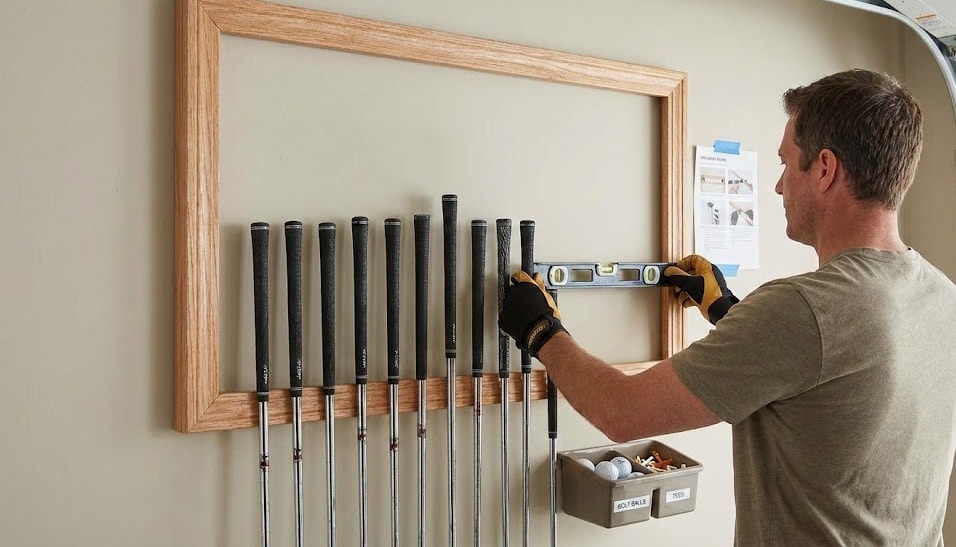
Golf clubs neatly arranged on wall display

Tools and Hardware You Will Need

Before you grab your drill and start punching holes in your garage wall, let's talk about what you actually need, because I've seen too many golfers waste money on hardware that doesn't match their wall type.

Your wall dictates everything. Drywall demands toggle anchors or plastic anchors. Wood studs? Lag bolts driven directly into the stud are your best friend. Concrete or brick requires masonry anchors and a specialized drill bit.

Beyond hardware, you'll need a drill, level, tape measure, pencil, and stud finder. Don't skip the stud finder; it's the difference between a secure mount and clubs crashing down at 2 AM.

Grab protective eyewear and check weight ratings on every anchor. Your vintage Scotty Cameron deserves better than drywall anchors rated for wall decor. Just like re-gripping your golf clubs requires proper drying time for optimal results, mounting hardware needs adequate time to set before bearing the full weight of your collection. For cabinet-style displays, you'll typically need 2 gold hangers with 4 screws plus mounting hardware to get everything secured properly. If you're mounting a heavy-duty commercial rack that can hold up to 140 clubs, you'll want to invest in robust lag bolts rated for significant weight.

Choosing the Right Location and Layout

Where you hang your clubs matters just as much as how you hang them, and this is where most golfers make their initial critical mistake.

You need a dry, temperature-controlled space away from direct sunlight. That garage wall next to the water heater? Terrible choice. The humid corner near your laundry room? Even worse. Heat warps shafts, moisture breeds rust, and UV rays fade grips faster than you'd expect. If you've recently had your clubs re-gripped, wait at least 24 hours before mounting them to ensure the grips have fully adhered.

Your wall must handle the weight. Stud walls give you direct screw attachment, the strongest option. Drywall demands proper anchors. Concrete requires masonry fasteners. For standard stud walls, look for mounting systems with brackets spaced 16 inches apart to align with typical framing.

Allow eight inches of clearance from the wall for easy club removal. Position the rack at a comfortable reaching height, away from high-traffic zones where someone might bump into your equipment. Keep clubs raised off the floor, always. Storing bags on the garage floor exposes them to dirt, dust, and debris that can damage both your bags and clubs over time.

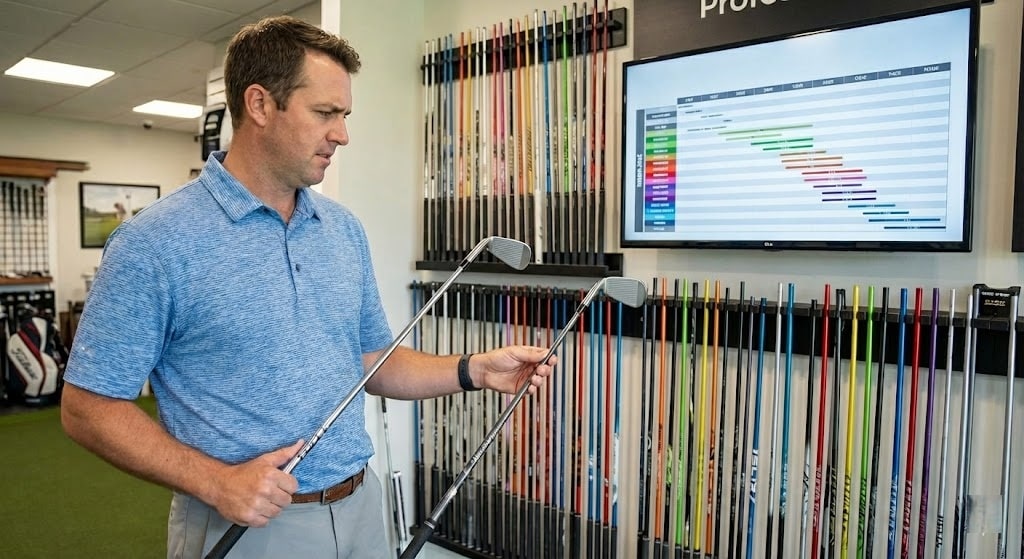
Customer getting fitted for golf clubs in store

Step-by-Step Installation Process

Your location's locked in, so let's get to the actual work. Start by drilling pilot holes directly into your marked stud locations. This prevents wood splitting and guarantees your screws bite properly. If you're mounting into drywall without studs, use heavy-duty anchors rated for the combined weight of your clubs and bags.

Secure your mounting rails with lag bolts, tightening them until the base sits perfectly perpendicular to the wall. Don't eyeball this; use a level. Next, attach rubber-coated or padded hooks to your rail, spacing them evenly so club grips won't rub together. Before hanging, consider cleaning grips with dish soap and hot water to remove built-up oils and maintain their tackiness while in storage. Once your bag is positioned in the rack, use bungees with plastic balls to keep it securely in place.

Hang clubs with grips facing up at chest height for easy access. For bags, use the top handle on sturdy hooks designed for the weight. Measure your longest golf bag and add four inches to determine the minimum mounting height. Test each hung item with a gentle pull before walking away.

Safety Tips for Secure Mounting

Even though you've just finished tightening every bolt and testing your handiwork, the job isn't truly done until you've addressed the safety factors that'll keep your clubs and your walls intact for years.

Here's the reality: most mounting failures happen weeks later when screws loosen from wall vibrations or temperature changes. Check your hardware monthly, give each screw a quarter-turn test. If it spins freely, you've got a problem developing.

Don't skip the weight test before loading your clubs. Apply downward pressure exceeding your set's total weight. That fourteen-club bag plus hardware can hit twenty pounds easily. Easy installation with proper wall anchors prevents accidents and ensures your display stays securely mounted over time.

Position your mount away from doorways and walkways. A falling driver isn't just expensive, it's dangerous. Keep the mounting height above knee level to prevent trips and accidental contact. Storing clubs on the floor with extended stand legs creates tripping hazards that wall-mounted solutions eliminate. Just as golfers use artificial markers to precisely mark their ball's position on the green, consider using small adhesive indicators to mark optimal bracket placement before drilling.

Maintenance and Care for Your Wall-Mounted Clubs

Once your clubs are safely mounted, the real work begins, and here's where most golfers drop the ball.

Wall-mounted clubs aren't maintenance-free. Wipe down shafts, heads, and grips with a dry towel after every round to prevent rust and deterioration. Clean grooves weekly with a soft nylon-bristle brush and mild soapy water; dirty grooves kill spin control. Research shows that dirty clubs can reduce backspin by up to 50%, significantly affecting your shot accuracy and distance.

Store your clubs in a space between 50°F and 70°F with humidity between 30% and 50%. Garages and attics are club graveyards. Use silica gel packs if moisture's a concern.

Inspect shafts, ferrules, and grips every one to three months for cracks or rust. Replace grips every 12 to 24 months. Rotate club positions monthly to prevent pressure marks and guarantee proper airflow around each club.

Golf store displaying new club release schedule

Frequently Asked Questions

Can I Hang Golf Clubs on a Wall in a Rented Apartment?

Yes, you can hang golf clubs in a rented apartment, but you'll need your landlord's written permission initially. Don't skip this step; unauthorized wall modifications can cost you your security deposit. Your safest bet? Use damage-free adhesive hooks or freestanding floor racks that eliminate wall damage. If you do mount anything, document your walls with photos before and after to protect yourself during move-out.

Will Hanging Golf Clubs on a Wall Damage the Club Grips?

No, hanging golf clubs on a wall won't damage your grips if you do it right. The key mistake I see? Hanging clubs by the grip itself. That causes deformation and flattening over time. Instead, use wall hangers that support the shaft, with clips positioned below the grip and above the clubhead. Rubber-coated or padded hooks prevent abrasion, and you'll keep your grips in solid playing condition.

How Do I Display Vintage or Collectible Golf Clubs Without Devaluing Them?

Use custom wall mounts with soft padding or felt backing; they'll protect delicate finishes without creating pressure points on wooden heads or leather grips. Skip DIY methods like nails or hooks that'll dent surfaces and tank value. Opt for UV-protective display cases away from direct sunlight, and control humidity to prevent rust or warping. You're preserving history here, so handle minimally and document condition with photos.

Can Wall-Mounted Golf Clubs Be Covered by Homeowner's Insurance?

Yes, your wall-mounted golf clubs are covered by homeowner's insurance. Standard policies treat them as personal property regardless of how you display them. You'll get protection against theft, fire, and accidental damage. However, here's the catch: high-value vintage or collectible clubs may exceed standard coverage limits. I'd recommend documenting everything with photos and receipts, and consider a replacement cost endorsement for premium pieces.

Is It Safe to Hang Golf Clubs in a Garage With Temperature Fluctuations?

Storing clubs in an uninsulated garage isn't ideal, but it's not the disaster some claim. The real threat isn't a single hot day; it's repeated temperature cycling that degrades epoxy bonds and hardens grips over time. If your garage swings from freezing to 100°F regularly, you're accelerating wear. Your best move? Use an insulated golf bag and bring clubs inside during extreme weather stretches.

Conclusion

You've now got everything you need to convert your clubs from closet clutter into a legitimate wall display. The process isn't complicated: pick your mount style, find your studs, and follow the steps. Don't overthink it. The real satisfaction comes from seeing your gear displayed properly while freeing up floor space. Now grab your drill and get those clubs on the wall where they belong.

How Much Does It Cost to Fly with Golf Clubs? (and How to Save Money)

Flying golf clubs typically costs $30 to $60 on major airlines, but here's what most golfers miss: Southwest doesn't charge anything for golf bags, while budget carriers like Spirit hit you for $36 to $89 each way. Overweight fees add another $50 to $125 if you exceed 50 pounds. Your actual cost depends entirely on which airline you choose and whether you've packed smart, and there are several tricks that'll cut your expenses dramatically.

Table of Contents

Standard Airline Fees for Golf Bags

Flying with golf clubs doesn't have to drain your wallet, but airlines count on you not knowing their fee structures.

Most major US carriers charge between $30 and $60 for a golf bag under 50 pounds when checked as standard baggage. That's the baseline. Cross that 50-pound threshold, and you're looking at overweight charges ranging from $50 to $100—a penalty that catches unprepared travelers off guard.

Here's what the airlines won't advertise: pre-booking your golf bag online almost always costs less than paying at the airport counter. Budget carriers hit harder, charging $50 to $100 per segment with stricter weight enforcement. Southwest remains the outlier, offering two free checked bags, including golf equipment. That policy alone can save you over $100 on a round trip. Some premium carriers may include golf bags in certain fare classes or through loyalty program benefits. Your bag may also face additional oversized charges if it exceeds 62 total linear inches. For added convenience, consider using shipping services like Ship Sticks to send your clubs ahead and avoid airport hassles entirely.

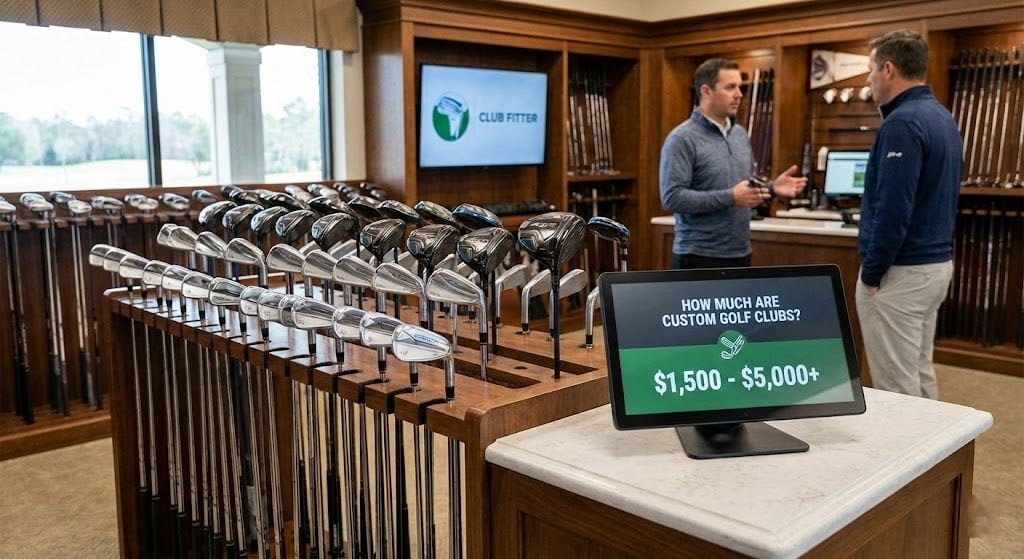
Custom golf clubs display in fitting studio

Weight and Size Limits That Affect Your Costs

Three numbers determine whether your golf bag flies at standard rates or triggers a cascade of fees: weight, linear dimensions, and the arbitrary thresholds each airline sets differently.

Most carriers cap golf bags at 40 to 50 pounds before penalties kick in. Exceed 50 pounds, and you're looking at $100 to $125 in overweight fees per flight segment. That adds up fast on a round trip.

Size matters similarly. Airlines enforce linear dimension limits around 115 inches, though some stretch to 120. Your bag's length plus width plus height must stay under that threshold, or you'll face oversized surcharges stacked on top of any overweight penalties.

Here's the smart move: weigh and measure your packed bag at home before you leave. Surprises at check-in cost real money. Understanding different airline policies regarding sports equipment can save you from unexpected charges at the counter. Some airlines also require a hard-shell case or will ask you to sign a limited release form if you use a soft-sided bag. If the fees become too burdensome, some golfers opt to rent clubs at their destination or invest in electric push carts that eliminate the need to transport heavy equipment altogether.

Comparing Major Airline Golf Bag Policies

Knowing the weight limits means nothing if you don't understand how wildly airline policies differ from carrier to carrier.

Here's the reality: American, Delta, Southwest, and JetBlue won't charge you extra for one golf bag within standard limits. That's the baseline. But Spirit? You're looking at $36–$89 just for the initial bag, plus another $79 if you hit 41–50 pounds. Most airlines allow one golf bag containing clubs, balls, and shoes without additional fees beyond standard checked baggage charges. If you're packing premium balls like Callaway's Chrome Soft line, rest assured, they're manufactured in Massachusetts with rigorous quality control worth protecting during transit.

International carriers get interesting. Air Calin, Vietnam Airlines, and Garuda Indonesia actually give you a free 20–23kg golf bag allowance on top of regular luggage. Hawaiian Airlines waives oversize fees entirely. Virgin Atlantic lets everyone—regardless of status—check one golf bag free. Turkish Airlines offers your first golf set free on international flights, with additional sets subject to normal excess baggage fees.

The worst offenders? British Airways charges up to €150 in Economy. LATAM hits you with $100+ on certain routes. Always verify before booking.

Customer getting fitted for golf clubs in store

Budget Airlines Vs Premium Carriers

Where you spend your money matters more than how much you spend, and that's the fundamental truth most golfers miss when comparing budget versus premium carriers.

Budget airlines hook you with cheap tickets, then stack fees like building blocks. Spirit charges $41-$51 each way for your clubs. JetBlue wants $35-$50. Southwest stands alone, with free checked bags including golf clubs, though overweight items trigger a $100 penalty.

Premium carriers flip the script. British Airways charges around $50 in Economy, but Business class passengers often fly clubs free. Virgin Atlantic includes one golf bag at no charge for most fares. Elite members in airline loyalty programs often receive free or discounted golf bag transport as an added perk.

Here's what matters: book online, not at the counter. Pre-booking fees run considerably lower across both carrier types. That simple step saves you real money regardless of which airline you choose. To avoid unexpected charges at check-in, always weigh your clubs beforehand since most airlines impose overweight fees once bags exceed 50 pounds. For travelers wanting to bypass airline handling altogether, shipping clubs ahead to your destination offers tracking, insurance coverage, and eliminates the risk of damage entirely.

Packing Tips to Avoid Extra Charges

Smart packing separates golfers who pay baseline fees from those who get blindsided by overweight charges at the counter.

Here's your weight management strategy: Keep your bag under 20 kg to stay safely below most airline limits. Weigh it at home—don't trust your gut. Golf balls are the biggest weight culprits, so buy them at your destination instead of hauling three dozen across the Atlantic.

I've seen golfers get creative by dividing equipment among travel companions to share the load. It works. Some airlines like Tunisair offer 20 kg of golf baggage free on routes between Germany and Tunisia, making weight distribution even easier when you know your limits upfront.

Dimension limits matter too. Most airlines cap bags at 62 linear inches total. Exceed that, and you're paying oversized fees on top of everything else. Budget carriers like Spirit Air charge $100 for clubs that exceed 40 lbs or measure larger than 62 inches. If you're considering a home simulator instead, you'll need minimum 10x15 feet of space to make it worthwhile.

Fill empty spaces with clothing rather than air. Your clubs shift less, and you're maximizing space you've already paid for.

Money-Saving Alternatives to Airline Baggage

Why pay airline baggage fees at all when several alternatives can slash your costs or eliminate them?

Shipping your clubs ahead through FedEx or UPS runs $50–$80 for a 30- to 40-pound bag, often cheaper than airline oversized fees. Specialist services like LugLess charge $80–$150 but handle everything door-to-door. You'll need a five-day lead time for ground shipping, so plan accordingly.

Airline co-branded credit cards offer another angle. The United Club Card provides two free checked bags for you and a companion. JetBlue's cards extend free bag privileges to up to three companions per flight.

If you're flying Spirit frequently, their $69.95 annual Saver$ Club membership discounts baggage fees across multiple trips. For golfers considering investing in their own launch monitor rental instead of destination practice facilities, 3-day packages starting around $330 can offset the need for range time on your trip. Run the numbers—these alternatives often beat paying retail baggage rates, especially for regular travelers.

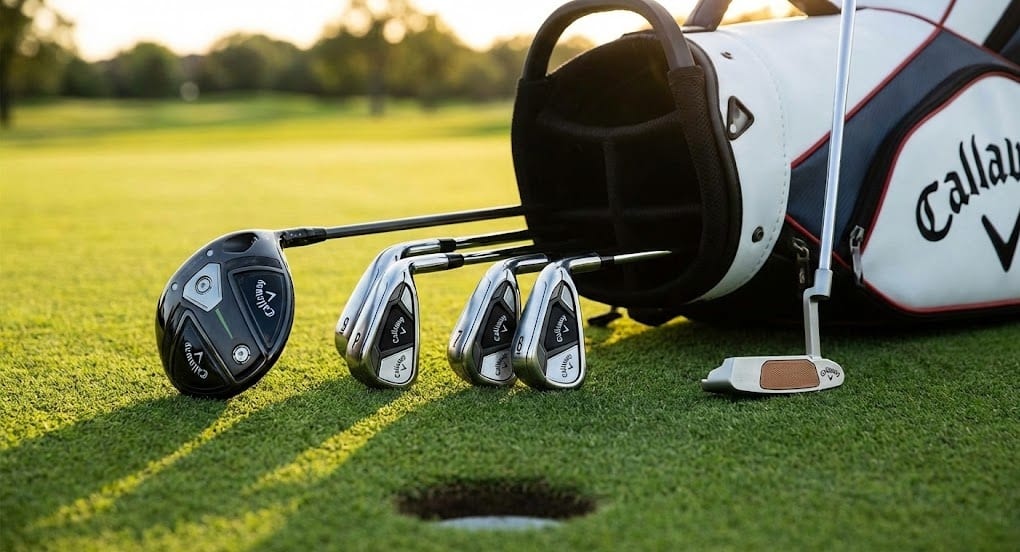
Golf bag with clubs on green golf course

Frequently Asked Questions

Can I Bring My Golf Rangefinder in My Carry-On Luggage?

Yes, you can bring your golf rangefinder in your carry-on luggage, and honestly, you should. Here's the catch most golfers miss: you must remove the lithium battery and pack it separately. TSA won't hassle you if you place the rangefinder in its own bin during screening. Keep the battery in a protective case to prevent short circuits. It's straightforward once you know the drill.

Will Airlines Compensate Me if My Golf Clubs Are Damaged?

Yes, but don't expect a windfall. Airlines cap liability at around $3,500 for domestic flights and roughly $1,800 internationally, regardless of what your clubs actually cost. Here's the catch: you'll likely only qualify if you packed them in a hard-sided case. Soft bags? You're probably out of luck. File your claim immediately upon arrival with an itemized inventory and receipts. Consider travel insurance as backup protection.

Do Golf Courses at My Destination Offer Club Rental Services?

Yes, most golf courses offer club rentals, and you shouldn't stress about availability. Resort and destination courses almost always have them, while urban and public tracks typically stock sets for casual players. Expect to pay $25 to $75 per round for standard clubs, or up to $100+ for premium brands like TaylorMade. I'd recommend booking ahead during peak season; walk-ins aren't guaranteed for the good stuff.

Are There Travel Insurance Options That Specifically Cover Golf Equipment?

Yes, specialized golf travel insurance exists, and it's worth your attention. Standard travel insurance often leaves your clubs exposed. Dedicated golf policies cover loss, theft, and damage to your equipment, typically $500 to $3,000 per item. You'll also get rental reimbursement if your gear's delayed and protection for non-refundable green fees. Read the exclusions carefully; GPS rangefinders and electric carts often aren't covered.

Can I Ship Golf Clubs Internationally Without Customs Issues?

You can minimize customs headaches, but you won't eliminate them entirely; that's the honest truth. Your best move is using specialized golf shipping services like Ship Sticks or Sherpr because they handle all the customs paperwork for you. Remove any prohibited items from your bag, provide accurate valuations, and guarantee compartments stay accessible for inspections. Research your destination country's specific import duties beforehand so surprise fees don't ambush you.

Conclusion

Flying with your golf clubs doesn't have to drain your wallet. You've now got the knowledge to compare airline policies, pack smart, and investigate alternatives like shipping or rental clubs. The real savings come from planning, checking your airline's current fees before booking, weighing your bag at home, and considering whether that destination course offers quality rentals. Your clubs will get there; make sure your budget does too.

How Much Do Custom Golf Clubs Cost? The Surprising Price of a Perfect Fit

You'll spend anywhere from $1,200 to $5,000+ for a full custom set, but that massive range depends entirely on your choices. A basic custom-fit set runs $1,200 to $1,500, mid-tier builds from major brands hit $1,900, and premium options from Titleist or PXG push past $4,000. The real cost drivers are shaft upgrades ($20 to $500 per club) and fitting fees ($100 to $400). Understanding exactly where your money goes helps you avoid overpaying for features you don't need.

Table of Contents

Price Ranges for Custom Golf Club Sets

Here's the breakdown. Basic custom sets start around $1,200 to $1,500, solid entry points if you're testing the custom waters. Mid-tier options from brands like TaylorMade land around $1,900 and up, giving you legitimate fitting technology without the premium price tag. High-end sets from Titleist, PXG, or boutique builders push past $4,000 to $5,000.

Don't let sticker shock scare you. You're paying for clubs built specifically for your swing, not some average golfer who doesn't exist. These clubs deliver excellent durability and performance, often outlasting off-the-shelf options by years. The custom fitting process typically adds $50 to $200 per session to your overall investment, but it ensures every club matches your unique swing characteristics. The investment pays off—87% of custom-fit golfers lower their handicap by at least 10%, making custom clubs a smart long-term choice for serious players.

Indoor golf simulator with clubs and screen display

Cost Breakdown by Individual Club Type

Breaking down that full set price reveals where your money actually goes, and where manufacturers pad their margins.

Drivers command the largest slice: $399 to $600+ for standard custom builds, but shaft upgrades like the Mitsubishi Kuro Kage LE 50 push complete builds to $948. Iron sets run $699 to $1500+ for seven pieces, with custom fitting adding $175 for 90 minutes of work. Fairway woods and hybrids each cost $199 to $400+, while wedges sit between $145 and $200+ per club. The personalized fitting process and expert analysis contribute to a price premium of 10% to 30% over off-the-rack alternatives.

Here's where it gets interesting: component suppliers sell driver heads for $90.95 to $116.95, iron heads for $29.45 to $55.95, and wedge heads for $29.45 to $37.95. Custom putters range from $175 to $400+, with fitting services adding $125. Custom shafts remain the primary cost driver for individual clubs, often accounting for more price variation than the clubhead itself.

Hybrid clubs offer excellent value in the custom market, with options ranging from $50.45 to $54.95 from component builders like Monark Golf.

Upgrade Options and Their Impact on Total Price

Four upgrade categories determine whether your custom build stays affordable or spirals into premium territory, and manufacturers know exactly which ones trigger impulse spending.

Shaft upgrades hit hardest, adding $20 to $500 per club. Premium brands like Mitsubishi and Fujikura command top dollar, and a full bag upgrade can nearly double your total cost. Grips seem harmless at $8 to $20 each, but replacing all fourteen clubs quietly adds $100 to $300. Standard grips like Lamkin Crossline Black come included with most custom builds, while premium options require an upgrade cost.

Custom fitting fees average $299.99 for full bag sessions, though many retailers apply this toward your purchase. The fitting process includes a personalized evaluation of your swing and physical characteristics to determine optimal specifications like length, loft, and shaft type. Getting fitted early is especially beneficial for beginners since using ill-fitted clubs can lead to poor swing development and ingrained bad habits. The real wallet drain comes from cosmetic extras, paint fills, stamping, and specialty finishes tack on $20 to $100 per club. You're paying for aesthetics, not performance. Prioritize shafts and fittings; skip the vanity upgrades.

Golfer practicing swing in indoor simulator

Custom Clubs vs. Off-the-Rack: A Price Comparison

Knowing which upgrades drain your wallet leads to an obvious question: Should you even bother with custom clubs when off-the-rack sets promise the same technology at a fraction of the cost?

Here's the reality check. You'll spend $400 to $1,500 on a complete off-the-rack set. Custom-fitted alternatives start around $1,000 and climb past $4,000 for premium builds. That's 2-4 times more money leaving your pocket.

The math stings, but don't ignore what you're actually buying. Off-the-rack clubs use identical materials and manufacturer technology. The difference isn't quality, it's fit. Factor in fitting fees ($50-$100), launch monitor analysis ($100-$300), shaft modifications ($50-$300 each), and clubhead adjustments ($200-$500), and you'll understand where that premium goes. Semi-custom options split the difference if full customization feels excessive. The investment often pays dividends through fitted clubs that can lower handicaps by 2-4 strokes, depending on your current skill level. For budget-conscious golfers, certified pre-owned programs from major brands offer quality-assured alternatives that bridge the gap between off-the-rack and full custom pricing.

Independent fitters offer access to a wide range of components from multiple manufacturers, giving you options beyond what single-brand retailers provide.

Where to Buy Custom Golf Clubs and What to Expect to Pay

Where exactly should you hand over that hard-earned cash once you've committed to custom clubs? You've got three solid paths: specialty fitters like Club Champion, brand-direct websites, or local golf shops with certified fitters.

Here's the reality on pricing. Fitting sessions run $100 to $400, though many retailers fold that cost into your purchase. Drivers land between $400 and $1,200. Iron sets range from $700 to $1,800-plus. Full custom bags typically hit $1,500 to $5,000.

Don't assume online means cheaper. PXG drivers start at $649, while Vice offers complete iron sets from $770. Golf Galaxy and Golf USA provide configuration tools with prices spanning $150 to over $2,000 per club. Some retailers offer 0% APR financing with terms up to 24 months to help spread out the investment.

The fitting fee becomes irrelevant if you're buying; most reputable shops credit it toward your purchase. Top fitting facilities use over 65,000 club combinations to match your swing with the perfect shaft, head, and grip configuration.

Indoor golf simulator with clubs and screen

Frequently Asked Questions

How Long Does It Take to Receive Custom Golf Clubs After Ordering?

You'll typically wait 1-3 weeks for custom golf clubs, but that range varies wildly by brand. Tour Edge ships within 48 hours; that's the gold standard. TaylorMade takes about 15 business days. Titleist lands around 8-10 days total. Customized clubs? You're looking at 3-8 weeks, especially with international shipping. Don't trust marketing promises; check component availability before ordering, because out-of-stock parts blow up every timeline.

Do Custom Golf Clubs Come With a Warranty or Guarantee?

Yes, but the coverage is a patchwork you need to understand upfront. Manufacturer warranties typically run 1-2 years for defects, with Tour Edge offering lifetime coverage. However, custom builders like Club Champion don't provide their own warranty; they pass through whatever the component manufacturers offer, which is often nothing. Retailer guarantees are different; Golf Galaxy give you 90 days to exchange clubs you don't like.

Can I Trade in My Old Clubs When Buying Custom Ones?

Yes, you can trade in your old clubs when buying custom ones; most specialty fitters and retailers offer programs that apply your trade-in value toward your purchase. Here's the catch: you'll typically offset a few hundred bucks, not thousands. Trade-in credit usually covers part of the club cost, but won't touch fitting fees or customization add-ons. Confirm the terms upfront before assuming you're getting a massive discount.

How Often Should Custom Golf Clubs Be Refitted as My Swing Changes?

You should refit your custom clubs every 2-3 years if you're actively working on your swing. Don't fall for the myth that fitting is a one-time event. If you've gained or lost significant swing speed, changed your technique with a coach, or noticed consistent distance loss, that's your signal. Your swing evolves—your equipment needs to keep pace.

Are Custom Golf Club Fittings Available for Left-Handed Players?

Yes, custom golf club fittings are absolutely available for left-handed players. Major fitting centers like True Spec Golf, Club Champion, and Golf Town specifically train their fitters to work with lefties. You'll find custom options from Callaway, Titleist, and TaylorMade with full loft, lie, and shaft adjustments. The truth? Selection remains smaller than right-handed inventory, and some shops carry fewer demo clubs, but extensive fitting services exist nationwide.

Conclusion

Custom golf clubs aren't the luxury splurge manufacturers want you to believe. You're looking at $150-$500 per club or $1,500-$4,000 for a full fitted set, yes, more than off-the-rack, but not dramatically so when you factor in performance gains. If you've got a consistent swing and you're committed to the game, custom fitting pays dividends. If you're still developing, save your money and get fitted later.

How Many Clubs Are You Allowed to Carry in Your Golf Bag?

You're allowed exactly 14 clubs in your golf bag during any round of golf. That's the official rule set by the USGA and R&A, and it applies whether you're playing casually or competing in tournaments. The point is - you can mix and match any combination you want, like carrying two drivers or four wedges if that suits your game! Break the rule, though, and you'll face penalties of up to four strokes. There's actually a fascinating story behind why this specific number became golf's golden standard.

Table of Contents

The Official 14-Club Rule in Golf

You need to carefully select which clubs cut your round. Golf's fundamental equipment rule states that you can carry a maximum of 14 clubs in your bag, no more, no less! This applies whether you're playing a casual weekend round or competing in the Championship.

Here's the thing: you've got complete freedom within those 14 slots. Want to carry two drivers? Go for it. Three putters? That's perfectly legal. You can even mix left-handed and right-handed clubs if that's your style. You're also allowed to start with fewer than 14 clubs and add clubs during your round as long as you don't exceed the limit.

The rule applies universally, from junior tournaments to the PGA Tour. Both the USGA and R&A enforce this regulation through Rule 4.1b, keeping the game consistent worldwide. This limit forces you to think strategically about your club selection before each round, and modern golf bags with 14-way dividers help keep your chosen clubs organized and protected from damage. Before this rule was established, some professionals carried 20 or more clubs in their bags, which the governing bodies felt gave an unfair advantage.

Golf bag on course near players

History Behind the Club Limit Regulation

The 14-club limit wasn't always part of golf's DNA; in fact, players used to carry as many clubs as they wanted! Back in 1913, Francis Ouimet won the US Open with just seven clubs. But here's where it gets crazy: by 1934, Lawson Little was hauling around 31 clubs to win the Amateur Championship!

When steel shafts arrived in the 1920s, manufacturers started creating specialized clubs for every possible shot. The situation spiraled out of control; one player at the 1935 US Open carried 32 clubs, and caddies needed two bags to lug everything around. Modern golf bags with 14-way dividers are designed specifically to accommodate today's club limit, making organization much simpler than the chaotic multi-bag setups of the past. The push for regulation came when Robert Harris proposed limiting clubs to 14 in 1936, concerned about the excessive number of players carrying.

Golf's governing bodies ultimately said "enough!" They worried wealthy players had unfair advantages, so the USGA set the 14-club limit in 1938, with the R&A following in 1939. The specific number 14 was chosen after Bobby Jones and Tony Torrance observed Albert Campbell carrying 32 clubs at the 1936 Walker Cup and decided to average their own club counts; Jones had 16, and Torrance had 12.

Flexibility Within the 14-Club Maximum

Most golfers don't realize they've got complete freedom to mix and match their 14 clubs however they want! There's no rule saying you need a driver, three-wood, or any specific combination. Want to carry three putters? Go for it. Prefer loading up on wedges instead of long irons? That's totally fine.

Here's the thing - you can customize your bag based on what works for your game. If you're playing a short course with tight fairways, you might skip the driver entirely and pack extra irons. Some players even carry duplicate clubs, like two 7-irons with different lofts. You could even play with just seven clubs if you wanted to challenge yourself; there's no minimum requirement. Breaking this rule comes with serious consequences, though; you'll face penalties of up to four strokes in stroke play or lose up to two holes in match play.

The only requirement is staying at or under 14 clubs. This flexibility lets you build a set that matches your strengths and the courses you play most often. Whether you're using a minimalist stand bag or a fully loaded cart bag with 15-way dividers, the choice of which clubs fill those slots is entirely yours.

Golf travel bag with club dividers

Penalties for Exceeding the Club Limit

While you're free to customize your clubs within that 14-club limit, breaking this rule comes with some pretty serious consequences! The USGA established this rule to maintain fairness and prevent players from gaining an unfair advantage through excessive equipment. In stroke play, you'll get hit with two penalty strokes for each hole where you carried too many clubs, but here's the good news: the maximum penalty is four strokes per round. So even if you played nine holes with 15 clubs, you'd still only add four strokes to your score.

Match play works differently. You'll lose a hole for each violation, up to a maximum of two holes per round. Once you identify the extra club, you've got to immediately declare it out of play. The key is catching it early; the sooner you spot that 15th club, the fewer holes you'll be penalized for! With modern cart bags offering 23 pockets for organization, it's easier than ever to keep track of your club count and avoid this costly mistake.

Strategic Advantages of Optimizing Your Club Selection

After you've become proficient in the rules about how many clubs you can carry, it's time to think about making those 14 clubs work harder for you on the course. The important point is, knowing your exact yardages for each club isn't just helpful; it's a transformative factor. When you nail down that your 7-iron flies 150 yards, you'll avoid hazards and hit more greens. This knowledge becomes even more valuable when you track your yardages regularly through practice sessions and on-course play.

Smart club selection means adjusting to conditions, too. Playing into a 15-mph wind? Take one extra club. Hitting uphill? Same deal. The pros swap out clubs based on the course; you can too! Consider replacing those tough-to-hit 3 and 4-irons with hybrids, which launch easier and forgive mishits better. That's strategic thinking that'll drop your scores. A quality stand bag with 14-way dividers ensures each club has its dedicated spot, preventing club chatter and making it easier to quickly grab the right club for every shot.

Golf bags with clubs on a golf course

Frequently Asked Questions

Can I Share Clubs With Another Player During a Round?

No, you can't share clubs with another player during a regular round – it'll cost you two penalty strokes per hole! The situation is this: if you're playing foursomes or fourballs with a partner, you're golden. Partners can share clubs all day long, but you've got to keep it under 14 clubs total between you. In regular stroke play, though, using someone else's putter means automatic penalties.

What Happens if a Club Breaks During Play?

If your club breaks during normal play, you've got options! You can keep playing with the damaged club or replace it without penalty, just remember you can't exceed 14 clubs total. The point is: the damage must happen during regular play, not from throwing it in frustration. You'll need to tell your playing partners about the replacement. If you intentionally damaged it, though, you're looking at penalties.

Are Training Aids or Alignment Sticks Counted Toward the Limit?

No, training aids and alignment sticks don't count toward your 14-club limit! These items aren't considered clubs under the rules, so you can carry them separately without any penalty. Think of it this way: only actual golf clubs that you'd use to hit the ball count. Your alignment sticks, swing trainers, or other practice tools are classified as equipment, not clubs. Just remember, you can't use them for artificial help during play.

Can I Replace a Club I've Removed From My Bag Mid-Round?

You can't replace a club you've removed from your bag mid-round unless it was damaged during normal play. The fact of the matter is - once you take a club out of play, it's done for that round. The rules let you add clubs if you're under 14, but swapping isn't allowed. For example, you can't ditch your 5-iron on hole 10 to grab a hybrid from your car. That removed club stays out!

Do Practice Swings With Non-Conforming Clubs Violate the Rule?

Yes, practice swings with non-conforming clubs violate the rules! Here's the deal: any club you use during your round, even for practice swings, must meet USGA standards. If you're caught swinging a non-conforming club, you'll face a two-stroke penalty in stroke play or lose the hole in match play. The rules don't distinguish between actual shots and practice swings, so keep those illegal clubs out of your bag entirely.

Conclusion

You've got it, fourteen clubs are your magic number! Whether you're carrying a full set or mixing things up with specialty wedges, staying within that limit keeps you legal on the course. Remember, it's not about having every possible club, but choosing the right ones for your game. Next time you're organizing your bag, count those clubs carefully. Trust me, avoiding that two-stroke penalty is worth the extra minute of checking!

How Long Do Golf Clubs Last? The Surprising Lifespan of Your Clubs

Your golf clubs last longer than manufacturers want you to believe. Drivers typically perform well for 3-5 years, irons hold up for 7-10 years, and a quality putter can outlast your golf journey. Wedges are the exception; they'll need replacing every 1-3 years due to groove wear. The real question isn't lifespan but performance: when you're losing distance or seeing inconsistent shots, that's your signal. Understanding what actually causes wear helps you know exactly when it's time to upgrade.

Table of Contents

Lifespan Expectations by Club Type

Not all clubs in your bag wear out at the same rate, and understanding these differences saves you from replacing equipment too early or playing with gear that's silently sabotaging your game.

Your driver takes the biggest beating, lasting 3-5 years, before clubface deterioration kills your distance. Fairway woods and hybrids hold up better, expect 5-8 years of solid performance. Irons sit in the 7-10 year range, though groove wear determines their true expiration date more than calendar time. Since consistent center contact can add nearly 30 yards to your distance, worn grooves that reduce spin control become a serious performance liability.

Here's where it gets interesting: your wedges die fastest, often needing replacement every 1-3 years due to constant turf and sand abuse. Meanwhile, your putter can outlive you. I've seen 20-year-old putters performing flawlessly because they simply don't endure the same physical punishment. Since comfort with a putter can directly enhance your performance on the green, there's rarely a compelling reason to replace one that feels right in your hands. To maximize this longevity across all your clubs, regular cleaning after each shot prevents debris buildup that accelerates wear on clubfaces and grooves.

Golf bag with clubs on green golf course

Signs Your Golf Clubs Need Replacing

Five warning signs tell you it's time to retire your clubs, and most golfers miss at least three of them.

Performance drops hit initially. You're losing distance despite solid contact. Your ball balloons with excessive spin or won't get airborne. Shots you used to shape now fly unpredictably. Even without visible damage, a professional check-up can identify hidden issues affecting your game.

Visual damage speaks loudly. Scratched clubfaces, worn-smooth grooves, and structural cracks aren't cosmetic problems; they're performance killers. Rust on shafts and rattling clubheads signal urgent replacement needs.

Grip and shaft issues compound everything. Slick, peeling grips destroy confidence. Cracked or bent shafts compromise energy transfer completely and can lead to dangerous breakage during your swing. Keep in mind that steel shafts typically last longer than graphite options, which require more frequent replacement.

Your wedges deserve special scrutiny. After 75-100 rounds, groove effectiveness plummets. Shots that once checked up now roll through the greens.

Technology gaps matter. Clubs older than five years lack modern forgiveness features that genuinely improve scores.

Factors That Affect How Long Your Clubs Last

Five factors drive club longevity: frequency of use, maintenance habits, build quality, playing environment, and technological obsolescence. Are you hitting 100+ rounds annually? Your wedges and irons face dramatically accelerated wear compared to weekend warriors. Sandy conditions and coastal salt air corrode metal components faster than inland play on well-manicured fairways. Warmer climates generally accelerate wear on equipment just as they reduce the lifespan of course features like greens and bunkers. Maintaining optimal storage conditions with humidity between 40-60% helps preserve club components and prevents premature deterioration.

Here's what most golfers miss: premium clubs genuinely outlast budget options. Titanium drivers and high-quality shafts resist the cracking and deformation that plague cheaper alternatives. Forged irons feel incredible but wear faster than cast versions. Steel shafts are more durable than graphite options, making them a smarter choice for players prioritizing longevity over weight savings.

Regular cleaning, proper storage, and routine regripping aren't optional; they're the difference between five-year replacements and decade-long performance.

Two golf bags on a sunny golf course

Real-World Replacement Patterns Among Golfers

When you dig into actual replacement data, the gap between what manufacturers recommend and what golfers actually do becomes impossible to ignore.

Only 7% of golfers replace clubs annually, while a massive 43% wait more than four years. Another 31% follow the four-year cycle that aligns with industry guidance. The reality? Most of you are holding onto clubs far longer than marketing departments would prefer.

This isn't laziness, it's practical wisdom. Budget-conscious players stretch clubs a decade or more, prioritizing value over shiny new releases. Competitive golfers follow tighter three-to-five-year cycles chasing performance edges. Heavy practice players wear equipment faster than weekend warriors. Since putters account for roughly 40% of your total strokes, they often see the most wear and deserve priority when evaluating replacement needs.

Your replacement timeline should match your playing frequency and goals, not arbitrary manufacturer suggestions designed to move inventory.

Maintenance Tips to Extend Club Longevity

Proper maintenance separates clubs that last five years from those that serve you for fifteen.

You don't need fancy products, just consistency. Clean your clubheads after every round with a soft-bristle brush and warm, soapy water, focusing on those grooves that actually generate spin. Dry everything completely before storage. That's the foundation.

Here's what most golfers skip: wipe down your shafts and grips after play. Sweat deteriorates rubber faster than you'd think. Store clubs in a cool, dry place—never in your car trunk, where temperature swings weaken adhesives and warp materials. Regularly inspect your shafts for dents, bends, or cracks that can lead to unpredictable performance on the course. A loose clubhead or bent shaft can significantly impact your game, so address these issues as soon as you notice them.

Apply light mineral oil to metal clubheads seasonally, especially if you play in humid conditions. Inspect grooves for wear and regrip when surfaces feel slick. For stubborn rust spots, a vinegar and water solution with light scrubbing can restore your clubheads without damaging the finish. These small habits compound into years of extended performance.

Golf bags and balls on practice range

Frequently Asked Questions

Can I Mix Old and New Clubs in the Same Golf Bag?

Yes, you can absolutely mix old and new clubs in your bag, and you should. There's no rule against it, and tour players do it constantly. That trusty putter you've drained putts with for years? Keep it. Is your worn-out driver losing distance? Replace it. The smartest approach is upgrading strategically based on performance needs, not buying matching sets because marketing tells you to. Focus on results, not uniformity.

Do Golf Club Warranties Cover Normal Wear and Tear Over Time?

No, golf club warranties don't cover normal wear and tear. This is the fine print manufacturers hope you'll ignore. Warranties protect you against manufacturing defects, a clubhead cracking, a shaft failing unexpectedly, not the gradual deterioration from regular play. Paint scratches, grip wear, cosmetic fading, and surface abrasions? You're on your own. Most warranties run one to two years and explicitly exclude these everyday realities of playing golf.

Should Beginners Buy New Clubs or Quality Used Equipment Instead?

Quality used clubs are your best bet as a beginner. Here's the truth: you'll likely upgrade within two years anyway as your swing develops. Why sink premium dollars into new equipment you'll outgrow? Used irons and putters retain near-new performance when properly maintained. Spend less now, experiment with different styles, then invest in fitted new clubs once you've established a consistent swing worth building around.

How Does Club Fitting Affect the Lifespan of Golf Clubs?

Club fitting directly extends your equipment's lifespan by reducing unnecessary stress on shafts and clubheads. When clubs match your swing speed and style, you'll produce fewer off-center hits that destroy grooves and faces over time. Fitted clubs eliminate those compensatory swings that cause uneven wear and premature cracks. You're looking at reaching the upper end of lifespan estimates, 7-10 years for irons, instead of replacing equipment due to perceived underperformance.

Are Expensive Golf Clubs More Durable Than Budget-Friendly Options?

Yes, expensive golf clubs genuinely outlast budget options, and it's not close. Premium clubs use high-grade steel and forged construction with tight manufacturing tolerances, so they'll maintain their specs for decades. Budget clubs? They're built with cheaper materials like zinc alloys that degrade after just a few rounds. You're not paying for a logo; you're paying for materials that won't fall apart on you.

Conclusion

Here's the truth: your clubs probably have more life left than manufacturers want you to believe. Don't fall for arbitrary replacement timelines. Instead, watch for the real warning signs, worn grooves, loose ferrules, and shafts that feel dead. Take care of your equipment, and it'll serve you well for years. Replace clubs when you need to, not when marketing tells you to.

How to Cut a Graphite Golf Shaft Without Destroying It

To cut a graphite golf shaft, you'll wrap masking tape around your marked cut line, secure the shaft in a rubber-lined vise, and use a tungsten carbide hacksaw blade or Dremel with gentle, consistent pressure. Rotate the shaft during cutting to distribute stress evenly across the fibers, cut halfway through, rotate 90 degrees, then finish. Always wear a dust mask since graphite particles are no joke. The technique details below prevent costly mistakes.

Table of Contents

Tools and Equipment for Cutting Graphite Shafts

The biggest myth in DIY club building is that you need a $500 professional shaft cutter to get clean results on graphite. You don't. A tungsten carbide rod saw blade, costing around $8, fits your standard 12-inch hacksaw frame and slices through graphite in 15-20 seconds without splintering. The blade's toothless design with tungsten carbide particles enables cutting on both push and pull strokes.

For power tool enthusiasts, a Dremel rotary tool with a fine-tooth cutting wheel handles detailed work beautifully. Cut-off saws work too, but you'll need graphite-specific blades to prevent fraying.

If you're building clubs regularly, consider a dedicated shaft cutter from GolfMechanix or Mitchell Golf. These machines offer dust containment and precision cutting scales that justify their cost over time. But for occasional builds? That rod saw blade delivers professional results at hobby prices. Beyond cutting tools, you'll need essential equipment, including a vise with protective rubber clamps, masking tape to prevent splintering, measuring tape, and sandpaper in medium and fine grits to smooth the cut edges. Working with graphite requires extra care since the layered carbon fiber construction that gives these shafts their lightweight flexibility also makes them prone to fraying if cut improperly.

Measuring metal rod with tape measure and marker

Preparing Your Graphite Shaft for Cutting

Before you make that initial cut, the preparation work determines whether you'll end up with a clean, professional edge or a frayed, splintered mess that weakens your shaft.

Start by measuring twice, actually, measure three times. Mark your cutting line with a fine permanent marker, then wrap masking tape around the shaft at that exact spot. This tape isn't optional; it holds graphite fibers in place during cutting and prevents splintering.

Secure the shaft in a proper clamp or padded vise. Don't overtighten; graphite crushes under excessive pressure, creating invisible micro-fractures that'll haunt you later. Sand away any paint near the cut line with fine-grit sandpaper, then wipe clean with acetone. Removing paint properly also helps prevent ferrule creep when you install the ferrule later. Keep in mind that graphite driver shafts are preferred over steel because of their lighter weight, so preserving the shaft's structural integrity during cutting is essential for maintaining optimal performance. Ultimately, inspect for existing cracks and verify your blade's sharpness. Dull blades cause disasters. Work in a well-ventilated area to avoid inhaling harmful graphite dust particles released during the cutting process.

Step-by-Step Cutting Techniques

Five distinct cutting methods exist for graphite shafts, and I've tested every single one of them. Some produce clean, professional results, while others leave you with a frayed mess that'll cost you a new shaft.

Here's the technique that actually works: wrap masking tape around your marked cutting point, secure the shaft in a rubber-lined vise, and grab a grit-edge blade or rod saw. Start your cut with gentle, consistent pressure; don't force it. The critical move most DIYers skip? Rotate the shaft continuously as you cut. This distributes stress evenly across the graphite fibers instead of crushing them on one side.

For bulletproof results, cut halfway through, rotate the shaft 90 degrees, then finish. You'll get a clean edge every time. Always wear protective eyewear during the cutting process to shield your eyes from graphite particles and debris. Once you've made your cut, lightly sand the tip from the tape line down using 150-grit or finer sandpaper to remove the polyurethane finish and prepare the surface for epoxy adhesion. Similar to how tour professionals use medium-grit sandpaper to restore golf grips by exposing fresh material underneath, this sanding step creates an optimal bonding surface for your new clubhead.

Hands sanding a metal pipe with sandpaper

Safety Precautions and Cleanup

Carelessness around graphite dust has sent more DIYers to the doctor than botched cuts ever have, and I've seen guys treat shaft trimming like they're whittling a stick in the backyard. That's a mistake. Graphite particles are fine, abrasive, and irritate your lungs and eyes fast.

You need safety goggles, cut-resistant gloves, and a dust mask, no exceptions. Work in a well-ventilated area and position a vacuum near your cutting site to capture airborne particles. Safety glasses are essential to protect your eyes from graphite splinters and debris that can fly unexpectedly during the cutting process.

After you've made your cut, don't just blow the dust away. Use a soft brush or vacuum to clean your workspace thoroughly. Sand the cut edge with fine-grit paper to eliminate splinters, then wash your hands completely. Dispose of graphite dust according to local guidelines for fine particulates. Since factors like shaft weight and kick point affect performance, keeping your workspace clean ensures no debris interferes with your final assembly or fitting measurements.

Common Mistakes to Avoid When Cutting Graphite Shafts

Even when you've got the right tools and safety gear, a single careless moment can turn a perfectly good graphite shaft into expensive garbage.

The biggest mistake I see? Grab a manual pipe cutter. It'll mangle graphite instantly, leaving you with a frayed, cracked mess. You need a hacksaw or an electric saw with the correct blade, and that blade better be sharp. Using the wrong cutting method produces an unusable butt end that ruins the entire shaft.

Don't skip the tape. Wrapping masking tape around your cut line prevents those graphite layers from peeling and splintering. It's a thirty-second step that saves your shaft. Since graphite shafts are a premium customization option that can significantly increase club costs, protecting your investment with proper technique is essential.

Measure twice, cut once isn't cliché; it's mandatory. Account for blade width, double-check your mark, and clamp the shaft securely before you start. Movement during cutting guarantees an angled, unusable result. When making your cut, allow for an extra 1/32 inch to ensure you don't end up with a shaft that's too short. Ultimately, always deburr that cut edge.

Metal rod and utility knife on wooden surface

Frequently Asked Questions

How Much Does Cutting a Graphite Shaft Affect the Club's Flex?

Cutting from the butt end barely changes flex; we're talking negligible stiffness increases that won't alter your shot. Tip trimming? That's a different story entirely. It noticeably stiffens the shaft, and manufacturers provide specific trim charts for this reason. Your real concern isn't flex, it's swing weight. You'll lose roughly 6 points per inch cut, which you'll actually feel. That's the adjustment demanding your attention.

Can I Extend a Graphite Shaft After Cutting It Too Short?

Yes, you can extend a graphite shaft after cutting it too short using a graphite shaft extension. You'll insert a nylon/carbon fiber extension into the butt end, secured with high-strength epoxy. The catch? Don't exceed 2 inches; any longer and you'll compromise shaft integrity and mess with your club's balance. Sand both surfaces, let the epoxy cure for 24 hours, then regrip.

How Does Shaft Length Impact Swing Weight and Ball Flight?

Longer shafts increase swing weight, roughly 3 points per half-inch, making the clubhead feel heavier and shifting your balance point toward the head. You'll generate more potential power and a higher launch angle, but you're also sacrificing control. Shorter shafts drop swing weight, giving you faster swing speeds and tighter dispersion, though you'll lose some distance. The real question isn't length alone, it's finding the swing weight that matches your tempo and strength.

Should I Cut From the Tip or Butt End of the Shaft?

Cut from the tip end. This is the standard method manufacturers recommend, and for good reason, it properly adjusts flex to match your setup. Butt cutting preserves flex but limits you to about one inch before you're messing with swing weight and balance. Here's the real deal: tip trimming gives you control over both length and stiffness, making it the smarter, more versatile choice for most builds.

How Do I Determine the Correct Shaft Length for My Height?

Forget the oversimplified height charts; they're a starting point, not gospel. You'll get far more accurate results using the wrist-to-floor method. Stand straight, arms relaxed, and measure from your wrist crease to the ground. If you're between 5'7" and 6'1", standard lengths typically work. Under 5'7"? Go shorter. Over 6'1"? You'll likely need extensions. This measurement beats height alone every time.

Conclusion

Cutting a graphite shaft isn't rocket science, but it demands respect. You've now got the knowledge to do this right, proper tools, measured cuts, and smart safety practices. Skip the expensive club fitting fees when you're confident in your measurements. Just remember: measure twice, cut once. That old saying exists because graphite doesn't forgive mistakes. Take your time, and you'll nail it.

When to Use a Sand Wedge (It’s Not Just for Bunkers)

You'll reach for your sand wedge far more often than just bunker escapes. This club shines on approach shots from 65-90 yards, chip shots around the green where you need height and spin, and any situation demanding a soft landing. The 54-58 degree loft creates the flight path and stopping power you need when precision matters most. Understanding when and why to utilize this versatile club can shave strokes off your scorecard.

Table of Contents

Understanding Sand Wedge Loft and Design

The numbers stamped on the bottom of your sand wedge tell you far more about its performance than any marketing buzzword ever will. Most sand wedges sit between 54 and 58 degrees, with 56 being the industry standard. That loft determines everything, trajectory, spin, and how quickly your ball stops on the green.

Here's what actually matters: higher loft (56–58 degrees) launches the ball higher and generates more backspin. Lower loft (54–55 degrees) keeps shots flatter with more roll-out. You'll also notice bounce angles ranging from 10 to 14 degrees, which prevent the club from digging into sand. The bounce angle measures the distance between the leading edge and lowest point of the sole, creating that essential resistance against deep penetration. Deep, fluffy bunkers need maximum bounce on your sand wedge to prevent the club from burying too deeply.

The wider, rounded sole distinguishes sand wedges from other clubs. It glides through bunkers instead of burying itself, giving you consistency when conditions get soft. This high bounce angle proves especially effective in soft sand or long grass, where the club needs to skim rather than dig.

Golfer hitting ball from sand bunker

Escaping Bunkers With Confidence

Understanding your wedge's design only gets you halfway to escaping sand, you've still got to execute when you're standing ankle-deep in a bunker with your ball plugged against the lip.

Here's the truth: you're not hitting the ball. You're hitting the sand. Commit to striking one to two inches behind the ball with genuine speed. Hesitation kills bunker shots faster than bad technique.

Open that clubface dramatically, twist the grip until the face points skyward. Dig your feet in, widen your stance, and position the ball forward. Keep your hands low to prevent slicing. Keeping the face open prevents the club from digging in the sand and losing momentum. This works because a higher bounce angle creates a more gradual leading edge that glides through the sand rather than cutting into it.

The magic happens when you let the wedge's bounce glide through the sand rather than dig. Swing along your body line, accelerate through impact, and finish high. The sand does the work. For optimal results, choose between a 56-degree sand wedge or a 60-degree lob wedge, depending on how much elevation you need.

Mastering Chip Shots Around the Green

Once you've conquered the bunker, a different challenge awaits just off the green, and here's where most golfers overthink themselves into disaster.

Your sand wedge isn't just for sand. It's your secret weapon for chip shots, offering 54 to 58 degrees of loft that handles everything from tight lies to fluffy rough.

Here's what actually works: narrow your stance, position the ball back, and keep 60% of your weight on your lead foot. Grip down the shaft. Your hands stay ahead of the ball, always.

Forget complicated wrist mechanics. Use a simple pendulum motion where your backswing matches your follow-through. This stroke should be simple, resembling a putting motion for maximum consistency. Focus on rocking your shoulders rather than hinging your wrists to promote cleaner, more consistent strikes. This technique mirrors the straight-back, straight-through approach that creates predictable ball contact every time. You can pick a specific landing spot, not the hole itself, and let the ball roll out. The sand wedge delivers a reliable path when you trust the process.

Golf wedge showing bounce angle and edges in sand

Controlling Distance for Approach Shots

Before you grab your sand wedge for that 80-yard approach, let's address the biggest distance control myth that plagues amateur golfers: you don't need a full swing to hit your number.

Your sand wedge's sweet spot lives between 65 and 90 yards. A full swing typically produces 75 yards or more, but here's what matters: mastering three distinct swing lengths, full, three-quarter, and half, gives you precise yardage gaps that generic distance charts can't replicate. Sand wedges with 54°-58° loft typically fly 65-95 yards depending on your skill level, so knowing where you fall in that range is essential.

Build your own distance chart through actual range sessions. Track your carry distances for each swing length, then update them regularly as your game evolves. Using a launch monitor or consistent practice sessions helps you gather accurate data that eliminates guesswork from your game. The higher flight path and steeper landing angle your sand wedge produces means the ball stops quickly, but only when you've dialed in your exact numbers through deliberate practice. Keep your grooves clean between shots, since a clubface packed with dirt dramatically reduces spin rates and causes the ball to launch higher with less stopping power.

Choosing the Right Bounce for Course Conditions

While most golfers obsess over loft degrees and shaft flex, bounce angle quietly determines whether your sand wedge glides through turf or digs into the ground like a shovel.

Here's the structure: soft, soggy courses demand high bounce wedges (10°-14°) that prevent the leading edge from burying itself. Firm, sun-baked tracks require low bounce (4°-6°) for clean contact on tight lies. Most players default to mid bounce (7°-10°) because it handles mixed conditions reasonably well.

Your swing matters too. Steep attackers who take deep divots need a higher bounce for forgiveness. Sweepers with shallow approaches benefit from lower bounce options. Understanding your attack angle and tempo plays a critical role in selecting the right bounce, just as it does when fitting for other clubs in your bag. As Bob Vokey emphasizes, bounce is your friend because it provides forgiveness even when your striking isn't perfect.

The smart play? Carry wedges with different bounce angles. Course conditions shift with seasons and weather, and one bounce setting won't handle everything you'll encounter. This is why fitting for wedges should receive the same attention you give to fitting for drivers.

Golfer hitting ball from sand bunker

Frequently Asked Questions

Can I Use a Sand Wedge for Putting From the Fringe?

Yes, you can absolutely use a sand wedge for putting from the fringe, and in many situations, you should. That sharp leading edge cuts through thick grass where your putter blade gets hung up. Position the ball slightly forward, strike the upper half to create topspin, and choke down for better feel. It's a legitimate scoring weapon once you've practiced the distance control.

How Often Should I Replace My Sand Wedge?

You should replace your sand wedge every 75 rounds, that's the magic number backed by Titleist testing. Don't fall for the myth that lifespan alone wears out grooves; it's actual use that matters. If you're practicing bunker shots regularly, you'll hit that threshold faster. Check your grooves: if they feel smooth or show dark splotches in the strike zone, performance has already tanked.

Is a Sand Wedge Suitable for Beginners Learning Golf?

Yes, a sand wedge is one of the best clubs you can add to your bag as a beginner. I've seen too many new golfers overthink their wedge selection when the answer is straightforward: a 56° sand wedge with around 10° of bounce handles bunkers, chips, pitches, and approach shots inside 90 yards. Dominate this club before buying anything else.

Can I Use a Sand Wedge in Wet Weather Conditions?

Yes, you can absolutely use a sand wedge in wet weather, but you'll need to adjust your approach. Wet sand is firmer and denser, so grab a lower bounce wedge (4-8 degrees) to prevent that frustrating skip off the surface. Keep your clubface square instead of wide open, position the ball slightly back, and hit down with a slapping motion rather than scooping. Clean those grooves religiously.

    Should I Carry Multiple Sand Wedges With Different Lofts?

    You probably don't need two sand wedges. The real question is whether your wedge lofts are properly gapped, aim for 4-degree intervals between clubs. If you're carrying a 54° and 58°, that's your sand and lob covered. Adding another sand wedge creates redundant yardages and bag clutter. Instead, focus on mastering one sand wedge and ensuring your gap wedge fills the space above it.

    Conclusion

    Your sand wedge isn't just a bunker escape tool; it's one of the most versatile scoring clubs in your bag. You'll reach for it from greenside bunkers, tight lies around the green, and approach shots between 80-100 yards. Match your bounce to your course conditions, practice those open-face blast shots, and stop treating this club like a specialist. It deserves regular playing time.

    What Is Bounce on a Wedge and How Do You Choose the Right One?

    Bounce is the angle between your wedge's leading edge and the lowest point of the sole, measured in degrees. It's what prevents your club from digging into turf or sand like a shovel. Low bounce (4-6°) works on tight lies, mid bounce (7-10°) handles most conditions, and high bounce (10-14°) saves you in soft sand and fluffy rough. Your swing style and course conditions determine which category actually works for you.

    Table of Contents

    Understanding the Bounce Angle on Your Wedge

    Bounce is the most misunderstood spec on your wedges, and it's costing you strokes around the green. Here's what you actually need to know: bounce is simply the angle between your club's leading edge and the lowest point of the sole. When you set your wedge flat on the ground, what gap do you see between the turf and the leading edge? That's your bounce angle at work. This angle is measured in degrees and typically ranges from 4 to 14 degrees depending on the wedge model.

    Think of it like the turned-up nose of a surfboard or the curved tips on skis. It prevents the front edge from digging into the turf or sand. Without adequate bounce, your club becomes a shovel. With too much, it skips off the surface. The right amount keeps you striking clean. The camber of your wedge also plays a crucial role, as it determines how the sole interacts with the ground through impact. The higher the bounce angle, the more gradual the leading edge becomes, which is why choosing the right bounce depends on your swing style, course conditions, and the types of shots you typically play.

    Golf club hitting ball with trajectory diagram

    How Bounce Affects Turf and Sand Interaction

    When your wedge contacts the ground, the bounce angle determines whether the sole glides through or the leading edge digs in like a garden trowel. This isn't abstract theory; it's the difference between crisp contact and chunked shots that travel half the intended distance.

    In soft turf or fluffy bunker sand, higher bounce prevents your club from burying itself. The sole skips across the surface, letting you make that explosive sand shot without leaving the ball in the bunker. Lower bounce does the opposite; it lets the leading edge slice under the ball on firm, tight lies where you don't want the sole bouncing off hardpan. Course conditions play a significant role in wedge selection, as soft turf requires higher bounce angles between 10-16 degrees to avoid digging.

    Your swing matters here, too. Steep swingers who take deep divots need a higher bounce to prevent excavation. Shallow sweepers benefit from lower bounce that doesn't catch and skip. Because most golfers have a neutral angle of attack, mid-bounce wedges in the 7-10° range tend to be the most popular and versatile choice.

    Opening the clubface on higher bounce wedges creates additional loft, which is why high-bounce wedges allow for easier shot manipulation around the greens when you need to hit soft, floating shots over obstacles.

    Low, Mid, and High Bounce Categories Explained

    Understanding which bounce category suits your game requires cutting through the oversimplified advice that floods golf forums and retail floors.

    Low bounce wedges (4°-6°) position the leading edge closer to the ground, demanding precision. You'll find these in the bags of players who sweep the ball cleanly off tight lies and firm turf. They're unforgiving but devastatingly effective in the right hands.

    Mid bounce wedges (7°-10°) dominate the market for good reason. They handle standard conditions without punishing inconsistent contact. If you're uncertain, start here. This category serves as a versatile option that adapts to varying course conditions and swing types.

    High bounce wedges (10°-14°+) prevent digging in soft sand and fluffy lies. That extra sole angle keeps you from burying the club face when conditions turn mushy. Steep swingers and bunker warriors swear by them. Since professional fitting can improve performance by 22%, consulting an expert helps determine which bounce category matches your swing characteristics.

    Golf wedge showing bounce angle and edges in sand

    Matching Bounce to Your Swing Style

    Your divot tells a story about which wedges belong in your bag, and most golfers never bother to read it.

    If you're carving trenches that look like you're aerating the green, you need high bounce (10-14 degrees). That extra sole angle prevents the leading edge from burying itself and converts potential skulls into playable shots. Steep swingers who ignore this end up fighting their equipment every round. High bounce wedges feature a wider flange and lower trailing edge that creates a smoother gliding response along the ground.

    Sweepers who barely brush the turf need the opposite approach. Low bounce (4-6 degrees) keeps the leading edge tight to the ground, eliminating the blade-style thin shots that plague shallow swingers on firm lies. This setup works particularly well on hard ground and firm sand, where you need the club to slide rather than dig.

    Most players fall somewhere in between. Mid bounce (7-10 degrees) gives you margin for error while you're still figuring out your tendencies. Just like proper fitting requires consideration of individual swing characteristics rather than relying on a single factor, finding your ideal bounce means understanding your unique attack angle and tempo.

    Choosing the Right Bounce for Course Conditions

    Course conditions matter more than your swing when you're standing over a shot from wet sand or baked fairways. I've watched golfers struggle with perfectly fitted wedges simply because they ignored what the course was telling them.

    Here's the breakdown: firm turf and compacted sand demand low bounce wedges in the 4-6 degree range. You need that leading edge to contact the ball initially without skipping. Soft, fluffy conditions flip the script entirely; high bounce exceeding 10 degrees prevents your club from digging like a shovel. This higher bounce angle means the leading edge sits higher at address, allowing the sole to glide through soft conditions rather than cut into them. Players who take deep divots with a steeper attack angle benefit most from these high-bounce options in softer conditions.

    Most courses fall somewhere in between, which is where mid bounce wedges between 7-10 degrees earn their keep. They handle variable lies without specialized requirements. Getting properly fitted clubs ensures your wedge bounce matches both your swing characteristics and the conditions you typically play. Match your bounce to the ground, not the marketing, and you'll see cleaner contact immediately.

    The Relationship Between Bounce and Sole Grind

    While bounce angle gets all the attention on spec sheets, it's only half the story; sole grind determines how that bounce actually performs when your club hits the turf.

    Here's what manufacturers don't emphasize enough: a wedge's effective bounce depends on five factors working together: bounce angle, sole width, sole radius, leading edge shape, and lie angle. Sole grind directly manipulates several of these elements. Different grind types are designated with letters by manufacturers, with options like F, S, M, D, K, L, U, C, and Y each catering to specific turf conditions or swing styles.

    A full sole grind enhances turf contact, providing every degree of that stamped bounce number. But add heel and toe relief, and you've fundamentally changed the equation. That 12-degree wedge now plays like an 8-degree when you open the face for a flop shot.

    This is why two wedges with identical bounce specs can feel completely different. The grind is doing the real work. Just as proper grip size affects your swing mechanics and shot accuracy, sole grind selection should match your individual playing style and course conditions.

    Golfers walking together on a sunny course

    Frequently Asked Questions

    Can I Change the Bounce Angle on My Existing Wedges?

    You can change the bounce angle on your existing wedges, but it's not a DIY project. A skilled club fitter grinds material from the sole to adjust the effective bounce; it's precise work that can go wrong fast. Honestly, you're better off getting properly fitted for wedges with the right bounce from the start. Improper grinding weakens the club and creates inconsistent performance you'll hate.

    Does Bounce Affect the Distance I Hit My Wedge Shots?

    Bounce has minimal direct impact on your distance. The real issue is consistency. If you're playing the wrong bounce for your swing or turf conditions, you'll chunk or blade shots, creating wild distance dispersion. When bounce matches your attack angle and course firmness, you strike the ball cleaner, and your carry numbers become predictable. Don't expect yards gained, expect tighter distance control when you're properly fitted.

    What Bounce Do Professional Golfers Typically Use in Their Wedges?

    Professional golfers typically use 10°–14° bounce on sand wedges for bunker versatility and drop to 4°–8° on lob wedges for cleaner contact on tight lies. You'll find most tour players follow a decreasing bounce pattern as loft increases, around 10° on their gap wedge, then progressively lower through the bag. Don't overthink it: medium bounce (8°–10°) covers most situations you'll actually face.

    How Does Bounce Differ Between Pitching Wedges and Lob Wedges?

    The user wants me to explain how bounce differs between pitching wedges and lob wedges in 70 words, using second person POV, active voice, contractions, and following the expert golf writer persona. I need to start by immediately answering the question without reciting information about what bounce is.

    Let me think about the actual differences:

    • Pitching wedges typically have lower bounce (around 4-6 degrees) because they're used from the fairway with more sweeping swings
    • Lob wedges vary more widely but often come in low to mid bounce options (4-10 degrees) because they're used for delicate shots around the green
    • Actually, this can vary quite a bit by manufacturer and intended use

    Let me write a direct, authoritative 70-word answer in the specified voice

    Your pitching wedge typically carries less bounce, usually 4° to 6°, because you're hitting it from fairway lies with a shallower swing. Lob wedges span a wider range, from 4° to 14°, giving you options based on your technique and course conditions. Don't assume you need matching bounce across your wedges. You'll want lower bounce on your lob wedge for tight lies and higher bounce for fluffy sand and soft turf.

    Should I Carry Wedges With Different Bounce Angles in My Bag?

    Yes, you should carry wedges with different bounce angles. Here's the reality: no single bounce works everywhere. You need low bounce for firm turf and tight lies, high bounce for soft sand and fluffy conditions, and mid bounce for everything in between. Your swing type matters too; steep swingers need more bounce, shallow swingers need less. Carrying variety gives you options when conditions change.

    Conclusion

    Bounce isn't some mysterious spec you should ignore; it's the difference between clean contact and chunked shots. Match low bounce to tight lies and steep swings, high bounce to soft conditions, and shallow sweepers. Don't overthink this: grab a mid-bounce wedge if you're unsure, then adjust once you've identified your tendencies. Your short game will thank you for paying attention to this often-overlooked number.

    How to Hit a Golf Wedge with Spin and Control

    To hit a wedge consistently, you'll need to nail the setup initially: position the ball center or slightly back, load 55-60% of your weight on your front foot, and keep your hands ahead of the ball at address. Your grip pressure should stay moderate, about a 5 or 6 out of 10. The real secret is tempo, moving your arms and body as one unit while maintaining your sternum over the ball throughout the swing, and perfecting these fundamentals reveals distance control that'll change your short game.

    Table of Contents

    Mastering Your Grip and Stance for Wedge Shots

    Before you obsess over fancy swing mechanics, let's address the elephant on the range: most golfers sabotage their wedge shots before they even start the backswing.

    Your grip needs to be neutral, with the "V" formed by your thumb and index finger pointing toward your trail shoulder. Hold the club in your fingers, not your palm, and keep pressure at a moderate 5-6 on a scale of 1-10. Death-gripping the club kills your wrist hinge and destroys feel. Maintaining a slightly firm grip without excessive tightness allows for better club control throughout the swing.

    For stance, go narrower than you think. Position your feet about an inch inside shoulder width and load approximately 60% of your weight onto your front foot. Place your hands slightly ahead of the ball with a subtle forward press. This setup promotes the descending strike that crisp wedge shots demand. Position the ball just back of center for standard shots, moving it further back when you need more control. Remember that wedges generate the most backspin of any club in your bag, so this setup helps you maximize that spin for higher trajectories and better stopping power on the green.

    Steps to hit a golf wedge correctly

    Setting Up the Perfect Ball Position for Each Wedge

    Ball position might seem like the simplest variable in your wedge game, yet it's the one that trips up golfers more than any other setup fundamental.

    Here's the truth: center your ball position for virtually every wedge shot you hit. That's it. No complicated formulas or shot-specific adjustments needed for standard play. The center of your stance aligns perfectly with the bottom of your swing arc, promoting that slightly descending blow you need for crisp contact. If you need to work the ball lower for specific situations, moving the ball slightly back of center can effectively deloft the club.

    Where golfers mess up is overthinking this. Ball too far forward? You'll catch it fat or launch it too high. Too far back? You'll dig and lose spin control. Use your shirt logo as a reference point; it should point directly at the ball. Simple, repeatable, effective. Once you've established proper ball position, move your hands forward slightly in front of the ball to create a shaft lean towards the target for optimal contact. Remember to maintain proper posture with your arms hanging naturally beneath your shoulders for the most consistent contact across all your wedge shots.

    Developing a Controlled Swing Technique and Tempo

    Getting your ball position nailed down means nothing if your swing turns into a choppy, handsy mess the moment you take the club back.

    Here's the truth: wedge control lives and dies in your tempo. Your club reaches belt height at the halfway back position with the shaft horizontal—that's your checkpoint. From there, speed enters the scene only at the halfway point of your downswing when the club begins its release phase.

    The real key? Your arms and body move as one synchronized unit. You're not hitting the ball; you're collecting it on your way through. The ball simply gets in the way of a predetermined swing path. Keep that sternum forward over the ball, maintain consistent tempo regardless of swing length, and watch your distance control evolve completely. Striking the ball dead center on the clubface can add as much distance as swinging faster, which is why tempo matters more than raw power. When your hips and hands engage together through impact, you'll achieve the clean contact that separates solid wedge players from those who struggle with inconsistent strikes. Your weight distribution should favor your lead side at around 55-60% for full swings, providing the stability needed for consistent ball-first contact.

    Golfer hitting ball from sand bunker

    Dialing In Distance Control and Divot Management

    Controlling your tempo means absolutely nothing if you can't translate that smooth swing into predictable yardages—and this is where most weekend golfers completely fall apart.

    You need a distance matrix. Grab a launch monitor, hit five balls at half, three-quarter, and full swings with each wedge, and record the averages. Write those numbers directly on your shafts. This isn't obsessive, it's basic preparation. Remember that consistent ball position directly affects your loft at impact, which changes your launch angle and ultimately determines how far the ball travels.

    Your divots tell the truth about impact quality. The divot should start just before the ball position, not behind it. Shallow divots indicate you're sweeping; deeper ones mean a steeper attack angle. Neither is wrong, but you must know which you produce because it affects spin and roll. Understanding your attack angle and tempo helps you select equipment that complements your natural swing characteristics.

    Choke down an inch for instant distance reduction without changing mechanics. Simple adjustments beat complicated swing thoughts every time. Choking up on the club provides better distance control and lets you fine-tune yardages without overhauling your entire approach.

    Choosing the Right Wedge Bounce for Your Game

    Your divot depth reveals more than impact quality; it's the single most crucial data point for selecting wedge bounce, and ignoring it explains why so many golfers' blade shots off tight lies or chunk the ball in soft sand.

    If you're excavating deep craters, you need a high bounce (10°–14°) to prevent the club from burying. Sweepers who barely brush the turf thrive with low bounce (4°–6°). Most golfers fall somewhere in between and should grab mid bounce (7°–10°). For diggers, wedges with cambered soles help the club glide through turf rather than getting stuck.

    Course conditions matter similarly. Soft turf and fluffy bunkers demand high bounce. Firm fairways and hard-packed sand require low bounce for clean contact. Remember that course elevation also affects how your wedges perform, as altitude changes can impact ball flight and landing angle.

    Here's the real test: match your attack angle to your typical playing surfaces. Steep swing on soft courses? High bounce. Shallow swing on firm tracks? Low bounce. Players with more wrist hinge in their swing typically need higher bounce to accommodate their steeper angle of attack. Stop guessing.

    Frequently Asked Questions

    What Wedge Lofts Should Beginners Carry in Their Golf Bag?

    You need three wedges: a pitching wedge (46°), a gap wedge (52°), and a sand wedge (56°). That's it. Forget the lob wedge for now, it's a specialty club you don't need yet. This setup gives you consistent 6-degree gaps between clubs, which translates to predictable distance control. Don't let anyone upsell you on a fourth wedge until you're consistently striking these three.

    How Do Weather Conditions Affect Wedge Shot Performance and Spin?

    Weather wreaks havoc on your wedge game more than you'd think. A wet clubface slashes your spin dramatically; you'll lose nearly 1,000 rpm compared to dry conditions. Cold temperatures cut carry by 2–3 yards for every 10-degree drop. Wind demands you hit lower, controlled shots since higher trajectories become unpredictable. Your best defense? Wipe that clubface dry between shots and adjust your distance expectations accordingly.

    When Should I Use a Wedge Instead of Chipping With Another Club?

    You should grab your wedge when obstacles stand between you and the pin. Bunkers, thick rough, or ridges demand the higher path a wedge delivers. Firm, fast greens also call for a wedge because you'll need that spin to stop the ball quickly. If you've got a tight pin position with little room for rollout, don't gamble with a chip; pitch it and let the loft do the work.

    How Often Should I Replace My Wedges to Maintain Optimal Spin?

    You've probably heard you need new wedges constantly; that's partly marketing hype. Here's the reality: replace your wedges every 75 rounds or 12–36 months, depending on how much you play and practice. You'll notice grooves losing their bite when shots fly higher with less spin and control suffers around greens. Inspect them every 60–70 rounds. Don't wait until performance tanks; swap them before groove wear becomes obvious.

    What Drills Can I Practice at Home to Improve Wedge Consistency?

    You don't need a range to sharpen your wedge game. Grab a mirror and rehearse your setup, check your posture, ball position, and alignment until it's automatic. Practice different backswing lengths to build feel for distance control. The impact drag drill, using an alignment rod behind the ball, trains proper hand position at contact. These simple drills build the muscle memory that translates directly to consistent shots on course.

    Conclusion

    You've now got the complete structure: grip pressure that stays consistent, ball position that matches your intent, tempo that doesn't rush, and bounce selection that fits your conditions. Stop overcomplicating this. The golfers who struggle with wedges aren't lacking talent; they're lacking a systematic approach. Pick one element, drill it until it's automatic, then stack the next. Your short game change starts with your very next range session.

    How Do Golf Irons Work? The Science Behind the Shot

    Golf irons work through a simple physics equation: the loft angle on the clubface launches your ball at a specific path while imparting backspin for control. But here's what most golfers miss: the club's engineering means nothing without proper swing mechanics. You need a descending blow that compresses the ball against the turf, with your hands leading the clubhead through impact. Command these fundamentals, and you'll reveal the precision irons are designed to deliver.

    Table of Contents

    The Science Behind Loft and Ball Flight

    When club manufacturers boast about "hot faces" and "revolutionary speed technology," they're often burying the one specification that actually determines where your ball goes: loft angle.

    Here's the truth: Loft angle is simply the angle between your clubface and the ground. This measurement dictates your ball's initial launch angle, spin rate, and, fundamentally, how far and high it travels. Lower loft means lower path with more roll, perfect for distance. Higher loft sends the ball skyward with increased backspin, giving you stopping power on greens. This increased backspin is crucial because more spin aids in stopping the ball quickly after it lands on the putting surface. It's worth noting that greater loft increases the effect of lie angle on ball direction, making proper fitting even more critical for your short irons and wedges.

    Your irons progress from roughly 18 degrees in long irons to about 41 degrees in short irons. Each degree matters. Change your loft by just one degree, and you're looking at approximately two yards of distance difference. That's not marketing, that's physics. Understanding these specifications becomes essential since skill level affects distances significantly, with a 5-handicapper hitting their 7-iron about 164 yards compared to higher handicappers who see considerably shorter distances.

    Golf club hitting ball with trajectory diagram

    Essential Swing Mechanics for Solid Iron Shots

    Although the golf industry floods your inbox with promises of "game-changing" club technology, solid iron shots come down to one brutal reality: your swing mechanics determine everything.

    Your backswing creates the foundation. Turn your shoulders and hips together while keeping your wrists firm during the early takeaway. This controlled movement stores energy you'll release at impact. Focus on a smooth and gradual ascent while maintaining balance throughout the motion. At the top of your backswing, your weight should shift to your rear foot while ensuring a full shoulder turn to avoid reverse pivot.

    Here's what separates clean iron strikes from chunked disasters: you must hit the ball first, then take your divot. This requires a descending blow where your clubhead's lowest point occurs after contact, not before. Shift your weight onto your front foot to initiate the downswing, let your hips rotate explosively, and keep your trail hand back as long as possible before impact. That sequence delivers compression. To maximize consistency, consider getting professionally fitted for clubs so your shaft length and lie angles complement your natural swing characteristics.

    Mastering Ball Position and Setup Fundamentals

    Because your swing mechanics can be flawless, they'll still produce garbage shots if your ball position is off. This fundamental truth trips up golfers constantly, yet it's the easiest fix in your bag.

    Here's the structure: your ball position shifts based on club length. For long irons, position the ball about two inches inside your lead heel. Mid irons sit dead center in your stance. Short irons and wedges move center to slightly back, creating that descending strike you need for flight control. Incorrect positioning leads to inconsistent spin and shots that fly too high or too low. Understanding how loft angles affect trajectory helps explain why ball position varies so dramatically between your 5-iron and your pitching wedge.

    Your stance width matters too. Wider stances support forward ball positions for longer clubs, while narrower stances work with centered positions for wedges. Use alignment sticks during practice to lock in these positions. A consistent pre-shot routine eliminates guesswork and builds muscle memory. Standing behind the ball to visualize the shot before approaching your setup helps ensure proper alignment every time.

    Close-up of a silver golf iron club.

    Impact Dynamics and the Art of Ball Compression

    The moment your clubface meets the ball determines everything else that happens in your shot, yet most golfers obsess over backswing positions instead of this critical millisecond of contact.

    Here's what actually matters: you need forward shaft lean and a downward angle of attack to compress the ball properly. Your hands must lead the clubhead through impact, reducing effective loft and creating that satisfying "crushing" sensation pure strikers chase. Many golfers mistakenly believe that hitting down aggressively is essential for compression, when in fact the correct angle of attack matters far more than force. The "V" drill teaches you to form approximately a 30-40 degree shaft angle halfway down your downswing to achieve this proper compression.

    The divot tells the truth. It should appear after the ball's position, not before or underneath it. A shallow divot just past where the ball sat confirms you've struck the ball first with a descending blow. The best players achieve this by pulling their arms down hard from the top of the swing, allowing proper release through the hitting zone.

    You'll feel proper compression immediately, minimal vibration, a crisp sound, and that distinctive "fizzing" noise as the ball launches with ideal spin and path.

    Common Iron Play Mistakes and How to Fix Them

    Weight transfer might be the most misunderstood fundamental in iron play, yet it's where I see most amateur swings fall apart before the club ever reaches the ball. When you hang back on your trail leg, you're fundamentally asking your club to bottom out behind the ball; fat shots and thin skulls become inevitable.

    Here's what actually works: feel your weight shifting laterally toward the target while your hips rotate through. You should finish with most of your weight planted firmly on your lead leg. A proper weight shift ensures the divot occurs after the ball, confirming you've delivered a truly descending blow.

    The second killer? A cupped lead wrist at the top. That position opens your clubface and destroys your ability to maintain lag. Instead, work on keeping your lead wrist flat at the top, which squares the face and promotes consistent compression through impact. Remember that your rib cage guides the movement of your shoulders and arms during the swing, helping maintain natural control throughout the motion.

    Beyond swing mechanics, equipment issues can sabotage your iron play, an incorrect lie angle opens the face, pushing shots right, or creating slices even when your swing is fundamentally sound.

    Golfer hitting ball on sunny golf course

    Frequently Asked Questions

    How Often Should I Replace My Golf Irons for Optimal Performance?

    You don't need new irons every three years; that's marketing hype. Replace your irons every 4 to 6 years, or sooner if you're grinding out 150+ rounds annually. The real trigger? Check your grooves after 300 rounds. If you're losing spin and control, it's time. Well-maintained irons can last 8 to 12 years, so clean them regularly and re-grip every 1 to 2 years.

    What Is the Difference Between Forged and Cast Iron Clubheads?

    Forged irons come from a single billet of steel hammered into shape, giving you a softer feel and better feedback on every strike. Cast irons pour molten metal into molds, allowing for cavity-back designs that enhance forgiveness on mishits. Here's the real trade-off: you'll get more workability and customization options with forged clubs, but cast irons offer greater durability and consistency for developing players.

    How Do Cavity Back Irons Differ From Blade Irons?

    Cavity backs give you a bigger sweet spot and more forgiveness on mishits; it's that simple. The hollowed-out design moves weight to the perimeter, increasing MOI so your bad shots don't punish you as severely. You'll also get a wider sole that glides through turf instead of digging. Blades offer superior workability and feedback, but they demand precise contact. Most golfers genuinely benefit from cavity backs.

    What Shaft Flex Should I Choose for My Swing Speed?

    Match your shaft flex to your driver swing speed: under 75 mph needs Ladies flex, under 85 mph suits Senior, 80-95 mph works with Regular, 95-110 mph demands Stiff, and over 110 mph requires Extra Stiff. But here's what manufacturers won't tell you: these categories aren't standardized. One brand's Regular might feel like another's Stiff. Don't trust the label; get properly fitted because your tempo matters just as much as raw speed.

    How Does Club Fitting Improve My Iron Shot Consistency?

    The user wants me to write a 70-word answer about how club fitting improves iron shot consistency. I need to:

    • Use second-person POV.
    • Active voice
    • Contractions
    • Be a skeptical golf expert.
    • Cut through marketing hype.
    • Be informal and direct.
    • Start by answering the question immediately.
    • No hedging
    • Be authoritative

    Let me craft this response focusing on the key benefits from the background info while maintaining the skeptical expert voice.

    Club fitting eliminates the guesswork that causes inconsistent strikes. When your lie angle matches your swing, you'll hit straighter shots. 8 out of 10 fitted golfers see immediate accuracy improvements. The right shaft flex for your swing speed stops those unpredictable hooks and slices you're fighting. You're not compensating for equipment anymore; you're swinging freely. That confidence tightens your misses and puts more balls where you're actually aiming.

    Conclusion

    Understanding how your irons work changes guessing into confidence. You've now got the blueprint: loft creates path, proper swing mechanics generate compression, ball position controls contact, and impact interactions determine distance. Stop blaming your equipment and start trusting these fundamentals. The real secret isn't a new set of irons; it's applying these principles consistently on every shot you take.

    Woods vs. Irons: The Key Swing Differences You Need to Know

    The fundamental difference comes down to attack angle: you'll sweep your woods with the clubhead traveling upward at impact, while you'll strike down on your irons with the low point past the ball. Your driver sits forward near your front heel with a wide stance, but irons move center with a narrower base. Understanding these mechanical distinctions and why your clubs are engineered this way transforms how you approach each shot.

    Table of Contents

    Key Differences in Club Construction Between Woods and Irons

    When you're standing over a ball with a driver in your hands versus a 7-iron, you're holding two fundamentally different tools built for completely different jobs, and understanding those construction differences will change how you approach each swing.

    Woods feature large, rounded clubheads made from titanium or steel with a low, deep center of gravity. This design creates a bigger sweet spot and promotes higher launch with less spin. Irons take the opposite approach, thin, flat clubheads with grooved faces designed to grab the ball and impart spin. Long irons are specifically intended for penetrating, lower ball flight, making them ideal for windy conditions or when you need the ball to run out after landing. The grooved face on irons allows them to compress the ball effectively, giving players greater precision on approach shots.

    Here's what matters: woods use longer shafts to generate speed and distance, while irons prioritize control through shorter shafts. The longer shafts on woods require a sweeping swing motion, whereas irons favor a more descending blow into the ball. You can't swing these clubs similarly because they weren't built similarly.

    Golfer using irons and woods on golf course

    How Ball Position and Stance Width Change Your Swing

    Ball position and stance width might sound like minor setup details, but they're actually the invisible design that determines whether your swing produces a pure strike or a topped grounder.

    Here's the reality: your driver demands a position just inside your front heel with a wide stance, creating a low point 2-3 inches behind the ball for that crucial upward strike. Move to your irons, and you're centering the ball with a narrower stance, generating a low point 3-4 inches ahead for crisp, descending contact. This descending contact works in harmony with your club groove sharpness to maximize spin and control on approach shots.

    The same swing mechanics produce completely different angles of attack based purely on where you place the ball. Fairway woods and hybrids split the difference, one ball's width inside your front heel. Get this wrong, and you've reversed the engineering your clubs were designed to deliver. Using alignment sticks on the driving range helps you verify these positions until they become second nature. While your posture, grip, and alignment should remain consistent across all clubs, the ball position shifts forward progressively from irons to hybrids to woods due to the increasing length of each club.

    Understanding the Sweeping Motion Vs the Descending Strike

    The most persistent myth in golf instruction says you need two completely different swings, one for woods, another for irons. That's overcomplicating things. The real difference comes down to where your club bottoms out.

    With woods, you're sweeping the ball. Your swing arc reaches its lowest point behind the ball, letting the clubhead travel slightly upward through impact. This shallow angle of attack launches the ball higher with maximum distance. To achieve this motion, your club must stay low to the ground throughout the swing.

    Irons flip the script entirely. You're striking down on the ball, with your low point landing 2–4 inches past it. This descending blow compresses the ball against the turf, generating the spin and control you need for precision shots. The key is that ball position shifts depending on which club you're using, more forward for woods, just inside the lead foot for irons. Striking the ball dead center on the clubface can add as much distance as swinging faster, making consistent contact crucial for both club types.

    Same swing fundamentals, different low points. Master that distinction, and you've cracked the code.

    Golf club heads displayed on a table

    Trajectory Control and Ball Flight Variations

    Contrary to what you might assume, controlling path doesn't require reinventing your swing for every club in your bag; your equipment handles most of this automatically.

    Your iron's shorter shaft forces you closer to the ball, creating a steeper swing plane and that descending strike I mentioned earlier. Woods positions the ball forward in your stance, flattening your plane and producing a shallower attack angle. You don't consciously adjust anything; the club length dictates the geometry. The iron's higher center of gravity, combined with its thin, flat head design, contributes to the control and workability that skilled players prefer.

    Here's what this means for flight path: irons generate around 4000 rpm of backspin with steeper landing angles, while drivers produce minimal spin on a flatter plane. That reduced spin makes woods incredibly sensitive to clubface errors at impact. Your five wood launches higher than a three iron while producing far more consistent carry distances. This is why professionals often choose a 3 wood over a driver in challenging conditions, prioritizing accuracy over distance. Many golfers now carry hybrids instead of long irons because they offer comparable distances while being significantly easier to hit consistently.

    Common Swing Mistakes When Switching Between Club Types

    When you grab a different club, your brain often makes unnecessary adjustments that sabotage perfectly good mechanics.

    The biggest culprit? Ball position paranoia. With fairway woods, you're tempted to play the ball off your front heel like a driver. Don't. Move it slightly back, and you'll immediately strike it cleaner. The ideal position falls between center stance and lead heel for optimal ball-turf interaction.

    Here's another trap: you've heard "hit down on irons" so many times that your upper body lunges forward, creating steep divots and chunked shots. Think "swing up" instead, the same feeling you have with woods actually produces better iron contact. This out-of-sync motion creates steep angles of attack that ruin your ball striking. The adjustment becomes even more critical depending on your iron type, since cavity back irons offer more forgiveness on off-center hits than traditional blades.

    Your arc width changes, too. With woods, you unconsciously narrow your swing, pulling your arms close to your body. This kills speed and invites fat shots. Maintain that wide arc regardless of what's in your hands.

    Matching Your Swing Style to the Right Club Selection

    Fixing swing mistakes only gets you halfway there; you've also got to pick clubs that actually work with your natural tendencies, not against them.

    Here's the truth: your swing speed dictates everything. If you're generating serious clubhead speed, woods become your distance weapons, lower loft, longer shafts, and that sweeping motion translates into ideal launch angles with minimal spin. But if your swing speed runs slower, don't fight physics. Irons and hybrids give you the higher loft and shorter shafts needed for consistent contact.

    Your swing arc matters too. Steep swingers struggle with fairway woods because they're built for sweeping motions. If that's you, hybrids bridge the gap perfectly, offering wood-like distance with iron-like forgiveness. For shots over 180 yards, hybrids generally outperform long irons in both distance and consistency for most amateur golfers. Match the club to your swing, not the other way around.

    Customer getting fitted for golf clubs in store

    Frequently Asked Questions

    Should High Handicap Golfers Replace All Long Irons With Hybrids?

    The user wants me to write a 70-word answer about whether high handicap golfers should replace all long irons with hybrids. I need to:

    1. Use the second person point of view.
    2. Use active voice
    3. Use contractions
    4. Follow the persona of a skeptical, informal golf expert.
    5. Begin by immediately answering the question.
    6. Be direct and authoritative.
    7. Avoid hedging and fluff.
    8. Keep it to 70 words

    Let me craft this response:

    Yes, you should ditch those long irons. The data's crystal clear: you're nearly twice as likely to hit greens from 180+ yards with a hybrid. You'll gain 8–15 yards, launch the ball higher, and actually stop it on greens. Long irons demand swing speeds that most high handicappers simply don't have. Don't fight physics; get fitted for hybrids that match your swing, and watch your scores drop.

    How Much Farther Do Fairway Woods Travel Compared to Hybrids?

    You'll typically pick up 5 to 15 yards with a fairway wood over a comparable hybrid. A 3-wood carries roughly 195-250 yards versus a 3-hybrid's 175-220 yards. But here's what matters: that distance gap only shows up if you're making solid contact. If you're fighting longer shafts and lower lofts, you'll lose that advantage to mishits. Distance means nothing without consistency.

    Why Do Single-Digit Handicappers Sometimes Hook Hybrids off the Tee?

    You're treating your hybrid like a long iron, and that's the trap. Your steeper, iron-style attack angle causes the clubface to close prematurely through impact. Combine that with a strong grip and the ball positioned too far forward, and you've created a perfect hook recipe. The hybrid's design, with less offset and, lower center of gravity, amplifies every mistake. Shallow out your swing path, and you'll eliminate those snap hooks immediately.

    Which Club Type Performs Best When Hitting From Thick Rough?

    Hybrids outperform long irons and fairway woods from thick rough. You'll get more consistent contact because the hybrid's design combines mass distribution with a shorter shaft you can actually control. Long irons twist and snag in heavy grass, their narrow soles dig instead of gliding. Fairway woods have the mass, but their longer shafts make clean contact unpredictable. When you're buried in Bermuda, grab your hybrid and swing confidently.

    Do Hybrids or Long Irons Provide Better Accuracy for Mid-Handicap Players?

    Long irons actually deliver better accuracy for you as a mid-handicapper; studies show they're roughly 33% more precise on approach shots. I know that contradicts the marketing, but here's the catch: you'll likely struggle to make consistent contact with them. Your greens hit percentage ends up nearly identical between both clubs because hybrids' forgiveness compensates for their lower peak accuracy. The real answer? Test both yourself.

    Conclusion

    Stop treating every club the same way; that's the fastest path to inconsistent golf. You've got the structure now: sweeping with woods, descending with irons, and adjusting your setup accordingly. The difference isn't subtle, and neither should your approach be. Practice these distinctions deliberately, and you'll stop fighting your clubs and start letting them do what they're designed to do.