
The real difference comes down to your swing speed and where you’re hitting from. Fairway woods have bigger heads with shallower faces and longer shafts, and they’re built for long shots from the fairway, short rough and the tee. Hybrids are more compact, with shorter shafts, and a lot of golfers pick them for rough and uneven lies. Neither one wins every lie, and the same loft doesn’t mean the same carry, so test both from the lies you actually face. Your typical course conditions should drive this decision.
| Feature | Fairway woods | Hybrids |
|---|---|---|
| Head | Larger, broader head with a shallower face | More compact head, shaped closer to an iron |
| Loft | Titleist offers 18° and 21° fairways | The same line offers 18°, 19°, 20° and 21° hybrids |
| Shaft length | Titleist’s 18° and 21° fairways are 42 and 41.5 inches | Its 18° and 21° hybrids are 40.5 and 40 inches |
| Launch and spin | Depends on head, loft, shaft and strike; no set number | Varies by design and delivery; no set number |
| Lies | Designed for long shots from the fairway or short rough | Often picked for rough and uneven lies; results depend on lie and strike |
| Tee use | An option off the tee when a driver doesn’t suit the shot | No established tee role or tee distance edge |
| Long iron replacement | Higher-lofted fairway woods are a more forgiving option | A more forgiving option for a 2, 3, 4 or 5-iron |
| Same loft, same carry? | No; shaft length and head design change it | No; compare measured carry and landing |
| Typical carry | No general number | No general number |
| Tournament use | The specific club has to conform | Same rule, and the name alone doesn’t settle it |
Distance and Ball Speed Differences Between Woods and Hybrids
Let’s cut through the noise on one of golf’s most persistent debates: the idea that fairway woods always crush hybrids in distance. The reality’s more complex than club manufacturers want you to believe.
There’s no general carry number for either club. Titleist sells both an 18° fairway and an 18° hybrid, but the fairway is 42 inches long and the hybrid is 40.5, so the same loft doesn’t mean the same carry. Measure both with your swing before you decide which one fills the gap.
Fairway woods usually come with longer shafts than hybrids at the same loft, and a longer shaft can help you build speed, but how that turns into ball speed depends on the head and your strike. Launch and spin vary by design and delivery too, so don’t assume a hybrid will always fly lower or turn over less. For shots where you need a higher, softer landing, hit both from the same lie and see which one actually lands softer for you.
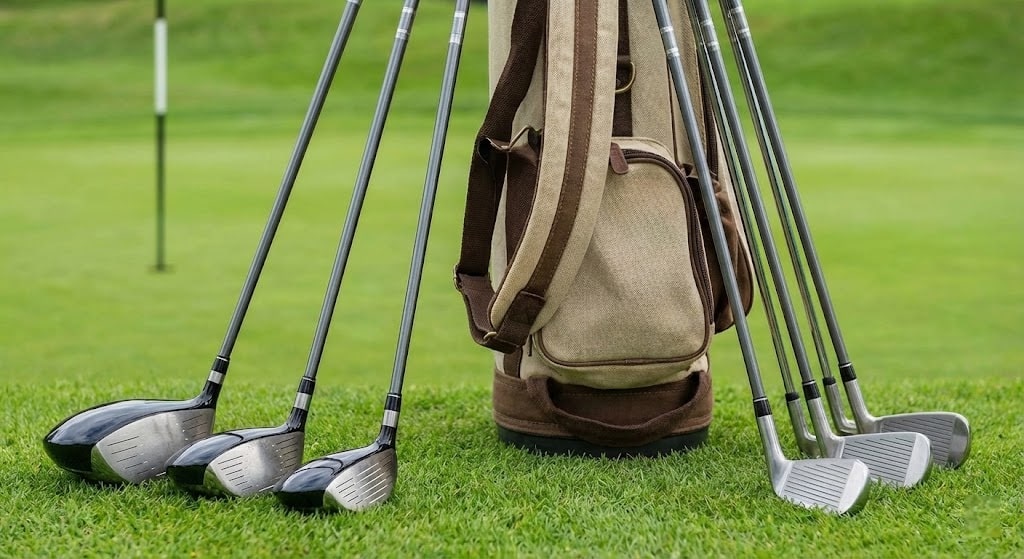
Launch Angle, Spin Rate, and Trajectory Comparisons
Distance only tells part of the story. You need to understand what happens between impact and landing to make the right club choice.
Here’s what you need to know: launch and spin depend on the head, loft, shaft, your strike and how you deliver the club, and there’s no general number that says one category launches higher or spins more than the other.
But don’t assume higher launch always wins. One club might fly higher for you and lower for the next golfer, so check your own launch, spin and landing with each one before you count on it into the wind or into a green. Hybrids feature a lower center of gravity compared to irons, which helps launch the ball higher from difficult lies like rough or sand.
The real differentiator? How each one plays from your lies. A lot of golfers reach for a hybrid in rough and on uneven lies, but the result depends on the lie and the strike, and fairway woods are built to play from short rough too.
Forgiveness and Performance From Various Lies
When you’re staring at a ball half-buried in the rough or sitting down on a tight lie, club design matters far more than loft numbers on the sole.
Hybrids are a popular pick here, with compact heads shaped closer to an iron, though the result still depends on the lie and your strike. That shorter shaft gives you control when your footing’s questionable or you’re reaching into a fairway bunker. These clubs are particularly confidence-boosting for mid to high handicappers who struggle with traditional long irons. If you need the ball to come in steep and stop, check that your hybrid actually does that, because launch and spin vary by design. As intermediate clubs combining features of both woods and irons, hybrids can be easier to launch for some players, but that’s something to test, not a given.
Fairway woods have longer shafts, which can make an awkward stance harder to manage, but they’re designed to play from the fairway and short rough as well as the tee. Whether the bigger head works for you out of the rough is something to test from those lies.
The verdict: neither club wins every lie. Hit both from the lies you face most and keep the one with the more playable miss.

Matching Club Selection to Your Swing Speed
Your swing speed determines whether fairway woods or hybrids actually perform as advertised, or become expensive decorations in your bag.
If you’re swinging your driver above 100 mph, fairway woods deliver their promised distance advantage. You’ll generate enough ball speed to maximize those longer shafts and lower lofts. A 3-wood becomes a legitimate weapon off the tee and fairway.
Drop into the 85 to 100 mph range, and the equation shifts. Hybrids can be easier to launch for some golfers here, so test one against a fairway wood in the same slot. You’ll find them more versatile for approach shots and tight lies.
If you’re in this range, my Performance Golf Easy 5 review covers one more club to test.
If your speed is on the slower side, a hybrid is worth a look, but it isn’t automatic. Test it against a higher-lofted fairway wood, since both are more forgiving options than a long iron. Proper club fitting should also consider your attack angle and tempo alongside swing speed to truly optimize performance.
Strategic Course Management With Woods and Hybrids
Knowing which club to pull doesn’t start with distance; it starts with reading the situation in front of you.
Your hybrid is often chosen for rough and uneven lies, but the result still depends on the lie and your strike, so don’t assume it beats a fairway wood every time. If you’re firing at a raised green, check that it actually launches higher and stops faster for you.
Fairway woods are built for the tee, the fairway and short rough. But drop one into deep rough, and that large clubhead grabs grass before it reaches the ball. When hitting your hybrid, position the ball closer to the center in your stance to enable a downward trajectory for solid contact.
Here’s the structure: pick the club that fills your yardage gap and gives you the more playable miss from the lies you face. Since individual swing characteristics like tempo and strength affect how each club performs, a professional fitting can help you determine the ideal mix of woods and hybrids for your game.

Frequently Asked Questions
How Often Should I Replace My Hybrid or Fairway Wood Grips?
You should replace your hybrid and fairway wood grips every 12 to 18 months, or roughly every 40 to 50 rounds. That’s the real benchmark, not the “they’re fine until they fall apart” mentality I see constantly. If you’re grinding through 75-plus rounds annually, cut that timeline to 6 to 9 months. Watch for slick spots, cracks, or lost tackiness; these kill your control before you realize it.
Can I Use the Same Shaft in Both Hybrids and Fairway Woods?
You generally can’t swap shafts directly between hybrids and fairway woods. Here’s the catch: connector sizes differ, hybrids use .370-inch hosels while fairway woods use .335-inch. Even within the same brand, you’ll need specific connectors for each club type. Beyond compatibility, hybrid shafts are shorter and often slightly heavier for control, while fairway wood shafts prioritize distance. Don’t force a mismatch; get properly fitted for each.
What Is the Ideal Gap in Degrees Between Consecutive Clubs in My Bag?
The ideal gap is 4-5 degrees between your woods and hybrids, then 3-4 degrees between irons, and 4-6 degrees for wedges. Don’t get too caught up in exact numbers; what matters is consistent 10-15 yard carry gaps between clubs. If you’re seeing awkward yardage bunching or massive distance jumps, your loft gaps need adjusting. Check your actual on-course distances, not spec sheets.
Are There Specific Hybrid or Fairway Wood Brands Better for Beginners?
Yes, and you should ignore the marketing noise. For beginners, I’d point you toward the PING G400 or Cobra DS-Adapt hybrids; they’re genuinely forgiving and launch the ball high without requiring perfect contact. For fairway woods, the Callaway Big Bertha B23 and PING G425 deliver the forgiveness you actually need. Skip the adjustable features for now; focus on clubs that make getting airborne effortless.
How Does Altitude Affect Performance Differences Between Hybrids and Fairway Woods?
At altitude, thinner air changes things. You’ll see both clubs fly farther, but whether a hybrid or a fairway wood handles that better comes down to your own launch and spin, so check both at altitude.
Conclusion: Golf Woods vs Hybrids
You don’t have to pick sides in this debate. The smartest play is carrying both and knowing when to reach for each. Use your fairway wood when you need raw distance from clean lies. Grab your hybrid when versatility matters, tight lies, rough, or shots requiring a steeper descent. Your bag has room for both tools, so use them strategically.

About the author
Paul Liberatore
Paul Liberatore is the founder of Golfers Authority and a former three-year golf gear contributor to Sports Illustrated. He tests golf equipment hands-on to help golfers make better buying decisions.