
Most golfers play a ball built for a swing speed they don’t have, and it costs them yards off every tee. I tested 62 golf balls. These are the 14 best golf balls of 2026, sorted into three swing-speed bands. If you swing under 85 mph, start with the Callaway Supersoft.
The Short Answer
The Callaway Supersoft is the best golf ball for most golfers under 85 mph. It’s $26.99 a dozen. A low compression core is the only thing that lets a slow swing actually squash the ball, and that’s where your ball speed comes from. Between 85 and 100 mph, the PXG Xtreme Tour gives you a real cast urethane cover at $39.99, well under tour money. Over 100 mph, the Titleist Pro V1 is still the ball everything else gets measured against. It’s $57.99, and its box-to-box consistency is the reason why.
Every pick at a glance
All 14 picks, with the swing-speed band each one is built for and the price I could verify. Prices run from $19.99 to $70.00.
| Product | Price | Swing speed | Best for | Verdict |
|---|---|---|---|---|
| Callaway Supersoft | $26.99 | Under 85 | Best overall for slow swings | Low compression, soft cover, half a tour ball’s price |
| Titleist Velocity | $24.99 | Under 85 | Best for pure distance | Low spin, hard cover, all carry and rollout |
| TaylorMade Distance+ | $21.99 | Under 85 | Best value | Low compression at the lowest real price |
| Callaway Warbird | $19.99 | Under 85 | Best under $20 | Big core, thin cover, out-spins most two-piece balls |
| Wilson DUO Soft | Check current price | Under 85 | Softest feel | Lowest compression here, and it caps out fast |
| PXG Xtreme Tour | $39.99 | 85 to 100 | Biggest surprise | Cast urethane spin at $18 under tour price |
| OnCore ELIXR | About $30 | 85 to 100 | Best ball nobody knows | Three-piece urethane, hard to find in shops |
| Bridgestone e9 Long Drive | $26.97 | 85 to 100 | Best distance value | Surlyn cover, 330 dimples, built to go |
| Vice Pro Soft | Check current price | 85 to 100 | Best direct-to-consumer buy | Cast urethane under 95 mph, editions sell out |
| Callaway Chrome Tour X | $57.99 | 100+ | Best for alignment | Firm, with Triple Track, and oversold on spin |
| TaylorMade TP5 | $57.99 | 100+ | Best all-round tour ball | Five layers, each firing at a different speed |
| Titleist Pro V1 | $57.99 | 100+ | Best overall tour ball | Gradient core, and every ball in the box matches |
| Srixon Z-Star XV | $54.99 | 100+ | Most durable | Coated urethane that survives a bunker round |
| Titleist Pro V1 RCT | $70.00 | Any, indoors | Best for simulators | A radar mark, so spin gets measured not guessed |
How swing speed decides your golf ball
Compression is the whole argument, and it’s simpler than the marketing makes it sound. A golf ball stores energy by deforming at impact. Then it gives that energy back as ball speed. A firm tour ball needs real force to deform. Hit one at 78 mph and it barely moves, so you get a fraction of what you paid $57.99 for.
That deforming starts with the core, and I followed the whole process in how golf balls are made, from the rubber mix to the X-ray check.
The other end works the same way in reverse. Hit a low compression ball at 110 mph and you over-compress it. The ball goes mushy and you lose speed.
That’s why this guide sorts by speed instead of price or brand. The 14 balls below sit in three bands: under 85 mph, 85 to 100, and 100 and up. There’s one specialist at the end for simulator use. Within each band, the pick that suits the most golfers leads.
The short version lives in my guide to which golf ball to use for your swing speed, which boils it down to compression, cover and cost per ball.
Compression numbers give you a rough map. Under 85 mph you want something in the 40 to 60 range. From 85 to 100 you can load a mid-compression urethane ball properly. Over 100 you can use a firm tour ball and you’ll lose distance on anything soft.
One thing the bands won’t tell you is how fast you actually swing. Most golfers guess high. If you’ve never had it measured, do that before you spend $57.99 on a ball, because the gap between a guessed 100 mph and a real 88 mph changes which half of this page applies to you.
A note on the numbers before you scroll. Prices here were checked against live retailers on September 3, 2026, and the method is spelled out further down. Where I couldn’t stand behind a figure, there isn’t one.
Under 85 mph
Under 85 mph you want a low compression ball, roughly 40 to 60, and none of these five costs more than $26.99. At this speed a firm tour ball never deforms enough to give your energy back, so paying $57.99 actively loses you distance.
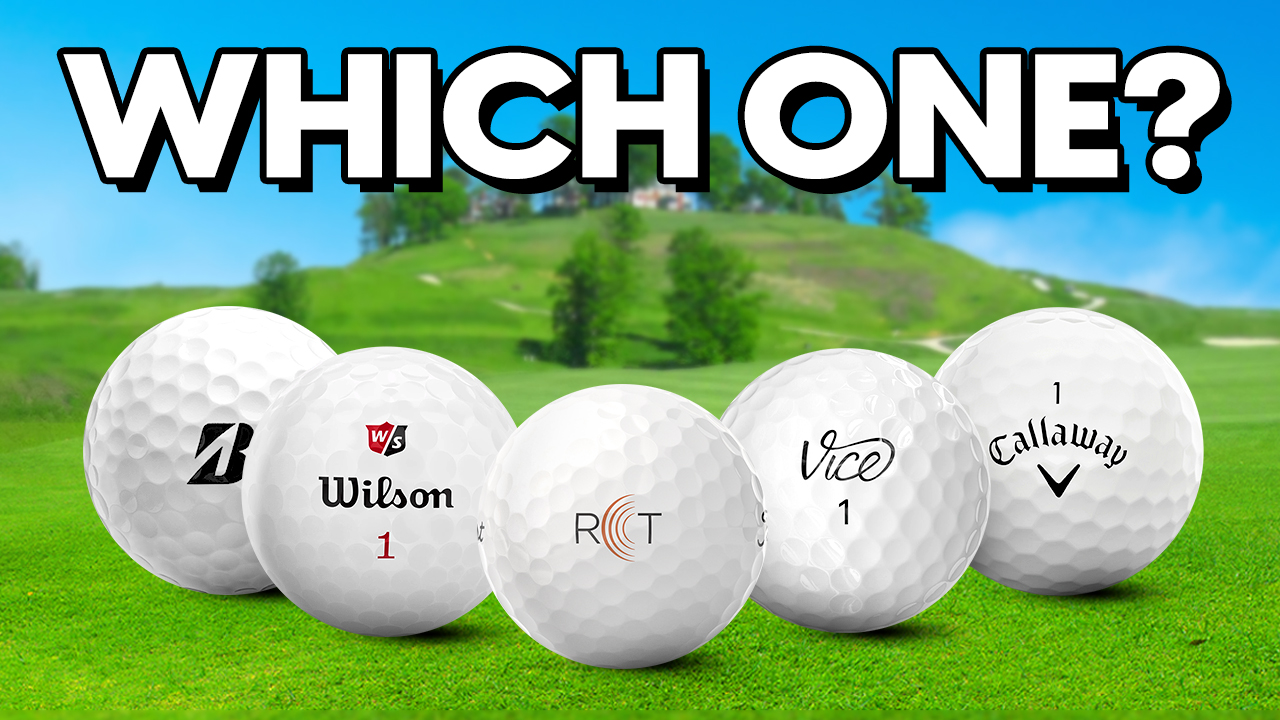
Best overall for slow swings: Callaway Supersoft

The pick for most golfers under 85 mph, at $26.99 a dozen. The Supersoft is a low compression two-piece ball. At this speed, low compression isn’t a comfort feature. It’s the mechanism. A firm ball off a slow swing doesn’t deform enough to hand the energy back, so it leaves the face slower than your swing deserves. The Supersoft deforms properly where a tour ball kind of just sits there.
The cover is soft enough that chips don’t skitter off the face the way they do off a distance ball. So you keep a usable amount of touch. Callaway’s Hyper Elastic SoftFast core does the work off the tee. In practice that’s a higher launch with less sidespin, and that combination is what stops a slice becoming a lost ball.
Price matters here more than golfers admit. At $26.99 you’re paying roughly half what a tour ball costs. GolfBalls.com and PGA Tour Superstore agree on that. Lose three in a round and it’s an annoyance, not a decision you make on the tee. I went deeper on the ball itself in my Callaway Supersoft review.
Anyone who’d rather grab a box today than wait on shipping can use my guide to where to buy golf balls near me, from big-box stores to specialty shops.
My Volvik Crystal Soft review covers another soft ball at roughly half the price of a tour urethane ball, and its wedge spin from 40 to 60 yards surprised me.
The limitation: it’s a two-piece ball. It won’t spin on a wedge like a urethane cover does. If you score by nipping a wedge and watching it check, this one runs out on you every time.
When wedge spin is the deal-breaker, my Chrome Soft vs Supersoft breakdown shows what Callaway’s urethane ball adds and what it costs per dozen.
Who should skip it:
- Anyone swinging over about 90 mph, who’ll get more from a urethane ball.
- Golfers whose short game is the strongest part of the bag.
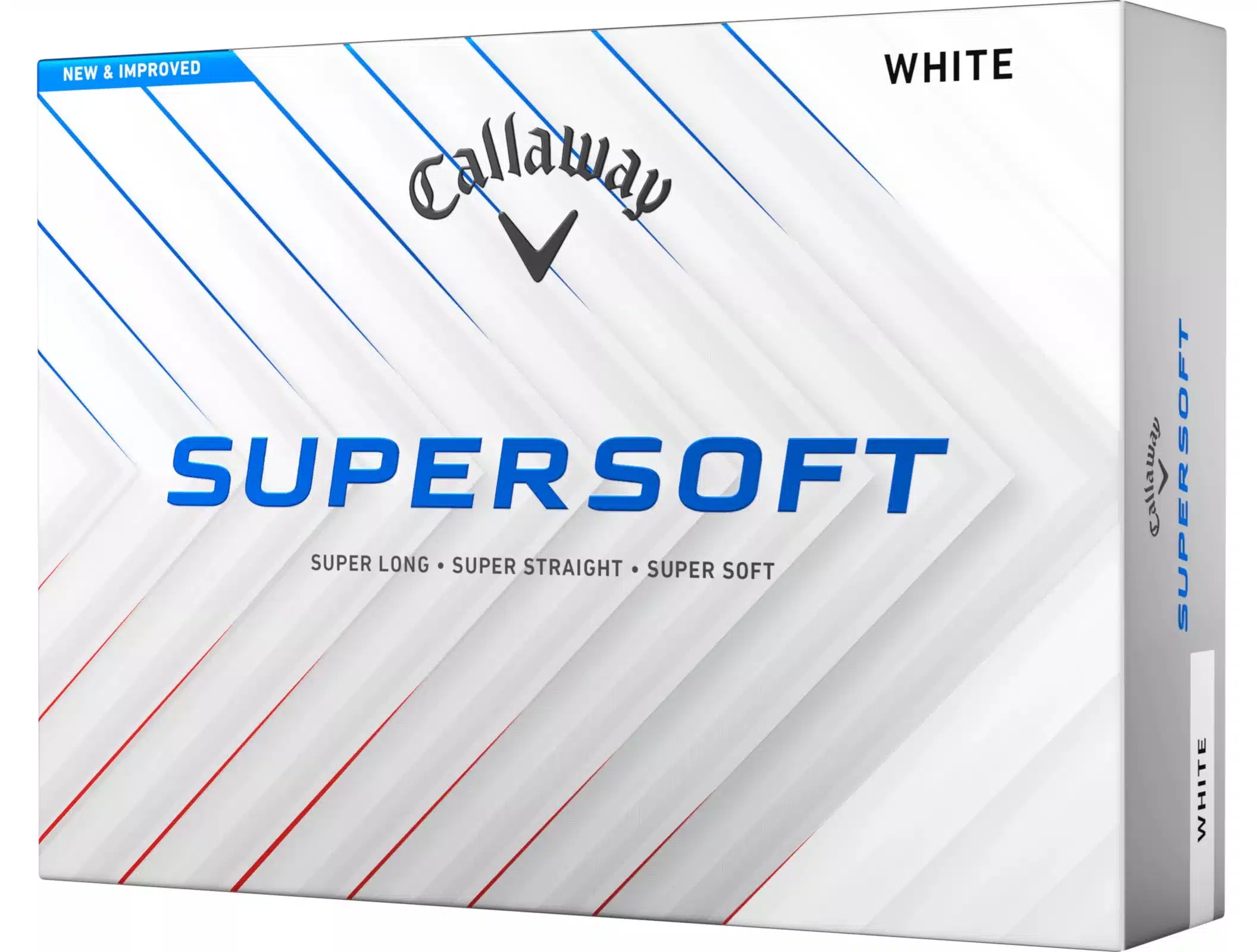
Unlock your best game with Callaway Supersoft golf balls, engineered for exceptional distance, incredible softness, and precise control to elevate every shot.
Best for pure distance: Titleist Velocity

The distance pick at $24.99, down from $29.99. Everything about the Velocity points at one outcome. It runs a high-speed LSX core under a hard NaZ+ cover, with a 350-dimple octahedral pattern. The design goal is maximum carry and minimum spin.
Just know that swing speed matters more than the brand here, and my guide to the golf balls that go the furthest matches compression to how fast you swing.
Low driver spin is what stops a ball ballooning. A slow swing with too much spin sends the ball climbing, stalling, then dropping short. Into wind it’s worse. The Velocity keeps the flight flat and hard, then rolls out when it lands. If you’re watching drives climb and die in a breeze, this is the mechanical fix.
Titleist refreshed it to a 2026 model. Two sellers have it at $24.99, marked down from $29.99. That’s one of the better value buys from a tour brand this year. The full Titleist Velocity breakdown has the rest of the numbers.
The limitation: the hard cover you’re buying for distance is the same cover you’re stuck with 40 yards out. It feels like a rock on a delicate chip and it releases past the hole.
Who should skip it:
- Golfers who chip and pitch more than they putt.
- Anyone who cares how a ball feels off the face.
Titleist Velocity golf balls are engineered for maximum speed and distance without sacrificing control. Whether you're a pro or weekend player, these balls boost your game with advanced technology designed to enhance every shot.
Best value: TaylorMade Distance+

The most ball you can buy for $21.99. The Distance+ is a two-piece with a low compression core and an ionomer cover. It’s the cheapest ball here that still behaves like a designed product instead of a commodity.
Low compression is the part that earns its keep at this speed. It’s built so an average swing genuinely loads the core. You get a higher launch and a long rollout, not the dead thud a hard budget ball gives you. PGA Tour Superstore has it at $21.99. GolfBalls.com sells a double dozen for $40.00, which lands near $20 a dozen if you buy a season at a time.
That’s the real argument for it. If you lose four or five a round, ball cost stops being a rounding error. It starts shaping how aggressively you play. Buying two dozen at a time takes that out of your head.
The limitation: it isn’t soft off the putter. There’s an audible click at impact, and if you’re coming off a urethane ball it’ll feel cheap for the first nine holes.
Who should skip it:
- Anyone who judges a ball by feel on the greens.
- Golfers who’ve already decided they want urethane.
Looking for explosive distance off the tee? TaylorMade Distance+ golf balls are engineered for pure speed and reliable control, giving every golfer the edge they need to dominate the fairway.
Best under $20: Callaway Warbird

The budget pick at $19.99, and better than the price suggests. The Warbird has been in Callaway’s line for decades. It survived because the design is honest about what it is: a large high-energy core under a thin cover. In plain terms, most of the ball is engine.
Volvik plays in this same budget space with a three-piece ball, and my Volvik Vista3 review explains how its 90-compression build fits swing speeds of roughly 70 to 100 mph.
That’s what gets a slower swing airborne. High launch, low spin, and enough rollout that a 200-yard carry finishes noticeably further down the hole. The current version sells as the Warbird Distance+. GolfBalls.com has it at $19.99. That was the only seller I could pin down, so read the figure as a ballpark.
Another cheap soft ball for slower swings is in my Noodle Long and Soft golf balls review, a budget dozen with high launch and low spin.
One more low-compression option for that slower group is the 55-compression ball in my OnCore Avant 55 review, built for high launch and low driver spin.
One thing about this ball genuinely surprised me. In the same independent robot testing that measured Callaway’s tour balls, the Warbird Distance+ came out as the second-highest-spinning two-piece ball in the field. A $19.99 ionomer ball out-spinning its whole price bracket honestly isn’t what this category usually does.
The limitation: a thin cover scuffs. Two cart-path bounces and it looks rough. It won’t survive a bunker-heavy round looking new.
Who should skip it:
Anyone over 90 mph.
Golfers who keep a ball in play three or four rounds.
Callaway Warbird Golf Balls deliver explosive distance and high launch with a durable HEX aerodynamic design for straight, long shots.
Softest feel: Wilson DUO Soft

The lowest compression ball in this guide. Wilson has spent years pushing its compression numbers down, and the DUO Soft is where that landed. Of the 14 balls on this list, nothing else compresses this easily. At slow speeds that’s a real advantage, not a marketing line. Full compression is where your ball speed comes from, and a very soft ball still compresses fully at speeds where the firmer picks on this list won’t.
It feels different off the putter too. That’s what most golfers notice first, and it’s what keeps them buying. A soft ball gives you feedback on pace. A hard distance ball simply doesn’t transmit it.
No two sellers agreed on a price for this one, so there’s no number here. Check what it’s going for before you buy.
The limitation: soft has a hard ceiling. Swing over about 90 mph and you over-compress it. The feel goes mushy and the ball comes up short. It’s the narrowest fit here.
Who should skip it:
Golfers whose swing is still getting faster.
Anyone with real clubhead speed.
Experience unmatched softness and top distance with Wilson Soft DUO Golf Balls, engineered for maximum energy return, straight flight, and ultimate feel.
85 to 100 mph
This is where most golfers actually live. It’s also where the decision gets harder, because at these speeds you can genuinely compress a premium ball. That opens up cast urethane covers and the greenside spin they bring. All four picks here sit between $26.97 and $39.99.
Biggest surprise: PXG Xtreme Tour

$39.99, and the ball that surprised me most this year. The Xtreme Tour is a three-piece with a cast urethane cover. Cast urethane is the expensive way to make a cover. It’s also what lets a ball grab wedge grooves, so an approach stops near where it lands instead of releasing through the back.
The price against what it does is the story. Cast urethane, tour-level greenside spin, real ball speed off the tee, all at $39.99. That’s $18 under a Pro V1 or a TP5. PXG direct and golfusa.com both list it there. There’s a firmer Tour X version as well, built for players who shape shots on purpose, and it spins noticeably less off the driver.
Tour players lean hard toward one brand, and my breakdown of what balls the pros play shows Pro V1 and Pro V1x at roughly 70% of the PGA TOUR.
I didn’t expect a PXG ball to be this good. It’s the one on this list I’d tell a mid-handicapper to try first. I covered both models in my PXG Xtreme Tour and Tour X review.
The limitation: PXG sells direct, so you’re not walking into a pro shop for a sleeve. If you like it, you have to remember to reorder. And the Tour X is genuinely too firm for a lot of golfers who assume the X badge is the better ball.
Who should skip it:
- Anyone under about 85 mph, who won’t compress it.
- Golfers who need to buy balls on the way to the course.
Experience elite performance with PXG Xtreme Tour and Tour X Golf Balls, engineered for maximum distance, control, and exceptional feel on every shot.
Best ball nobody knows: OnCore ELIXR

About $30 from OnCore direct. This is a three-piece urethane ball from a small American company, and the design idea is genuinely unusual. OnCore builds the ELIXR around a hollow metal core, which pushes mass out toward the edges of the ball.
Moving weight outward buys you stability. A ball with more mass at the perimeter resists tumbling and holds its line, and that shows up as tighter dispersion rather than extra yards. Add a urethane cover and you’ve got greenside spin and a soft feel well under tour-brand money.
OnCore’s own site puts the ELIXR at $30 a dozen. None of the other retailers I checked stocked it, so that’s a one-seller figure.
The limitation: availability. It isn’t on a shelf at your local shop, and a ball you can’t buy conveniently is one you’ll drift away from. There’s no wide independent testing on this model to point at either.
Who should skip it:
- Anyone who wants the ball their playing partners recognise.
- Golfers who buy balls in person.
Experience unmatched performance with Oncore Elixir Golf Balls, engineered for maximum distance, control, and a soft, consistent feel on every shot.
Best distance value: Bridgestone e9 Long Drive

$26.97, and the name tells you the whole strategy. The e9 Long Drive is a two-piece ball with a Surlyn cover and a 330-dimple design. Bridgestone built it to get the ball off the tee and keep it moving.
The dimple work earns its keep. A stable pattern gives you a penetrating flight that won’t climb and stall in wind, and that’s exactly the failure that costs mid-speed golfers distance on breezy days. It carries flat and it runs.
Amazon lists it at $26.97 and Walmart matches, so this one is two-source verified. If you want to compare it against the e6 and e12, that’s the best Bridgestone golf balls guide.
The limitation: Surlyn is a hard cover. This is a distance ball first and a short-game ball a distant second. You’ll feel that on anything delicate inside 30 yards.
Who should skip it:
- Anyone who’d rather pay a few dollars more for urethane.
- Golfers who score with their wedges.
Experience premium performance with Bridgestone e9 Golf Balls—precision-engineered for control and distance on every shot.
Best direct-to-consumer buy: Vice Pro Soft

Cast urethane built specifically for sub-95 mph swings. Vice sells direct with no retail middleman, and that’s the whole reason its urethane balls undercut the tour brands. The Pro Soft is a three-piece with a cast urethane cover over a low compression high-energy core.
That pairing is unusual, and it’s why the ball is here. Low compression normally means an ionomer cover and no greenside spin. Getting a genuinely soft core under real cast urethane means a golfer at 88 mph gets the ball speed and the wedge spin together. There’s a long alignment line moulded on for putting, too.
Vice’s own product page puts the fit at under 95 mph driver speed. I couldn’t get a second seller to agree on a current price for the standard Pro Soft, so there’s no figure here.
The limitation: Vice runs limited colour editions constantly and they sell out. The one you find today may be gone next month. If you want to reorder the same ball for years rather than months, buy the plain white Pro Soft instead of a colour run.
Who should skip it:
- Anyone over 95 mph, who’ll over-compress it.
- Golfers who want a ball with a decade of shelf stability behind it.
Experience premium performance with VICE Pro Soft Golf Balls, designed for exceptional feel, control, and distance on every shot.
100 mph and up
These are the tour balls, and they run from $54.99 to $57.99. Before you spend it, be honest about your speed. Under about 100 mph you’re paying for performance you physically can’t reach, and one of the cheaper picks above will go further.
Best for alignment: Callaway Chrome Tour X

$57.99, and note the name change. The Chrome Tour X is the 2026 model that replaced the Chrome Soft X. Search the old name now and you’ll find a discontinued product. The X is the firmer of the two Chrome Tours, and firm is what a fast swing needs to hold driver spin down.
Callaway’s Tour Fast Mantle is the headline change, described as 16 percent more rigid to create more ball speed. That gain is real but small, and nobody has published a controlled generational test, so treat it as a refinement rather than a reason to switch. Manufacturing consistency is confirmed, on a small sample. The Triple Track version puts three alignment lines on the ball instead of one, which cuts down the fiddling on the green.
Here’s the part the marketing won’t tell you. The Chrome family gets sold on short-game spin, and the independent evidence doesn’t support that. Measured against its peers, this ball sits on the low-spin side around the green. It’s a strong tee-to-green ball that’s oversold on wedge spin. The evidence behind that sits in my Chrome Tour X review.
Two more honest notes. Callaway’s claim that the 2026 balls are faster is contradicted for this model against the market leader, in the only published head-to-head of the two. And the spin separation between long game and short game narrowed this generation instead of widening as advertised.
The limitation: at $57.99 you’re paying tour money for a ball whose most-marketed attribute is its weakest. If greenside spin is what you’re buying, this isn’t the right $57.99.
Who should skip it:
- Golfers chasing maximum wedge spin.
- Anyone under 100 mph.
- Players who’d take the standard Chrome Tour, which is longer at the same price for most swings.
- Slower swingers, who should look at the Callaway ERC Soft. It won a gold medal for tee-to-green performance at 78 mph in the same robot test, and it costs far less.

Crush longer drives and stick approach shots with Callaway Chrome Tour X 2026 golf balls, the tour-level beasts blending seamless urethane cover tech for max spin and ball speed. Is this the best golf ball 2026 upgrade for low-handicappers? Dive into our exclusive review.
Best all-round tour ball: TaylorMade TP5

$57.99 for the five-layer ball. Everyone else in this bracket builds three or four pieces. TaylorMade added a fifth, and the reason is the clearest engineering argument in the category.
Each layer activates at a different impact speed. A chip only compresses the soft outer layers, so you get spin. A driver compresses through to the firm inner core, so you get speed with low spin. One ball behaves differently depending on the club, and that’s what golfers are really asking for when they say they want a ball that does everything.
It launches high and lands steep, so approach shots stop near their pitch mark instead of bounding over the back. GolfBalls.com lists the 2026 TP5 at $57.99, and PGA Tour Superstore matches that on the TP5x. My TaylorMade TP5 review walks the layer stack club by club.
The limitation: the soft cover marks up. You’ll see scuffs by the back nine, and at $57.99 a dozen that’s a running cost, not a cosmetic complaint.
Who should skip it:
- Golfers under 100 mph.
- Anyone who loses or scuffs three balls a round.
Experience top-tier performance with TaylorMade TP5 Golf Balls designed for exceptional distance, spin control, and soft feel on every shot.
Best overall tour ball: Titleist Pro V1

$57.99, and still the benchmark. The core is the part most summaries skip. The Pro V1 uses a gradient core, soft in the middle and progressively firmer toward the outside, with no hard boundary between layers. That gradient is how it produces fast ball speed and low driver spin without giving up the soft feel a cast urethane cover delivers on a wedge.
Consistency is the stronger argument. Titleist’s tolerances mean every ball in the box performs the same. When you’re dialling in a 150-yard number, that’s worth more than any single spec on the sheet. Two sellers had it at $57.99 when I checked. There’s a longer Titleist Pro V1 review on the site if you want the construction detail.
The limitation: you’re paying a premium for the last two or three percent. Several balls higher up this page get you most of the way there for half the money, and the gap is smaller than the price difference implies.
Who should skip it:
- Golfers losing more than a couple of balls a round.
- Anyone under 100 mph.
Experience unmatched precision and distance with the Titleist Pro V1 2025 Golf Balls, designed for elite golfers seeking top performance.
Most durable: Srixon Z-Star XV

$54.99, and the toughest cover here. Srixon puts a thermoplastic urethane cover on the Z-Star XV with its Spin Skin coating baked on top. Urethane is soft by nature, and soft normally means it scuffs. The coating is doing real work. Play a full round, catch a bunker lip, and you’ll finish with a ball that’s still playable.
That same coating grabs the grooves. You get heavy wedge spin and a ball that checks hard on a full shot, which is what the XV gets bought for. It’s the firmer of the two Z-Stars, built for the faster end of the range.
Srixon’s own store has the current generation at $54.99. One seller again, so hold that number loosely. The cover holds up better than the price suggests, and my Srixon Z-Star XV review shows why.
The limitation: firmer is less forgiving. If your speed isn’t genuinely there, the standard Z-Star is the right ball and the XV will feel harsh and come up short.
Who should skip it:
- Anyone under 100 mph.
- Golfers hitting indoors this winter, because none of these 13 balls tells the truth on a launch monitor.
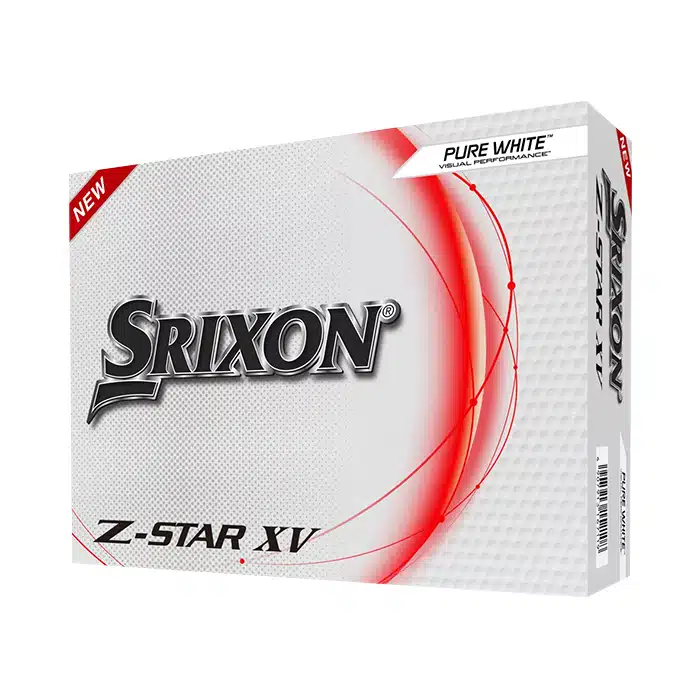
For golfers demanding top performance, the Srixon Z-STAR XV stands out as the best ball for maximizing distance and precision. Explore its pro-level features now.
The specialist
One ball here isn’t bought for the course at all. At $70.00 a dozen the Pro V1 RCT exists so a radar launch monitor can measure your spin indoors instead of estimating it.
Best for simulators: Titleist Pro V1 RCT

$70.00 a dozen, and the only ball here you buy for data instead of golf. RCT stands for Radar Capture Technology. The difference is a radar-reflective mark applied to one of the casing layers. That’s the whole product change, and it lets a radar launch monitor measure your spin directly instead of estimating it from launch conditions.
Space is why it matters. A radar unit needs a long ball flight to read spin properly, and a standard ball indoors gives it almost nothing. The RCT needs roughly eight feet. In a tight garage bay, that’s real numbers instead of a guess.
The measured gap is large. In first-party testing the RCT averaged a 167 rpm gap to a reference simulator on a seven iron. A standard Pro V1 on the same rig averaged 757 rpm. This is the ball I use in my own simulator, and I’ve said so on camera in my launch monitor testing video.
Two honest caveats, and both cut against the sale. Titleist says the RCT performs identically to the stock Pro V1, and there’s no published evidence either way. The claim that RCT is the best available fix for indoor radar spin is also contradicted on at least one device. A metallic dot sticker on a standard $58.00 Pro V1 measured roughly ten times closer to the reference than the RCT did on a FlightScope Mevo+.
There’s a version of this decision that doesn’t involve the ball at all. If your unit is camera-based rather than radar, it reads the ball optically and the mark does nothing for you. Check which type you own before spending the money, because the two technologies fail in completely different ways. My Titleist Pro V1 RCT review tests it against a standard Pro V1 indoors.
One more thing worth knowing before you commit. The mark sits on a casing layer under the cover, not in the core, so it isn’t something that wears off with a few range sessions the way a painted dot would. What does wear is the cover, same as any Pro V1, and a scuffed ball reads no better on radar than a standard one. Treat a dozen RCTs as practice inventory with a shelf life, not as a permanent upgrade to your bay.
The limitation: $70.00 against $58.00 for a standard Pro V1 is a $12.00 per-dozen premium for a reflective mark. The RCT advantage also narrows sharply as loft increases, so a ton of the benefit shows up on long clubs and very little of it on wedges.
Who should skip it:
- Everyone hitting outdoors.
- Anyone using a camera-based launch monitor, which doesn’t need the mark.

Keep your game sharp all winter. Our Titleist Pro V1 RCT golf ball review shows how to get flawless radar tracking during indoor studio practice sessions. Unlock true analytics.
Frequently Asked Questions
How can I find the right golf ball for my swing speed?
Start by measuring your driver clubhead speed. Any golf shop or launch monitor gives you that in a few swings. Under 85 mph, choose a low compression ball in the 40 to 60 range, like the Callaway Supersoft or the Wilson DUO Soft. Between 85 and 100 mph you can compress a mid-compression urethane ball such as the PXG Xtreme Tour or the Vice Pro Soft, which buys you greenside spin without wasting speed. Over 100 mph, a firm tour ball like the Pro V1 or the TP5 holds up. Then test two candidates side by side on the course, comparing carry distance and how each behaves on approach shots.
What golf ball goes the farthest with a slow swing speed?
Under 85 mph, distance comes from low compression and low spin, not from a tour ball. The Titleist Velocity at $24.99 is built for exactly this. It runs a high-speed core under a hard cover with a low-spin aerodynamic pattern, so the ball flies flat and rolls out instead of climbing and stalling. The Callaway Warbird at $19.99 and the TaylorMade Distance+ at $21.99 work on the same principle for less. The mistake slower swingers make is buying a premium tour ball. It’s too firm to compress properly, and it actually costs them yards.
Does an expensive golf ball actually make a difference?
It depends on your speed and your short game. Above roughly 100 mph, a tour ball’s gradient core and cast urethane cover give you measurable greenside spin and a consistency a two-piece ball can’t match. Below about 85 mph you can’t compress a firm tour ball properly, so you’re paying $57.99 for performance you never reach. The honest middle answer is that cover material matters more than price. A $39.99 cast urethane ball like the PXG Xtreme Tour delivers most of what a $57.99 ball does. Weigh how many balls you lose per round too.
What is the easiest golf ball to hit straight?
Straightness comes from low spin, because sidespin is what curves the ball. A two-piece low-spin ball reduces the sidespin your swing puts on it, so a slice or a hook curves less than it would with a high-spin tour ball. The Callaway Warbird and the Titleist Velocity are both built this way, and they’re the most forgiving picks in this guide for a golfer fighting a curve. The trade-off is real. The same low spin that keeps drives straighter also means the ball won’t stop quickly on a green.
How often should I change golf balls?
A urethane-covered tour ball holds full performance for roughly three to five rounds of normal play. A single cart-path strike or bunker lip can end it early. Check for visible scuffing or cover damage instead of counting rounds, because a scuffed cover changes the ball’s aerodynamics and dispersion in ways you’ll feel before you see. Harder Surlyn and ionomer balls like the Bridgestone e9 or the Titleist Velocity last considerably longer. The exception is the Srixon Z-Star XV, whose Spin Skin coating exists specifically to resist scuffing on an otherwise soft urethane cover.
How I picked
These 14 came out of testing 62 golf balls. The method matters, because plenty of ball guides are catalogue pages with links stapled on.
Every figure was checked against two separate US retailers on September 3, 2026. Nine of the 14 cleared that bar. Three turned up at a single seller, and each of those entries flags it. Two came back with nothing I trusted, so they carry no number at all. Honestly, a price I can’t stand behind is worse than no price.
Specifications come from manufacturer documentation and our own research reports, not from press releases. Where an independent measurement contradicts a manufacturer claim, the contradiction is in the entry. That’s why the Chrome Tour X entry says its greenside spin is oversold, and why the RCT entry names the sticker test that beat it.
On first-hand use, I’ll only tell you I’ve played a ball when I actually have. The PXG Xtreme Tour and the Pro V1 RCT are balls I’ve used and talked about on camera. The rest of this guide runs on verified specifications, checked prices and independent measurement, and it says so instead of inventing a round I didn’t play.
Inside each band, the ball most golfers at that speed should buy comes first. Not the one paying the biggest commission.
What to look for in a golf ball
Compression, matched to your speed. This is the one decision that changes your results. Under 85 mph you want 40 to 60. Between 85 and 100 you can load a mid-compression urethane ball. Over 100 you can use a firm tour ball, and you’ll lose distance on anything soft. Don’t know your driver speed? Most golf shops will measure it free, and it’s the most useful number you can bring to this decision.
Cover material, which decides your short game. Surlyn and ionomer covers are hard, cheap and durable, and they won’t spin on a wedge. Cast urethane is soft, expensive, and grabs the grooves, which is what makes a ball stop on a green. That’s the real line between a $19.99 ball and a $57.99 one. Far more than anything happening in the core.
Construction count, within reason. Two-piece balls are core and cover, built for distance and durability. Three-piece adds a mantle that separates driver spin from wedge spin. Five-piece goes further, with layers firing at different speeds. More layers isn’t automatically better. It’s only better if your swing reaches the inner ones. We break that down in 2-piece vs 3-piece golf balls.
How many you lose. Golfers skip this one and it changes the maths completely. Four balls a round at $57.99 a dozen is roughly $19.33 a round. The same four at $19.99 a dozen is about $6.66. If you’re still finding fairways inconsistently, the cheaper ball isn’t a compromise. It’s the correct answer. Used premium balls are worth a look too.
My Two Guys With Balls review is a good place to start, since they sell slightly used premium balls that are graded so you know what you’re getting.
Just know a refinished ball has been stripped and repainted, so you can’t always see what’s underneath, and my refinished golf balls explainer covers when they make sense.
Alignment aids, if you struggle to aim. Triple Track, KIL lines and the rest aren’t gimmicks for everyone. If you second-guess your aim on the greens, a long alignment line takes a decision away from you.

About the author
Paul Liberatore
Paul Liberatore is the founder of Golfers Authority and a former four-year golf gear contributor to Sports Illustrated. He tests golf equipment hands-on to help golfers make better buying decisions.