
You’re about to spend real money on a driver, a set of irons or a whole bag, and the order page wants you to pick stiff or regular. Pick wrong and you’re stuck with it, or paying to fix it. Here’s exactly how to choose the shaft flex for each club you’re buying, what beginners should do, and what to check besides the letter.
| Before you buy | Regular | Stiff |
|---|---|---|
| Who should start here | A golfer inside a maker’s Regular band, as a starting point to test | A golfer inside a maker’s Stiff band, as a starting point to test |
| What swing speed does | Narrows it down; it’s one input, not a full fitting | A faster swing doesn’t automatically mean Stiff |
| Tempo and transition | Helps pick flex and weight alongside head speed | A forceful transition doesn’t automatically require Stiff |
| Shaft weight to check | Callaway’s driver chart lists 55 to 70 grams | Callaway lists 60 to 75 grams, so weight overlaps between flexes |
| Near the line between bands | Test both flexes if you can | Test both flexes if you can |
| What to compare when you test | Ball speed, launch, spin, feel, sound and consistency | Ball speed, launch, spin, feel, sound and consistency |
Should You Buy Stiff or Regular Flex Golf Clubs?
Buy the flex your measured swing points to. And get that number before you order, because once the clubs show up, the shaft’s already in them.
That means getting your speed checked on a launch monitor or at a fitting first. Some clubs you order online have you pick your flex off a speed chart, and that chart only narrows it down. If you’re not sure whether it’s worth the trip, here’s when to get fitted for golf clubs.
Don’t trust the letter across brands, either. One company’s stiff can play like another company’s regular, and I break down what regular and stiff actually mean on a shaft in a separate guide.
And be honest with yourself here. Buying stiff because it sounds better, or because that’s what your buddy plays, is how you end up with a shaft that’s working against your swing instead of with it.

Should Your Driver and Irons Be the Same Flex?
They don’t have to be. Your driver and your irons are separate fittings, and your driver speed doesn’t tell you what flex your irons need.
So don’t assume the whole bag has to say S because your driver does. And don’t assume you have to mix, either. Matching letters all the way through isn’t wrong, and mixing isn’t wrong. What’s wrong is buying either one without checking.
That’s how my PXG fitting went. When I had the 7-iron in my hands, the fitter saw how much speed I was bringing and had me try a slightly stiffer shaft to see if it felt more stable and helped me strike it more consistently. Here’s that moment from my PXG fitting. The call came from what I was doing with the iron, and that’s how your irons should get picked too.
What Flex Should Beginners and High Handicappers Buy?
Your handicap doesn’t pick the flex. Your swing does. A high handicapper who swings fast can fit a stiffer shaft, and a low handicapper who swings smooth can fit regular.
If you’re new and buying your first set, your swing is still changing, so don’t overthink it and don’t overspend on a premium shaft. Get your speed measured before you buy and use it to pick the flexes worth trying. Then hit them and go with the one that gives you the best results and feels right. Recheck it when your game changes.
What Should You Check Besides the Flex Letter?
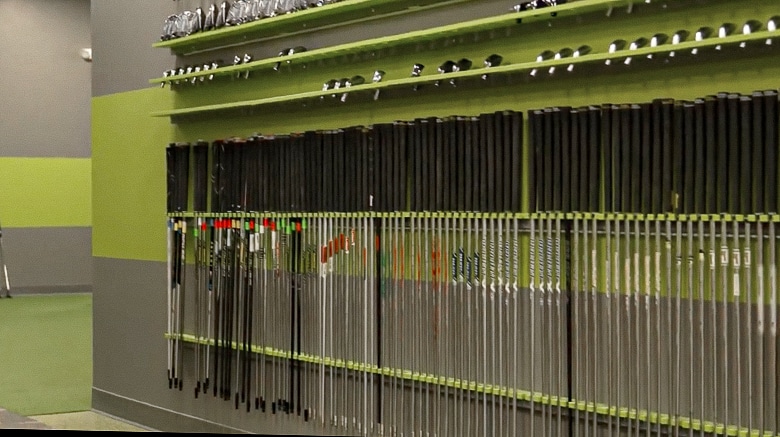
Check the shaft weight and the material, because they’re separate choices that change how the club feels and plays.
Weight is its own decision. There’s no rule that says regular shafts have to be light and stiff shafts have to be heavy. Two shafts in the same flex at different weights can feel very different, so if the spec sheet lists a weight, don’t skip past it.
Material is separate too. Steel or graphite doesn’t decide the flex, and graphite works for fast swingers too. Graphite iron shafts can be built light or strong, so a fast player can end up in graphite. If you’re torn between the two, here’s how graphite and steel shafts compare.
When Should You Reshaft Instead of Buying New Clubs?
Reshaft when you like the head and the shaft is the problem. If your driver head suits your eye and your game but the shaft feels wrong, a new shaft is worth trying before you replace the whole club.
Just don’t expect a shaft to fix everything. Putting a new shaft in a head that doesn’t suit you, or using one to cover up a swing problem, isn’t going to get it done.
Before you pay for it, hit your current club and the new shaft on a launch monitor and compare distance, dispersion, spin and how each one feels. If the new one doesn’t beat what you’ve already got, keep your money.
Frequently Asked Questions
Can a high handicapper use a stiff shaft?
Yes, if the swing fits it. Handicap isn’t what decides the flex, your swing is. So a high handicapper who swings fast can end up in stiff.
Can you mix stiff and regular flex in the same bag?
Yes. Your driver and irons get fit separately, so stiff in one and regular in the other is fine if that’s what your swings say. Just don’t mix them, or match them, without testing.
Should I reshaft my driver or buy a new one?
If you like the head, try a new shaft first. Compare it with your current setup on a launch monitor, and only pay for it if it beats what you’ve got. If you don’t like the head, a new shaft won’t change that.
Does steel or graphite change which flex I need?
No. Material and flex are separate choices. Pick the flex your swing fits, then pick steel or graphite on weight and feel, and don’t rule out graphite just because you swing fast.
Conclusion
The catch is that a fitting only tells you about the shafts you actually hit. Find a stiff you like there, then order a different shaft online because it also says S, and you’re back to guessing. So write down the exact shaft model, not just the letter.
If you’re buying a new driver or set and you’ve never had your speed checked, do that before anything else. If you already own clubs you like and the shaft is the only thing that feels off, test a reshaft before you replace anything. And if your current clubs give you a pattern you’re happy with, you don’t need to buy anything.

About the author
Paul Liberatore
Paul Liberatore is the founder of Golfers Authority and a former three-year golf gear contributor to Sports Illustrated. He tests golf equipment hands-on to help golfers make better buying decisions.