Senior flex golf clubs are designed for golfers with swing speeds between 70-85 mph, typically those carrying their driver 180-200 yards. They feature lighter graphite shafts (55-60 grams) and increased flexibility that helps you generate clubhead speed without swinging harder. The lower kick point promotes higher launch angles and more carry distance. If you're noticing your shots aren't traveling as far despite solid contact, understanding how shaft flex affects your game could be the missing piece.
Golf club manufacturers love slapping the word "senior" on equipment and charging a premium for it, but here's the reality most marketing campaigns won't tell you: Senior flex isn't about your maturity at all.
Senior flex clubs exist for one specific purpose: matching equipment to swing speeds between 70-85 miles per hour. That's the entire story. If you're carrying drives between 180 and 200 yards, these clubs target your game regardless of whether you're 45 or 75.
The design philosophy centers on lighter graphite shafts, typically 55-60 grams, that reduce strain on your joints and muscles. You'll find lower kick points engineered to launch the ball higher, compensating for reduced clubhead velocity. The increased flexibility also produces higher launch and more spin, helping slower swingers maximize their carry distance. These aren't dumbed-down clubs. They're precision-engineered tools that bridge the gap between ladies' flex and regular flex options. The senior flex shaft features approximately 4.0° torque, providing controlled resistance to twisting at impact for straighter ball flight. Since there are no universal standards for shaft flex across manufacturers, one brand's senior flex may perform differently from another's, making proper fitting essential.
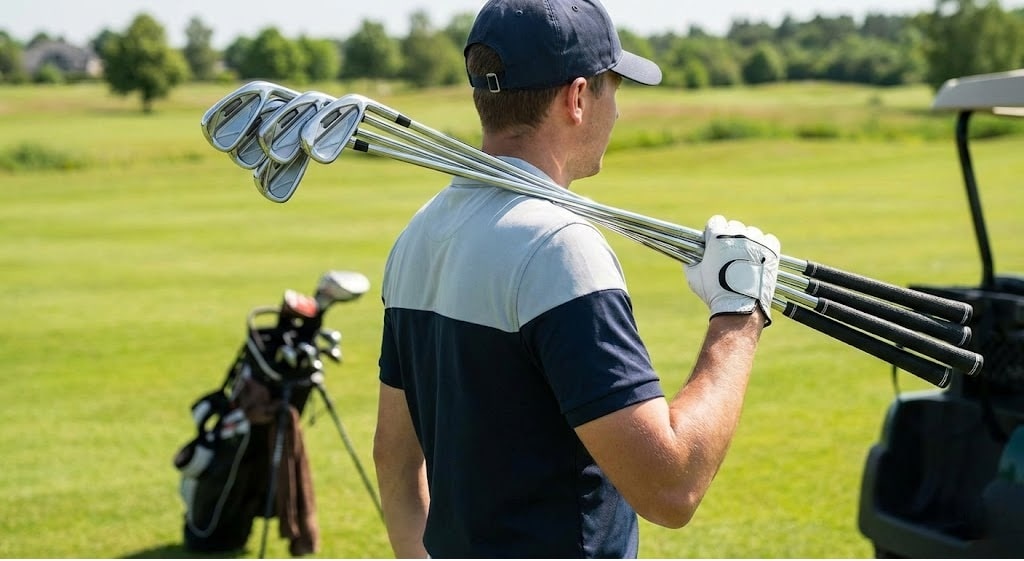
When you strip away the marketing jargon, senior flex shafts come down to four measurable characteristics that determine whether they'll actually help your game.
Flexibility sits at the core. These shafts bend more easily than regular or stiff options, designed specifically for swing speeds between 70-85 mph. That extra flex generates clubhead speed you can't produce on your own. Golfers with swing speeds under 75 mph should consider senior flex shafts in the 39-50 gram range to maximize distance potential.
Weight drops considerably, typically 30 to 50 grams compared to 55-80 grams for regular shafts. Lighter graphite construction reduces fatigue and maintains your speed through 18 holes. The Air Speeder series exemplifies this approach with weights ranging from 122 to 166 grams in their iron shaft offerings, demonstrating how manufacturers engineer lighter options for players needing speed assistance. The Aerotech SteelFiber i70 Senior Flex shafts weigh in at 74 grams, hitting a middle ground that balances stability with swing speed assistance.
Torque runs higher, usually 2.5 to 3.5 degrees, creating a softer feel and easier clubhead release. This helps acceleration but can sacrifice accuracy if overdone.
Bend point sits mid to mid-low, promoting higher launch angles that enhance carry distance for slower swingers.
Despite what the technical specs promise, the real question isn't whether senior flex clubs work; it's whether they'll actually change your game or just lighten your wallet.
Here's what I've seen: if your swing speed sits between 70-85 mph, senior flex delivers measurable results. You'll launch the ball higher without manipulating your swing. You'll carry it farther because that flexible shaft stores and releases energy your muscles can't generate anymore. And you'll hit straighter shots because the shaft helps square the clubface at impact.
The forgiveness factor matters too. Higher torque ratings mean off-center hits don't punish you as severely. Lighter graphite construction reduces fatigue, so your eighteenth hole swing mirrors your initial. The increased backspin these shafts produce generates lift that helps the ball float longer in the air, contributing to greater overall distance. Since each golfer has unique swing characteristics, working with a professional fitter can help you identify the exact shaft specifications that optimize your individual performance. Getting properly fitted clubs prevents the development of compensating swing habits that can hurt your game long-term.
These aren't marketing promises; they're physics working in your favor.

Understanding the physics behind senior flex shafts is one thing; knowing when you actually need to make the switch is another matter entirely.
Here's the brutal truth: swing speed determines everything. Senior flex works for speeds between 70-85 mph, while regular flex handles 85-95 mph. There's no overlap, no gray area.
The differences aren't subtle. Senior flex shafts run lighter, often under 60 grams, and deliver more whip through impact. Regular flex shafts sit heavier in the 60-80 gram range with added stiffness for control. Using the incorrect flex leads to inconsistent contact and wasted energy that costs you performance.
I've watched countless golfers stubbornly cling to regular flex as their swing speed drops. They're leaving yards on the table. Senior flex promotes higher launch angles and better energy transfer for slower swingers. You'll hit it farther and straighter, but only if your speed actually warrants the switch. Since senior flex shafts are typically made from graphite, they also provide a lighter overall club weight that further benefits players with reduced swing speeds. Beyond swing speed alone, personal swing tempo and other individual characteristics should also factor into your flex decision, which is why professional fitting can be valuable.
Since manufacturers slap "senior" labels on everything from legitimate performance clubs to rebranded bargain-bin equipment, you need to know which models actually deliver results.
Drivers: The PING G430 HL Max and Callaway Elyte Max Fast deliver genuine lightweight construction with senior-specific flex profiles. The Cleveland Launcher XL Lite stands out for joint relief without sacrificing distance. These drivers feature enhanced sweet spots that allow off-center hits to travel farther.
Irons: Ping G440 and Callaway Elyte X irons provide maximum forgiveness through tungsten weighting and oversized sweet spots. TaylorMade Qi HL Combo Irons target slow swing speeds specifically. The Ping G440 also features ultra-lightweight shaft options that enhance performance for seniors who need help generating clubhead speed.
Complete Sets: The Wilson Profile SGI and Cobra Fly-XL offer legitimate value for seniors wanting matched equipment without piecing together individual clubs. These sets help players understand how far to hit each club without the confusion of mixing different brands and shaft flexes.
You should consider senior flex if you're over 50, swing under 90 mph with your driver, or notice decreasing distance despite solid contact.
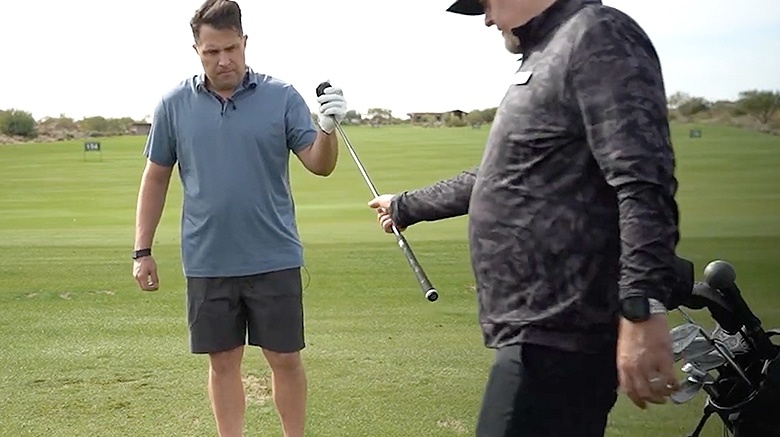
Yes, you can absolutely mix senior flex and regular flex clubs in your bag, and honestly, you probably should. The notion that every club needs matching flex is marketing nonsense. Match your driver's flex to your driver swing speed, your irons to your iron swing speed. They're different swings. Get fitted properly, and don't let anyone tell you a "mismatched" bag is wrong. It's smart customization.
You should replace your senior flex driver every 3-5 years, while fairway woods, hybrids, and irons last 5-6 years. Wedges wear out fastest; swap them every 75-100 rounds. But here's what manufacturers won't tell you: these timelines assume regular play. If you're hitting the course weekly, you'll need replacements sooner. Inspect your grooves and shafts regularly; visible wear trumps any arbitrary schedule.
No, senior flex clubs don't directly affect your handicap calculation. Your handicap's based purely on your scores relative to course difficulty; the system doesn't care what shaft you're swinging. However, here's the real impact: if senior flex better matches your swing speed, you'll likely hit straighter, more consistent shots. That improved performance shows up in lower scores, which then naturally brings your handicap down over time.
Yes, you can reshaft senior flex shafts into your existing clubheads. The process follows standard protocols: heat the hosel to remove the old shaft, clean out residual epoxy, and bond the new shaft with two-part epoxy. Here's what matters: ensure your new shaft's tip size matches the hosel bore diameter. Get this wrong, and you'll compromise durability and performance. Have a pro handle it unless you're comfortable with the technique.
Yes, you can absolutely use senior flex clubs in professional golf tournaments. There's no USGA rule prohibiting any specific shaft flex; your clubs simply need to conform to equipment standards. The "senior flex" label is a marketing designation, not a regulatory category. If your club meets USGA specifications, you're cleared to compete. Don't let anyone tell you otherwise; it's about conformance, not flex labels.
Don't let ego keep you swinging the wrong shaft. If your swing speed has dipped below 85 mph, senior flex clubs aren't a concession; they're a strategic upgrade that'll add distance and consistency to your game. Get fitted, test the numbers yourself, and make the switch when the data supports it. Your scorecard doesn't care about labels; it only reflects results.