
The real difference comes down to your swing speed and where you’re hitting from. If you swing above 100 mph from clean fairway lies, fairway woods deliver more distance; a 5-wood carries roughly 30 yards farther than a 5-hybrid at slower speeds. But hybrids shine everywhere else: thick rough, awkward stances, and any lie that isn’t perfect. They’re more forgiving, easier to launch, and stop faster on greens. Your typical course conditions should drive this decision.
Distance and Ball Speed Differences Between Woods and Hybrids
Let’s cut through the noise on one of golf’s most persistent debates: the idea that fairway woods always crush hybrids in distance. The reality’s more complex than club manufacturers want you to believe.
At a 90 mph swing speed, a 5-wood carries roughly 185 yards while a 5-hybrid manages about 156 yards. That’s a significant gap. But here’s where it gets interesting: bump your swing speed up, and that distance difference shrinks dramatically. At faster swing speeds, you’re looking at maybe 2 yards separating a wood from a hybrid, 207 versus 205 yards. Golf Digest testing confirms that slower swing speeds produce more significant distance gaps between hybrids and woods than faster swings do.
Woods generate higher ball speeds thanks to longer shafts and larger clubheads. More shaft length means more clubhead speed, which translates directly to ball speed. Hybrids can’t match that raw physics equation, but they’re playing a different game entirely. The hybrid tends to produce lower shots with less turning over, which can actually work in your favor when you need a more controlled ball flight. For shots where you need a higher, softer landing, hybrids often outperform expectations despite their lower ball speed numbers.
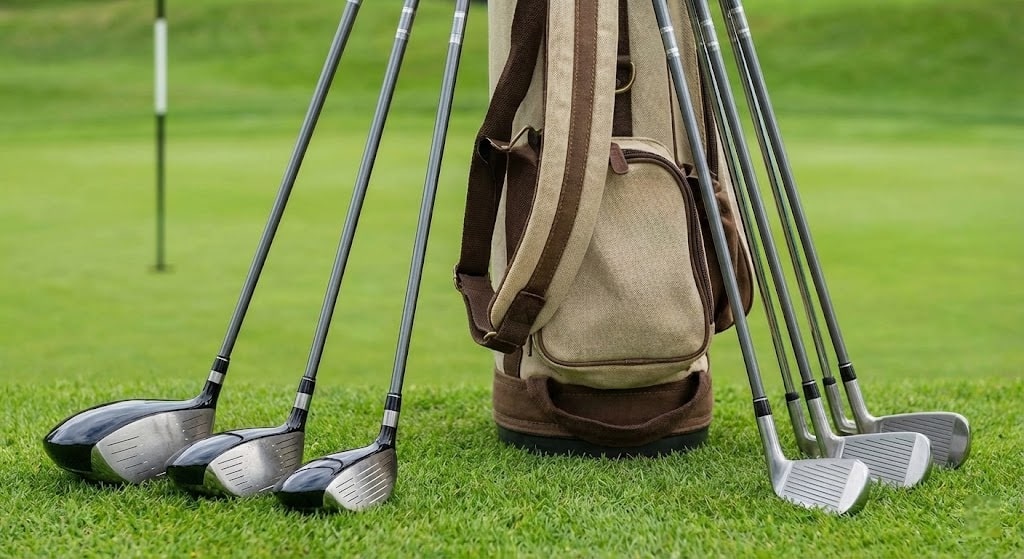
Launch Angle, Spin Rate, and Trajectory Comparisons
Distance only tells part of the story. You need to understand what happens between impact and landing to make the right club choice.
Here’s what the data actually shows: fairway woods launch higher and spin more than hybrids at equivalent lofts. We’re talking 23° variable loft versus 18.7° for a hybrid, with spin rates running 600+ rpm higher. That’s significant. This difference occurs because the center of gravity placement in fairway woods produces more dynamic loft at impact.
But don’t assume higher launch always wins. Hybrids achieve their ball flight through spin rather than extreme launch angles, creating a softer, more controllable descent. Fairway woods produce penetrating trajectories that cut through wind; hybrids give you that high, arcing flight perfect for holding greens. The lower trajectory of fairway woods makes them effective in windy conditions where hybrids may balloon and lose distance. Hybrids feature a lower center of gravity compared to irons, which helps launch the ball higher from difficult lies like rough or sand.
The real differentiator? Consistency. Hybrids maintain a predictable launch from rough and uneven lies where fairway woods struggle.
Forgiveness and Performance From Various Lies
When you’re staring at a ball half-buried in the rough or sitting down on a tight lie, club design matters far more than loft numbers on the sole.
Hybrids dominate these situations. Their compact heads slice through thick grass without snagging, while perimeter weighting and lower centers of gravity rescue your mis-hits. That shorter shaft gives you control when your footing’s questionable or you’re reaching into a fairway bunker. These clubs are particularly confidence-boosting for mid to high handicappers who struggle with traditional long irons. Hybrids also excel when you need to clear hazards with a steep landing angle, allowing the ball to stop quickly on the green. As intermediate clubs combining features of both woods and irons, hybrids provide easier launch and control for players at moderate swing speeds.
Fairway woods demand precision you simply won’t have from awkward stances. Their longer shafts require sweeping contact and perfect timing, luxuries that disappear when you’re standing sideways on a sidehill lie. Those larger heads catch rough and magnify timing errors.
The verdict’s clear: hybrids deliver consistent results from variable lies, where fairway woods punish anything less than perfect execution.

Matching Club Selection to Your Swing Speed
Your swing speed determines whether fairway woods or hybrids actually perform as advertised, or become expensive decorations in your bag.
If you’re swinging your driver above 100 mph, fairway woods deliver their promised distance advantage. You’ll generate enough ball speed to maximize those longer shafts and lower lofts. A 3-wood becomes a legitimate weapon off the tee and fairway.
Drop into the 85–100 mph range, and the equation shifts. Hybrids offer easier launch and more consistent yardages without demanding perfect contact. You’ll find them more versatile for approach shots and tight lies.
Below 85 mph, hybrids aren’t just helpful, they’re essential. Fairway woods become difficult to launch properly, costing you both distance and accuracy. The higher loft and shorter shaft of a hybrid compensate for reduced clubhead speed. Proper club fitting should also consider your attack angle and tempo alongside swing speed to truly optimize performance.
Strategic Course Management With Woods and Hybrids
Knowing which club to pull doesn’t start with distance; it starts with reading the situation in front of you.
Your hybrid shines when the lie gets dicey. Thick, rough, fairway bunkers, uneven ground, that smaller head cuts through turf conditions that swallow fairway woods whole. You’re also getting a higher launch with more stopping power, which matters when you’re firing at a raised green. The larger sweet spots on hybrids reduce your chances of mishits even from challenging positions.
Fairway woods demand clean lies. From the tee or a pristine fairway, they deliver penetrating ball flight and maximum distance. But drop one into deep rough, and that large clubhead grabs grass before it reaches the ball. When hitting your hybrid, position the ball closer to the center in your stance to enable a downward trajectory for solid contact.
Here’s the structure: prioritize accuracy and control with hybrids, reserve fairway woods for wide-open opportunities where distance trumps precision. Since individual swing characteristics like tempo and strength affect how each club performs, a professional fitting can help you determine the ideal mix of woods and hybrids for your game.

Frequently Asked Questions
How Often Should I Replace My Hybrid or Fairway Wood Grips?
You should replace your hybrid and fairway wood grips every 12 to 18 months, or roughly every 40 to 50 rounds. That’s the real benchmark, not the “they’re fine until they fall apart” mentality I see constantly. If you’re grinding through 75-plus rounds annually, cut that timeline to 6 to 9 months. Watch for slick spots, cracks, or lost tackiness; these kill your control before you realize it.
Can I Use the Same Shaft in Both Hybrids and Fairway Woods?
You generally can’t swap shafts directly between hybrids and fairway woods. Here’s the catch: connector sizes differ, hybrids use .370-inch hosels while fairway woods use .335-inch. Even within the same brand, you’ll need specific connectors for each club type. Beyond compatibility, hybrid shafts are shorter and often slightly heavier for control, while fairway wood shafts prioritize distance. Don’t force a mismatch; get properly fitted for each.
What Is the Ideal Gap in Degrees Between Consecutive Clubs in My Bag?
The ideal gap is 4-5 degrees between your woods and hybrids, then 3-4 degrees between irons, and 4-6 degrees for wedges. Don’t get too caught up in exact numbers; what matters is consistent 10-15 yard carry gaps between clubs. If you’re seeing awkward yardage bunching or massive distance jumps, your loft gaps need adjusting. Check your actual on-course distances, not spec sheets.
Are There Specific Hybrid or Fairway Wood Brands Better for Beginners?
Yes, and you should ignore the marketing noise. For beginners, I’d point you toward the PING G400 or Cobra DS-Adapt hybrids; they’re genuinely forgiving and launch the ball high without requiring perfect contact. For fairway woods, the Callaway Big Bertha B23 and PING G425 deliver the forgiveness you actually need. Skip the adjustable features for now; focus on clubs that make getting airborne effortless.
How Does Altitude Affect Performance Differences Between Hybrids and Fairway Woods?
At altitude, thinner air changes everything. You’ll see both clubs fly farther, expect 5-8% more carry around 5,000 feet, but here’s the catch: your fairway woods lose lift and fly flatter, rolling out unpredictably. Hybrids actually perform better because their higher launch compensates for reduced lift, giving you softer landings. Your hooks and slices straighten out, which sounds great until you realize you can’t shape shots when you need to.
Conclusion
You don’t have to pick sides in this debate. The smartest play is carrying both and knowing when to reach for each. Use your fairway wood when you need raw distance from clean lies. Grab your hybrid when versatility matters, tight lies, rough, or shots requiring a steeper descent. Your bag has room for both tools, so use them strategically.

About the author
Paul Liberatore
Paul Liberatore is the founder of Golfers Authority and a former four-year golf gear contributor to Sports Illustrated. He tests golf equipment hands-on to help golfers make better buying decisions.