You'll enhance distance by striking the center of the clubface, the sweet spot, which delivers a smash factor of 1.50 and can add up to 40 yards compared to mishits. Position short irons center or slightly back in your stance, mid-irons dead center, and move the ball forward about half an inch per club until your driver sits just inside your lead heel. Understanding how vertical and horizontal strike patterns affect your ball flight will change your consistency.
When you're chasing distance off the tee, here's the uncomfortable truth most golfers ignore: you're probably leaving 40 yards on the table before you even think about swing speed.
The sweet spot isn't marketing fluff, it's physics. Strike the center, and you'll achieve a smash factor of 1.50, meaning your 100 mph swing generates 150 mph ball speed. Miss it toward the toe or heel, and you're hemorrhaging 20% or more of that speed instantly. This optimal energy transfer directly translates to longer carry and total distance.
Here's what's frustrating: even skilled players hit the sweet spot less than 20% of the time. That miss creates a vicious cycle; you swing harder to compensate, which worsens contact, which costs more distance. Most golfers also develop consistent miss patterns, striking the same off-center location repeatedly, which means using a dry-erase marker on your clubface can reveal exactly where your tendencies lie. You can also use impact tape to assess clubface contact and identify your specific strike patterns during practice sessions.
The solution isn't more speed. It's precision.
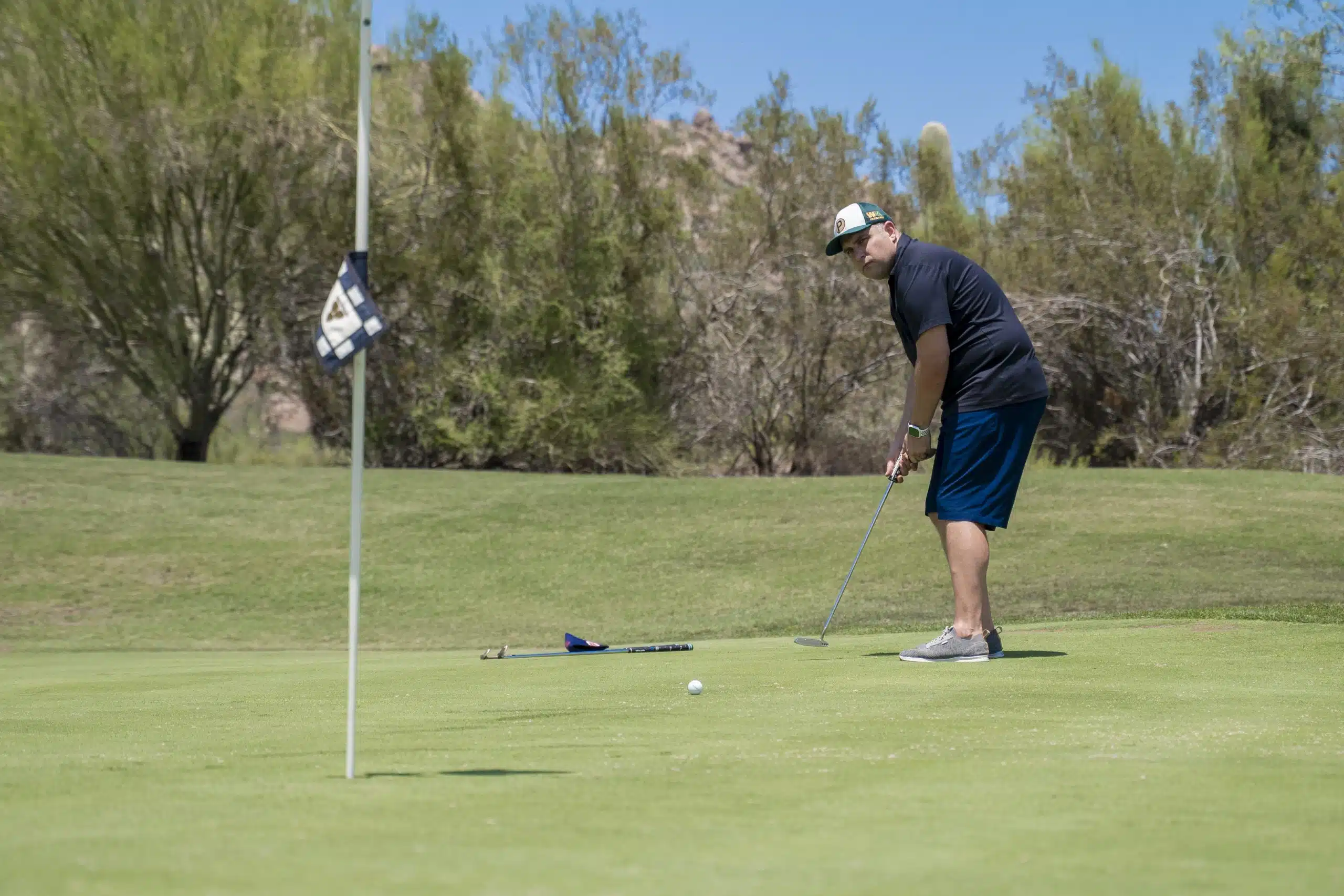
Mastering the horizontal center is only half the equation. Where you strike the ball vertically on the clubface dramatically changes your results, and here's where things get interesting.
Hit high on the face, and you'll lose over 6 MPH of ball speed compared to center contact. Sounds terrible, right? Not so fast. That high strike delivers higher launch angles and significantly lower spin rates, sometimes 1,400 rpm less than a low strike. This combination actually produces respectable distance despite the speed loss. High-end launch monitors can track these vertical impact variations with professional-level precision, giving you real-time feedback to dial in your strike location.
Low face contact tells a different story. You'll only shed about 2.7 MPH of ball speed, but launch plummets while spin skyrockets. Your ball balloons and drops short.
The takeaway? If you're missing center vertically, miss high. Adjust your tee height accordingly.
While vertical strike location affects your launch conditions, horizontal positioning on the clubface dictates where your ball actually goes, and the physics here are counterintuitive.
Here's what trips up most golfers: toe strikes push the ball right initially, but the gear effect imparts draw spin that curves it back left. Heel strikes pull the ball left, then slice spin bends it further right. Your miss location actually fights against itself.
This matters most with your driver and fairway woods, where gear effect is strongest. The further you are from the center, the more dramatic the spin axis tilt becomes. Club manufacturers account for this by designing drivers with a slight concave bulge to help mitigate these off-center effects.
The distance penalty tells the real story. Toe strikes barely hurt you, especially when contact is slightly high. Heel strikes? They're the distance killers you should actually worry about. Beyond lost yards, heel strikes create significant energy loss and produce a poor feel at impact that compounds the frustration of a mishit. Achieving consistent center contact can add nearly 30 yards to your driver distance alone, making strike location one of the most impactful factors in your overall yardage.

Controlling your strike location starts before your backswing; it starts with where you place the ball in your stance.
Here's the structure I use: short irons and wedges sit center or slightly back, promoting that descending blow you need for spin and control. Mid-irons stay dead center. As clubs get longer, you're moving the ball forward, about half an inch per club, toward your lead foot. Your driver? Just inside that lead heel. This forward position enables a sweeping motion that maximizes distance rather than hitting down on the ball.
This isn't arbitrary. Ball position dictates your angle of attack. Too far back with your driver forces a downward strike, killing launch and distance. Too far forward with irons means you're catching the ball on the upswing, hello, thin shots, and hooks. Using alignment sticks on the driving range helps you verify your ball position is consistent before each swing. Proper fitting requires consideration of individual swing characteristics like attack angle and tempo rather than relying solely on a single factor.
Match your stance width accordingly: narrow for wedges, wider for driver stability.
Consistency, not power, not swing speed, separates golfers who score from those who scramble. I've watched countless players chase distance while their strike patterns scatter across the clubface like buckshot. Here's the truth: your handicap drops faster when you hit the center repeatedly than when you occasionally crush one.
Start with tempo. Use a metronome or simple counting rhythm to build a repeatable swing foundation. Your body craves rhythm; give it one. Remember that your backswing should be slower than your downswing, maintaining a 3:1 tempo ratio for optimal control.
Next, nail your low point. It sits inches in front of the ball, not on it. For iron shots specifically, aim for your low point to land three to four inches past the ball to achieve that crisp ball-first contact. The "Jump the Fence" drill with alignment sticks trains this instantly.
Finally, track your strike location. Heel strikes create slices; toe strikes produce hooks. A consistent miss beats a random pattern every time. Use strike spray or face tape to identify your contact points without needing expensive launch monitor technology.

No, you shouldn't obsess over adjusting your strike point for weather or altitude. Here's the truth: these conditions affect ball flight and distance, but they don't fundamentally change where you should contact the clubface. You still want center strikes. Cold weather and high altitude alter how far the ball travels, not your swing mechanics. Focus on consistent center contact, that's what actually matters regardless of conditions.
The ideal strike point shifts based on your club. With your driver, you want to contact slightly above center; this launches the ball higher with less spin for maximum distance. With irons and wedges, you're aiming at or slightly below center to compress the ball properly and generate consistent spin. Fairway woods fall in between, favoring a slightly above-center strike. Each club's design dictates its best impact zone.
You don't need expensive gadgets to find the sweet spot. Impact tape or stickers on your clubface deliver instant, honest feedback about where you're actually striking the ball. Alignment sticks help groove a consistent swing path, which naturally promotes center contact. For setup, the Stance Caddy positions your feet, ball, and clubface simultaneously. Combine any of these with deliberate practice, and you'll develop reliable center-face contact.
Yes, your impact goals should absolutely differ. For draws, you're aiming for center-to-slightly-heel contact with a more compressed, lower strike on the ball; this reduces spin and enhances roll. For fades, you want that same general face location but with contact slightly higher on the ball itself, generating the backspin you need for soft landings. Different shots demand different impact strategies.
Worn grooves destroy your spin consistency, particularly on off-center strikes. You'll see the biggest damage on toe and heel hits, where diminished friction causes erratic spin and wild dispersion. Center contact suffers too, but those mishits become truly unpredictable. From the rough, it's even worse; worn grooves can't channel debris away, so you're fundamentally guessing where the ball goes. Fresh grooves can add 1,800+ RPM back to your game.
You've now got the structure to change your ball-striking. The center face delivers maximum energy transfer, period. Vertical position controls spin and launch, while horizontal placement dictates shot shape. Combine this with proper ball position in your stance, and you're building real consistency.
Stop guessing where contact happens. Use impact tape, track your patterns, and make targeted adjustments. Your scorecard will reflect the difference.