An A wedge, also called a gap wedge or approach wedge, sits between your pitching wedge and sand wedge, typically carrying 50 to 52 degrees of loft. You'll use it for those tricky 80 to 110 yard shots where your pitching wedge flies too far, and your sand wedge falls short. It's designed for precision scoring shots, not specialty escapes from bunkers. Understanding how this club fits your specific distance gaps can change your approach game.
The A wedge sits in every serious golfer's bag, yet it's one of the most misunderstood clubs in the game. You'll hear it called an approach wedge, gap wedge, or attack wedge depending on which manufacturer you're buying from. TaylorMade and Callaway stamp an "A" on theirs, while Cobra and Mizuno label the same club a gap wedge. Don't let the naming confusion throw you off; they're identical in function.
Here's what the A wedge actually does: it bridges the yardage gap between your pitching wedge and sand wedge. That distance void creates real problems on approach shots, and this club solves them. The A wedge emerged because modern pitching wedges now feature stronger lofts, creating a distance gap that affects shot consistency. You'll use it for full swings from the fairway, partial shots into tight pins, and even delicate chips around the green. The A wedge typically carries a loft of around 50 to 52 degrees, positioning it perfectly between the standard pitching wedge and sand wedge lofts. Unlike specialty wedges designed for bunkers or flop shots, the A wedge emphasizes distance control and accuracy for approach shots from the fairway or rough.
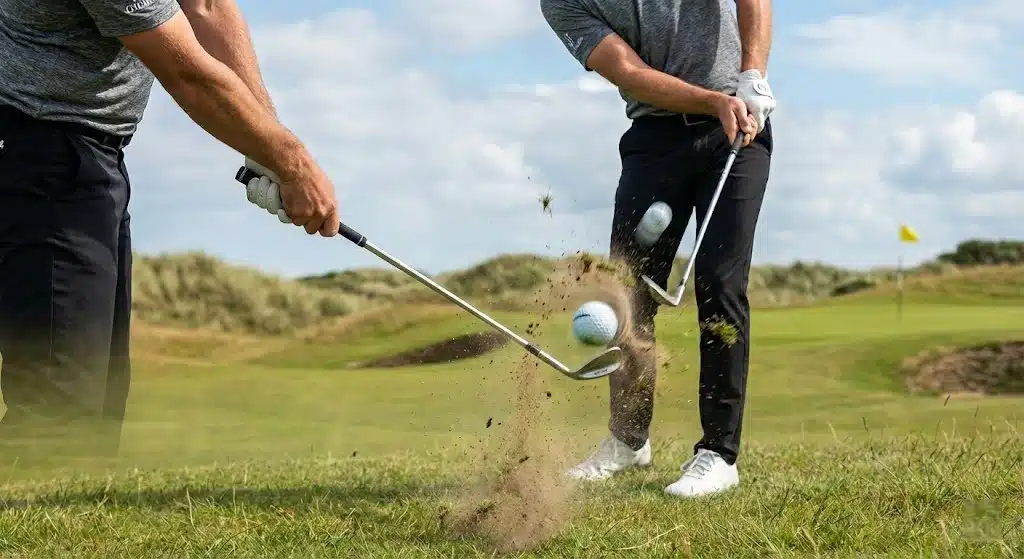
Loft angles tell you everything about what an A wedge can actually do on the course. You're looking at 48 to 52 degrees, with most landing right around 50 to 51 degrees. That's not arbitrary, it's engineered to fill the gap your pitching wedge and sand wedge leave wide open.
Here's what that loft translates to: expect 80 to 110 yards on a full swing. You'll carry roughly 9 to 15 yards shorter than your pitching wedge, which solves that frustrating in-between distance problem. The A wedge works particularly well for fuller partial shots like 50%, 75%, or 90% swings when you need precise distance control.
Your actual numbers depend on swing speed, shaft flex, and ball selection. Don't trust the marketing claims; get on a launch monitor. Data-driven fitting using launch monitor technology has become increasingly accessible and helps golfers fine-tune their lofts for optimal performance. The goal isn't maximum distance; it's predictable yardage gaps. A properly fitted A wedge eliminates those awkward half-swings that destroy consistency. Most golfers should aim to carry 1-2 hybrids to avoid distance gaps in their bag, and the same principle applies to wedge selection.
Your A wedge shares DNA with your iron set, same construction philosophy, matching finish, and similar sole width. Sand and lob wedges? They're specialists with wider soles, pronounced bounce angles, and compact heads built for bunker escapes and delicate flop shots.
Bounce tells the real story. Your A wedge runs 8 to 12 degrees, designed for moderate conditions and clean turf contact. Sand wedges pack 10 to 14 degrees specifically for soft lies. Lob wedges go higher still.
The A wedge prioritizes distance control and flight consistency over short game wizardry. It's your precision approach tool, not your rescue club from greenside trouble. With lofts between 48 to 52 degrees, the A wedge fills the crucial distance gap between your pitching wedge and sand wedge. A full swing with your A wedge typically produces carry distances of 90 to 110 yards, giving you reliable yardage for those mid-range approach shots. You can create multiple yardages by using partial swings at varying speeds, documenting your key distances for full swings, stock swings, and off-speed shots.
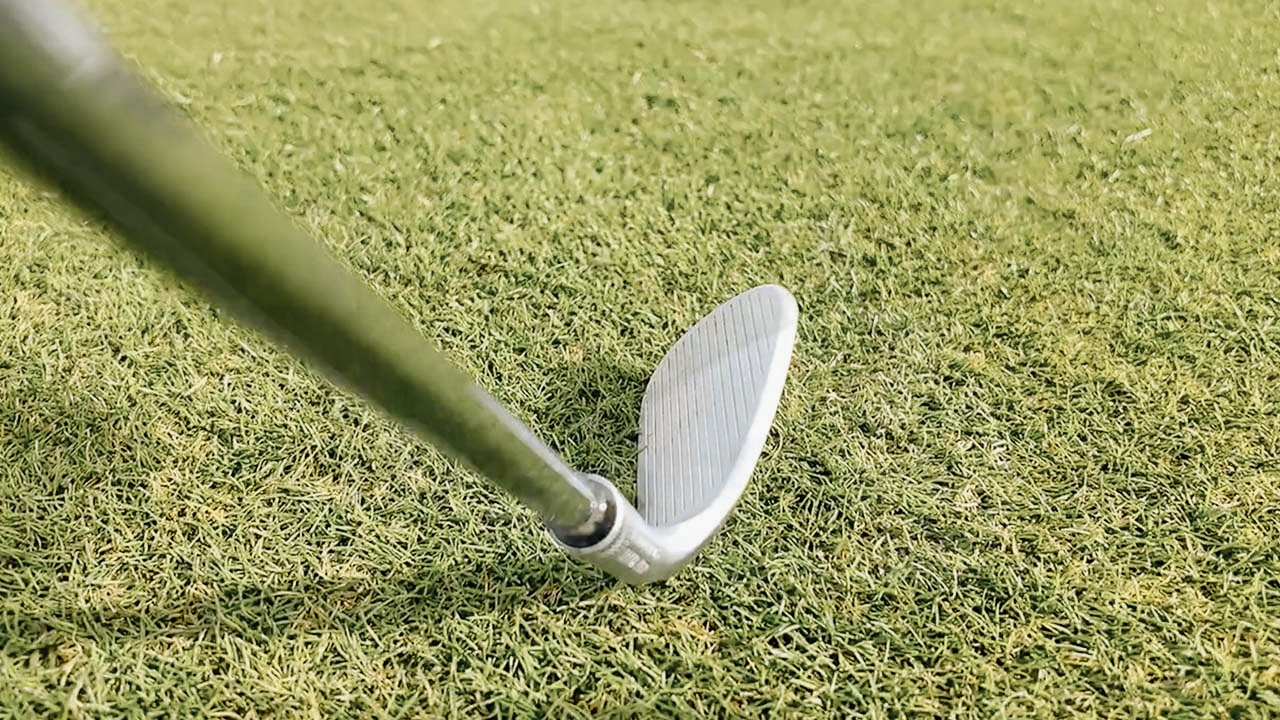
When should you actually pull your A wedge from the bag? The confusion ends here. Your A wedge dominates that 90-110 yard range where your pitching wedge flies too far, and your sand wedge falls short. That's its sweet spot.
I reach for mine when facing moderate obstacles, bunkers guarding the front, fringe rough between me and the pin, where I need height without the drama of a full lob. It's also my go-to on tight lies where clean contact matters. The narrower sole cuts through turf better than a sand wedge ever will. Since tight lies benefit from lower-lofted clubs like the A wedge, you'll achieve cleaner strikes compared to using higher-lofted options.
Around the green, use it for chip shots requiring controlled flight with quick stopping power. Skip the bump-and-run here; the A wedge delivers precision placement when you need the ball to sit down fast. This club also provides more spin than other wedges, giving you added control on approach shots. Including a gap wedge addresses awkward in-between distances that would otherwise leave you guessing between clubs.
Beyond knowing when to apply your A wedge, understanding what makes it perform in those situations comes down to one spec that manufacturers love to overcomplicate: bounce angle. Here's what actually matters: low bounce (4-6 degrees) keeps your leading edge tight to the ground for firm turf and tight lies. Mid bounce (7-10 degrees) gives you versatility across conditions. High bounce (14+ degrees) prevents digging in soft sand and thick rough.
Your A wedge typically falls in the mid-bounce range, which explains its reputation as a workhorse club. But bounce angle alone doesn't tell the whole story. Sole width, grind shape, and leading edge design all influence how your wedge interacts with turf. You can even modify effective bounce through shaft angle adjustments at the address. Moving the ball back in your stance and delofting the club steepens your angle of attack, effectively reducing bounce for tighter lies. Proper fitting should also include lie angle adjustments, shaft length, shaft type, and grip size to ensure your A wedge performs optimally for your swing. Just as shaft flex and weight significantly impact driver performance based on your swing speed, selecting the right shaft specifications for your wedge can improve consistency and control around the greens.
Most golfers overthink their wedge setup, obsessing over the exact number of clubs when the real question is simpler: Do you have consistent distance gaps from 130 yards in?
Your A wedge fills the scoring zone between your pitching wedge and sand wedge, typically covering 80-110 yards. That's the distance where you're attacking pins, not just finding greens.
Here's the structure: maintain 4-degree loft gaps between wedges. If your pitching wedge sits at 48 degrees, your A wedge should land around 52 degrees. This creates predictable 8-12 yard spacing between clubs.
You might need to sacrifice a long iron or hybrid to fit an A wedge. Make that trade. Courses reward precision inside 130 yards far more than they reward carrying an extra club you'll hit twice per round. Getting properly fitted for clubs ensures your A wedge matches your unique swing characteristics and physical attributes for optimal performance in the scoring zone.

Yes, you'll absolutely benefit from an A wedge, but here's the catch: don't rush into buying one. Initially, get comfortable with your pitching and sand wedges. Once you're hitting those consistently, you'll notice awkward distances around 100 yards where neither club feels right. That's your signal. The A wedge fills that gap perfectly, giving you a dedicated club instead of forcing half-swings that destroy your consistency.
You should replace your A wedge every 65-75 rounds; that's when performance genuinely drops off. Forget the marketing push for annual upgrades. Instead, watch for the real signs: shots flying higher with less bite, grooves looking flat and shiny, and inconsistent distance control. If you're grinding out weekly practice sessions, that timeline shrinks. Tour pros swap wedges constantly, but you're not them.
Steel works best for most golfers. You'll get better control, consistent feedback, and that penetrating ball flight you need for precision shots. The marketing push for graphite wedge shafts targets slower swing speeds, but unless that's you, stick with steel in the 115-130 gram range. Match your iron shaft weight; jumping between materials creates distance gaps you don't want around the greens.
Your skill level decides this. If you're a low-handicapper who lives for feel and shot shaping, forged wedges deliver that buttery feedback you crave. But here's what manufacturers won't tell you: most recreational players can't actually distinguish the difference during a round. Cast wedges offer better durability and forgiveness at a lower price. Don't pay the forged premium unless your short game truly demands it.
Weather conditions dramatically affect your A wedge's performance. In wet conditions, you'll see spin drop by nearly half on standard wedges; that's not marketing fluff, it's physics. Moisture between the ball and face causes a higher launch with less stopping power. Your best defense? Look for wedges with aggressive groove designs and higher bounce options that glide through soggy turf instead of digging. Don't overlook this variable.
You don't need an A wedge, but you might want one. If you've got a gap between your pitching wedge and sand wedge that's costing you strokes, an approach wedge fills it perfectly. Don't buy one because it sounds useful; buy one because you've identified that specific 100-115 yard distance as a problem in your game. That's the only reason that matters.