Most pros play Titleist's Pro V1 or Pro V1x; they account for roughly 70% of balls on the PGA TOUR. You'll also see Callaway's Chrome Tour, TaylorMade's TP5 series, Bridgestone's Tour B (Tiger Woods' pick), and Srixon's Z-Star in professional bags. These aren't random endorsements; tour players choose balls based on specific spin profiles, compression ratings, and feel characteristics that match their swing. Understanding what separates these options helps you find your own ideal match.
When nearly three out of four PGA TOUR players reach into their bag, they're grabbing the same ball you can buy at your local golf shop, and that's not marketing spin; it's verified count data.
Titleist's dominance isn't subtle. In 2024, their balls were teed up 3,369 times across 39 events, which is 70% of everything in play. Over 97,000 PGA TOUR rounds have been logged with Pro V1 or Pro V1x, more than six times the nearest competitor's total.
Here's what matters to you: 26 wins in 2025 came from Titleist balls, and they've held the #1 spot at the U.S. Open for 77 consecutive years. The pros aren't choosing based on sponsorship alone; they're choosing proven performance. The Pro V1 features a high-gradient core design that improves ball speed while reducing unwanted spin, a combination that appeals to players at every level.

Although Titleist dominates the tour count, Callaway's Chrome Tour has carved out serious territory among players who want Pro V1 performance with a distinct spin profile, and the numbers back up why it's worth your attention.
The Chrome Tour sits at 87 compression, five points above average, matching the Pro V1's firmness while providing a fundamentally different spin design. You'll get low spin off the driver for distance, then high spin with wedges for stopping power. That's the holy grail combination. The new Seamless Tour Aero design delivers consistent flight even in challenging wind conditions.
The Chrome Tour X pushes this further with maximum short game spin and a medium-firm feel. If you're currently playing Pro V1x and want more greenside bite, this is your move. The four-piece construction and 332-dimple urethane cover provide tour-level control without the tour-level price anxiety. For comparison, TaylorMade's competing TP5 produces 200-300 more RPMs of spin on pitch shots than many alternatives, showing how premium balls differentiate themselves through measurable spin characteristics.
TaylorMade's TP5 and TP5x represent the most aggressive five-layer engineering on tour, and that extra layer isn't just marketing fluff; it fundamentally changes how the ball performs across your entire bag.
The Speed Wrapped Core technology delivers measurably lower driver spin while maintaining the greenside control you need. Here's the real distinction: TP5 runs a compression of around 83 for a softer feel and more spin on wedge shots. TP5x sits near 98, among the firmest tour balls available, and delivers up to half a club more distance. The 2024 edition features a re-engineered core that enhances overall performance metrics. The core's polybutadiene rubber composition provides exceptional elasticity to return energy quickly after impact from a golf club.
Tour pros are split between them based on priority. If you value touch around greens, grab TP5. If you're chasing every yard off the tee and prefer a firmer response, TP5x is your ball. The ClearPath Alignment system also dominates tour usage for putting consistency. These balls are trusted by professional golfers globally who demand both explosive distance and exceptional greenside control.

Bridgestone doesn't get the same retail shelf presence as Titleist or TaylorMade, yet the Tour B Series quietly dominates among players who prioritize feel-based performance over brand recognition.
Tiger Woods' switch to the Tour B X in 2021 validated what many tour players already knew: Bridgestone's Reactiv urethane cover technology delivers exceptional shock absorption without sacrificing distance. You'll find Tiger using the Tour B X for its high-swing-speed optimization, occasionally switching to the softer Tour B XS for improved greenside control. The softer urethane cover on the XS allows for higher spin rates that enhance shot shaping and precision around the greens.
Here's what matters for your game: if your swing speed falls under 105 mph, you're looking at the RX or RXS models. The RXS generates 5% more iron spin and extra carry height, while the RX provides firmer feedback and consistent ball flight. Both feature Dual Dimple Technology for reduced drag, which achieves a more efficient ball trajectory during flight. The RX also incorporates Gradation Compression technology, which increases speed and minimizes spin off the driver for maximum distance.
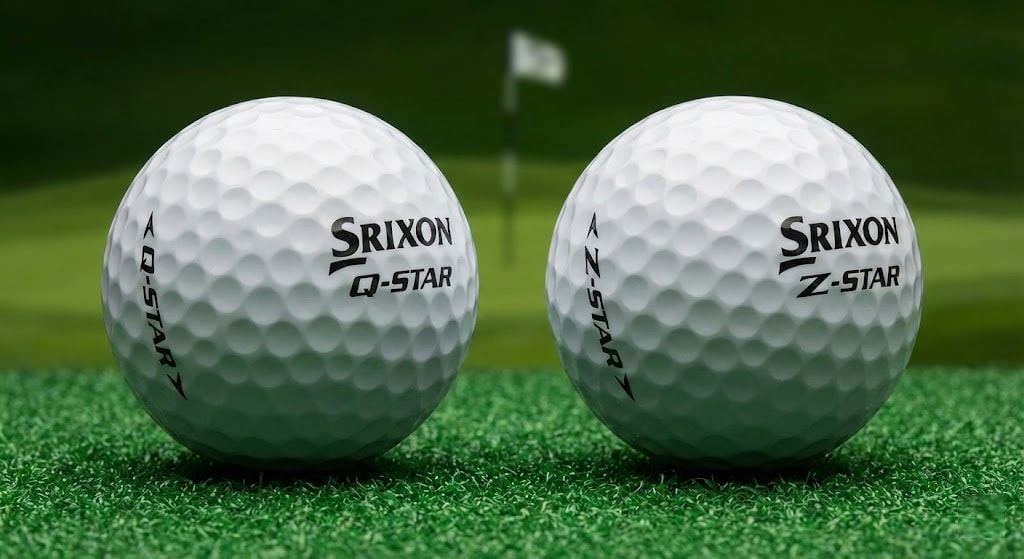
Srixon rarely gets mentioned in pro shop conversations, yet the Z-Star series provides performance that rivals, and sometimes surpasses, the industry's premium products at a lower price point.
The FastLayer DG Core 2.0 technology creates a soft center with a firm outer edge, giving you explosive ball speeds without sacrificing feel. That 338 Speed Dimple pattern cuts through wind like few competitors can, maintaining distance when conditions get tough. The deep dimensions of these dimples help the ball cut through the air effectively, reducing drag for optimal trajectory. After the initial penetrating launch, these dimples generate lift for maximum glide, extending your carry distance.
Here's where it gets interesting for power players: the Z-STAR XV runs at 102 compression, offering maximum distance with high launch. But if you prioritize greenside stopping power, the standard Z-STAR's 88 compression provides the softest feel with unmatched spin control. The Spin Skin+ coating creates serious friction on wedge shots, giving you the bite you need around greens. For comparison, competitors like Vice achieve wedge spin rates between 8,500 and 10,000 RPM on full shots, setting the benchmark for short game performance in the premium ball category.
While manufacturers love throwing around terms like "proprietary core technology" and "advanced aerodynamic systems," understanding what actually separates a $50 dozen from a $25 one comes down to a handful of engineering decisions that genuinely affect your game.
Tour balls use urethane covers instead of ionomer. That's the biggest difference. Urethane grips clubface grooves better, generating the spin you need to stop approach shots on firm greens. This urethane elastomer cover system delivers that hop-and-stop action on full wedge shots while providing the soft feel players need for feedback on shot quality.
Layer count matters too. Three to five layers let engineers enhance each section independently, soft cores for feel, firm mantles for speed, responsive covers for control. Cheaper two-piece balls force compromises. Some mid-tier options like 3-layer designs with Surlyn covers offer a balance between performance and durability for players who want quality construction without the tour-level price tag.
Dimple patterns aren't marketing fluff either. Tour balls feature 300-400 precisely engineered dimples that reduce drag and tighten dispersion. You'll see straighter flights and more predictable trajectories in the wind. Many tour players also use balls with visual alignment aids like lines and stripes to improve putting accuracy and gain a competitive edge.
You can benefit, but only if your swing speed and skill level match the ball's design. If you're swinging under 100 mph, you won't compress a tour ball properly, and you'll actually lose distance. However, if you're a low-handicapper with solid swing speed, you'll gain real short-game control and feel. Don't let marketing convince you that pro equipment automatically improves your game; it doesn't work that way.
Professional golfers don't switch ball brands often; you're typically looking at a handful of changes across an entire career, not seasons. Most pros lock into multi-year sponsorship deals that keep them committed to one manufacturer. When switches happen, they're triggered by contract expirations, better technology from competitors, or shifts in personal relationships with brands. Tiger Woods famously stayed loyal for decades; others chase performance gains more aggressively.
Yes, pros often use different balls for practice rounds versus tournament play, but not different models. They'll typically mark their practice balls distinctly to separate them mentally and physically from their tournament stock. You'll find them using older or cosmetically blemished balls during practice, saving pristine ones for competition. It's about preserving their best equipment and maintaining a clear mental separation between preparation and performance.
Most pros prefer high compression golf balls rated 90 or above. Here's the reality: with swing speeds exceeding 100 mph, you need that firmer ball to optimize energy transfer and distance. The Titleist Pro V1 and V1x, used by roughly 71% of touring professionals, sit right around that 90 compression mark. Don't let anyone tell you softer balls work better for elite speed. They don't.
You'll pay roughly double or triple for pro-grade balls. Premium options like Titleist Pro V1 and TaylorMade TP5 run $45-$55 per dozen, while budget balls from Wilson or Pinnacle sit around $15-$25. That price gap reflects urethane covers, multi-layer construction, and tighter quality control, not just marketing. The real question isn't cost; it's whether your game can actually exploit those performance differences.
Here's the truth: you don't need to play what the pros play. These tour balls deliver exceptional performance, but they're engineered for swing speeds and skills most of us don't possess. If you're breaking 80 consistently, a Pro V1 or TP5 will reward your game. If you're not there yet, you're paying premium prices for benefits you can't access. Match the ball to your game, not your favorite player's.