To determine your ideal golf shaft flex, forget the manufacturer's letter labels—they're inconsistent across brands. Instead, focus on your swing speed: over 105 mph needs Extra Stiff, 95-105 mph calls for Stiff, 85-95 mph suits Regular, and below 85 mph works best with Senior flex. For precise measurement, you'll want CPM (Cycles Per Minute) testing, which objectively measures stiffness regardless of marketing labels. Your tempo and change also play vital roles in finding the perfect match.
When you walk into a golf shop and see shafts labeled "Stiff," "Regular," or "Senior," you'd assume these terms mean the same thing across every brand, but they don't. One manufacturer's "Regular" flex plays like another's "Firm" or even "Stiff." This inconsistency creates real problems when you're trying to match equipment to your swing.
Some companies sidestep the chaos entirely. Project X uses numerical codes, 5.0 through 7.0, to denote flex levels from regular to extra stiff plus. It's a cleaner system, but even these numbers don't translate perfectly across brands. The lack of standardization exists because flex specifications may vary among manufacturers, with no universal industry standard governing these labels.
Here's what actually matters: flex ratings loosely correspond to swing speed ranges. Extra Stiff targets speeds above 105 mph. Stiff covers 95-110 mph. Regular fits 85-95 mph. Senior and Ladies flexes serve speeds under 85 mph. Choosing the right flex based on your swing speed is essential because a mismatched flex can lead to loss of control or power. For most amateur golfers, Regular flex shafts represent the most common and appropriate choice.
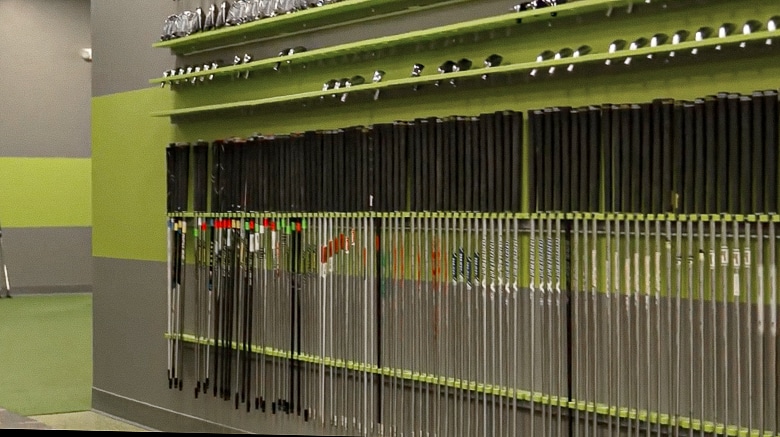
Because flex labels vary so wildly between manufacturers, club fitters and serious builders turn to a more objective measurement: CPM, or Cycles Per Minute.
Here's how it works: you clamp the shaft near the grip end, attach a standardized weight to the tip, pull it down, and let it oscillate. A frequency analyzer counts those oscillations per minute. Higher CPM means a stiffer shaft; it's that simple. Testing typically uses a 5-inch clamp without grip, with 204 grams for woods and 260 grams for hybrids and irons. However, the common 5-inch clamp design can cause measurement issues, particularly where diameter changes in the mid-section lead to uneven clamp pressure and less accurate readings.
But don't mistake "objective" for "perfect." There's no universal standard for clamp length, pressure, or even tip weight across the industry. Rotate that same shaft 90 degrees in the clamp, and you'll often see CPM shift by up to 8 cycles due to material anisotropy. For golfers wanting to validate flex measurements against actual performance, Fusion Tracking technology in modern launch monitors can help correlate shaft stiffness with real-world ball flight data. CPM gives you a solid baseline for comparing shafts, but it's not the whole story.
CPM readings give you a number, but that number means nothing until you connect it to the engine driving your swing: raw clubhead speed.
Here's the structure that actually works: swing speeds over 105 mph demand extra stiff shafts, 95-105 mph pairs with stiff, 85-95 mph matches regular flex, 75-85 mph fits senior flex, and under 75 mph calls for ladies flex. These aren't arbitrary; they're based on how much force you're putting into the shaft during the downswing. The shaft's bending during your swing stores energy that releases at impact, which is why matching flex to speed directly affects your distance potential.
But here's what the charts won't tell you: your tempo matters just as much. A smooth swinger at 100 mph might need regular flex, while an aggressive loader at the same speed requires stiff. Don't trust speed alone. Get on a launch monitor and hit different flexes to see your actual dispersion patterns. As golfers age and experience natural swing speed changes, proper refitting can boost distance by up to 15%. A professional club fitting can optimize your driver shaft flex to match your unique swing characteristics and ensure you're getting the most from your equipment.
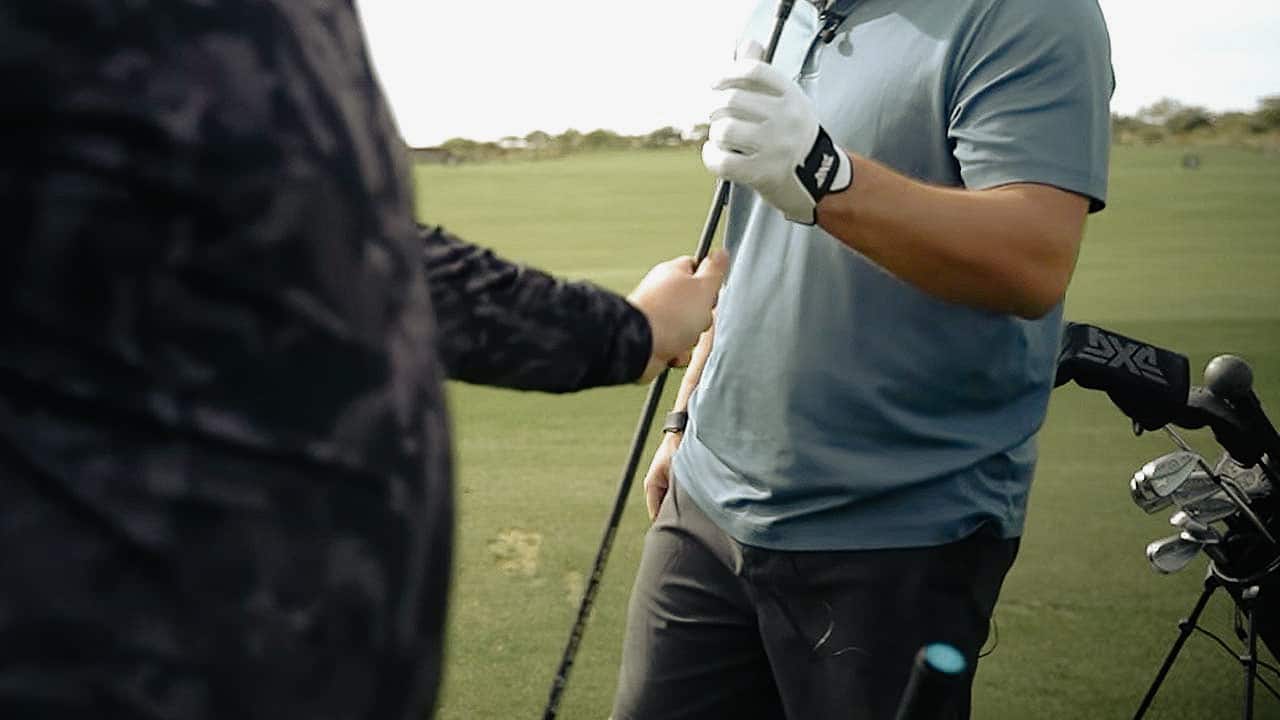
Stripped of their labels, shafts become anonymous, and that's actually where the truth lives.
You've got two reliable options here. Initially, frequency analyzers measure cycles per minute when you deflect the shaft tip; higher CPM means stiffer, lower means softer. This is the gold standard that professional fitters use, and it cuts through every brand's inconsistent labeling.
Second, deflection boards clamp the grip end while a standard weight hangs from the tip. You're measuring actual bend, not some marketing department's interpretation of "stiff." The amount of deflection directly reveals the shaft's true flexibility, since more bending indicates a softer flex rating.
If you're experienced, compare step patterns against reference shafts you've already verified. Some shafts hide ID marks on the butt end that reveal flex ratings. Understanding these measurements matters because flex ratings influence club head position at impact, directly affecting your shot trajectory and spin. Working with a professional club fitter ensures these measurements translate into a shaft that matches your unique swing characteristics.
Skip the "break it over your knee" nonsense, you'll destroy the shaft and learn nothing useful.
Understanding launch characteristics starts with one fundamental truth: your shaft bends during the downswing, and that bend directly shapes every aspect of ball flight.
Flexible shafts produce higher launch angles and increased spin. Testing with R-flex shafts demonstrated 2° of additional loft through lead deflection at impact—translating to 11 extra yards of carry and 7 more yards of total distance. That's real performance you're leaving on the table with the wrong flex. Softer shafts help slower swing speeds generate more clubhead speed, making them ideal for players who need that extra boost.
Stiffer shafts generate lower launch profiles with reduced spin. If you're swinging fast with a shaft that's too whippy, you'll create excessive spin that kills your roll-out distance. Go too stiff, and you won't get the ball airborne properly. Your shaft flex directly controls flight path optimization; there's no workaround. The kick point location also determines where the shaft flexes along its length, further influencing your launch angle and spin rates. Beyond trajectory concerns, incorrect flex may contribute to hooks or slices that send your shots off target.
While alphabetical flex ratings give you a starting point, they're fundamentally unreliable, and modern fitting technology exposes exactly why.
Today's fitting systems use multi-point frequency analysis, measuring stiffness in CPM at intervals along the entire shaft length. This reveals what letter designations hide: two "stiff" shafts can have dramatically different stiffness profiles. EI profiling takes this further, using strain gauges to map wall elasticity and mechanical inertia at one-inch intervals, creating detailed distribution graphs that expose every variation.
Launch monitors add real-time ball flight data, speed, spin, and launch angle, eliminating guesswork. Pair this with motion capture analysis of your swing mechanics, and fitters can match shaft characteristics to your specific change of force and downswing activity. Custom manufacturing now controls weight, flex, and torque independently, building shafts to your exact specifications. Modern graphite shafts using advanced composite technologies can now be engineered to tighten dispersion and nearly match steel's accuracy while offering customized stiffness and weight distribution.
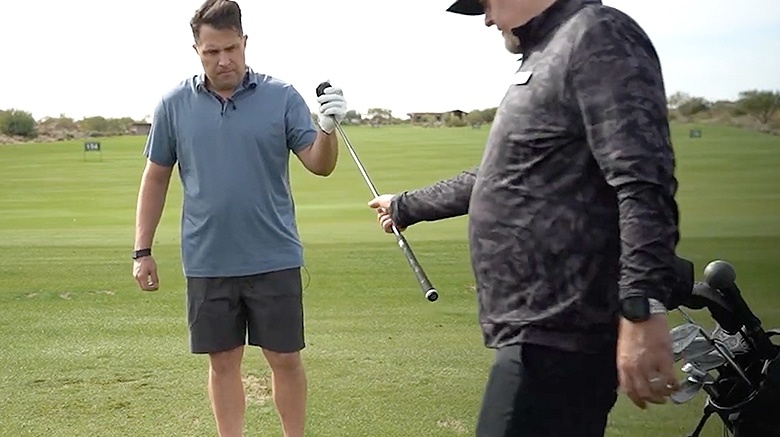
Yes, you can change shaft flex through trimming, but here's what actually matters: tip trimming packs the real punch. Remove one inch from the tip, and you've effectively jumped a full flex; an S becomes an X. Butt trimming? It's mostly a myth for flex changes. You'll lose swing weight without meaningful stiffness gains. The shaft's tapered design makes the tip the control center for flex adjustments.
You should reassess your shaft flex every one to two years once you're past 60. Don't wait for your game to fall apart initially. The real trigger isn't your birthday; it's a measurable drop in swing speed below 85 mph or noticeable distance loss. Get fitted annually if you play regularly, and always reassess after any injury or extended break. Your swing changes gradually; your equipment should follow.
Yes, temperature directly impacts your shaft's performance. Cold weather stiffens materials, particularly steel, reducing flex and costing you distance. You're fundamentally playing a stiffer shaft than you fitted for. Heat does the opposite, making shafts more pliable. Humidity affects your grip more than the shaft itself. The fix? Consider graphite shafts for winter rounds and club up in cold conditions to compensate for that temporary stiffness increase.
Yes, your driver and irons can absolutely require different flex ratings, and they often should. Your driver swing is typically faster and more aggressive, which might demand a stiffer shaft, while your irons benefit from heavier, sometimes softer shafts for control. Don't fall for the myth that you need matching flex across your bag. Your swing characteristics change with each club, so your shaft specs should adjust accordingly.
Regripping won't change your shaft's actual flex, but it absolutely changes how that flex feels in your hands. A firmer grip material makes the shaft feel stiffer; softer materials create a sensation of more whip. Grip weight matters too; heavier grips subtly increase perceived stiffness. So while you're not physically altering the shaft, you're definitely changing your sensory experience of it during the swing.
Here's what I want you to take away: shaft flex isn't about your handicap or what the guy at the pro shop assumes about your game. It's about your swing speed, tempo, and how you deliver the club. Get fitted properly using actual data, CPM readings, launch monitor numbers, and on-course feedback. Skip the marketing labels and trust the measurements. Your ball flight will tell you everything you need to know.