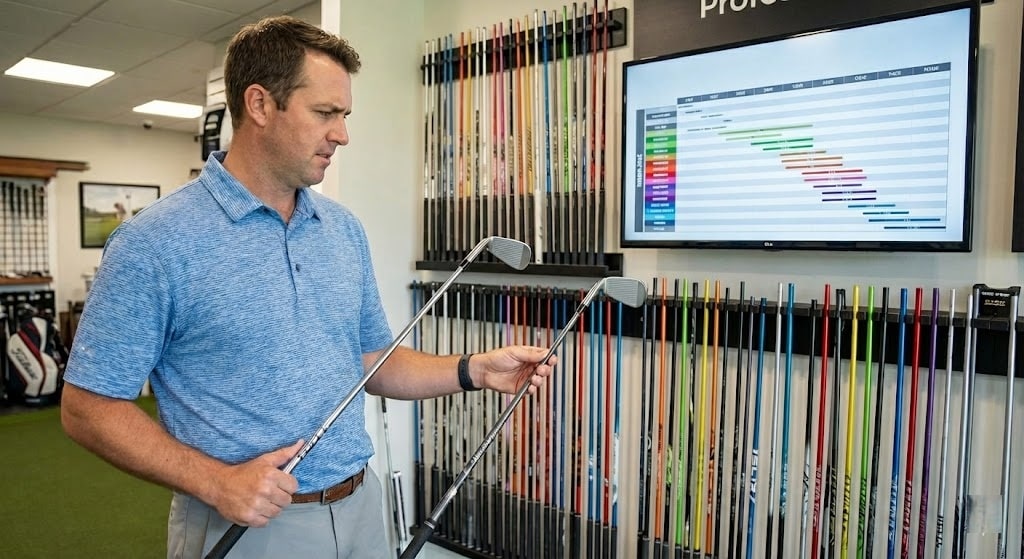
The right shaft comes down to your swing speed, tempo, and whether you're prioritizing distance or control. If you swing under 90 mph, you'll benefit from lighter graphite shafts in regular or senior flex. Faster swingers above 105 mph need stiffer, heavier options for stability. Don't fall for the myth that stiffer always means better; it doesn't. The details below break down exactly how to match shaft characteristics to your specific game.
When you walk into a golf shop, you'll hear sales pitches about "aerospace-grade carbon fiber" and "tour-proven steel construction," but here's what they won't tell you: the material of your shaft matters far less than whether that material matches your swing.
Steel shafts run heavier at 120 grams or more, providing control and shot consistency that stronger players crave. Graphite tips the scales between 50 and 85 grams, generating clubhead speed you can't manufacture with steel. Graphite shafts also absorb vibrations better, making them easier on your hands and joints. Composite shafts split the difference, combining a steel body with a graphite tip.
Here's the truth: each material serves a purpose. Steel rewards precision. Graphite rewards speed. Composite attempts both. Your job isn't picking the "best" material; it's identifying which trade-off serves your game. The lighter weight of graphite makes it particularly suitable for seniors and women golfers who benefit from the increased swing speed potential. Modern manufacturers now utilize carbon composites and titanium blends to achieve both strength and lightness in premium shaft options.
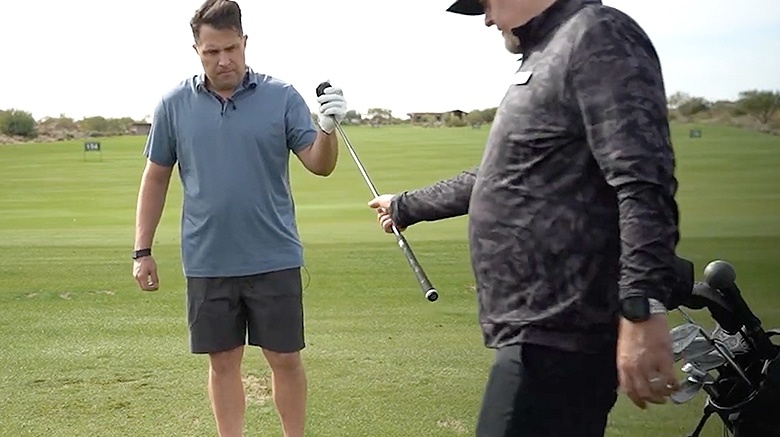
Flex, that single letter stamped on your shaft, causes more confusion than any other equipment variable in golf. Here's the truth: it's simpler than manufacturers want you to believe.
Your swing speed determines your starting point. Swinging above 105 mph? You need extra stiff. Between 95 and 105 mph puts you in stiff territory. Most amateurs fall into the 85-95 mph range, making regular flex their match. Senior flex works for 70-85 mph, while ladies' flex suits speeds below 70 mph. Players with swing speeds under 90 mph often benefit from lighter graphite shafts that can help increase clubhead speed.
Get this wrong, and you'll pay the price. Too stiff a shaft for your speed means poor energy transfer and lost distance. Too soft creates balloon shots with excessive spin. Softer shafts also produce high spin rates that can make the ball harder to control in windy conditions. The right flex syncs your shaft's loading and release timing with your natural swing, providing consistent ball flight every time. If you consistently miss in the same direction, your shot shape may indicate that you need to adjust your flex selection.
Shaft weight might matter even more than flex, yet most golfers obsess over that single letter while ignoring the grams listed right next to it.
Here's the reality: every 10 grams you add drops your swing speed by roughly half a mile per hour. That sounds minor until you realize lighter isn't automatically better. Testing shows over half of golfers achieve tighter shot dispersion with shafts around 85 grams, not the lightest option available.
Your swing tempo dictates everything. Aggressive, fast shifts demand heavier shafts to prevent overswinging and stabilize your path. Smooth, deliberate swingers generate more speed with lighter options. The wrong weight forces compensations that create pulls, slices, and mishits. Proper fitting has revealed distance differences up to 21 yards between shaft weights for individual players. Professional fittings using launch monitors provide precise data on swing speed, ball speed, and flight patterns to identify your optimal weight.
A shaft that's too light can produce high spin rates that reduce your control and cause the ball to balloon upward, costing you distance despite the increased club speed. For reference, golfers with swing speeds under 75 mph typically perform best with lightweight graphite shafts in the 39-50 gram range, while those swinging faster may need considerably heavier options. optimal golf shaft selection tips can further enhance your performance on the course. Consider consulting with a professional club fitter who can analyze your swing and recommend the best shaft material and flex for your game. Experimenting with different shaft characteristics can lead to significant improvements in accuracy and distance, allowing you to play your best.
Beyond that single flex letter stamped on your shaft, three interconnected characteristics actually determine how your ball flies and whether you can control it: kick point, torque rating, and shaft geometry.
Kick point dictates where your shaft bends most. A low kick point flexes near the clubhead, launching the ball higher with more spin, ideal if you're fighting to get shots airborne. A high kick point bends closer to your hands, producing that penetrating, low-spin path faster swingers crave. Players with high swing speeds often prefer high kick points because they provide lower launch and spin for enhanced control.
Torque measures twist resistance. Low torque shafts fight rotation, keeping your face stable through impact. High torque allows more twist, which can actually help slower swingers square the face. But excessive torque creates unpredictable pushes and hooks. Since there are no universal standards for shaft specifications, torque ratings can vary significantly between manufacturers.
Shaft geometry, tip diameter, butt diameter, and parallel sections fine-tune these effects beyond simple flex ratings. More flexible shafts feature a longer parallel tip section and skinnier tip, which allows for greater forward bending before impact, launching the ball higher.
Your bag contains 14 clubs, and treating every shaft the same is a fundamental mistake that costs you strokes.
Drivers and fairway woods demand graphite, period. The lighter construction (50-85 grams) generates clubhead speed you simply can't achieve with heavier alternatives. Steel in your driver is a relic from another time.
Irons flip this equation. Steel shafts deliver the consistency and feedback precision shots require. That heavier weight stabilizes your swing and provides distinct impact feedback that helps you diagnose every strike.
Hybrids sit in between, but lean toward graphite to maintain their distance-friendly characteristics. Match the flex to your swing speed: Senior for slower tempos, Stiff for aggressive swingers. Taking the ShaftFit quiz can help recommend suitable shafts based on your specific swing characteristics. Your swing tempo also influences the appropriate flex, with faster tempos generally requiring stiffer options.
Wedges need heft. Heavier shafts improve control where touch matters most around the greens. A shaft that's too soft can cause high spin and ballooning shots, undermining the precision you need for scoring clubs.
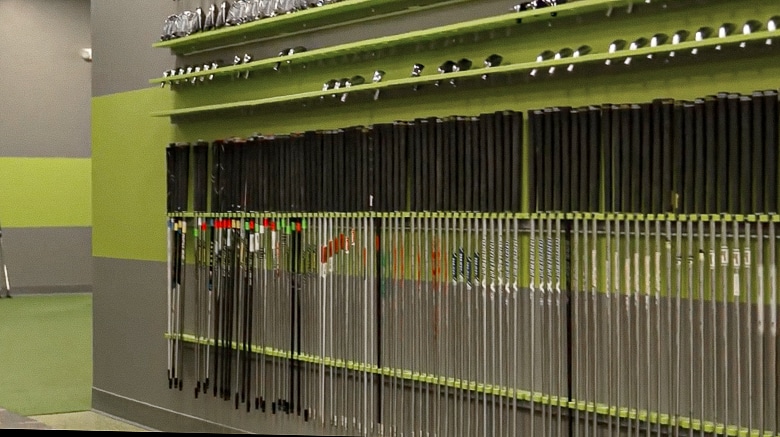
You don't need to replace shafts nearly as often as manufacturers want you to believe. Steel shafts hold up for about two years of regular play, while graphite versions last around five years. That said, I'd ignore the calendar and watch for actual warning signs: cracks, strange vibrations, unexplained distance loss, or inconsistent ball flight. If your shafts feel solid and you're hitting it well, don't fix what isn't broken.
You can't directly swap shafts between brands; the adapters aren't universal. A TaylorMade shaft won't fit a Callaway head without the correct brand-specific adapter. Third-party adapters exist, but they're hit-or-miss on fit and performance. Your best move? If you've got a shaft you love, have it pulled and re-tipped with the proper adapter for your new club head. It's the only reliable solution.
Yes, most golf shaft manufacturers offer warranties, typically lasting one to two years from your purchase date. You'll find brands like Fujikura and TaylorMade covering defects for two years, while KBS and Mitsubishi provide one-year protection. Here's the catch: you must buy from an authorized dealer, keep your receipt, and avoid any modifications. Damage from misuse, improper installation, or club-throwing tantrums won't qualify for coverage.
Professional shaft fitting typically costs you between $100 and $300 for a standalone session. You'll pay around $99 to $175 for a driver-only fitting lasting about 90 minutes. If you're getting a full bag fitted, expect $325 to $400 for thorough sessions running 2.5 to 3 hours. Facilities using premium technology like TrackMan or GCQuad charge more, but you're getting precise data that justifies the investment.
No, you can't reliably repair cracked or damaged shafts; don't let anyone tell you otherwise. Once a shaft's structural integrity is compromised, it won't perform as designed, and you'll notice changes in feel, sound, and distance immediately. Bent, dented, or fractured shafts alter energy transfer during your swing. Replacement is your only real option. The good news? A professional can reshaft your club properly with the right equipment.
You don't need to chase the latest shaft technology or trust what worked for your buddy. You need a shaft that matches your swing speed, your tempo, and your goals. Get fitted by someone who isn't trying to upsell you, test multiple options on a launch monitor, and trust the data over the marketing. Your perfect shaft exists, now go find it.