The TP5 and TP5x share an identical five-layer construction, but compression tells the real story. You'll feel the TP5's softer 85 compression absorb into your putter face, generating 8,500+ RPM for superior greenside bite. The TP5x's firmer 97 compression delivers roughly 4 mph more ball speed and a higher launch with less spin, ideal if you're swinging fast and chasing distance. Your swing speed ultimately determines which ball releases your best performance.
If you've ever browsed discount golf balls online, you've probably stumbled across "refinished" options selling for a fraction of new ball prices and wondered what the catch is.
Here's the deal: refinished golf balls are used balls that have undergone a complete cosmetic makeover. The process strips away the original paint and clear coat entirely, leaving a bare surface. New paint matching the original branding gets applied, followed by a fresh clear coat for that glossy, straight-from-the-box appearance. Each ball undergoes final inspection and packaging before being shipped to customers. A refinished logo is added during the repainting process to distinguish these balls from factory-new products. This restoration is typically performed on balls that are intact with no significant cover damage to ensure the best possible results.
The critical distinction you need to understand is that refinishing is purely cosmetic. Nobody touches the core or internal structure. The ball's guts, where performance actually lives, remain exactly as they were when the ball left the factory originally.
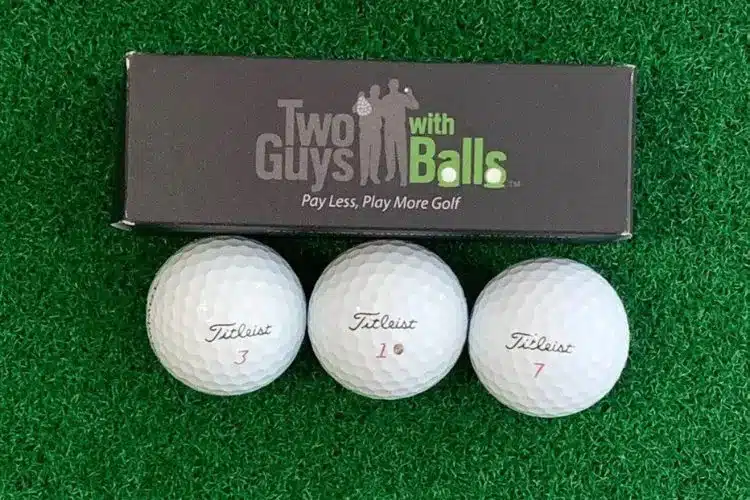
Understanding what refinishing actually involves naturally raises the next question: how does a refinished ball differ from a recycled one?
The distinction matters more than you'd think. Recycled balls keep their original factory paint, branding, and clear coat intact. You're getting the same ball that left the factory, just previously played and thoroughly cleaned. Those scuff marks and faded logos? They're authentic battle scars. Recycled balls are then sorted into quality categories like Eagle, Birdie, and Par based on their condition. Each recycled ball undergoes quality control and grading to ensure transparency about what you're actually purchasing.
Refinished balls undergo a complete surface alteration. Workers strip away the original paint and clear coat, then repaint and rebrand the ball to look factory-fresh. That glossy, pristine appearance comes at a cost—you can't always verify what's underneath. Some refinished balls sport logos that don't match their actual construction, creating legitimate authenticity concerns you won't encounter with recycled options. This repainting process means the performance characteristics might be affected, which is why careful selection matters when choosing refinished over recycled.
Because refinished balls undergo such dramatic surface alterations, quality control becomes the only thing standing between you and a subpar product masquerading as premium equipment.
Reputable refinishers clean each ball thoroughly, then visually inspect for scuffs, creases, and surface damage before sorting into grades. A 5A refinished ball should be pristine with only original markings, while 4A balls may show minor flaws like slight scuffs or misprints. It's worth noting that original manufacturers do not endorse refinished or recycled golf balls, so buyers should understand they're purchasing third-party restored products.
Here's what matters most: USGA regulations prohibit altering a ball's performance characteristics. The original make, model, weight, size, and spherical symmetry must remain intact. Any modification affecting play renders that ball non-conforming. Legitimate refinishers don't touch the core or internal structure—they're restoring appearance, not engineering a different product. Look for clear "refinished" labeling and transparent grading systems. Performance testing shows refinished balls demonstrate minimal variation in distance and trajectory compared to new balls. The USGA accepts refinished golf balls for tournament play, confirming their legitimacy as conforming equipment when properly restored.

Refinished balls consistently lose distance. Testing shows you're giving up around 8 yards with irons, and driver ball speeds drop measurably. The refinishing process slightly increases ball diameter, which directly hurts carry distance. You'd expect firmer compression to mean more speed, but it doesn't work that way with these balls.
The bigger problem is consistency. Refinished balls show wild compression variations, meaning your 7-iron might fly differently shot to shot. That unpredictability kills your ability to dial in distances. At higher swing speeds, the performance gap widens significantly, with testing showing up to 13 yards of distance loss off the driver compared to new balls. This stands in stark contrast to used balls recovered from water hazards, which show performance nearly identical to new balls even after months submerged.
Surface integrity matters most. If the cover's compromised, expect dramatic spin axis changes; we're talking 35+ degrees of deviation. That's not a minor miss; that's finding the wrong fairway. Just as using a ball marker requires precision to maintain fair play on the green, surface consistency on your golf ball is critical for predictable shot outcomes.
Why would anyone deliberately choose a ball that performs worse? That's the wrong question. The real issue is whether refinished balls deliver enough value to justify their trade-offs.
The upside is straightforward: You'll pay less for a ball that looks premium. The refinishing process strips away scratches and stains, leaving you with a visually uniform ball at a fraction of new-ball prices. For casual rounds, that's an attractive deal.
Here's where I get skeptical: The stripping and recoating process can alter weight and balance. Durability takes a hit. And mislabeling remains a genuine problem; you might not actually be playing the brand you think you're playing.
My take? Refinished balls work for practice and recreational play. For competition, stick with new or quality recycled options that use grades like Eagle or Birdie to indicate near-original condition without the coating alterations.

You'll pay roughly $20 to $30 per dozen for refinished golf balls; that's about half what you'd spend on premium new balls like Pro V1s, which run $55 to $60 per dozen. The savings are real: we're talking $25 to $40 back in your pocket per dozen. Buy in bulk, and you'll cut that cost even further. It's straightforward math that favors your wallet.
Yes, you can refinish golf balls at home, but let's be honest, you're unlikely to match factory results. You'll need mild soap, chemical strippers or fine sandpaper, quality spray paint, and a clear sealant. The process demands patience: clean, strip, dry, apply multiple light paint coats, then seal. Here's the catch: your refinished balls may play slightly differently due to weight or surface changes.
You've got solid options. I'd point you toward LostGolfBalls.com (the industry heavyweight since 1992), Golfballs.net, and FoundGolfBalls.com—all offer transparent grading systems, satisfaction guarantees, and free returns. GolfBallPlanet.com and CleanGreenGolfBalls.com round out the reliable picks. Stick with retailers that clearly explain their 5A/Mint grading criteria and offer money-back guarantees. That's your protection against getting stuck with subpar product.
The entire refinishing process takes roughly 3-5 days from start to finish. You'll find that the actual hands-on work, stripping, cleaning, repainting, and applying logos, only consumes a few hours per batch. The real-time sink? The clear coat curing phase, which demands 48-72 hours alone. Temperature and humidity can stretch this timeline further, so don't expect shortcuts without sacrificing quality.
No, professional golfers virtually never use refinished golf balls in tournaments. You might assume it's a rules issue, but it's not—refinished balls are technically legal. The real reason? Performance inconsistency. Pros demand absolute uniformity in spin, distance, and feel that refinished balls simply can't guarantee. Add sponsorship obligations requiring specific new ball models, and you'll understand why refinished balls stay firmly in the amateur practice bag.
Refinished golf balls aren't a scam, but they're not a magic shortcut either. You're trading some performance consistency for significant cost savings. If you're losing multiple balls per round or working on your game without competing seriously, they're a smart choice. But if you need predictable spin and feel for tournament play, stick with new or high-quality recycled options instead.