Let me start with a confession. I've tested more putters over the last decade than I care to admit: blades, mallets, counterbalanced designs, armlock setups, you name it. I've gone down every rabbit hole the putter world has to offer. So when Performance Golf started talking about "Forward Axis Weighting" and a putter that puts 75% of its weight in front of the shaft, my initial reaction was a raised eyebrow and a healthy dose of skepticism. Another gimmick putter promising to fix your stroke? I've heard that pitch before.
But here's the catch: after spending serious time with the RS1, I'm not writing a dismissal. I'm writing something closer to a love letter. Let me walk you through exactly why.
Shave 3 strokes off your next round. Our RS1 review reveals how this mallet’s high-MOI alignment tech locks your line. Click for the true on-green test.
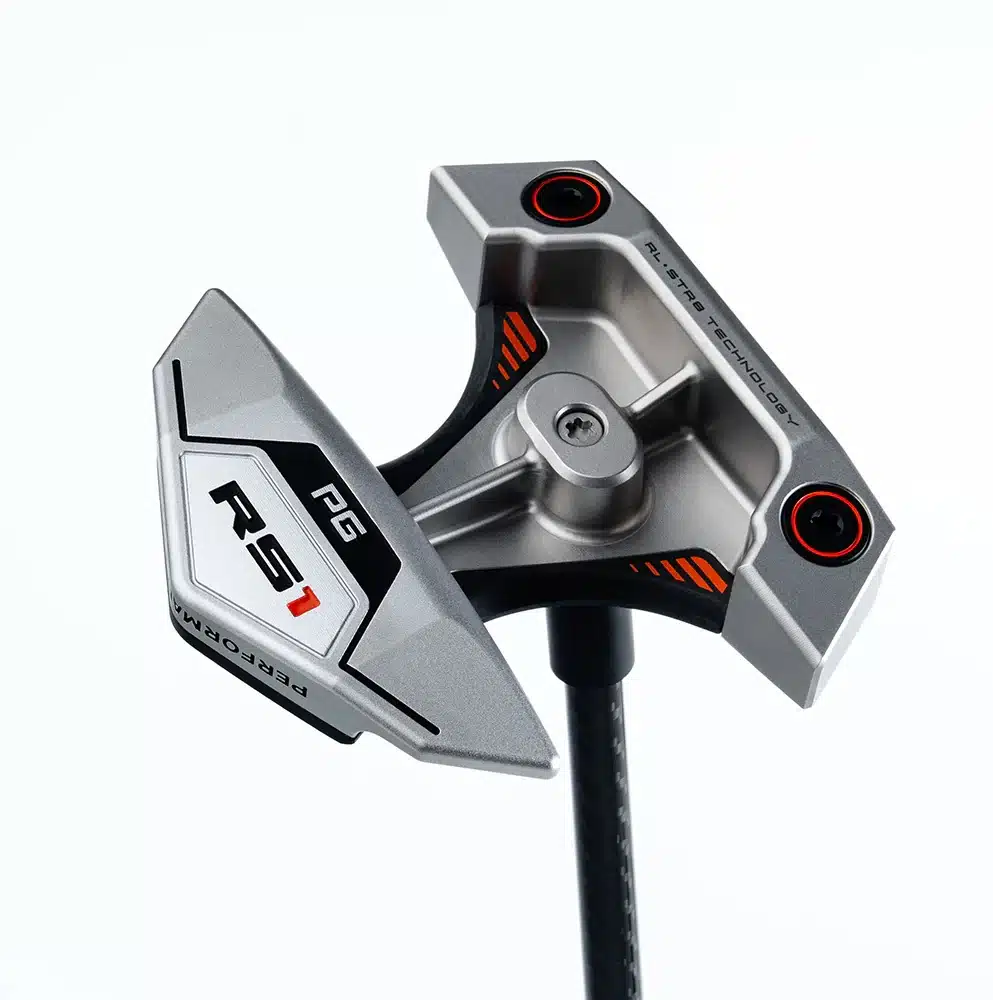
When you first pull the RS1 out of its packaging, it catches you off guard. This isn't your grandfather's Anser-style blade, and it's not a spaceship mallet either. It sits somewhere in between a hybrid shape that looks purposeful without being intimidating. The forward-weighted design means the mass is concentrated ahead of the shaft, and you can see that in the way the head is proportioned. It's different, but not weird. Think of it as "interesting different" rather than "what-is-that different."
The overall aesthetic is clean and modern, with lines that frame the ball well at address. Setting it down behind the ball for the first time, I noticed the face seemed to settle naturally into a square position. Whether that was the design doing its thing or my brain playing tricks on me, I couldn't tell yet. But the initial impression was positive, it looked like a serious tool, not a novelty item. And for a putter that Performance Golf describes as one of the more radical designs in recent releases, it manages to look remarkably confident sitting behind the ball.

Okay, let's get into the big one, the headline technology. Forward Axis Weighting is the core concept behind the RS1, and it's what separates this putter from basically everything else on the market. The idea is straightforward: instead of placing the majority of weight behind the shaft (like most putters do) or trying to create a zero-torque, face-balanced design, Performance Golf loaded 75% of the putter's total weight in front of the shaft axis.
Why does that matter? Because of something called toe flow. In a conventional putter, the weight distribution behind the shaft creates a natural tendency for the toe of the putter to rotate open on the backstroke and close through impact. That's mechanical toe flow, and it's something every golfer fights to some degree. Some players manage it beautifully with timing and practice. The rest of us, and I'm raising my hand here sometimes, struggle to get the face back to square consistently, especially under pressure.
The RS1's forward weighting is designed to counteract that toe flow. Performance Golf calls it "Face Down Balance," and the best way I can describe the sensation is this: the putter face feels like it wants to stay looking at the target. During the stroke, instead of feeling the head twist or drift, it tracks like it's on a rail. I was genuinely surprised the first time I made a few practice strokes. There was a stability to the face that I don't normally feel, even with high-end mallets I've tested.
Now, I want to be clear, this isn't a zero-torque putter. Those designs try to eliminate all face rotation, which can feel robotic and unnatural to some players. The RS1 still has a little life to it. There's still a hint of natural arc. But the face drift that usually accompanies that arc is dramatically reduced. It's a subtle but significant distinction, and it's the difference between a putter that feels like a training aid and one that feels like a weapon.
After a few practice sessions, I started to trust it. And that trust translated directly to confidence over the ball, which, as any golfer knows, is half the battle on the greens. The RS1 was designed by Chris McGinley, an experienced club designer with decades of work in the golf industry, including projects for top players and major brands, and that pedigree shows in how thoughtfully the weighting system has been executed.
Here's a detail that might fly under the radar but made a significant difference in how the RS1 performs: the lie angle is set at 74 degrees. That's roughly 4 degrees more upright than a standard putter, and it changes the geometry of your stroke in ways that complement the forward weighting beautifully.
An upright lie angle does a few things. First, it positions your eyes more directly over the ball and the target line. Second, and this is the key part, it creates a tighter, more compact stroke arc. Think about it like this: a flatter lie angle encourages a wider, more arcing stroke path, which introduces more opportunities for the face to open and close. A more upright setup keeps the putter moving on a narrower track, which means fewer variables and fewer chances for the face to get offline.
I noticed this almost immediately on the practice green. My stroke felt shorter and more efficient. I wasn't making big, sweeping motions; the putter naturally encouraged a compact back-and-through movement. For someone who has occasionally battled an overactive stroke (guilty), this was a welcome change. It felt like the putter was working with gravity to guide the face back to square, rather than relying entirely on my hand-eye coordination and timing.
The combination of the forward weighting and the upright lie angle is where the RS1 really starts to make its case. These aren't two separate features, they're designed to work together. The weighting keeps the face stable, and the lie angle keeps the stroke tight. The result is a putting motion that feels remarkably repeatable. And repeatable, on the greens, is everything.
If you're a player who has been told your stroke has too much arc, or if you've ever felt like your putter face is doing its own thing through impact, this setup is worth your serious attention.

I'll admit, I almost overlooked the grip when I first picked up the RS1. But after using it for a while, I realized the Dual Pistol Grip is more than just an aesthetic choice; it's a functional piece of the design puzzle that ties the whole package together.
The grip is shaped to encourage a downward hand position throughout the stroke. Your hands naturally settle into a posture where they're working with the forward-weighted head rather than fighting against it. I found that my grip pressure dropped almost unconsciously. I wasn't squeezing the putter. I was guiding it. And less grip pressure, as any putting instructor will tell you, means a smoother stroke with better feel and feedback.
The feel through the grip is soft and controlled. Strikes on the sweet spot produce a satisfying, muted feedback that gives you confidence without being harsh. Off-center hits still feel decent, more on that in a moment, but you can absolutely tell the difference. It's the kind of feedback loop that helps you self-correct without needing a launch monitor.
What I appreciated most is that, despite all the technology packed into this putter, the grip makes it feel more conventional than you'd expect. I've tested specialty putters that feel alien in your hands, putters where the grip alone reminds you that you're using something "different." The RS1 doesn't do that. Once you're over the ball and locked into your setup, it just feels like a really good putter. That's a compliment, by the way. The best technology is the kind you stop thinking about because it's just working. The grip design is also versatile, working well with conventional, cross-hand, and claw grips alike.
Alright, let's talk about what actually happened when I took the RS1 out of the practice green and onto the course, because that's where it counts.
Short putts inside 10 feet were the RS1's sweet spot, and I mean that literally and figuratively. The combination of face stability and that tight stroke arc gave me a level of confidence on those nerve-wracking 5-to-8-footers that I don't always have. The ball came off the face on line, consistently. I wasn't second-guessing my aim or my stroke. I'd set up, make my stroke, and the ball would track right where I expected it to. For someone who has occasionally turned a 4-footer into an escapade (we've all been there), this was genuinely invigorating.
Forgiveness was another pleasant surprise. On putts where I didn't catch the center of the face perfectly, maybe I was a touch toward the heel or toe, the ball still held its line reasonably well. The forward weighting seems to minimize the face-twisting effect that usually accompanies off-center contact. Is it as forgiving as a giant, high-MOI mallet? Probably not. But for a putter with this kind of blade-mallet hybrid shape, the forgiveness was above what I expected.
Lag putting took a little more adjustment, and I want to be honest about that. In the first few rounds, my distance control on 30-to-40-footers was slightly off. The putter's unique weighting and feel required a brief recalibration period for those longer rolls. But once I dialed in the speed, which took maybe three or four practice sessions, my lag putting actually improved. I started leaving approach putts in a much tighter circle around the hole. During one particularly memorable stretch, I went two consecutive rounds without a single three-putt. For a 10-handicapper, that's borderline miraculous.
The bottom line on performance? The RS1 delivers on its promises. The face genuinely stays squarer through the stroke, the ball starts on line more consistently, and the overall putting experience feels more controlled and repeatable than what I've been used to. It's not magic; you still have to read greens and commit to your line, but the RS1 removes a lot of the mechanical variables that can sabotage an otherwise good read.
Shave 3 strokes off your next round. Our RS1 review reveals how this mallet’s high-MOI alignment tech locks your line. Click for the true on-green test.
Honestly? I can't confirm it does. Performance Golf's product pages for the RS1 don't explicitly mention a headcover in the box, not for the $399 stainless steel version or the $429 graphite shaft model. That doesn't mean one isn't included, but it's not advertised. Your safest bet is checking the checkout page or hitting up their customer support directly before you buy. Don't just assume.
The RS1 Putter comes with a 365-day, no-questions-asked guarantee, basically a full-year trial period. That's way longer than the typical 30-day return window most companies offer. You can game it for nearly a year and send it back if you're not feeling it. That's serious confidence from Performance Golf. Just note this is a return policy, not a traditional defect warranty, so contact the seller directly for specifics on damage or repairs.
The short answer: not through any standard menu. The RS1 comes with its patented Dual Pistol Grip, and there's no evidence that you can swap it at checkout. Shaft length? Performance Golf says customization is possible on a "case-by-case basis," but that means contacting them directly; it's not a dropdown option. Custom lie angles are the most clearly supported tweak. For everything else, you'll need to ask and hope they say yes.
The standard RS1 Putter has an estimated delivery of late June to early July, so you're looking at a pre-order situation, not next-day shipping. The Founder's Edition ships on 5/20, which is faster but costs $449 and has fewer than 100 units available. No expedited options or carrier details are listed anywhere. Bottom line: shipping's tied to production timing, not warehouse availability.
Yes, you get a 365-day money-back guarantee, which is honestly wild for a putter. Performance Golf calls it the "Roll STR8 Guarantee," and the deal's simple: if you're not sinking more putts or feeling more confident, send it back. No questions asked. That's nearly a full year to test it on the course. I'd still double-check the return page before buying since policies can always be updated.
So, is the Performance Golf RS1 for everyone? No. If you already putt beautifully with a traditional blade or mallet, and your stroke mechanics are dialed in, you might not need what the RS1 offers. And if you prefer a flatter lie angle with a pronounced arc, the upright geometry could feel restrictive.
But if you're a golfer who struggles with face consistency, if you've ever watched a well-read putt slide offline because the face was a degree or two open at impact, the RS1 deserves a very serious look. It's built for the player who wants technology to do some of the heavy lifting, who wants the putter to work with them rather than demand perfect mechanics on every stroke. The forward weighting, the upright lie, and the grip all work in concert to create something that genuinely feels different in the best possible way. I went in skeptical and came out convinced. That doesn't happen very often. The RS1 is the real deal, and it might just be the most intriguing putter I've tested this year.