Hybrid and rescue clubs are the exact same thing; TaylorMade simply trademarked "rescue" in 2003 as a marketing term, and the confusion has plagued golfers ever since. You're not choosing between two different technologies; you're just navigating branding noise. Both feature the same lower center of gravity, wider sole, and forgiveness benefits that make long irons obsolete for most players. What actually matters is matching loft, shaft specs, and head design to your swing.
If you've ever wondered why some golfers call their club a "hybrid" while others insist on "rescue," you're not alone. This terminology confusion has plagued equipment discussions for decades.
Here's the truth: the concept dates back to 1896 when Standard Golf Company in England patented a club combining wood and iron features. But the modern hybrid didn't truly emerge until Stan Thompson introduced The Ginty in 1973, featuring laminate wood construction and a keel-shaped sole designed for tough lies.
The "rescue" name? That's pure marketing. TaylorMade launched its Rescue line in 2003, branding these clubs as lifesavers for golfers struggling with long irons. The term stuck. Today, hybrid, rescue, and utility clubs all describe the same thing: a wood-iron crossbreed built for forgiveness and distance. These clubs feature cambered sole designs that allow smooth gliding through rough, making them ideal for challenging lies. Cobra Golf also contributed to this evolution when they launched the Baffler in 1975, featuring an innovative rail sole design. However, many sources credit Cobra Golf's Baffler as the first hybrid when it was introduced in 1998, marking the true beginning of the modern hybrid era.
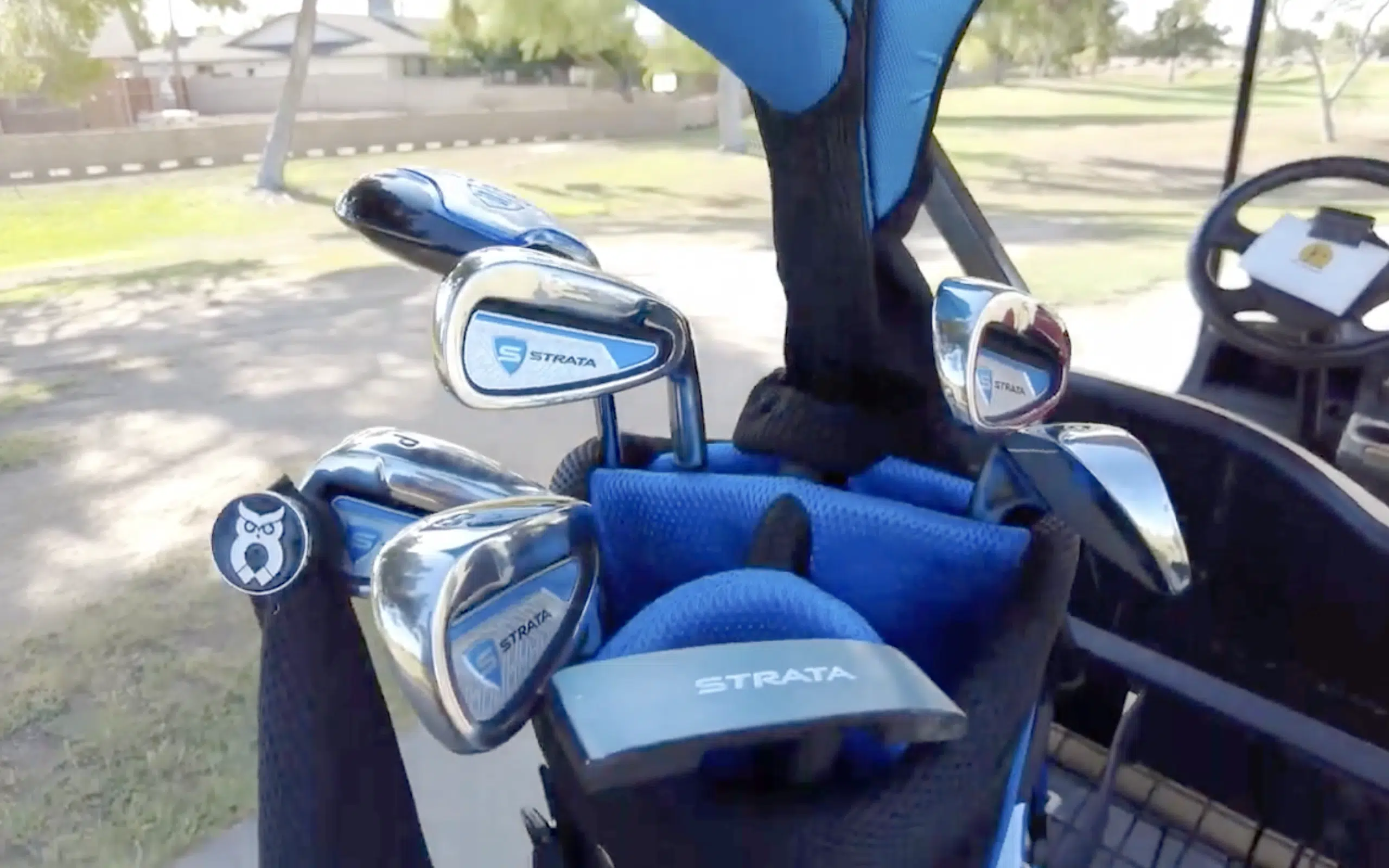
Understanding what these clubs are called matters far less than understanding how they're built, and that's where the real differences between individual models start to emerge.
You'll notice hybrid heads sit between irons and fairway woods in size, compact enough for control, large enough for forgiveness. That bigger head houses a lower, deeper center of gravity that launches the ball higher with less effort on your part. The convex face and wider sole work together to glide through rough that would grab an iron and stop it cold.
Manufacturers fit these clubs with graphite shafts at lengths matching the irons they replace. You get fairway wood launch characteristics with iron-like control. Lofts run from 16 to 27 degrees, and adjustable models let you fine-tune the flight path without buying another club. The long hollow head design prevents the club from snagging in thick grass, making these clubs reliable performers from difficult lies. This higher trajectory means your shots land with softer landings and stay closer to where they pitch. For shots over 180 yards, hybrids typically outperform long irons in both distance and consistency for most amateur golfers.
While the design differences between hybrids and rescues amount to nothing more than branding semantics, how you actually employ these clubs on the course separates scratch golfers from weekend warriors.
You'll find these clubs dominate in situations where long irons fail miserably. That wider sole cuts through thick rough like butter, while the lower center of gravity rescues your mishits from disaster. Off the tee on tight par-4s, you're getting accuracy that drivers can't match. The forgiveness on mishits still allows for significant distance even when you don't strike the ball perfectly. Most golfers should reach for these clubs on long shots over 180 yards, where traditional irons become increasingly difficult to hit consistently.
Here's where versatility truly shines: you can shape trajectories from high-stopping approaches to low punch shots under branches. Windy coastal conditions? These clubs deliver penetrating ball flights you can actually control. From sand, fairway, or gnarly rough, you're carrying one club that handles what used to require three different decisions. You can even use them for chipping around the greens, particularly when dealing with longer grass where traditional wedges might snag.

Performance numbers tell the real story here, and they demolish the notion that hybrids and rescues differ in any meaningful way beyond the logo stamped on the sole. You're looking at identical launch characteristics: higher flight path than long irons, softer landings, and that sweet spot of spin that sits between fairway woods and irons.
Here's what actually matters for your game. If you swing under 95 mph, you'll see significant distance gains over your long irons. Faster swingers? The distance advantage shrinks, but you're trading raw yards for precision and consistency from tough lies. Testing showed the Qi1 rescue achieved 4,200 RPM spin with a 96-foot peak height, demonstrating the high launch these clubs deliver. In comparison, seven wood testing produced a ball speed of 153 mph under similar conditions.
The forgiveness factor is where these clubs earn their keep. Larger clubfaces deliver better ball speed on mishits, while wider soles slice through rough without getting tangled. The lower center of gravity, combined with a wider sole, helps golfers achieve more consistent and controlled shots from various lies. You're buying reliability, not miracles.
Because forgiveness dominates every conversation about these clubs, let's cut through the noise and examine what actually happens when you don't catch one pure.
The data tells a clear story: hybrids and rescues consistently produce tighter shot groupings than long irons across every handicap bracket. That larger clubhead and lower center of gravity aren't marketing fluff; they're engineering solutions that minimize distance and accuracy loss when you miss the sweet spot.
Here's what matters for your game. If you're a high handicapper, you'll find these clubs launch easier and perform reliably from rough, fairway, or awkward lies. Mid-handicappers gain consistency on approach shots and reliable distance gapping. Even low handicappers benefit from the higher launch and softer landing when attacking tight pins or recovering from thick rough. For those serious about optimizing their hybrid performance, launch monitors with club path data can reveal exactly how your swing mechanics translate to ball flight with these forgiving clubs.
Terminology confusion kills clarity in the golf equipment space, and the hybrid versus rescue debate is a perfect case study in marketing muddying the waters. Here's the truth: TaylorMade coined "rescue" in 2002 when they launched the initial hybrid in their Firesole line. The name stuck like Q-Tips to cotton swabs; first-mover advantage created permanent vocabulary.
You're not comparing two different club categories. You're navigating brand-specific marketing language for identical technology. Manufacturers slap "hybrid," "utility," or "rescue" on the sole based on their marketing department's preference, not engineering differences. Some use "H" designations, others prefer "R"; it's arbitrary branding, nothing more. Regardless of what manufacturers call them, these clubs deliver the distance of a fairway wood with the accuracy of an iron. This lack of standardization mirrors the shaft flex industry, where no universal standards exist for classifications like stiff or regular.
Don't let terminology dictate your purchasing decisions. Focus on loft, head design, and shaft specifications. The label means nothing; the performance data means everything.

You should carry two to three hybrids in your bag. Forget the idea that more is always better; it's about filling specific distance gaps between your fairway woods and mid-irons. Map your actual yardages initially. If you're hitting your 5-iron 180 yards and your 5-wood 220 yards, that's a 40-yard gap screaming for hybrid coverage. Start with a 4-hybrid, then add others only where real gaps exist.
Yes, you can absolutely get hybrid clubs custom-fitted for your swing, and you should. A proper fitting session uses launch monitor data to dial in shaft flex, lie angle, club length, and loft specifically for your swing speed and tempo. This isn't marketing fluff; it's how you guarantee your hybrids actually fill distance gaps and deliver consistent ball striking instead of guesswork.
Your swing speed dictates everything. If you're swinging 105+ mph, you need stiff or extra-stiff flex. Slower speeds pair better with regular or senior flex options. But here's what most golfers miss: off-the-rack hybrid shafts are typically too light. You'll gain more accuracy by moving to a heavier shaft (75-85 grams) than by obsessing over flex alone. Weight matters just as much.
Start with the irons you dread pulling from your bag, typically your 3 or 4 iron. If you're consistently mis-hitting, hitting it low, or lack confidence standing over the ball, that's your signal. Test hybrids at the range, comparing launch angle and shot dispersion. Replace gradually; there's no rule saying you must swap all your long irons at once. Let performance, not marketing, drive each decision.
Yes, hybrid clubs are fully legal for tournament and competitive play. You'll find pros on the PGA Tour, LPGA Tour, and PGA Tour Champions using them regularly. The only requirement is that your hybrid conforms to USGA and R&A equipment standards, proper clubhead size, COR limits, and groove specifications. Don't let anyone tell you hybrids are somehow "cheating." They're legitimate, tour-proven clubs you can confidently put in your bag.
Here's the truth you've been waiting for: hybrid and rescue clubs are the same thing. You've been comparing two names for identical equipment. Don't let marketing terminology send you down a rabbit hole of confusion. Pick a club based on the loft you need, the shaft that fits your swing, and the head design that inspires confidence at address. That's what actually matters.