To sharpen your wedge grooves, start by cleaning the clubface with warm, soapy water and a soft-bristle brush to remove debris. Hold your sharpener at a 45-degree angle matching your groove profile, then make 3-4 light strokes per groove before gradually increasing pressure. Don't carve new channels; you're restoring edges, not redesigning them. Wipe away metal shavings and check for a distinct grip. The right technique can add nearly 1,000 rpm of backspin, and I'll show you exactly how to get there.
The sharpener market is a mess of confusing claims and wildly different price points, and most golfers grab whatever's cheapest without understanding what actually works.
Here's the breakdown: you've got three tiers. Entry-level steel sharpeners ($10–$15) handle basic cleaning and light sharpening on V-grooves. Mid-range multi-tip tools ($10–$20) give you interchangeable heads for U-grooves, V-grooves, and deep cleaning, solid versatility for the money. Premium carbide sharpeners (around $80) deliver industrial-grade durability with conforming groove geometry and lifetime sharpness guarantees. Top-tier options like GrooVex use CNC precision to improve groove geometry for better shot performance.
The material matters most. Carbide construction outlasts steel and produces measurably better spin results. Look for aluminum alloy shafts (lightweight, rust-resistant), non-slip grips, and guard rails that prevent accidental scratches on your clubface. Quality options like the nU Groove Sharpener feature groove-restoring steel hardened to 64 Rockwell, ensuring long-lasting performance without damaging your clubs. Skip the bare-bones single-point tools unless you're only working with older V-groove wedges. Just like how fresh grips enhance ball speed and carry distance, properly maintained grooves maximize the spin and control you get from each shot.
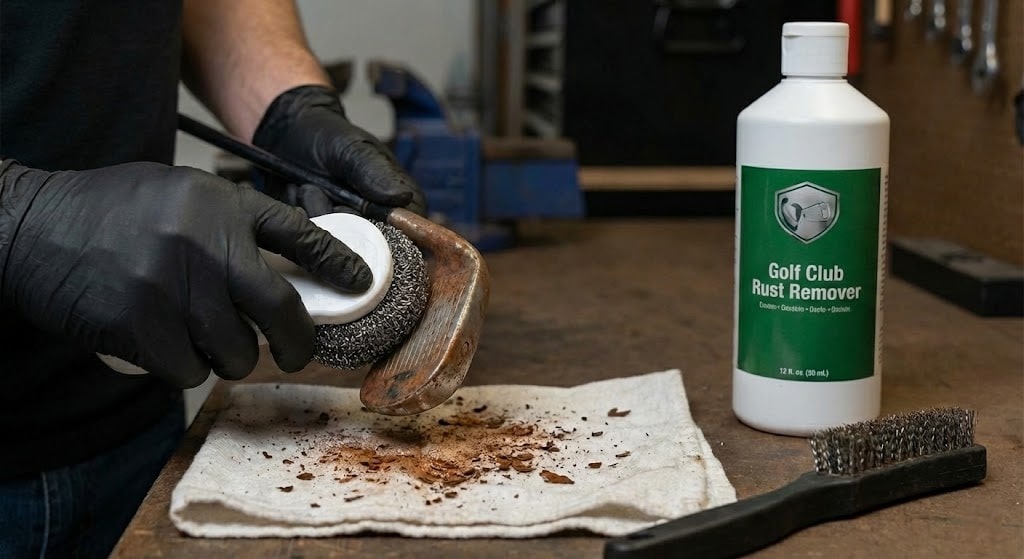
Before you touch that sharpener to your clubface, there's a step most golfers skip, and it completely undermines their work. Dirt, grass, and grime packed into your grooves don't just hurt your spin; they'll prevent the sharpening tool from making proper contact with the groove walls.
Grab a soft-bristled brush and mix warm water with mild dish soap. Soak your club heads for five minutes, then scrub every groove thoroughly. For stubborn grime that won't budge, soak in warm soapy water before scrubbing to loosen the buildup. Rinse carefully, keeping water away from shafts and grips, and dry completely with a microfiber towel. Don't forget to clean your grips with a damp cloth to remove dirt and sweat that accumulates during play.
Here's what matters: those packed-in deposits create a false groove profile. You'll reshape around debris instead of metal. Clean grooves reveal their true condition, letting you see exactly where material needs removing and ensuring your sharpening work actually restores performance. Remember that dirty grooves can reduce backspin by up to 50%, making this cleaning step essential before any sharpening work begins.
Grab your sharpener and let's get to work, but at the outset, I need to address the biggest mistake I see golfers make with groove sharpening.
They apply way too much pressure. You're restoring edges, not carving new channels.
Place your club on a towel-covered flat surface for stability. Hold the sharpener at a 45-degree angle to match your groove profile, V, U, or square. Insert the tip carefully into the initial groove and draw it back smoothly along the entire length. Start with 3-4 light strokes before increasing pressure. Begin with the bottom groove and systematically move upward across the club face.
Here's what matters: work each groove individually with consistent, controlled movements. Don't rush past the groove ends, or you'll scratch the face. After completing all grooves, wipe away metal shavings and run your fingernail across the edges; you should feel a distinct, clean grip. This technique of exposing fresh material underneath is similar to how tour professionals use medium-grit sandpaper to restore tackiness on worn grips. To check your groove shape beforehand, use a tee; a triangle shape indicates V grooves, while more wiggle room indicates U grooves.

Now that your grooves look razor-sharp, let's address the question you're really asking: Does this actually make a difference on the course, or is it just another equipment rabbit hole?
Here's the truth: sharpened grooves genuinely improve spin and control. Testing reveals worn wedges can gain nearly 1,000 rpm in backspin after proper sharpening. That's not marketing fluff, it's measurable performance you'll feel on approach shots and around the greens.
Sharp grooves grip the ball at impact, creating consistent compression and predictable stopping power. You'll notice tighter dispersion on chip shots and more reliable behavior from the rough. This is especially beneficial for players who frequently play in sandy conditions where debris can accelerate groove wear. The improved grip becomes even more critical with lob wedges, which travel 50-80 yards and demand precise spin control for those delicate shots around the green.
The practical payoff? Your wedges work as designed again. You're not fighting worn equipment that dumps shots past the pin. You're executing with confidence.
Sharp grooves won't stay sharp if you neglect the tools that got them there. I've seen golfers obsess over their club faces while their carbide sharpener sits caked in metal shavings; that's backwards thinking.
Clean your sharpening tool after every use. Metal debris dulls even industrial-grade carbide over time. Store it somewhere dry; rust doesn't care how much you paid for your gear. Quality stainless steel blades help prevent rusting and extend the life of your sharpener.
Before you sharpen, always clear debris from your grooves initially. Dirt and grit reduce effective groove volume, and dragging a sharpener through contaminated channels just grinds that junk deeper into the steel. A properly cleaned clubface ensures the sharpener can work at the correct 45-degree angle without obstruction.
Check your tool's cutting edges monthly. Quality sharpeners with hardened steel (64-65 Rockwell) last years, but nothing's immortal. A dull sharpener damages grooves instead of restoring them. Well-maintained sharpeners can increase backspin by up to 3x, so protecting your investment pays dividends on the green.

Yes, sharpening can absolutely make your clubs non-conforming. If you're too aggressive or use the wrong tool, you'll exceed the USGA's strict limits, 0.035 inches width, 0.020 inches depth, and that critical .010-inch edge radius. Go past any of those, and you've got an illegal club. Use a precision sharpener with depth guides, apply light pressure, and limit yourself to 2-4 strokes per groove.
There's no magic expiration date; that's just marketing fluff. You'll replace your tool when it stops performing, not when a calendar says so. Watch for a rounded edge, longer sharpening times, or grooves that won't bite anymore. Recreational golfers might get years of use; frequent sharpeners need replacements sooner. Clean it after each use, store it dry, and you'll stretch its life considerably.
Sharpening grooves on newer wedges can absolutely decrease spin performance. You're risking damage to precisely engineered groove geometry that manufacturers spent millions perfecting. The GrooVex sharpener, for example, actually reduced spin on certain wedges during testing. Newer wedges feature localized heat treatments and specific "U" or "V" groove profiles; aggressive sharpening tools designed for older clubs can wreck these surfaces. Don't fix what isn't broken yet.
No, sharpening won't fully restore your worn wedges to new club performance. Testing shows sharpened wedges produce roughly 6,300 to 7,300 RPM, while new wedges deliver 8,500 to 9,500 RPM. You'll gain 600 to 1,000 RPM over your current worn grooves, a meaningful improvement, but modern wedges have superior groove designs you simply can't replicate with a sharpening tool. Sharpening extends life; it doesn't create resurrection.
You've now got everything you need to restore your wedges to peak performance. Sharp grooves mean more spin, better control, and lower scores; it's that simple. Don't let worn grooves cost you strokes around the green. Commit to regular maintenance, use the right tools, and you'll extend your clubs' effective lifespan considerably. Your short game will thank you for the effort.