To hang golf clubs on a wall, you'll need a sturdy rack system, appropriate anchors for your wall type, and basic tools like a drill and level. Mount the rack into wall studs whenever possible; drywall alone won't support the weight. Position hooks at chest height with eight inches of clearance from the wall, and always test the mount with downward pressure before loading your clubs. The installation process takes about thirty minutes when you've got the right hardware.
When you're ready to mount your golf clubs on the wall, you'll quickly find that the market is flooded with options, and not all of them deserve your attention.
Let's cut through the noise. You've got three primary categories worth considering: gravity racks, magnetic racks, and traditional wall-mounted storage systems. Gravity racks use simple physics to hold your clubs in place. They're basic, affordable, and constructed from metal or plastic. Magnetic racks rely on magnets to secure equipment, but I'll be blunt: they're only suitable for lightweight accessories, not your prized irons.
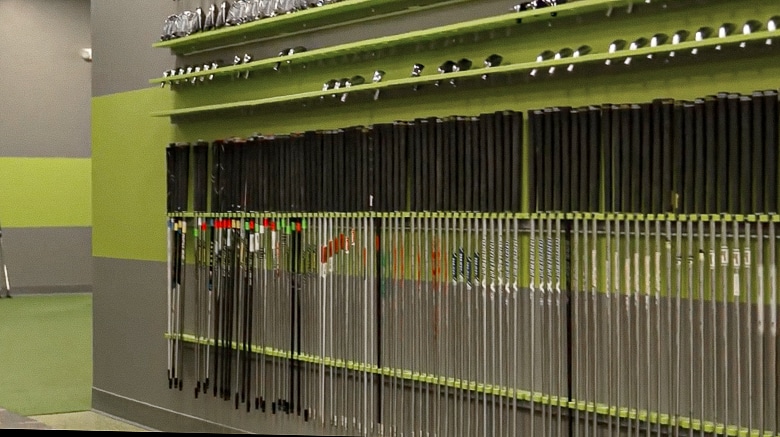
Traditional wall-mounted storage remains the most reliable choice. Built from metal or wood, these systems bolt directly to your wall, keeping clubs lifted and protected while reclaiming precious floor space. This approach also protects equipment from damage and potential hazards that can occur when gear is left on the ground. For retailers and serious collectors, specialized display racks featuring a waterfall arrangement provide unobstructed club visibility while allowing easy interaction with each piece. If you're considering complementary storage solutions, cart bags with forward-facing pocket designs offer similar organizational benefits for when you're ready to hit the course.
Before you grab your drill and start punching holes in your garage wall, let's talk about what you actually need, because I've seen too many golfers waste money on hardware that doesn't match their wall type.
Your wall dictates everything. Drywall demands toggle anchors or plastic anchors. Wood studs? Lag bolts driven directly into the stud are your best friend. Concrete or brick requires masonry anchors and a specialized drill bit.
Beyond hardware, you'll need a drill, level, tape measure, pencil, and stud finder. Don't skip the stud finder; it's the difference between a secure mount and clubs crashing down at 2 AM.
Grab protective eyewear and check weight ratings on every anchor. Your vintage Scotty Cameron deserves better than drywall anchors rated for wall decor. Just like re-gripping your golf clubs requires proper drying time for optimal results, mounting hardware needs adequate time to set before bearing the full weight of your collection. For cabinet-style displays, you'll typically need 2 gold hangers with 4 screws plus mounting hardware to get everything secured properly. If you're mounting a heavy-duty commercial rack that can hold up to 140 clubs, you'll want to invest in robust lag bolts rated for significant weight.
Where you hang your clubs matters just as much as how you hang them, and this is where most golfers make their initial critical mistake.
You need a dry, temperature-controlled space away from direct sunlight. That garage wall next to the water heater? Terrible choice. The humid corner near your laundry room? Even worse. Heat warps shafts, moisture breeds rust, and UV rays fade grips faster than you'd expect. If you've recently had your clubs re-gripped, wait at least 24 hours before mounting them to ensure the grips have fully adhered.
Your wall must handle the weight. Stud walls give you direct screw attachment, the strongest option. Drywall demands proper anchors. Concrete requires masonry fasteners. For standard stud walls, look for mounting systems with brackets spaced 16 inches apart to align with typical framing.
Allow eight inches of clearance from the wall for easy club removal. Position the rack at a comfortable reaching height, away from high-traffic zones where someone might bump into your equipment. Keep clubs raised off the floor, always. Storing bags on the garage floor exposes them to dirt, dust, and debris that can damage both your bags and clubs over time.

Your location's locked in, so let's get to the actual work. Start by drilling pilot holes directly into your marked stud locations. This prevents wood splitting and guarantees your screws bite properly. If you're mounting into drywall without studs, use heavy-duty anchors rated for the combined weight of your clubs and bags.
Secure your mounting rails with lag bolts, tightening them until the base sits perfectly perpendicular to the wall. Don't eyeball this; use a level. Next, attach rubber-coated or padded hooks to your rail, spacing them evenly so club grips won't rub together. Before hanging, consider cleaning grips with dish soap and hot water to remove built-up oils and maintain their tackiness while in storage. Once your bag is positioned in the rack, use bungees with plastic balls to keep it securely in place.
Hang clubs with grips facing up at chest height for easy access. For bags, use the top handle on sturdy hooks designed for the weight. Measure your longest golf bag and add four inches to determine the minimum mounting height. Test each hung item with a gentle pull before walking away.
Even though you've just finished tightening every bolt and testing your handiwork, the job isn't truly done until you've addressed the safety factors that'll keep your clubs and your walls intact for years.
Here's the reality: most mounting failures happen weeks later when screws loosen from wall vibrations or temperature changes. Check your hardware monthly, give each screw a quarter-turn test. If it spins freely, you've got a problem developing.
Don't skip the weight test before loading your clubs. Apply downward pressure exceeding your set's total weight. That fourteen-club bag plus hardware can hit twenty pounds easily. Easy installation with proper wall anchors prevents accidents and ensures your display stays securely mounted over time.
Position your mount away from doorways and walkways. A falling driver isn't just expensive, it's dangerous. Keep the mounting height above knee level to prevent trips and accidental contact. Storing clubs on the floor with extended stand legs creates tripping hazards that wall-mounted solutions eliminate. Just as golfers use artificial markers to precisely mark their ball's position on the green, consider using small adhesive indicators to mark optimal bracket placement before drilling.
Once your clubs are safely mounted, the real work begins, and here's where most golfers drop the ball.
Wall-mounted clubs aren't maintenance-free. Wipe down shafts, heads, and grips with a dry towel after every round to prevent rust and deterioration. Clean grooves weekly with a soft nylon-bristle brush and mild soapy water; dirty grooves kill spin control. Research shows that dirty clubs can reduce backspin by up to 50%, significantly affecting your shot accuracy and distance.
Store your clubs in a space between 50°F and 70°F with humidity between 30% and 50%. Garages and attics are club graveyards. Use silica gel packs if moisture's a concern.
Inspect shafts, ferrules, and grips every one to three months for cracks or rust. Replace grips every 12 to 24 months. Rotate club positions monthly to prevent pressure marks and guarantee proper airflow around each club.

Yes, you can hang golf clubs in a rented apartment, but you'll need your landlord's written permission initially. Don't skip this step; unauthorized wall modifications can cost you your security deposit. Your safest bet? Use damage-free adhesive hooks or freestanding floor racks that eliminate wall damage. If you do mount anything, document your walls with photos before and after to protect yourself during move-out.
No, hanging golf clubs on a wall won't damage your grips if you do it right. The key mistake I see? Hanging clubs by the grip itself. That causes deformation and flattening over time. Instead, use wall hangers that support the shaft, with clips positioned below the grip and above the clubhead. Rubber-coated or padded hooks prevent abrasion, and you'll keep your grips in solid playing condition.
Use custom wall mounts with soft padding or felt backing; they'll protect delicate finishes without creating pressure points on wooden heads or leather grips. Skip DIY methods like nails or hooks that'll dent surfaces and tank value. Opt for UV-protective display cases away from direct sunlight, and control humidity to prevent rust or warping. You're preserving history here, so handle minimally and document condition with photos.
Yes, your wall-mounted golf clubs are covered by homeowner's insurance. Standard policies treat them as personal property regardless of how you display them. You'll get protection against theft, fire, and accidental damage. However, here's the catch: high-value vintage or collectible clubs may exceed standard coverage limits. I'd recommend documenting everything with photos and receipts, and consider a replacement cost endorsement for premium pieces.
Storing clubs in an uninsulated garage isn't ideal, but it's not the disaster some claim. The real threat isn't a single hot day; it's repeated temperature cycling that degrades epoxy bonds and hardens grips over time. If your garage swings from freezing to 100°F regularly, you're accelerating wear. Your best move? Use an insulated golf bag and bring clubs inside during extreme weather stretches.
You've now got everything you need to convert your clubs from closet clutter into a legitimate wall display. The process isn't complicated: pick your mount style, find your studs, and follow the steps. Don't overthink it. The real satisfaction comes from seeing your gear displayed properly while freeing up floor space. Now grab your drill and get those clubs on the wall where they belong.