You'll find 12 golf balls in a standard box, packaged as four sleeves of three balls each. This dozen format has become the industry norm, though it's not your only option. Six-packs work well if you're testing a new brand or playing casually, while bulk boxes of 36 make sense if you're burning through balls regularly. The pricing and packaging variations run deeper than most golfers realize.
Walk into any golf shop, and you'll notice something curious: golf balls come packaged in boxes of 12, almost without exception. But the reality is—I can't give you a definitive historical answer for why this became the norm.
The honest truth? The origins of the dozen-ball box remain murky. While golf ball design has a well-documented evolution, from feathery balls to gutties to modern multi-layer construction, the packaging conventions didn't receive the same historical attention. The game itself has nearly 600 years of evolution since originating in Scotland in the early 1400s. The introduction of guttie balls in the mid-1800s finally made golf accessible to more players through affordable mass production.
What I can tell you is that the dozen became so entrenched that manufacturers simply don't question it anymore. It's practical, it divides evenly into sleeves of three, and it's what golfers expect. Whether you're buying premium balls with urethane covers or budget-friendly alternatives, you'll find them packaged the same way. Sometimes industry standards stick not because they're the best, but because they're familiar.
Beyond the standardized dozen, there's another packaging element that shapes how you actually buy and carry golf balls: the sleeve. Most golfers grab sleeves without thinking, but understanding this simple packaging tells you exactly what you're getting.
A sleeve typically holds three golf balls; that's the industry standard you'll encounter at every pro shop and sporting goods store. You'll occasionally find single-ball, two-ball, or four-ball sleeves, but three-ball configurations dominate the market for good reason: they divide evenly into a dozen. Custom sleeves are typically made from sturdy 310 gr. cardboard with a white base color for optimal printing quality. When shopping for sleeves, you'll notice women's golf balls often come in more vibrant colors and feature lower compression ratings designed for slower swing speeds.
Here's how it works inside that box you're buying. A standard dozen box contains four three-ball sleeves, fitting neatly into dimensions of 1 3/4" x 7 1/2" x 5 1/4". Each sleeve protects your balls individually while maintaining that organized presentation manufacturers want you to experience. When ordering custom imprinted sleeves, box dimensions run approximately 5 H x 1-3/4 W x 1-1/2 D for each individual sleeve package.
Not every golfer needs exactly twelve balls, and manufacturers have ultimately caught on. You'll find 6-packs containing two sleeves—perfect if you're testing a new brand or playing a casual nine holes without committing to a full dozen. These mid-size options balance portability with having enough ammunition for your round. Skilled golfers can often complete an entire round with just three balls from a single sleeve. Sleeves of three are also ideal for trying different brands before committing to a larger purchase.
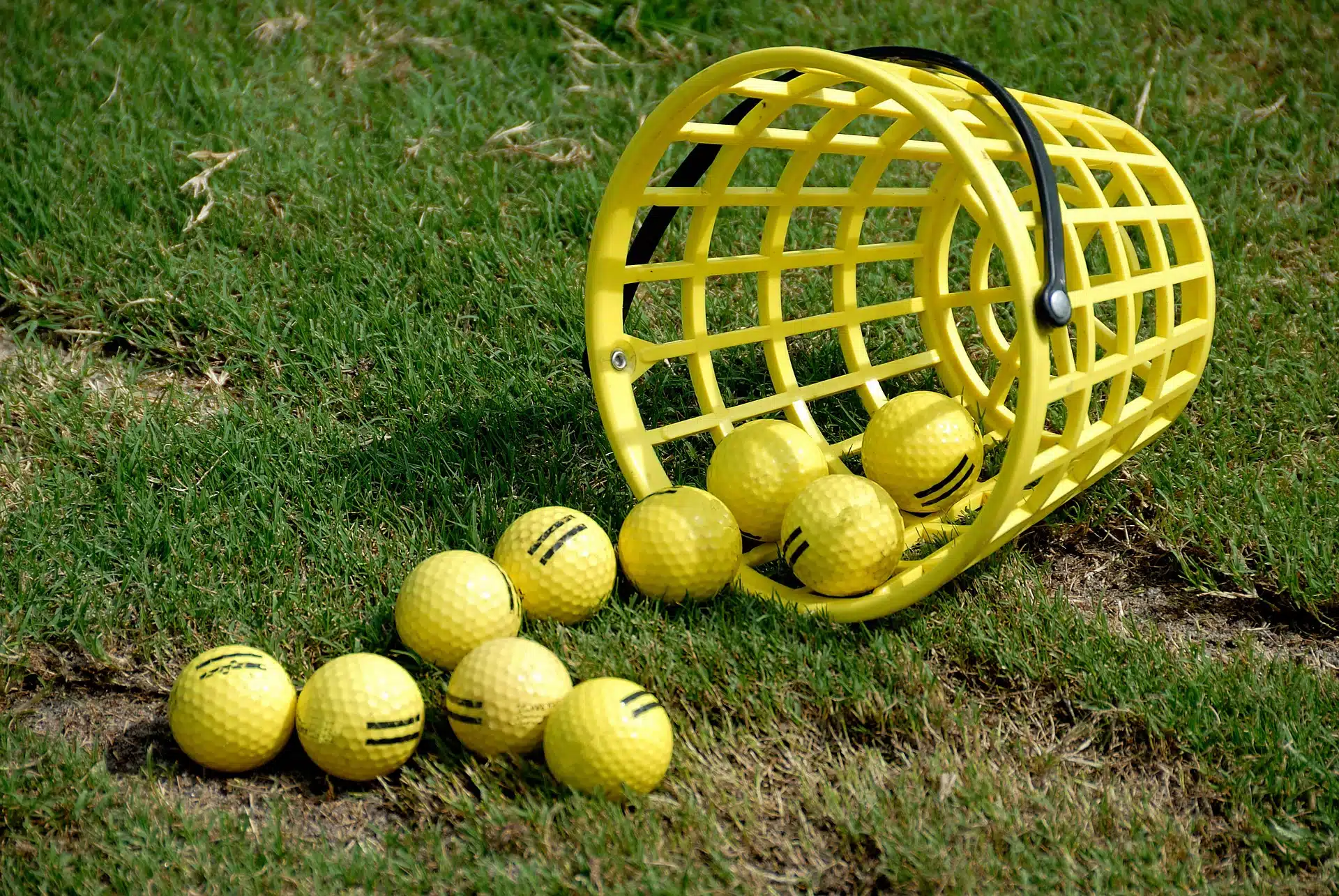
At the other extreme, mega boxes pack 36 balls and deliver genuine savings per ball. If you're burning through golf balls regularly or stocking up for a tournament, this bulk approach makes financial sense. Buying in bulk also lets you stock up on affordable two-piece balls that offer solid performance without breaking the bank. Driving ranges take this even further with crates holding around 250 balls, though that's industrial-scale territory you won't encounter at retail.
The bottom line: match your purchase size to your actual consumption rather than defaulting to the standard dozen.

Those standardized box dimensions you see on every store shelf aren't arbitrary; they're the result of careful engineering that serves three authorities simultaneously: retail display efficiency, golf bag compatibility, and ball protection.
That 1.7" x 1.7" x 5" standard sleeve fits perfectly into your golf bag's side pocket without creating bulk or interfering with club organization. You can grab a box, slide it in, and forget about it until you need fresh ammunition on the course.
Retailers love these dimensions because the 5" height stacks efficiently on shelves and fits standard display racks. The vertical orientation enhances product visibility while allowing easy stock rotation. This industry-wide consistency helps golfers easily compare products across major brands like Titleist, Callaway, and Bridgestone. The standard box containing a dozen golf balls is typically divided into four sleeves of three balls each, making it easy to grab exactly what you need for a round.
The tight fit inside, designed around that 1.68" ball diameter, prevents shifting during transport. Your balls arrive pristine, not rattled around like dice in a cup. For custom orders, companies offer various imprint sizes, including 3/4", 7/8", 1", and 1 1/8" diameter options to maximize logo visibility on each ball's surface.
Price matters more than most golfers want to admit, but the packaging game creates a confusing maze where you're never quite sure if you're paying for the ball or the box.
Here's the breakdown you actually need. Budget sleeves with three balls let you test brands without commitment. Standard dozen boxes hit the $24.98-$27.57 sweet spot for most mid-range players. Premium custom boxes with logo imprinting jump to $34.73 for small six-box orders but drop to $21.97 when you commit to 120+ boxes. Six-pack boxes serve as a middle ground option for golfers who want more than a sleeve but don't need a full dozen. Premium brands like Callaway produce their flagship urethane balls at a Chicopee, Massachusetts plant that employs cutting-edge technology and rigorous quality control, which partly explains the higher price point.
The math reveals everything. Bulk buyers at 48+ boxes pay $22.95 per dozen, slashing costs considerably. You're fundamentally rewarded for planning. Those 15-ball alternative configurations sometimes deliver better per-ball value than traditional dozens, so don't ignore unconventional packaging options. Economy-size boxes holding 50 to 100 balls offer even greater savings for avid players who go through equipment quickly.
When you're ordering custom golf ball packaging, the design options matter far more than most corporate buyers realize, and the choices you make directly impact whether recipients actually keep your branded gift or toss it in a drawer.
You've got three primary formats: boxes for maximum protection and premium presentation, sleeves for that classic tournament aesthetic, and tubes for single-ball promotional giveaways. Each serves a distinct purpose.
Here's where it gets interesting: full-color printing is now standard, but the real differentiation happens with embossing, foiling, and spot UV finishes. These embellishments convert generic corporate swag into something recipients genuinely value.
Don't overlook QR code integration. It's an underutilized feature that bridges physical packaging to digital engagement, giving your promotional investment measurable ROI beyond the golf course. Many companies take personalization further by requesting double-digit custom numbers ranging from 1 to 99, allowing them to print meaningful dates or company milestones directly on the balls themselves.

Professional golfers typically use between 5 and 12 golf balls per round. You might assume they're losing them constantly, but that's not the case. Pros swap out balls for conditioning; a tiny scuff can affect spin and performance. Most carry nine balls (three sleeves) to start, changing every hole or two based on personal preference, course hazards, and playing conditions rather than actual ball loss.
Yes, golf balls do lose performance over time, but the timeline isn't as dramatic as manufacturers want you to believe. Stored properly at room temperature, you've got a solid 5-7 years before you'll notice any difference. The core slowly firms up and cover elasticity fades, but it's gradual. Keep them away from your garage or car trunk; temperature swings are the real performance killer, not the calendar.
Yes, you can recycle most golf ball boxes since they're typically paperboard or cardboard. Here's the catch: plastic sleeves or foil-lined packaging won't fly in standard curbside recycling. Strip those out initially. Flatten your boxes and remove any adhesive residue before tossing them in the bin. Check your local recycling guidelines; they vary wildly by region. Some brands now use biodegradable materials, making disposal even simpler.
I'll be honest with you, this question falls outside the scope of what I can authoritatively answer here. My research on golf ball packaging doesn't cover the science or history behind their traditional white color. You'll want to dig into sources specifically addressing golf ball manufacturing history and visibility science. I'd rather admit that gap than feed you speculation dressed up as knowledge.
A quality golf ball typically lasts you around 7 rounds before performance starts slipping. You might stretch that to 10 rounds if you're keeping it clean and avoiding cart paths. Here's the real test: check for scuffs larger than a dime or deep scratches. If you're noticing inconsistent flight or losing distance, don't blame your swing; replace the ball.
Now you've got the facts: standard boxes hold 12 balls in three sleeves, but you're not locked into that format. Whether you grab a 6-pack to test a new brand or buy bulk 36-ball boxes to save cash, the right choice depends on your budget and how quickly you're losing balls. Don't let packaging dictate your purchase; let your game do that.