Foam golf balls travel between 30 and 110 yards, but don't let that range fool you; most backyard-safe foam balls max out around 40 yards, while premium compressed foam options like BirdieBall push toward 100 yards with realistic flight simulation. You'll sacrifice distance and accurate spin feedback for the ability to practice safely indoors or in tight spaces. The key is matching your foam ball choice to your actual training goals.
Most foam golf balls travel between 30 and 110 yards, a massive range that confuses golfers shopping for practice equipment.
Here's what's actually happening: manufacturers design foam balls for specific environments, not maximum distance. You'll find soft, entry-level foam balls capped at around 40 yards for backyard safety. These won't damage windows or sail into your neighbor's pool. They're built for constraint, not performance.
At the other end, firmer compressed foam balls reach 100-110 yards and simulate real ball spin. These require more space but deliver genuine practice feedback. Products like the BirdieBall use patented True Flight technology to mimic real golf ball flight with reverse spin, creating satisfying hang time even at limited distances. Premium options like the Callaway HX feature a hex dimple pattern that helps them fly straighter and more consistently than most foam alternatives. These premium balls fly about 60-70% of regular distance, giving you more realistic feedback than basic foam options.
The 40-yard limit you'll see marketed everywhere isn't a flaw; it's intentional. Most golfers practicing at home need swing mechanics work, not distance simulation. Understanding this distinction saves you from buying the wrong ball for your space.
While foam balls solve the space problem for indoor practice, they create a feedback problem that manufacturers don't advertise. You won't get accurate spin data, a realistic flight path, or the satisfying compression feel that tells you whether you've struck the ball properly. The physics simply don't transfer.
Here's what foam balls actually deliver indoors: safe swing repetitions, tempo work, and basic contact training. That's genuinely significant for beginners building muscle memory in a garage or basement. Dense options like BirdieBall provide slightly better feedback than cheap sponge alternatives, but they still fall short of replicating real ball behavior. Many foam balls feature a dimpled surface design to help simulate the feel of striking a real golf ball. GoSports foam balls come in various colors for easy visibility when practicing on grass surfaces.
The tradeoff is straightforward. You're sacrificing shot-shaping feedback for the ability to swing freely without destroying furniture or windows. For swing mechanics practice, that's a reasonable compromise. This limitation matters less for beginners since fundamentals are crucial and represent half the battle in developing a consistent golf game.
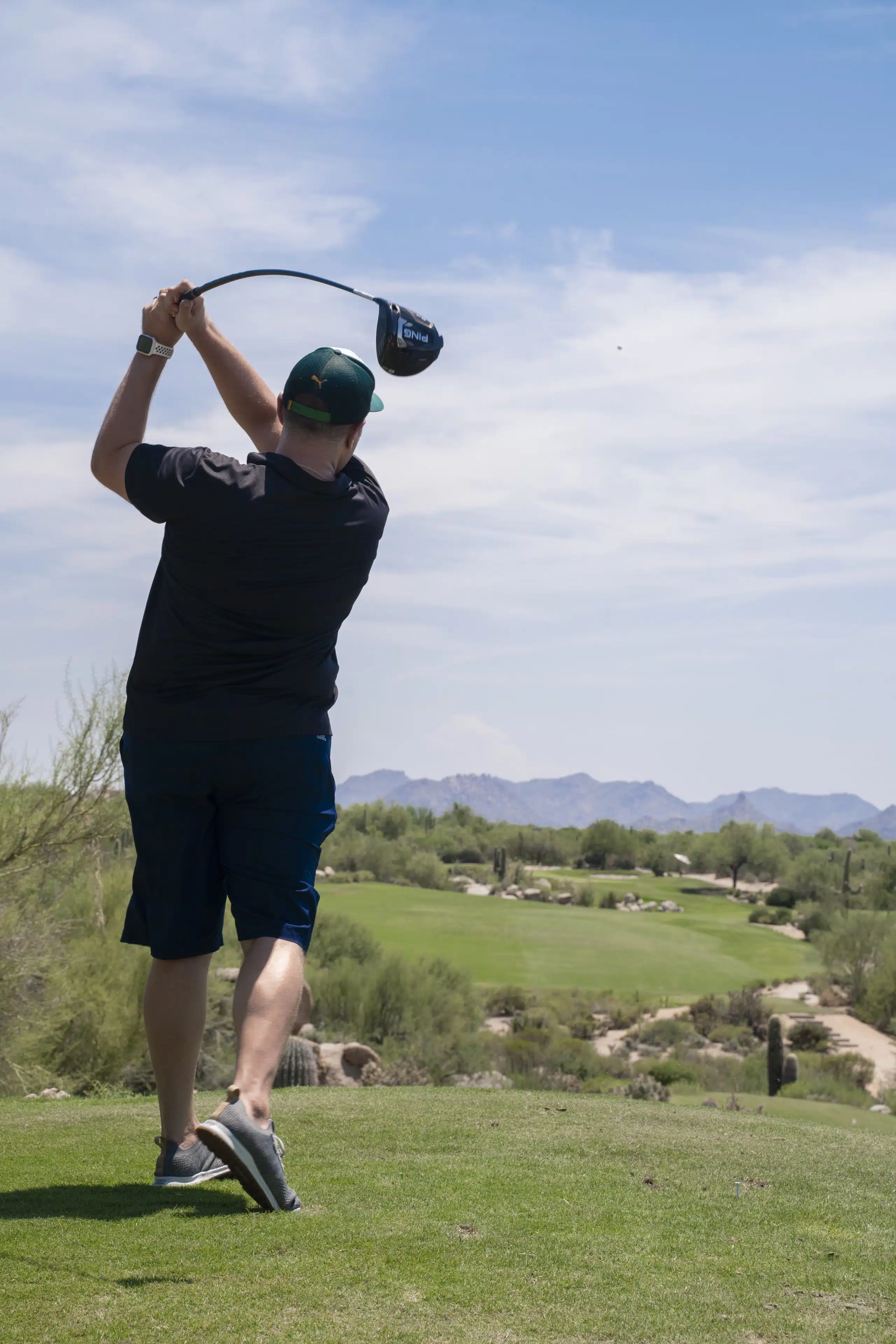
How far can you actually hit a foam golf ball outdoors? Let's cut through the confusion. With a standard swing, you're looking at 10 to 40 feet; that's it. Your irons will send foam balls roughly 20 to 30 feet, while drivers max out around 40 feet with solid contact.
Here's where it gets interesting. Limited flight options like BirdieBall cap distance at approximately 40 yards, deliberately mimicking a real ball path without the range. Premium foam balls can push 110 yards under ideal conditions, but that's the exception, not the rule. The dimpled foam surface on performance models helps achieve these distances by mimicking real golf ball aerodynamics. These lightweight balls, weighing just 14g each, still provide valuable feedback on your ball flight despite their reduced mass.
Wind plays a factor, though quality foam balls track surprisingly well in crosswinds. The real takeaway? You need just 40 yards of space for full swing practice outdoors, perfect for backyards where real balls aren't an option. Unlike on the putting green, where you'd use an artificial ball marker to mark your spot, foam practice balls let you focus purely on swing mechanics without worrying about course etiquette.

Because foam balls fly shorter and lower than real golf balls, many golfers assume they're useless for serious practice, and they're half right.
Foam balls don't replicate real flight path, spin, or distance. You'll notice slices become exaggerated, and that smooth draw you're working on won't behave the same way. The softer material absorbs energy differently, giving you a muted feel that masks mishits you'd immediately recognize with a real ball.
Here's what foam balls actually do well: they let you groove swing mechanics safely indoors without destroying your living room. Launch monitor data stays reasonably consistent for ball speed and backspin, making them viable for simulator work. When paired with quality launch monitors, you can still capture over 20 data parameters for each swing to analyze your technique. Their bright colors make them easy to locate, preventing frustrating searches through your backyard grass. As the lightest and cheapest option among practice ball types, foam balls are particularly gentle on your clubs during repetitive indoor sessions.
Don't expect foam practice to translate directly to course performance. You'll need adjustment time when switching back to real balls.
The foam inside your practice ball determines everything about how far it'll travel, and most golfers never give it a second thought.
Here's the reality: polyurethane foam compresses differently than the polybutadiene rubber in your Pro V1. When you strike a foam ball, the material deforms considerably, absorbing swing energy that would otherwise launch a standard ball down the fairway. You're losing velocity before the ball even leaves the clubface.
That compression also kills energy transfer efficiency. Traditional balls spring back instantly, converting your swing speed into forward momentum. Foam doesn't bounce back; it squishes and settles, bleeding kinetic energy with every millisecond of contact. Using a launch monitor to measure ball speed and spin rate reveals just how dramatically foam construction reduces these critical performance metrics compared to regulation balls. Companies like Universal Foam Products manufacture Expanded Polystyrene (EPS) materials for various applications, including giant golf balls that demonstrate how foam construction differs fundamentally from performance golf equipment.
The tradeoff? You won't shatter windows or dent cars. But don't expect these balls to fly anywhere close to regulation distance. The durable foam construction is specifically designed for safe training rather than distance performance.
You've probably heard that foam golf balls are completely harmless indoors, and that's mostly true. They won't crack your windows or dent your furniture. The soft PU foam deforms on impact, spreading force across a wider area. You might get minor scuff marks on walls if you're really swinging hard at close range, but that's easily cleaned. They're genuinely safe for indoor practice around glass and furniture.
Your foam golf balls will last far longer than manufacturers want you to believe. High-quality options endure thousands of hits; we're talking 5,000+ strokes before serious wear appears. Cheaper versions? They'll crater after a few hundred swings. You'll know it's replacement time when you see permanent deformation, foam peeling, or compression loss that kills your feedback. Store them in climate-controlled spaces, and you'll squeeze out multiple years of solid practice.
Foam golf balls don't work accurately with most launch monitors; that's the truth. You'll get inconsistent spin rates, unreliable launch angles, and skewed distance data because foam balls simply don't replicate real ball physics. Camera-based units like the RSG One handle them better, especially if you mark the balls for tracking. But if you're serious about swing analytics, you'll need real golf balls for meaningful data.
Foam balls work okay for basic chipping mechanics in tight spaces, but they're not suitable for putting practice. Here's the reality: you'll develop fundamental contact skills for chips, but the limited feedback on spin, path, and roll won't enhance your touch. For putting, skip them entirely; they're too light and roll inconsistently. Use real or plastic practice balls instead for any meaningful green work.
Cold, wind, and rain are your biggest enemies. Cold temperatures stiffen foam balls, killing compression and costing you roughly 2 yards for every 10°F drop. Wind wreaks havoc because foam's lightweight construction makes flight paths unpredictable, and crosswinds will push your shots completely offline. Wet conditions add weight as foam absorbs surface moisture, and muddy debris clings to the ball, slashing both carry distance and roll.
You're not buying foam golf balls for distance, you're buying them for convenience and safety. They'll travel 30-50 yards outdoors and 10-20 feet indoors, which is exactly what you need for practice without broken windows or angry neighbors. Stop overthinking this purchase. Grab a set, work on your swing mechanics, and save your distance obsession for the real thing on the course.