Titleist golf clubs are assembled in Carlsbad, California, but don't let "Made in USA" marketing fool you; the story's more complicated. Components like driver heads, shafts, and grips arrive from Japan, China, and Thailand before skilled California workers piece them together. The notable exception? Scotty Cameron putters are milled entirely stateside from solid 303 stainless steel. Understanding this global supply chain reveals why Titleist maintains premium pricing and what you're actually paying for. taylormade's manufacturing locations revealed that while the brand produces clubs in countries like China and Vietnam, their premium models often feature components sourced globally. This strategic approach allows taylormade to innovate while also keeping production costs manageable. As a result, golfers can expect cutting-edge technology and performance in every club, just like with other competitive brands in the market.
When you hear "Made in the USA" slapped on golf equipment, it's easy to assume that's mostly marketing spin, a label designed to justify premium prices rather than reflect actual manufacturing reality. But Titleist's Carlsbad, California, facility tells a different story. This isn't some token assembly line; it's the genuine nerve center where roughly 3 million golf clubs roll out annually. You're looking at 35 million components flowing through those doors each year: heads, shafts, grips, and weights converging into finished clubs. The operation handles both stock production and custom builds simultaneously, with skilled technicians executing precise assembly steps rather than just snapping parts together. The facility is capable of manufacturing around 1,200 golf clubs daily to meet demand. Quality checks happen during assembly, not as an afterthought. This commitment to rigorous manufacturing standards mirrors the approach taken at Titleist's ball plants in Massachusetts, where Pro V1 and Pro V1x production maintains similarly exacting quality controls. The facility employs approximately 200 workers, with the majority dedicated specifically to club building operations. Scotty Cameron putters get milled here, reinforcing that this location prioritizes craftsmanship over convenience.
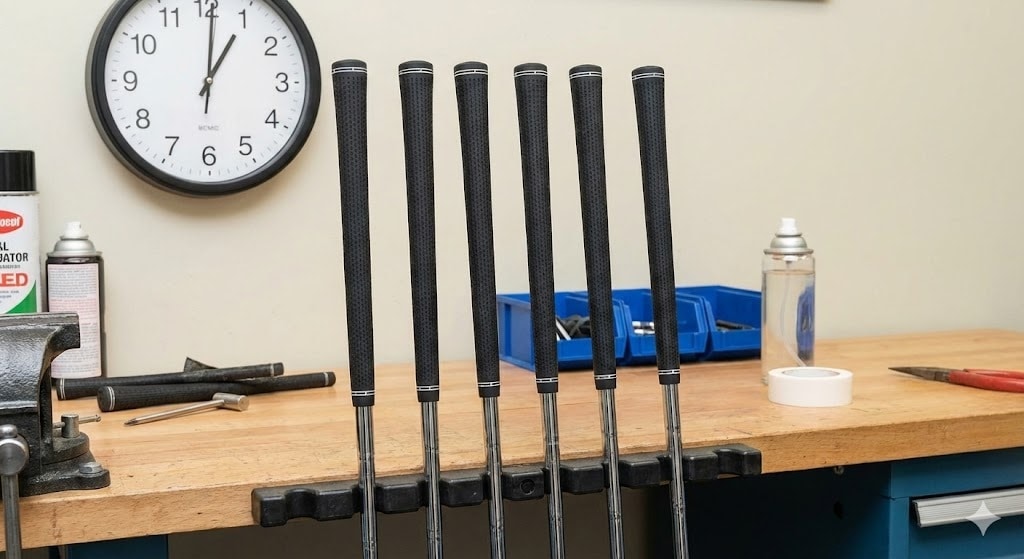
Most golfers assume Titleist's "premium American brand" positioning means everything happens stateside; that's not remotely true, and honestly, it shouldn't be.
Titleist's global component network spans Japan, China, Thailand, and beyond. Your driver's head? Likely forged in Asia. Those precision iron heads? Cast or forged in Japan or China, then shipped for final assembly. Shafts and grips come from vetted suppliers across multiple continents. This approach mirrors how other major golf brands like TaylorMade utilize cost-effective manufacturing in Asia while maintaining U.S.-based design and engineering.
Here's what matters: Titleist doesn't compromise on quality regardless of origin. They sort forged iron heads by weight and consistency before assembly. Real-time inspections happen on every production line. Supply chain managers enforce the same specifications whether components come from Osaka or Ohio. Acushnet Company oversees all design, manufacturing, and quality control across every facility in the network.
This isn't cost-cutting, it's strategic specialization. Japanese manufacturers excel at precision metalwork. Titleist utilizes that proficiency. Final assembly occurs in Carlsbad, CA, where components from around the world come together before reaching your local pro shop.
Although components arrive from manufacturing hubs across Asia and beyond, Titleist's Carlsbad facility changes this global supply chain into something distinctly American, and the scale is staggering.
You're looking at 30 to 35 million components flowing into California annually. That's clubheads, shafts, grips, weights, head covers, and assembly tools, all converging on one facility. This massive import volume isn't a weakness in the manufacturing story; it's what gives you access to custom options that would otherwise be impossible. This approach differs from competitors like Ping, whose clubs are exclusively manufactured in Phoenix through a fully domestic production process.
Here's what matters: those international components don't just sit in a warehouse. They're funneled into an assembly operation where cellular manufacturing teams change raw parts into finished clubs. Each 14-person cell works on a 30-second cycle, maintaining the precision you'd expect, whether you're ordering stock or fully custom specifications. Swing weight cuts performed during assembly are critical for ensuring each club meets exact balance requirements.

Scotty Cameron putters represent the exception that proves the rule in Titleist's manufacturing story. While other Titleist clubs involve overseas components, every Scotty Cameron putter is designed, milled, and built in California from solid blocks of 303 stainless steel. This isn't marketing spin; it's been their approach for over 25 years.
Here's why that matters to you: CNC milling from solid steel means the initial putter off the line matches the thousandth in exact specifications. You're getting precision that casting simply can't replicate. The milled construction also allows for neck bending and customization without compromising structural integrity. In contrast, cast putter necks may snap if bent more than three degrees, making long-term adjustments risky. The absence of porosity or air pockets in milled putters eliminates the unpredictable performance issues that can plague cast alternatives.
Earlier models used carbon steel, but modern Scotty Camerons stick with 303 stainless for durability and consistency. This stands in stark contrast to other Titleist products that rely on Asian manufacturing facilities for component production. When you're paying premium prices, you're genuinely getting American craftsmanship throughout.
Whether Titleist manufactures clubs in California or overseas, the company enforces identical quality control protocols at every facility, and I've seen enough inconsistent multi-location manufacturing to know that's a bold claim worth scrutinizing.
Here's what backs it up: Titleist's central engineering team oversees quality at every location. Raw materials undergo rigorous testing for weight and dimensional accuracy before they touch a production line. Laser measurement and computerized analysis catch defects that human eyes miss. Components arrive from manufacturing partners in countries including Japan, Taiwan, and China, where they must meet Titleist's strict incoming inspection standards. This precision matters because even minor weight variations can affect average club distances by significant margins across your bag.
Every assembled club gets checked for fit, finish, alignment, and balance against Titleist's specifications. Clubs undergo functional testing simulating real-world conditions before earning approval for distribution. Skilled craftsmanship combines with modern technology throughout this process to ensure optimal performance.
The feedback loop matters too. Quality data feeds continuous improvement, and tour player input directly shapes protocols. You're getting the same standards whether your club ships from Carlsbad or Asia.
Given how aggressively most golf equipment companies have shifted production overseas to slash costs, Titleist's commitment to domestic manufacturing looks almost stubborn, and that's exactly the point.
You're not just buying a golf club when you purchase Titleist; you're getting the benefits of tight integration between their California R&D teams and assembly lines. This proximity means tour player feedback gets implemented fast, and quality control stays razor-sharp. In contrast, competitors like PXG operate custom-built facilities in locations such as the United Kingdom to serve their European markets with rapid turnaround times.
The Massachusetts ball plants and Carlsbad club facilities aren't about nostalgia. They're strategic assets that shorten your wait time on custom orders, reduce supply chain headaches, and keep skilled American craftspeople employed. The Carlsbad facility alone employs around 200 skilled workers dedicated to producing millions of golf clubs annually. When tariffs spike or overseas shipping gets interrupted, Titleist's domestic footprint becomes a genuine competitive advantage. That "Made in USA" label carries operational substance, not just marketing weight.

You can't simply book a tour of Titleist's Carlsbad facility. They don't offer public walk-in visits or scheduled tour programs. The factory processes proprietary technology and confidential production methods, so access stays tightly controlled. Occasionally, media members and select insiders receive private invitations, but that's it. If you're craving a behind-the-scenes look, your best bet is watching third-party factory tour videos online; they're genuinely fascinating and readily available.
Manufacturing a custom Titleist golf club takes anywhere from several hours to a few days once production begins. You're not getting a rushed job; each club moves through head prep, precise shaft bonding, loft and lie adjustments, swing weight calibration, and grip installation. Factor in 90-plus inspection points and you'll understand why your order isn't shipping overnight. The wait reflects genuine craftsmanship, not corporate foot-dragging.
No, Titleist doesn't operate a traditional factory-direct store for its golf clubs. You can't just hop online and buy standard models straight from the source. Your path runs through authorized retailers and pro shops. The exception? Custom orders. You can spec out a tailored club through their website, and Titleist's custom shop handles fulfillment, sometimes shipping directly from their facilities. For everything else, you're working through their dealer network.
Yes, your Titleist clubs are covered by a manufacturer's warranty. Here's the deal: you're protected against defects in materials and workmanship, typically for one year from purchase. But don't lose that receipt, you'll need it. The warranty won't bail you out for normal wear, misuse, or damage from unauthorized repairs. Contact your retailer or Titleist directly to start a claim.
You can verify your Titleist club's authenticity through several reliable methods. Check the club's serial number against Titleist's official database or call their customer service line at 800-333-4200. Inspect the physical quality; genuine clubs have flawless paint, precise alignment, and consistent weight distribution. Purchase documentation from authorized retailers also confirms legitimacy. Don't trust deals that seem too good; counterfeiters are getting better, but quality control details always expose fakes.
You're getting a hybrid approach when you buy Titleist clubs. Components come from overseas suppliers, but final assembly and quality control happen in Carlsbad, California. Scotty Cameron putters remain the exception, crafted entirely stateside. Does "assembled in America" matter to your game? Probably not. But if domestic manufacturing influences your purchasing decisions, Titleist maintains a stronger U.S. presence than most competitors in the industry.