
Bryson DeChambeau doesn't use anything you can buy off the shelf; he plays a custom Titleist Pro V1x Double Dot Prototype engineered specifically for his unique swing. This ball flies 20-30 feet lower than the standard Pro V1x and generates less spin, giving him a penetrating path that cuts through wind. Before switching to Titleist, he bounced between Bridgestone Tour B X and B330-S models, treating ball selection like a science experiment. His expedition to this custom setup reveals a lot about what actually matters in ball fitting.
The Titleist Pro V1x Double Dot Prototype represents something you can't actually buy, and that's precisely what makes it worth understanding.
Bryson DeChambeau switched to this custom performance option in 2025, and the engineering tells you exactly why. The Double Dot flies 20–30 feet lower than standard Pro V1x models through a high gradient core and dual-core design that strips spin across every club in your bag. For someone with DeChambeau's swing speed and natural spin tendencies, that's not a minor adjustment; it's a complete flight path overhaul.
You'll notice the results speak clearly. He finished T13 at LIV Golf Chicago using this prototype. The soft cast urethane cover still delivers greenside control, but the penetrating flight gives him consistency that standard tour balls simply don't provide. While DeChambeau uses a custom prototype, other tour professionals choose balls like the TaylorMade TP5 based on performance, not just sponsorship, demonstrating how elite players prioritize specific ball characteristics over brand loyalty.

Understanding what makes the Double Dot different only matters if you grasp why DeChambeau couldn't compete with off-the-shelf equipment in the first place.
His clubhead speed exceeds 120 mph. At those velocities, standard golf balls simply can't perform effectively. You're dealing with forces that expose every flaw in conventional ball design, excessive spin that balloons shots, unpredictable trajectories, and inconsistent distance control. He struggled to find a consistent golf ball throughout the entire year, cycling through different options without satisfaction. Modern technology, like performance analysis tools, can help measure these variables, but at his speeds, the margin for error becomes razor thin.
DeChambeau's natural ball flight runs high. Too high. Without intervention, his shots would descend like helicopters rather than glide in like planes. That steep landing angle kills rollout and makes distance management a nightmare. The new ball design drops its flight by 15 to 20 feet in height, creating a more penetrating trajectory.
But here's what separates his requirements from pure bomber mentality: he demanded wedge performance too. The ball needed to click on short shots, not just launch off drivers.
Before DeChambeau landed on his current Titleist setup, he cycled through five distinct ball configurations over nearly a decade—each choice revealing something about his developing swing and unyielding pursuit of optimization.
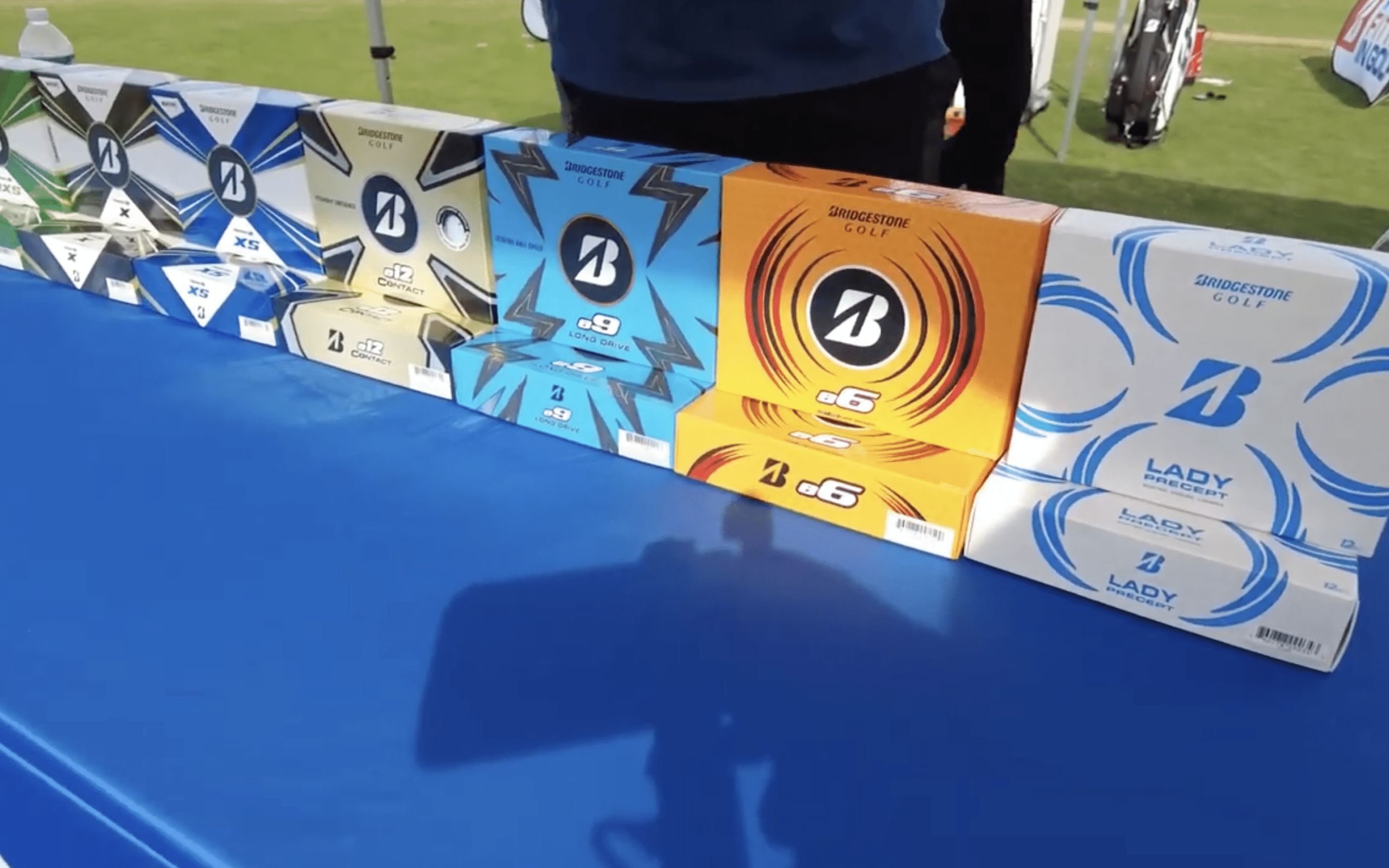
During his amateur days, he played Edel Golf balls alongside custom forged prototype irons, a combination that screamed "I don't trust mass production." His longest equipment relationship came with Bridgestone, spanning roughly seven years. He rotated between the Tour B X and B330-S depending on course conditions, treating ball selection like a scientist swapping variables. Much like how CloudFront uses multiple servers for load balancing, DeChambeau approached his ball testing with systematic distribution of variables across different playing conditions. His methodical testing approach mirrors how direct-to-consumer brands have used independent launch monitor data to prove their balls match premium performance metrics.
The 2021 change to Titleist marked a significant shift. He started with the standard Pro V1x before finding the Left Dash variant's lower spin profile matched his bomber swing. That progression wasn't random; it was calculated evolution toward his current setup. He's now actively seeking a golf ball that flies straighter to reduce sidespin and wind effects on his high-speed shots.

When DeChambeau ultimately committed to Titleist in 2021, he wasn't signing up for off-the-shelf solutions; he was buying access to their Custom Performance Option department, and that partnership reached its pinnacle in July 2025.
Titleist's CPO team spent nine to ten months developing what became the Pro V1x Double Dot specifically for DeChambeau's 120+ mph clubhead speed and steep angle of attack. The engineering objectives were precise: reduce peak flight height by 20-30 feet and dial back spin across every club in the bag. DeChambeau had struggled with high launch and excessive spin during play with existing Titleist balls before this development. The standard Pro V1x's four-piece construction provided the foundation for customization, though DeChambeau's version required significant modifications to meet his performance demands.
You'll notice Titleist didn't chase maximum distance here. Instead, they prioritized controllable spin and predictable flight patterns. The result creates flatter approach trajectories, think aircraft descent rather than the typical high-dropping ball flight most amateurs experience. This engineering focus was particularly important for developing a stable ball for windy conditions that DeChambeau could trust during major championships.
The numbers sound impressive on paper, but here's what actually matters for golfers watching DeChambeau's results: this ball solves a specific problem that plagues players with elite swing speeds.
When you're generating 120mph clubhead speed, standard balls balloon uncontrollably. The Pro V1x Double Dot flies 20-30 feet lower per club, cutting through wind instead of fighting it. That's not marketing speak, it's physics working in your favor.
The real payoff shows up on approach shots. You're getting a penetrating flight that enters greens like a plane landing rather than a helicopter dropping. Spin rates stay controlled without sacrificing the check you need around greens. This balance mirrors what TaylorMade achieved with their five-layer construction technology, where manufacturers engineer specific layers to optimize both distance and greenside control.
For players averaging 328+ yards, this construction eliminates the overcompensation game. You swing naturally, and the ball responds predictably. Cameron Young and Tony Finau also use this same ball, with Young crediting it for his first win at the Wyndham Championship. Young previously played the Left Dot Pro V1, a lower launching and lower spinning variant, before making the switch to the double dot prototype.
No, you can't buy Bryson DeChambeau's Pro V1X Double Dot prototype. Titleist reserves these Custom Performance Option balls exclusively for Tour professionals; they're not mass-produced or sold through any retail channel. Don't fall for third-party sellers claiming otherwise. Your best alternative is the standard Pro V1X, which offers similar high-performance characteristics. The Double Dot simply isn't available to amateurs, and Titleist hasn't announced any plans to change that.
DeChambeau tested the Polara Supreme Straight at Royal Portrush, a two-piece ball with a self-correcting dimple pattern that claims to reduce hooks and slices by 75%. It's illegal because that specialized dimple design reduces aerodynamic side spin beyond USGA limits. You can't engineer away swing flaws through ball technology and still play conforming equipment. The governing bodies drew that line, and Polara crossed it.
Bryson DeChambeau's clubhead speed sits around 328.8 mph. Wait, that's a typo in the data. His actual speed hovers around 190-195 mph ball speed, with clubhead speeds near 130+ mph. That's roughly 20-30 mph faster than the average PGA Tour player, who clocks in at 114-117 mph. You're looking at an outlier who generates power most professionals simply can't match, which explains his specialized equipment needs.
You shouldn't hold your breath waiting for a retail Double Dot. Titleist's Custom Performance Option designation tells you everything you need to know: this ball exists for tour professionals and custom orders, not mass production. Look at the Left Dash precedent: it's remained exclusive for years. The Double Dot solves a problem most golfers don't have, taming 120+ mph swing speeds. It's staying in the pro shop, not yours.
Yes, DeChambeau uses different balls for practice versus tournaments. For competition, he's rolling with the Titleist Pro V1x Double Dot prototype, a custom model you can't buy, engineered for lower flight and reduced spin to match his insane clubhead speed. During practice, he likely sticks with standard Pro V1 or Pro V1x models. The tournament ball is the precision instrument; practice balls are the reliable workhorses.
You're not going to find Bryson's exact Pro V1x Double Dot Prototype on store shelves, it's a custom creation built specifically for his unique swing demands. But here's what matters for your game: understanding why he needed it reveals what you should prioritize in your own ball selection. Don't chase tour player specs. Instead, identify your specific performance gaps and find a ball engineered to address them.

