To clean your golf grips, fill a bucket with warm water and mild dish soap, then scrub each grip with a soft brush. Rinse thoroughly with clean water while keeping the club head pointed down, then immediately dry with a towel. This simple process restores the tackiness that prevents club slippage and tension in your swing. However, different grip materials require specific approaches, and knowing when cleaning won't cut it anymore saves you strokes.
If you've ever watched your club twist in your hands during a swing, you already know the sinking feeling that comes with a grimy grip. That slip isn't bad luck; it's preventable.
Here's the truth most golfers ignore: dirty grips force you to squeeze harder. That death grip creates tension throughout your swing, destroying tempo and consistency. When you grip too tightly, you restrict proper wrist hinge and release, robbing yourself of power and control. Clean grips let you hold the club with relaxed pressure, which translates directly to smoother mechanics and better shots.
Beyond performance, there's a hygiene factor worth considering. Your grips collect sweat, bacteria, sunscreen, and environmental grime every round. That buildup doesn't just feel gross; it can cause skin irritation and spread germs, especially if you're sharing clubs or touching your face mid-round. To clean your grips effectively, use warm water and dish soap with a non-abrasive scrubbing surface, then rinse and dry thoroughly.
Clean grips aren't optional maintenance. They're fundamental equipment care that maintains grip quality, ensuring a secure hold during every swing.
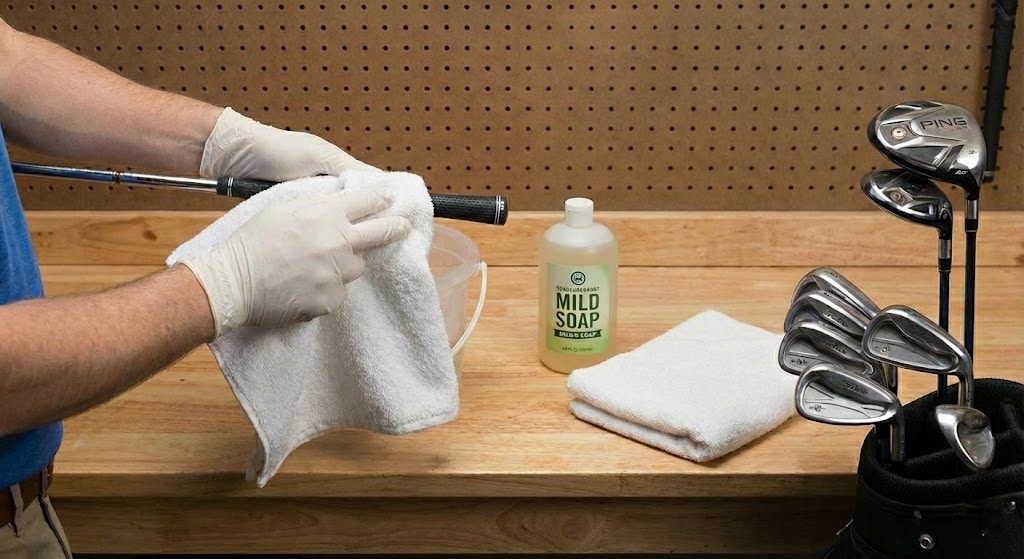
The warm soap and water method isn't glamorous, but it's the most effective way to restore your grips without risking damage.
Here's what you'll need: a bucket with an inch of warm water, mild dish soap like Dawn, a soft brush for rubber or cord grips, and a dry towel. Skip hot water; it loosens adhesive and degrades the material.
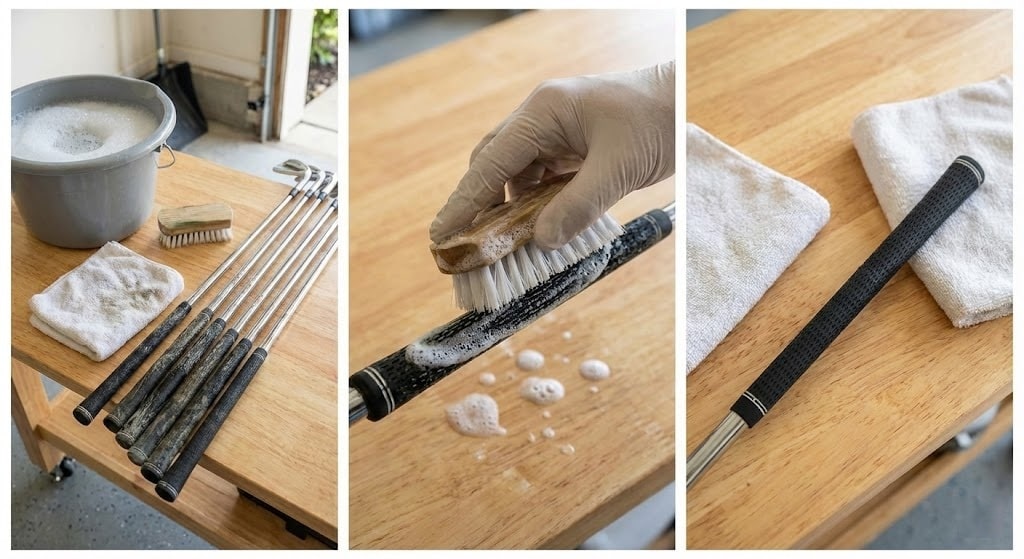
Dip your brush in the soapy water and scrub from top to bottom, covering the entire surface. Before you begin scrubbing, inspect grips for damage such as rips, tears, or bubbles that might indicate replacement is needed instead. Rinse with clean water, keeping grip ends pointed down so water doesn't pool inside. Dry immediately with your towel. The same soapy water solution you use for cleaning can also be applied inside new grips to make installation easier when replacement becomes necessary. If you do replace your grips, remember to wait at least 24 hours before playing to allow the solvent to evaporate and ensure proper adhesion.
This simple process removes the sweat, oils, and grime that make grips slick. You'll feel the tackiness return instantly, and your control during swings improves noticeably.
Soap and water work for most grips, but applying the same cleaning approach across the board is a mistake I see golfers make constantly.
Rubber grips handle mild detergent and a soft brush without issue. Over time, porous rubber accumulates sweat, dirt, and oils that reduce tackiness, making regular cleaning essential. Corded grips need a slightly coarser brush to reach between the cords, but don't soak them—water retention destroys their integrity. Synthetic grips are the easiest to maintain since they're less porous, though textured versions still need a brush for the grooves.
Leather grips demand the most care. Use only a damp cloth, never soak them, and apply leather conditioner afterward to prevent cracking. Soft or squishy grips require gentle handling with a washcloth; aggressive scrubbing deforms the material permanently.
Match your cleaning method to your grip type, and you'll extend their lifespan considerably. Always dry grips thoroughly after cleaning to prevent moisture damage and maintain optimal performance. For grips that have developed a slick, worn appearance, lightly sand them with fine sandpaper to restore their original texture and tackiness.
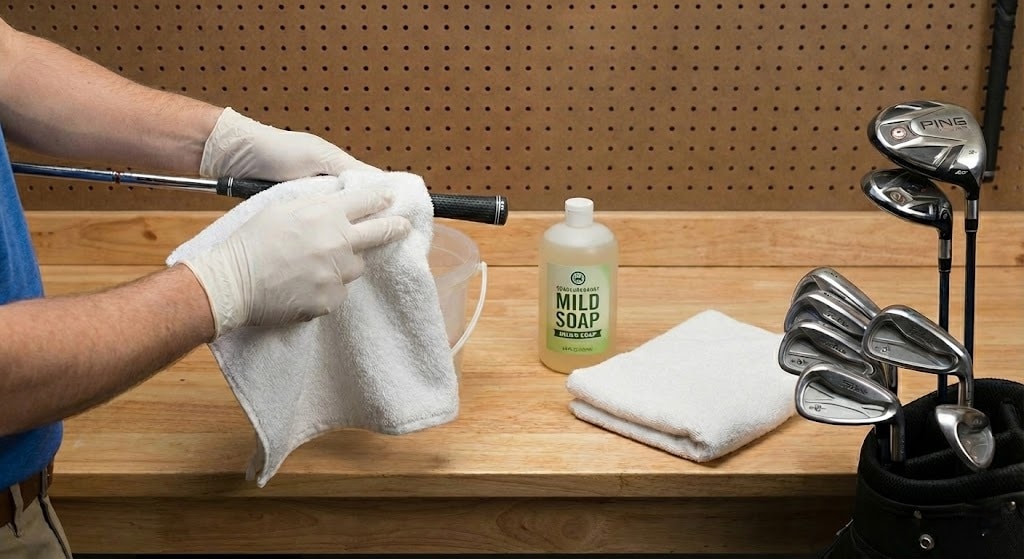
After you've cleaned your grips, rushing the drying process or skipping it entirely, undoes all that work and accelerates the deterioration you're trying to prevent.
Grab a dry towel and squeeze it along each grip, pulling up and down to extract maximum moisture. Then let your clubs air dry in a shaded, well-ventilated spot for at least 20 minutes. Direct sunlight degrades rubber and synthetic compounds faster than you'd expect.
Skip the heat gun. Skip the hairdryer. These shortcuts warp and crack grips, creating the exact problem you're solving.
For on-course maintenance, carry a half-damp towel, wipe grips to remove sweat and grime, then flip to the dry side. A product like GRIP-DRY keeps your clubs elevated off wet grass, preventing grips from picking up moisture, sand, and fertilizers between shots. This lightweight accessory fits easily in your golf bag without adding bulk. Store clubs in cool, dry spaces away from humidity that accelerates grip breakdown. With proper care, you can preserve grip tackiness and avoid the expense of frequent replacements.
Between deep cleans, most golfers either do nothing or obsess over elaborate routines, and both approaches miss the point. A damp towel after each round removes sweat and oils before they bond with the rubber. That's it, no fancy products required for daily maintenance.
Here's where I'll push back on the grip cleaner industry: specialized products work, but mild soap and warm water handle 90% of what you'll encounter. Save the Geko-style cleaners for stubborn sunscreen or heavy grease buildup.
Your storage habits matter more than your cleaning frequency. Keep clubs away from car trunks, direct sunlight, and damp garages. Heat and moisture accelerate grip breakdown faster than dirt ever will. Extreme temperatures can also weaken the adhesive that holds your grips in place. Just as regular cleaning after each round keeps your clubhead grooves performing optimally, consistent grip maintenance prevents buildup that degrades your connection to the club.
One counterintuitive tip: wearing a glove actually protects your grips by reducing oil transfer from your hands.
While cleaning can revive tired grips, there's a point where no amount of scrubbing will restore what's fundamentally broken down.
You'll know you've crossed that line when visible cracks split the rubber, shiny bald spots appear where your thumbs rest, or grip material crumbles and sticks to your gloves. These aren't dirt problems; they're structural failures.
The tactile signs matter just as much. If you're white-knuckling every swing because the surface feels slick, or your hands ache after nine holes from death-gripping a hardened club, cleaning won't fix that lost tackiness. A quick test is to press your thumb firmly into the grip; if it feels slick rather than grabbing back, that's a clear sign the tackiness is gone. For reference, tour pros change grips every 6-8 weeks to maintain optimal feel and performance.
Here's your baseline: replace grips every 40-50 rounds or annually, whichever comes first. Hot, humid climates and frequent range sessions accelerate this timeline considerably. Don't waste effort cleaning grips that need retirement.
You can, but you shouldn't make it a habit. Rubbing alcohol and hand sanitizer will strip oils and grime fast, but they'll also dry out your grips over time, leading to cracking and lost tackiness. I've seen too many golfers ruin perfectly good grips this way. Stick with warm water and mild dish soap; it cleans just as effectively without degrading the rubber. Save the alcohol for emergencies only.
During peak season, you should deep clean your grips every 15 to 20 rounds. If you're playing multiple times per week, bump that up to weekly cleaning. Playing once a week? Monthly works fine. Hot, humid conditions or heavy sunscreen use mean you'll need to clean more frequently. Don't overthink it. When your grips feel slick or look grimy, that's your signal to act.
No, cleaning your grips won't void your warranty. I've seen this myth floating around, and it's nonsense. Golf Satisfaction, Lamkin, and every major manufacturer actively recommend regular cleaning with mild soap and water. Warranties cover defects in materials and workmanship, not your failure to take proper care of your equipment. The only way you'll void coverage is by using harsh chemicals, abrasive tools, or physically modifying the grip.
No, don't put your golf grips in the dishwasher. I know it seems convenient, but you'll wreck them. The high heat destroys elasticity and tackiness, while harsh detergents leave residue that attracts dirt. You'll end up with slippery, brittle grips that compromise your swing control. Stick with warm water, mild soap, and a soft brush; it takes five minutes and won't trash your equipment.
Clean your grips while they're still attached to your clubs. You don't need to remove them; that's unnecessary extra work that risks damaging your shafts. Grab some warm water, mild dish soap, and a soft brush. Scrub each grip top to bottom, rinse thoroughly, then towel dry. Let them air out for about 20 minutes before storing. The whole process takes 10-15 minutes and keeps your grips performing properly.
Here's the bottom line: clean grips aren't about obsessive maintenance, they're about consistent performance. You've now got everything you need to keep your grips tacky and responsive for years. Spend five minutes after each round with a damp towel, do a deep clean monthly, and you'll extend grip life considerably. But when cleaning stops restoring that tackiness, don't hesitate, replace them.