
Golf irons work through a simple physics equation: the loft angle on the clubface launches your ball at a specific path while imparting backspin for control. But here’s what most golfers miss: the club’s engineering means nothing without proper swing mechanics. You need a descending blow that compresses the ball against the turf, with your hands leading the clubhead through impact. Command these fundamentals, and you’ll reveal the precision irons are designed to deliver.
The Science Behind Loft and Ball Flight
When club manufacturers boast about “hot faces” and “revolutionary speed technology,” they’re often burying the one specification that actually determines where your ball goes: loft angle.
Here’s the truth: Loft angle is simply the angle between your clubface and the ground. This measurement dictates your ball’s initial launch angle, spin rate, and, fundamentally, how far and high it travels. Lower loft means lower path with more roll, perfect for distance. Higher loft sends the ball skyward with increased backspin, giving you stopping power on greens. This increased backspin is crucial because more spin aids in stopping the ball quickly after it lands on the putting surface. It’s worth noting that greater loft increases the effect of lie angle on ball direction, making proper fitting even more critical for your short irons and wedges.
Your irons progress from roughly 18 degrees in long irons to about 41 degrees in short irons. Each degree matters. Change your loft by just one degree, and you’re looking at approximately two yards of distance difference. That’s not marketing, that’s physics. Understanding these specifications becomes essential since skill level affects distances significantly, with a 5-handicapper hitting their 7-iron about 164 yards compared to higher handicappers who see considerably shorter distances.

Essential Swing Mechanics for Solid Iron Shots
Although the golf industry floods your inbox with promises of “game-changing” club technology, solid iron shots come down to one brutal reality: your swing mechanics determine everything.
Your backswing creates the foundation. Turn your shoulders and hips together while keeping your wrists firm during the early takeaway. This controlled movement stores energy you’ll release at impact. Focus on a smooth and gradual ascent while maintaining balance throughout the motion. At the top of your backswing, your weight should shift to your rear foot while ensuring a full shoulder turn to avoid reverse pivot.
Here’s what separates clean iron strikes from chunked disasters: you must hit the ball first, then take your divot. This requires a descending blow where your clubhead’s lowest point occurs after contact, not before. Shift your weight onto your front foot to initiate the downswing, let your hips rotate explosively, and keep your trail hand back as long as possible before impact. That sequence delivers compression. To maximize consistency, consider getting professionally fitted for clubs so your shaft length and lie angles complement your natural swing characteristics.
Mastering Ball Position and Setup Fundamentals
Because your swing mechanics can be flawless, they’ll still produce garbage shots if your ball position is off. This fundamental truth trips up golfers constantly, yet it’s the easiest fix in your bag.
Here’s the structure: your ball position shifts based on club length. For long irons, position the ball about two inches inside your lead heel. Mid irons sit dead center in your stance. Short irons and wedges move center to slightly back, creating that descending strike you need for flight control. Incorrect positioning leads to inconsistent spin and shots that fly too high or too low. Understanding how loft angles affect trajectory helps explain why ball position varies so dramatically between your 5-iron and your pitching wedge.
Your stance width matters too. Wider stances support forward ball positions for longer clubs, while narrower stances work with centered positions for wedges. Use alignment sticks during practice to lock in these positions. A consistent pre-shot routine eliminates guesswork and builds muscle memory. Standing behind the ball to visualize the shot before approaching your setup helps ensure proper alignment every time.
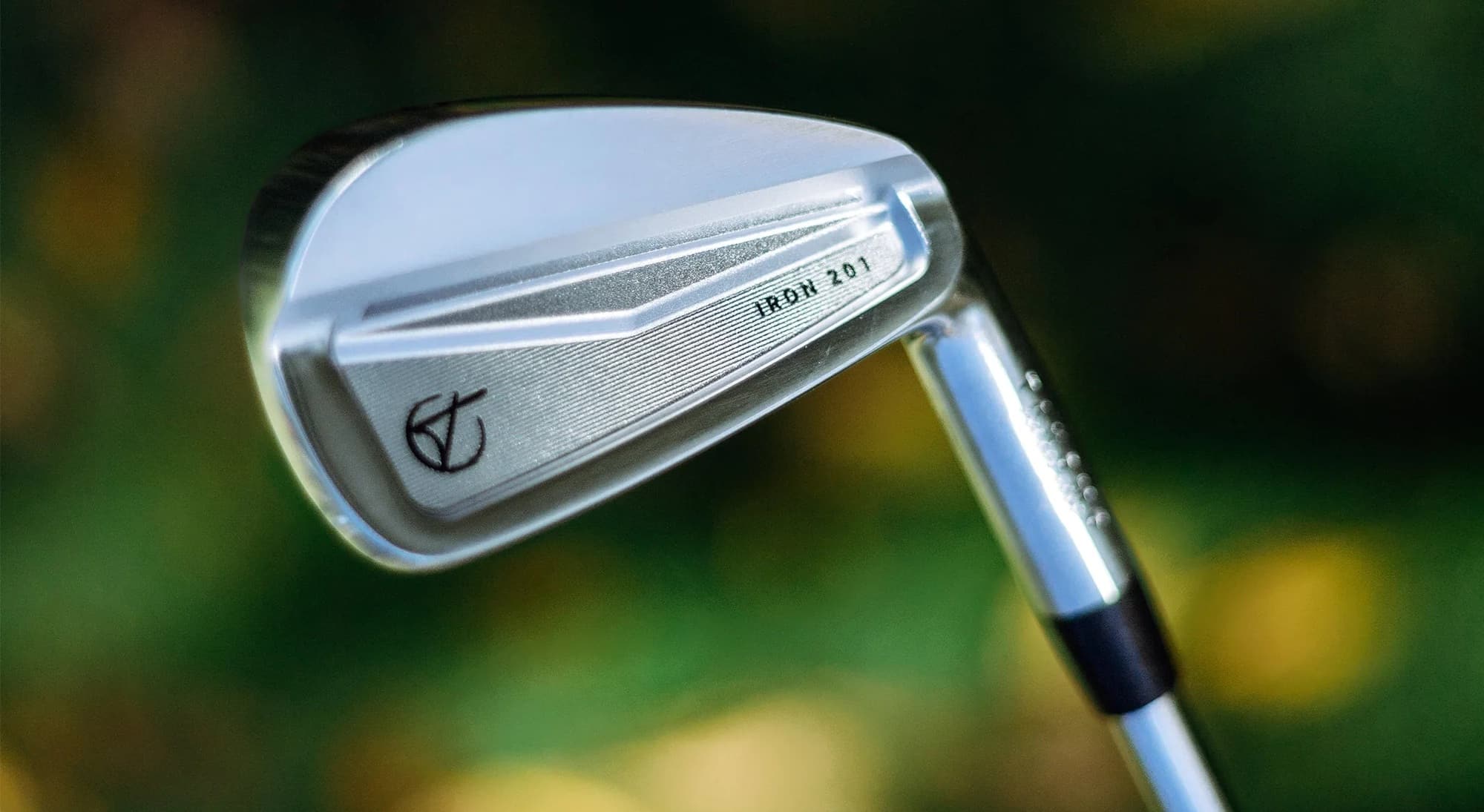
Impact Dynamics and the Art of Ball Compression
The moment your clubface meets the ball determines everything else that happens in your shot, yet most golfers obsess over backswing positions instead of this critical millisecond of contact.
Here’s what actually matters: you need forward shaft lean and a downward angle of attack to compress the ball properly. Your hands must lead the clubhead through impact, reducing effective loft and creating that satisfying “crushing” sensation pure strikers chase. Many golfers mistakenly believe that hitting down aggressively is essential for compression, when in fact the correct angle of attack matters far more than force. The “V” drill teaches you to form approximately a 30-40 degree shaft angle halfway down your downswing to achieve this proper compression.
The divot tells the truth. It should appear after the ball’s position, not before or underneath it. A shallow divot just past where the ball sat confirms you’ve struck the ball first with a descending blow. The best players achieve this by pulling their arms down hard from the top of the swing, allowing proper release through the hitting zone.
You’ll feel proper compression immediately, minimal vibration, a crisp sound, and that distinctive “fizzing” noise as the ball launches with ideal spin and path.
Common Iron Play Mistakes and How to Fix Them
Weight transfer might be the most misunderstood fundamental in iron play, yet it’s where I see most amateur swings fall apart before the club ever reaches the ball. When you hang back on your trail leg, you’re fundamentally asking your club to bottom out behind the ball; fat shots and thin skulls become inevitable.
Here’s what actually works: feel your weight shifting laterally toward the target while your hips rotate through. You should finish with most of your weight planted firmly on your lead leg. A proper weight shift ensures the divot occurs after the ball, confirming you’ve delivered a truly descending blow.
The second killer? A cupped lead wrist at the top. That position opens your clubface and destroys your ability to maintain lag. Instead, work on keeping your lead wrist flat at the top, which squares the face and promotes consistent compression through impact. Remember that your rib cage guides the movement of your shoulders and arms during the swing, helping maintain natural control throughout the motion.
Beyond swing mechanics, equipment issues can sabotage your iron play, an incorrect lie angle opens the face, pushing shots right, or creating slices even when your swing is fundamentally sound.

Frequently Asked Questions
How Often Should I Replace My Golf Irons for Optimal Performance?
You don’t need new irons every three years; that’s marketing hype. Replace your irons every 4 to 6 years, or sooner if you’re grinding out 150+ rounds annually. The real trigger? Check your grooves after 300 rounds. If you’re losing spin and control, it’s time. Well-maintained irons can last 8 to 12 years, so clean them regularly and re-grip every 1 to 2 years.
What Is the Difference Between Forged and Cast Iron Clubheads?
Forged irons come from a single billet of steel hammered into shape, giving you a softer feel and better feedback on every strike. Cast irons pour molten metal into molds, allowing for cavity-back designs that enhance forgiveness on mishits. Here’s the real trade-off: you’ll get more workability and customization options with forged clubs, but cast irons offer greater durability and consistency for developing players.
How Do Cavity Back Irons Differ From Blade Irons?
Cavity backs give you a bigger sweet spot and more forgiveness on mishits; it’s that simple. The hollowed-out design moves weight to the perimeter, increasing MOI so your bad shots don’t punish you as severely. You’ll also get a wider sole that glides through turf instead of digging. Blades offer superior workability and feedback, but they demand precise contact. Most golfers genuinely benefit from cavity backs.
What Shaft Flex Should I Choose for My Swing Speed?
Match your shaft flex to your driver swing speed: under 75 mph needs Ladies flex, under 85 mph suits Senior, 80-95 mph works with Regular, 95-110 mph demands Stiff, and over 110 mph requires Extra Stiff. But here’s what manufacturers won’t tell you: these categories aren’t standardized. One brand’s Regular might feel like another’s Stiff. Don’t trust the label; get properly fitted because your tempo matters just as much as raw speed.
How Does Club Fitting Improve My Iron Shot Consistency?
The user wants me to write a 70-word answer about how club fitting improves iron shot consistency. I need to:
- Use second-person POV.
- Active voice
- Contractions
- Be a skeptical golf expert.
- Cut through marketing hype.
- Be informal and direct.
- Start by answering the question immediately.
- No hedging
- Be authoritative
Let me craft this response focusing on the key benefits from the background info while maintaining the skeptical expert voice.
Club fitting eliminates the guesswork that causes inconsistent strikes. When your lie angle matches your swing, you’ll hit straighter shots. 8 out of 10 fitted golfers see immediate accuracy improvements. The right shaft flex for your swing speed stops those unpredictable hooks and slices you’re fighting. You’re not compensating for equipment anymore; you’re swinging freely. That confidence tightens your misses and puts more balls where you’re actually aiming.
Conclusion: How Do Golf Irons Work
Understanding how your irons work changes guessing into confidence. You’ve now got the blueprint: loft creates path, proper swing mechanics generate compression, ball position controls contact, and impact interactions determine distance. Stop blaming your equipment and start trusting these fundamentals. The real secret isn’t a new set of irons; it’s applying these principles consistently on every shot you take.

About the author
Paul Liberatore
Paul Liberatore is the founder of Golfers Authority and a former four-year golf gear contributor to Sports Illustrated. He tests golf equipment hands-on to help golfers make better buying decisions.