You've got four solid options: local PGA professionals who prioritize your swing over sales quotas, big-box retailers like Golf Galaxy offering convenient tech-driven fittings, manufacturer centers where you'll commit to one brand's ecosystem, or premium independent studios stocking components from everyone. The right choice depends on your budget and whether you want brand-agnostic recommendations or a simplified brand experience. Each path has distinct tradeoffs that'll shape your final club specs.
When you're searching for a quality club fitting, you'll inevitably stumble into a maze of options that range from big-box retail chains to boutique specialists tucked away in strip malls. Here's what actually matters: your fitter's independence and proficiency trump fancy storefronts every time.
Local PGA Professionals bring a dual advantage; they understand swing mechanics and equipment optimization simultaneously. They're using the same TrackMan technology and SureFit adjustability as tour fitters, and they're not working on commission. That means recommendations based on your game, not their sales quota. This expertise is especially valuable for beginners, since using ill-fitted clubs can lead to poor swing development and ingrained bad habits.
Independent fitting specialists take customization further. These skilled fitters work across multiple brands without corporate constraints, building clubs to exact specifications. Top facilities offer access to over 65,000 hittable head and shaft combinations to find your optimal setup. Expect to pay $100 for wedge fittings, up to $400 for complete bag evaluations, money well spent for data-driven, unbiased recommendations.
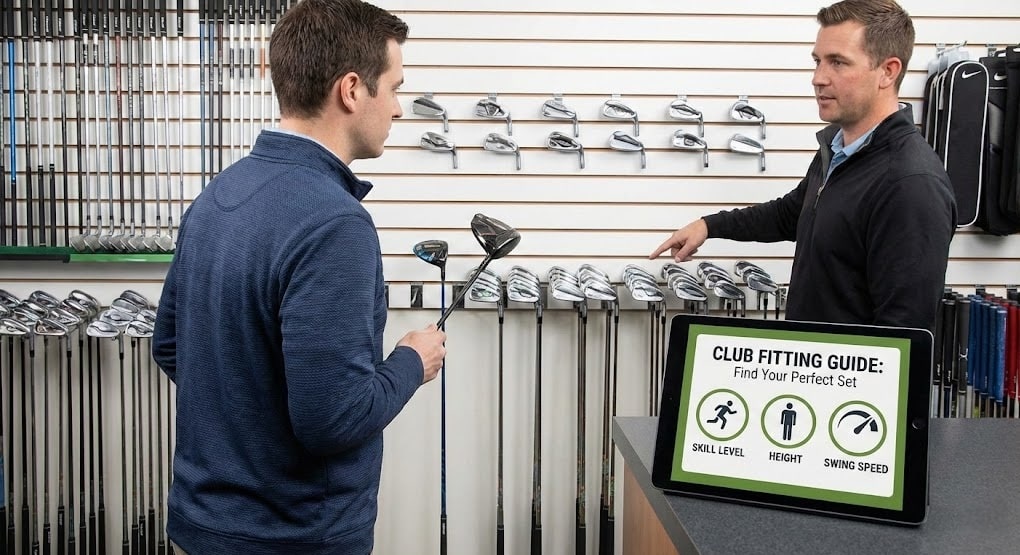
Although independent fitters offer unmatched customization freedom, large retail chains deliver something comparably significant: consistency, convenience, and surprisingly strong fitting technology under one roof.
You'll find Trackman launch monitors at PGA TOUR Superstore and advanced swing analysis at Golf Galaxy, the same tech independent fitters use. Club Champion takes it further with over 65,000 component combinations and expert fitters trained at their internal university. That's not marketing fluff; it's genuine depth.
Here's what matters: certified fitters at PGA TOUR Superstore work without commission pressure, so you're getting honest recommendations. Golf Galaxy handles everything from club gap analysis to regripping under one visit. Global Golf sweetens the deal with complimentary fittings on purchases. However, be aware that staff at large chains may have brand biases due to manufacturer incentives, so it's worth asking about the reasoning behind specific brand recommendations.
The convenience factor can't be ignored; online scheduling, national footprints, and immediate inventory access make these chains genuinely competitive. Many retailers also offer 90-day satisfaction guarantees from the date of purchase, giving you peace of mind if the fitted clubs don't perform as expected on the course. Keep in mind that custom-fitting services at these locations can range from around $100 to several hundred dollars, though many chains include the fitting fee with your club purchase.
Because manufacturers control every variable, R&D data, proprietary fitting algorithms, and unreleased prototypes, their dedicated fitting centers offer something retail chains simply can't replicate: a pure, unfiltered brand experience. At Titleist fitting centers, you'll work with TrackMan technology and trained professionals who know the SureFit™ system inside out. Callaway Performance Centers give you access to their complete lineup with fitters analyzing launch angle, spin, and ball speed to dial in precise specs. PXG operates over 200 locations staffed by tour-level experts who customize flex, loft, and lie from your swing data. TrackMan's Doppler radar technology achieves over 90% accuracy in critical metrics, giving fitters precise data to optimize their equipment recommendations.
The tradeoff? You're committing to one brand before walking through the door. If you know you want Titleist or Callaway, these centers deliver unmatched expertise. Don't expect them to recommend a competitor's shaft.
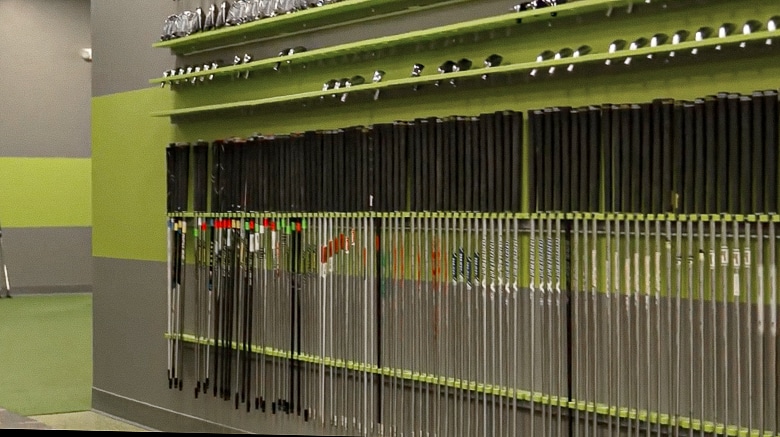
Manufacturer centers lock you into a single brand, but premium fitting studios flip the script entirely. These facilities, like Club Champion with its 150+ locations or True Spec Golf's global network, stock components from every major manufacturer. You're not choosing between Titleist or Callaway; you're choosing what actually performs best for your swing.
The difference is measurable. Studios like Club Champion employ fitters who've completed extensive manufacturer certifications and participate in ongoing training. Their fitters are trained through an exclusive in-house university program that ensures consistent expertise across all locations. They'll analyze your swing with Trackman technology, test thousands of head-shaft combinations, and build your clubs by hand to exact specifications. Their fitters have been ranked among Golf Digest's Top 100 Club Fitters for ten consecutive years. For brand-specific expertise, COBRA's Performance Studios offer tour-level fitting experiences with industry-leading launch monitor technology and access to premium exotic shaft options.
Expect to pay more; dynamic fittings typically start around $200, but you're buying unbiased knowledge. These fitters don't care which brand you leave with. They care about your data, your results, and getting you dialed in properly.
Before you walk through the doors of a fitting studio, you've already made decisions that'll shape the entire session, and most golfers blow this part completely.
Bring your current clubs. Period. Fitters need that baseline to understand what's working and what's failing you. They'll measure your existing equipment to gather accurate data on shaft length, loft, lie angles, and weight. Wear your golf shoes and glove; you're replicating real swings, not practicing in loafers.
Here's what nobody tells you: don't play 18 holes beforehand. Fatigue corrupts your swing data, and you'll walk out with clubs fitted for a tired golfer. Expect to be there a while, since appointments typically span 1–4 hours depending on whether you're fitting a single club or an entire bag.
Know your budget before you arrive. Fitters won't judge you for having limits, but they'll waste your time showing $800 shafts if you don't speak up. Keep in mind that graphite shafts typically provide more distance due to their lighter weight, adding 5-10 yards compared to steel options. Define your goals clearly, whether that's accuracy, distance, or consistency, so every recommendation serves your actual game.
You'll typically pay between $75 and $200 for a solid professional fitting, though prices swing wildly based on what you're fitting. A driver session runs $99-$200, while a full bag fitting climbs to $250-$400. Don't let sticker shock scare you; many retailers waive the fee when you buy clubs. The real cost isn't the fitting itself; it's walking away without one.
Yes, you'll benefit from fitted clubs, but let's be real about expectations. Custom fitting gives you an 80% accuracy enhancement and prevents bad habits from developing early. However, if your swing is wildly inconsistent, you won't optimize the investment immediately. I'd recommend getting fitted after a few lessons when your swing stabilizes. The benefits compound as your skills develop, making it a smart long-term play.
You don't need annual refittings; that's mostly marketing talk. Check your woods every 2-3 years, and replace wedges around every 80 rounds when groove wear kills your spin. Get your loft and lie angles checked yearly since that's cheap insurance. The real trigger? When you notice distance drops, accuracy tanks, or your body changes considerably. Otherwise, you're wasting money chasing marginal gains.
It depends entirely on where you go. Most major retailers like Golf Galaxy and PGA Superstore credit your fitting fee toward same-day purchases; that's their standard play. Premium studios often do the same, but independent fitters vary wildly. Here's the move: ask upfront before booking. Get the policy in writing. Don't assume anything, because a "maybe" becomes a hard "no" after you've already paid.
A single club fitting runs about 60 minutes, though driver fittings stretch to 90 minutes because of all that loft and launch angle testing. You're looking at 3 to 4 hours for a full bag fitting; some facilities split this into two 90-minute sessions so you don't exhaust your swing. Arrive 10 minutes early to warm up and bring your current clubs to optimize efficiency.
You've got options, from free fittings at big-box retailers to $500 sessions at premium studios. Don't let the price tag alone guide your decision. Match the fitting experience to your commitment level and budget. If you're serious about improving, invest in a thorough fitting with a skilled professional. Your clubs should work for your swing, not against it. Now book that appointment.