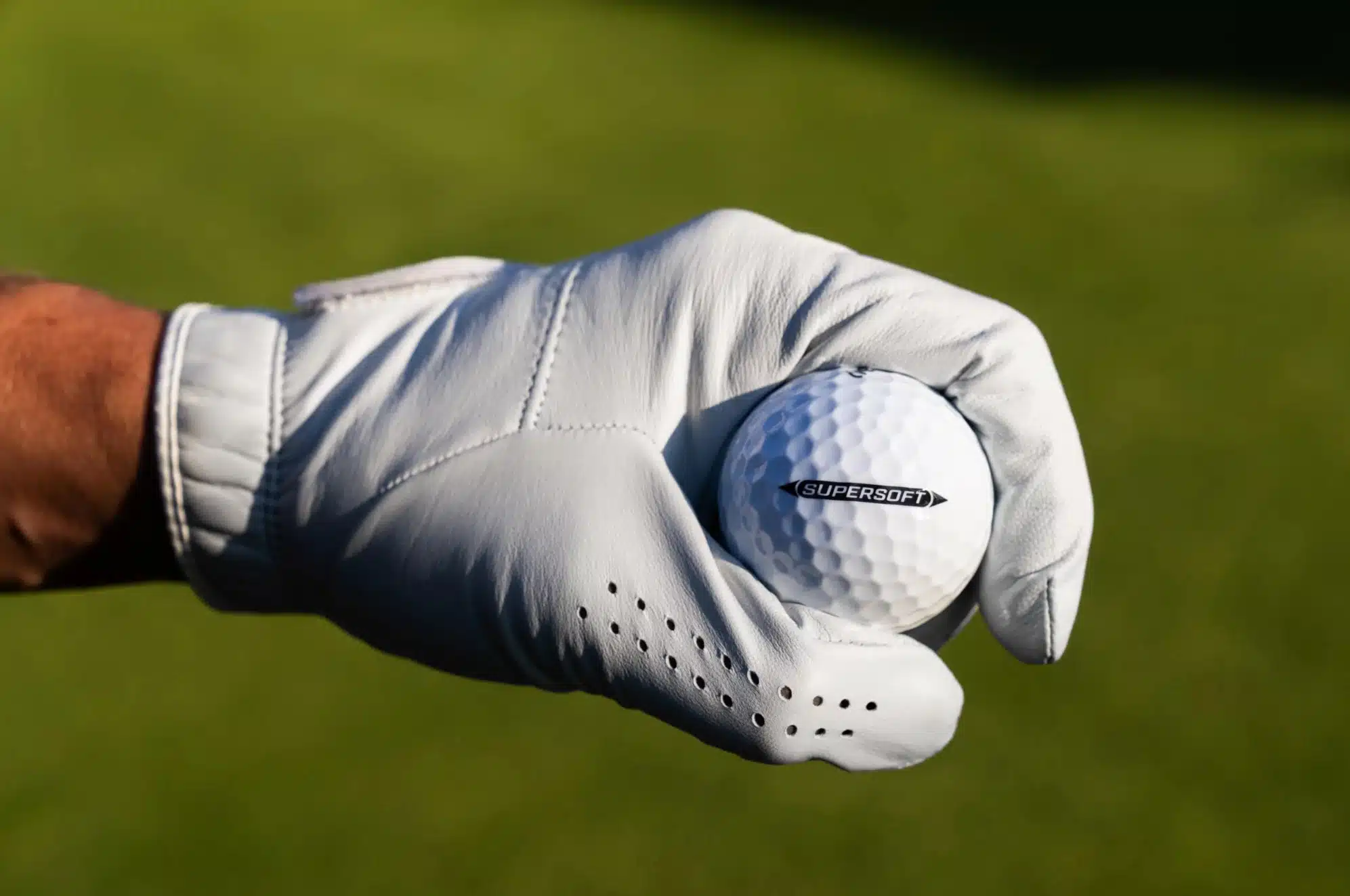
Callaway's premium urethane golf balls, Chrome Tour, Chrome Tour X, and Chrome Soft, are all manufactured at their Chicopee, Massachusetts, plant, one of the oldest golf ball facilities in the world. Their budget-friendly ionomer models, like Supersoft, come from contract manufacturers in China and Taiwan. If you're paying tour-level prices, you're getting USA-made quality control; if you're buying value balls, they're coming from overseas. The production differences extend further than geography.
When golfers hear "premium golf ball," they often assume everything's manufactured overseas, but that assumption falls apart the moment you look at Callaway's Chicopee, Massachusetts, plant. This facility isn't some token domestic operation; it's the sole US production site for every urethane-covered premium ball Callaway sells, including the Chrome Soft and Chrome Soft X lines. The plant has been operational since 1896, making it one of the longest-running golf ball manufacturing sites in the world.
You're getting balls built with state-of-the-art mixers, robotic molding systems, and mechanized processes that maintain tolerances most facilities can't match. The precision is critical because thousands of an inch can affect how a golf ball performs on the course. The plant churns out 240,000 golf balls daily, supplying the global market from American soil. Callaway's $50 million investment created hundreds of local jobs while establishing what I'd argue is the most consistent premium golf ball manufacturing operation in the country. The facility combines skilled workers and robotic automation to produce millions of high-end golf balls that compete at the top tier of the industry.
Legacy doesn't always translate into quality; plenty of historic facilities coast on reputation while churning out mediocre products. But Chicopee's story hits different.
You're looking at one of the world's initial golf ball manufacturing facilities, operational since 1896. That original red brick facade? It's survived since the Spalding period, when workers crafted baseballs, tennis rackets, and persimmon woods alongside golf balls.
Here's what matters: this isn't some dusty museum piece. The facility sits in a region with manufacturing roots stretching back to the Independence War. Boilermakers from Local 1851 have worked these floors since 1982—long before Callaway arrived. Callaway acquired Top-Flite and modernized the Chicopee facility in 2003, bringing fresh investment to this storied location. The plant recently received a $50 million investment for modernization, ensuring this historic facility remains competitive in modern golf ball production.
When you buy a Callaway ball, you're getting 130 years of accumulated production knowledge baked into every layer. That institutional memory can't be replicated overnight in a cheaper overseas factory. The parent company's $170 million investment in golf ball research and development demonstrates its commitment to advancing manufacturing excellence at facilities like Chicopee.
Behind that 130-year-old brick facade, Callaway's running what amounts to a mad scientist's laboratory, and the technology inside would blow your mind. You're looking at Fanuc robotic arms handling cores with surgical precision, proprietary X-ray systems measuring concentricity that determines whether your ball flies true, and tolerances tighter than 1/30th the thickness of a Post-It Note.
Here's what separates marketing fluff from reality: Callaway's achieving accuracy down to 1/1000th of an inch. That's not hyperbole, that's pure engineering obsession. High-speed vision systems catch defects your eye would never notice, while automated painting lines deliver uniform urethane coatings across every single ball. This precision matters because even slight imperfections affect how your ball performs once you've used a ball marker and replaced it on the green.
The machinery requires over 30 hours just to cut dimple molds for one cover side. When you're paying premium prices, you're funding this technological commitment.

All that state-of-the-art technology means nothing if you can't figure out which balls actually come from the Chicopee facility.
Here's your definitive list. Every urethane-covered Callaway ball rolls off the Massachusetts production line: Chrome Tour, Chrome Tour X, and Chrome Soft. That includes all TruTrack alignment versions of these models. From core to cover, these flagship balls never leave American soil during production. This mirrors how TaylorMade handles its premium TP5 line, with urethane cover assembly taking place at its Liberty, South Carolina, facility.
The ionomer story gets murkier. Big Bertha and Tour Preferred ionomer balls are domestically produced. However, Supersoft models have shifted overseas, despite their previous USA manufacturing status.
If you're specifically hunting for American-made performance, stick with the urethane lineup. You'll get consistent quality control from a single dedicated facility. The Chrome series represents Callaway's commitment to keeping its premium technology stateside. These premium balls deliver a soft feel with optimal trajectory and distance that players have come to expect from Callaway's flagship offerings. When purchasing these balls online, buyers can shop with confidence knowing the eBay Money Back Guarantee protects their purchase.
Callaway's overseas production network isn't some closely guarded secret, but the company doesn't exactly broadcast it either. You'll find contract manufacturing operations spread across China and Taiwan, handling production capacity that the Chicopee facility can't cover alone.
In China, Callaway has worked with multiple factories, including Launch Tech, GTS, and Qingdao Oudun. These facilities historically produced lower-priced products, not the premium Chrome Soft line you'd associate with American manufacturing. Production shifts between these partners based on demand fluctuations and supply chain realities. Some of these facilities also handle refinished golf balls that undergo cosmetic restoration processes to achieve a like-new appearance.
Taiwan serves as a secondary contract manufacturer, providing flexibility for international demand. This diversified approach across Asian manufacturing hubs gives Callaway supply chain resilience you won't find with single-source production. It's a practical business strategy, not something to hide. This outsourcing model allows the company to keep costs down since manufacturing and labor costs are lower in Asia.

You'll find between 400 and 500 employees working at Callaway's Chicopee golf ball plant, with recent counts pushing close to that 500 mark. That's a massive jump from roughly 100 workers a decade ago. Nearly 300 are Union Boilermakers, and the average tenure exceeds 20 years; these aren't temporary gigs. Jobs here are genuinely prized in the area, and the competitive hiring process proves it.
The Chicopee plant churns out 240,000 golf balls every single day. That's not marketing fluff; it's one of the largest golf ball manufacturing operations in the entire United States. You're looking at a facility where nearly 500 workers operate precision equipment with tolerances finer than 1/30th the thickness of a Post-It Note. This isn't outsourced overseas production; it's American manufacturing at a serious scale.
Callaway's poured over $60 million into the Chicopee facility since 2018. That's not marketing fluff; the investment started at $30 million, climbed to $50 million, and then kept growing. You're looking at state-of-the-art rubber mixers, 3D X-ray inspection systems, and advanced core-molding equipment. This cash injection changed an aging plant into what's arguably the most modern golf ball manufacturing facility on the planet.
The original Chicopee plant was a full-blown sporting goods factory, not a golf-focused operation. You're looking at a facility that churned out baseballs, baseball gloves, football gloves, footballs, basketballs, and tennis rackets for decades. Spalding started golf ball production there in 1896 and added persimmon woods and irons shortly after. The building's been altered completely; now it exclusively produces premium Callaway golf balls.
You'll find a solid range of positions at Callaway's Chicopee facility. Production roles include Set-Up Technicians, Machine Operators, Packing Associates, and Core Molders. On the technical side, they're hiring Electrical Engineers, Process Engineers, Injection Mold Operators, and Material Scientists. Licensed Electrician spots open on 2nd and 3rd shifts. If you're eyeing advancement, Production Lead positions exist with strong satisfaction ratings—though be prepared for mandatory 6-day work weeks.
You now know exactly where your Callaway golf balls come from. Premium models roll off the line in Chicopee, Massachusetts, while budget-friendly options come from overseas partners. Does manufacturing location affect performance? Not really. What matters is matching the right ball to your game. Don't let "Made in USA" marketing drive your decision. Let your swing speed and skill level guide you instead.