You'll pack your golf bag like a tour pro by starting with a military-grade travel case ranging from 8.5-11 pounds, then wrapping club heads in towels and bubble wrap, especially around those fragile hosels. Arrange your driver and woods at the top, irons in the middle by length, and wedges at the bottom for perfect balance distribution. Tuck clothing around clubs for extra cushioning, snap photos of everything, and attach an AirTag before locking up. These insider tricks will change how you protect your gear during flights.
When you're getting ready to fly with your golf clubs, picking the right travel bag makes all the difference between arriving with your gear intact or dealing with damaged equipment. You'll want a bag made from military-grade 1680D ballistic nylon, it's the same tough stuff they use in bulletproof vests! Look for dimensions around 51-54 inches tall, which fit both stand and cart bags comfortably. The best travel cases include four compression straps to lock your clubs in place and prevent shifting during rough baggage handling. For ultimate protection, consider hard cases with high-density foam interiors that completely immobilize your clubs during transit.
Here's the thing: weight matters when you're hauling through airports. Aim for bags between 8.5 to 11 pounds with smooth-rolling wheels, preferably the 360-degree kind. Don't skimp on padding either; you need thick cushioning all around the clubheads. Smart features like TSA locks and water-resistant fabric protect your investment from both thieves and weather. Premium models feature velour-lined padded compartments that cradle your clubheads with the same care as a high-end jewelry case.
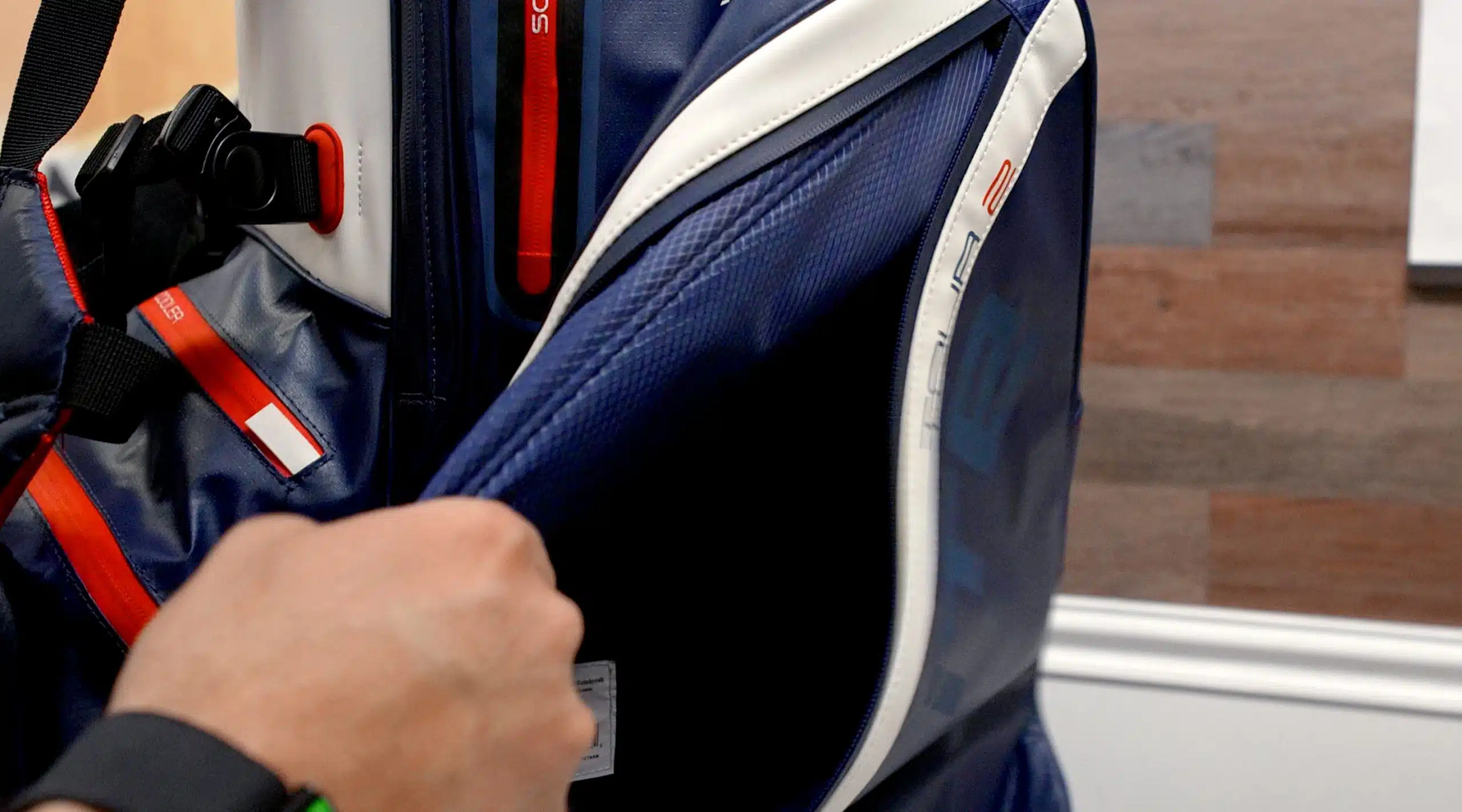
After you've got the right travel bag, you'll need to protect your clubs as the pros do, and trust me, baggage handlers aren't exactly gentle with golf bags. Start by covering every club head with a headcover or wrapping it in a towel—this prevents those painful scratches and dings. Next, wrap bubble wrap tightly around vulnerable spots, especially the hosels where the shaft meets the head. Here's where it gets smart: invest in a Stiff Arm device, basically a telescopic pole that extends past your longest club and absorbs impacts when your bag gets tossed around. For maximum stability, place your heaviest irons in the center of the bag to create a balanced weight distribution that prevents shifting. Consider arranging your clubs by size to maximize space efficiency and create a more secure pack. Premium bags use microfiber-wrapped dividers to prevent club chatter and grip damage during transport, a technique you can replicate with soft cloth wrapping. Ultimately, stuff clothing and towels into empty spaces at the top of your bag. The less your clubs move, the safer they'll be during transit!
Now that your clubs are wrapped up tight, let's talk about arranging them in your bag, because throwing them in randomly is asking for trouble. Start by placing your longest clubs (driver, woods, hybrids) in the top section. These big guys need their own space! Next, arrange your irons in the middle, going from lowest to highest numbers. Position your lower-numbered irons at the top of the iron section and higher-numbered ones toward the bottom for better weight distribution. Your wedges belong at the bottom, with the putter getting its own special spot for quick grabs.
Here's the thing: you're creating zones, woods up top, irons in the middle, wedges down below. This setup prevents clubs from banging into each other during travel. Using a bag with 14-way dividers provides maximum protection by keeping each club separated in its own compartment. Plus, it keeps your bag balanced so it won't tip over when you're hauling it through the airport. Remember to clean your equipment before packing to remove any dirt or moisture that could cause damage during transit. Smart packing means safer clubs!

Three things separate amateur packers from the pros: they use compression bags, they pick the right fabrics, and they turn their clothes into protective padding.
Start with compression bags; they'll shrink your rain jacket and sweater down to half their size. Pick polyester blends or merino wool since they won't wrinkle when squished between your clubs. Here's the smart move: wrap golf towels around your club heads, then nestle clothing cubes around them for extra cushioning.
Keep your golf shoes in their own bag (nobody wants dirt on their polo!), and stash them near the top. Utilize any antimicrobial pockets in your golf bag to protect electronics and valuables from moisture during travel. Place your putter in the center of the bag since it's typically your most valuable club and needs maximum protection. Consider using a stiff arm inside your travel bag to keep clubs upright and prevent them from shifting during transit. Pack an extra outfit in case your checked luggage goes missing, trust me, you'll thank yourself later. Remember, airlines cap bags at 50 pounds, so ditch duplicate items and stick to versatile pieces you can mix and match.
Your perfectly packed clothes won't mean much if your bag tips over at baggage claim and sends everything flying. The important point is, you need to think like an engineer when loading your bag.
Place your driver and woods at the top slots, then arrange your irons by length, going down. Your wedges and putter go at the bottom, creating a stable pyramid shape. This keeps your bag's center of gravity low, preventing those embarrassing tip-overs! Remember that centering heavier items like your clubs properly will stabilize the entire bag during transport. Following the principle of lower center of gravity by placing heavier items at the bottom ensures optimal balance throughout your journey.
Distribute your golf balls and accessories evenly across all pockets. Don't stuff twenty balls in one side pocket – that'll throw everything off balance. Instead, split them between multiple compartments. Using internal base dividers can prevent club jams and tangling during travel, keeping your equipment organized and protected. Add towels or shirts between clubs to stop rattling, and you've got yourself a perfectly balanced travel companion.

Before you even think about heading to the airport, you've got some homework to do, and trust me, it'll save you from nasty surprises at the check-in counter. Initially, jump on your airline's website and check their golf bag policies – each carrier has different weight limits and fees. Some airlines treat golf bags as standard luggage, while others slap on premium charges for anything over 50 pounds. Quality travel cases with compression strap systems can help distribute weight evenly and keep your total package under airline limits.
Here's the thing: snap photos of your packed gear before sealing everything up. If damage happens during transit, you'll need proof for insurance claims. Pop an AirTag in there too; it's your best defense against lost luggage. Ultimately, double-check that those TSA-approved locks are secured, and your contact info is clearly visible on the luggage tags.
You technically can't pack two full sets in one travel bag. Here's why: airlines limit weight to 50 pounds, and two sets plus the bag exceed that. You'll face $100+ overweight fees! Plus, golf rules allow only 14 clubs per bag anyway. Your best bet? Pack two half-sets (7 clubs each) in one bag, or use two separate travel bags. Most pros ship their second set ahead.
You'll typically spend between $123 and $137 to ship your golf bag with major carriers like UPS or FedEx. The important point is - ground shipping runs about $94-99 for cross-country trips, but if you need it fast, you're looking at $355+ for overnight delivery! Smart move? Try specialized shippers like ShipSticks, where rates start at just $49. They'll save you up to 60% off standard prices, plus they include basic insurance coverage.
Yes, you should definitely consider golf-specific travel insurance if your clubs are worth over $1,500. Standard travel insurance barely covers golf equipment, maybe $500 max. Golf insurance covers theft, damage, and delays up to $1,000 per item. You'll also get protection for non-refundable green fees if the weather ruins your trip! Just remember, you'll need receipts and proof of ownership for claims. It's worth the extra $30-50 for peace of mind.
You'll need to remove swingless golf club load strips from your golf travel bag - they're prohibited. The TSA's official prohibited items list applies here too, so double-check that nothing banned sneaks in. The important point is: while electronics aren't technically prohibited, you shouldn't pack them due to theft risk. The same goes for prized collectibles and jewelry. Stick to the basics - clubs, balls, tees, and golf clothes are all TSA-approved!
You'll want to arrive 90 minutes early for international flights and 60 minutes for domestic ones. The reality is - golf clubs need special handling, so airlines often require extra time for oversized baggage check-in. During busy periods like summer vacations, add another 30 minutes! Some carriers actually mandate two-hour arrivals for sporting equipment. This buffer gives you time to handle any unexpected fees, special tagging, or separate check-in counters.
You're now ready to travel with your clubs like a tour pro! Remember, it's all about protection, organization, and smart packing. Your clubs won't just survive the trip; they'll arrive ready for action. Next time you're heading to the course, whether it's across the country or overseas, you'll pack with confidence. Take five extra minutes to double-check everything before leaving. Your future self will thank you when those clubs come off the conveyor belt in perfect condition!