Start by loosening both shoulder straps completely, then load your bag with clubs and wear it like a backpack. You'll want to adjust each strap in one-inch increments until the bag sits at hip level, resting comfortably against the small of your back. The key point is - most golfers make the mistake of adjusting with an empty bag, which throws everything off! Keep both straps equal length for proper balance, and position the bag just below your shoulder blades. Perfect these basics and you'll uncover the advanced techniques that make walking 18 holes feel effortless.
Before you start fiddling with those straps, you'll need to check what type of golf bag you're working with. Single straps work fine, but double straps spread the weight across both shoulders, much better for your back! These dual-strap systems help distribute weight evenly across shoulders, reducing fatigue during your round. Next, lighten your load by ditching old scorecards, broken tees, and that half-eaten energy bar from last month. You'd be surprised how much junk accumulates in those pockets.
Now the important part: loosen those straps all the way out before you begin adjusting. This makes the whole process easier and prevents you from fighting against tight straps. While you're at it, give the buckles and clips a quick inspection. If they're worn or damaged, fix them now, not when you're halfway through the back nine! Remember that proper fitting of your straps is essential, whether you're using a single or double strap system. When making adjustments, you'll want to achieve that central X shape on your back by properly positioning the primary strap over your right shoulder and the secondary strap over your left arm.
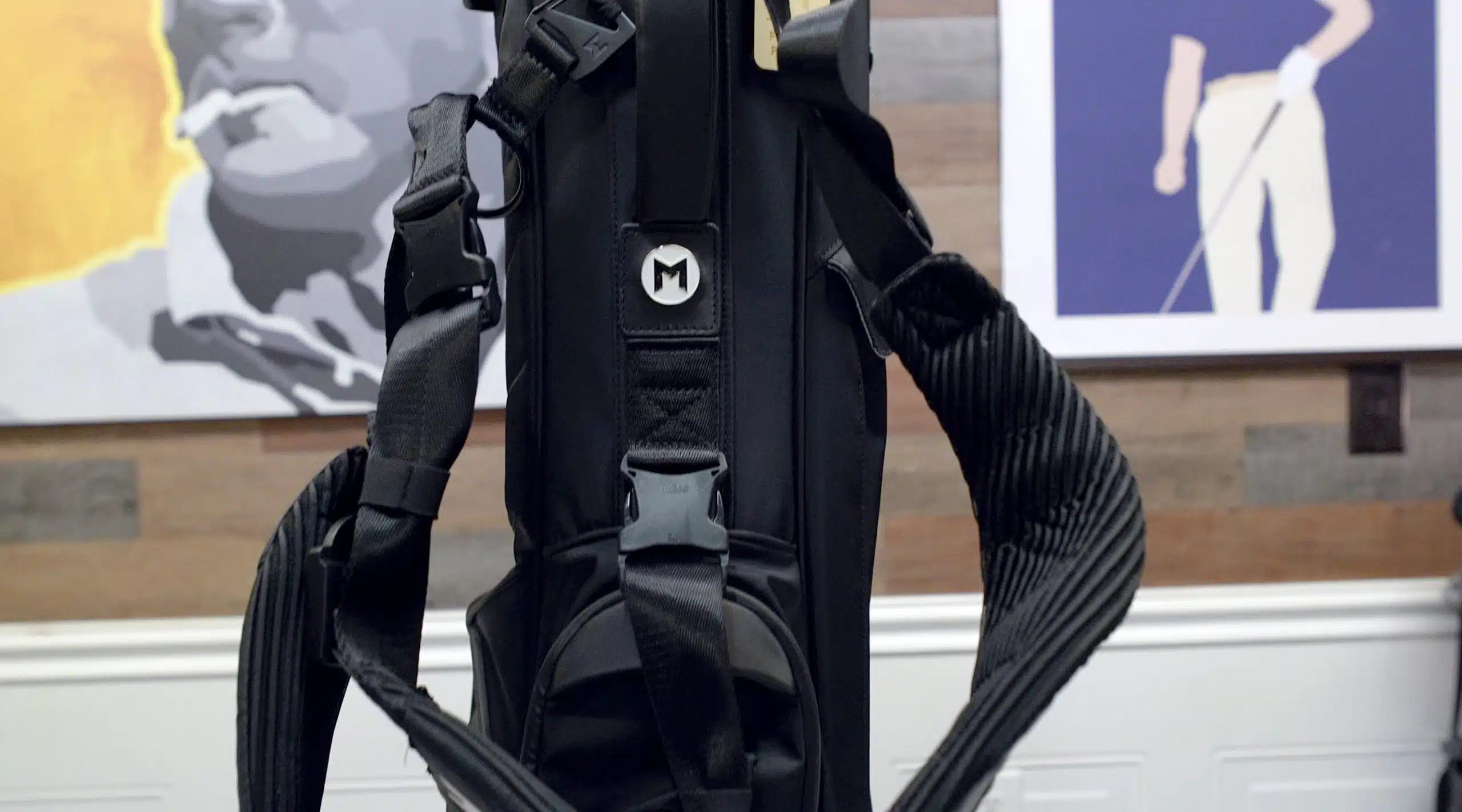
Got your bag ready? Start by loosening both shoulder straps completely, think of it like resetting your phone to factory settings. You'll need this baseline to work from. Now, load up your bag with your usual clubs and gear, then sling it on like a backpack. Put the primary strap over your stronger shoulder initially, then the secondary strap.
Here's where it gets interesting: adjust in one-inch increments while checking that the bag sits at hip level. You want that X-shape centered on your back! The bag should rest comfortably on the small of the back to prevent strain during your round. If one shoulder feels heavier, shorten that strap slightly. Keep fine-tuning until the weight feels even across both shoulders. Try walking around for a minute after each adjustment; you'll quickly know if something's off. For golfers who prefer minimalist options, this adjustment process becomes even more critical since lighter bags can shift more easily during play. Remember that properly adjusted straps will help you maintain better posture throughout your entire round, reducing fatigue and potential back problems.
Balance is everything when you're carrying 30 pounds of golf equipment on your back. You'll want to position the bag high on your upper back, just below your shoulder blades, where it won't sway with each step. The fact is, your heavier clubs should sit centrally at the bottom, creating a stable center of gravity. Pack your golf balls and rain gear in the lower pockets to counterbalance those chunky driver heads up top.
Make sure both straps are evenly adjusted so the bag sits snugly against your back. Modern double strap systems utilize memory foam padding and gel inserts to cushion pressure points and enhance comfort during extended rounds. Premium bags feature high attachment points that allow the bag to sit flush against your back, reducing strain and improving balance. When you've got it right, the weight spreads across both shoulders like butter on warm toast! This setup prevents that annoying one-sided ache that ruins your back-nine focus. Additionally, keeping your clubs separated by type in the dividers prevents them from clanking together and getting damaged during your walk.

Even when you've perfected weight distribution, there are several strap adjustment blunders that'll sabotage your comfort on the course. The biggest mistake? Adjusting your straps with an empty bag. Once you load it with clubs and gear, everything changes—those perfectly fitted straps suddenly feel too tight or loose.
Here's the thing: you'll also want to check that both straps are exactly the same length. Even a half-inch difference can throw off your balance and strain your back after nine holes. Another common error is letting your bag sit too low, which creates downward drag on your neck and back muscles. Straps that are too loose shift during your round, while overly tight straps dig into your shoulders and restrict your swing motion. Premium bags often include reinforced grab handles and antimicrobial padding that make strap adjustments easier and more hygienic during frequent use. Don't forget to inspect your straps regularly, either! Worn buckles or frayed fabric can fail mid-round, leaving you scrambling. Ultimately, remember to recheck your straps during play—they naturally loosen up, especially on hot days when you're sweating through your shirt.
Most golf bags come with one of four main strap systems, and knowing which type you're dealing with makes all the difference when it's time to adjust them. Single straps work like a messenger bag, simple but tough on one shoulder. Double straps distribute weight like a backpack, which your back will thank you for! Advanced systems like VESSEL's Equilibrium 2.0 feature a rotating four-point swivel that self-adjusts to maintain even weight distribution as you move. The high attachment points on these systems keep the bag upright and minimize club rattling during your round. Then you've got convertible systems that switch between single and double modes using clips, perfect when you're indecisive. The fanciest option? Self-adjusting swivel straps with 4-point or 8-point mechanisms that rotate as you walk.
Each system has different adjustment points. Singles usually have one sliding buckle, doubles feature four separate points, and convertibles use clip-on attachments you can remove completely. Double strap designs became popular in the mid-1990s, specifically to help walking golfers carry their bags more comfortably during full rounds.

You'll typically need to replace worn golf bag straps every 3-4 years if you're playing regularly. The fact is – frequent players who hit the course multiple times weekly should check their straps annually for fraying or clip damage. If you're a weekend warrior playing once or twice weekly, your straps can last 5+ years! Watch for worn padding, broken clips, or stretched material – these signal it's replacement time.
Yes, you can convert your single-strap bag to double straps, but it's tricky! You'll need to add at least two extra attachment points, usually D-rings, to create that X-pattern across your back. The fact is—your bag wasn't built for this stress, so reinforcement might be necessary. While clip-on conversion kits exist, they're often unstable. Honestly, if comfort's your priority, buying a proper double-strap bag saves headaches and potential damage.
Yes, you'll definitely want to adjust your straps differently! When you're walking, tighten them up so the bag sits high and snug against your back—this prevents shoulder strain during those long 18 holes. But the point is: when using a push cart, loosen those straps since the cart's doing the heavy lifting. You'll just need them comfortable enough for quick lifts on and off the cart.
You'll want to detach the straps initially, then gently scrub them with mild soap and water using a soft brush. For leather straps, use a leather cleaner instead – harsh chemicals will ruin them! Rinse thoroughly and let them air dry completely in the shade. Once dry, apply leather conditioner to leather straps to prevent cracking. Regular cleaning after rounds prevents sweat and dirt buildup that'll eventually damage the material.
You'll find that aftermarket straps aren't universally compatible with all golf bag brands. While many claim they're "universal," the reality's more complicated. Your bag's attachment system determines compatibility—basic clip-on straps work with about 60% of standard bags, but proprietary systems like Vessel's Equilibrium 2.0 won't accept generic replacements. The key point is: check your bag's mounting points initially. If it uses simple clips or loops, you're probably good to go!
You've now got the skills to adjust your golf bag straps like a pro! Remember, the right fit means your bag sits at hip level, weight spreads evenly across both shoulders, and you can swing freely without the bag shifting. Take five minutes before your next round to dial in these adjustments, your back will thank you after walking 18 holes. Once you find that sweet spot, mark the strap positions with tape for quick setup next time.