
Golf simulators improve your game faster than driving ranges because you're getting instant feedback on every swing, ball speed, spin rates, and launch angles, while ranges leave you guessing. The reality is: 96% of simulator users drop an average of 5.27 strokes, but simulators can't replicate real outdoor conditions like wind or grass lies. Ranges cost $6,000–$7,500 over five years versus a one-time simulator investment that pays for itself in under two years. The best approach combines both methods for maximum improvement.
Looking at the price tags side by side, golf simulators demand anywhere from $1,000 to $20,000+ upfront, while driving ranges let you start swinging for just $10–$15 per bucket of balls. But here's the catch: those small range fees add up fast. If you're practicing twice weekly, you'll spend $1,200–$1,500 annually just on buckets, hitting $6,000–$7,500 over five years. Meanwhile, your simulator investment pays for itself within 1–2 years of consistent practice. After that initial payback period, your cost per session drops remarkably since you've already covered the equipment expense. Premium systems last 5–10 years with minimal maintenance, spreading that upfront cost across hundreds of practice sessions. Don't forget to budget for software updates and course add-ons as part of your ongoing simulator expenses. Factor in occasional expenses like projector bulb replacements to keep your system running optimally. The range fees? They never decrease; you're locked into that $10–$15 per visit indefinitely.

Golf Simulator vs Driving Range Data: Which Improves Your Game Faster?
Why does one golfer shave 5 strokes off their handicap in six months while another hits the same slice for years? The answer's in the feedback loop.
Simulators give you instant data on every swing, ball speed, spin rates, launch angles, the works. You're not guessing whether that felt good; you're seeing exactly what your club face did at impact. That's why 96% of simulator users see performance gains, with an average score drop of 5.27 strokes per round.
Driving ranges? You're fundamentally flying blind. Sure, you can watch ball flight, but you're missing the vital metrics that reveal swing flaws. Without knowing your club path or face angle, you'll groove the same mistakes over and over.
Here's the thing: simulators fix issues faster because precision data allows quicker corrections than visual guesswork. Mid- and high-handicappers show particularly significant improvements with simulator training. Meanwhile, consistent practice sessions become far more achievable when you can train regardless of weather or time constraints.
Your skill level completely changes which practice tool deserves your money and time. If you're just starting, simulators give you instant feedback on swing mechanics like club path and face angle. Basically, they show you exactly what you're doing wrong before bad habits stick. You'll see visual representations that correct slices and hooks immediately, which beats guessing at the range. However, beginners also benefit from ranges' less intimidating setup for developing basic hand-eye coordination.
Once you're intermediate, simulators deliver detailed stats, including spin rate and launch angle for targeted improvements. Advanced players? You'll want both. Simulators provide high-precision data for equipment fine-tuning, while ranges deliver true-to-life feedback on divot patterns and outdoor trajectories that no screen can replicate. The beauty of simulator technology is that it functions like a personal coach who's available whenever you need guidance, regardless of your schedule. Elite players recognize the value of rotating between both environments, using ranges to build muscle memory through repetition and simulators for precision analysis.
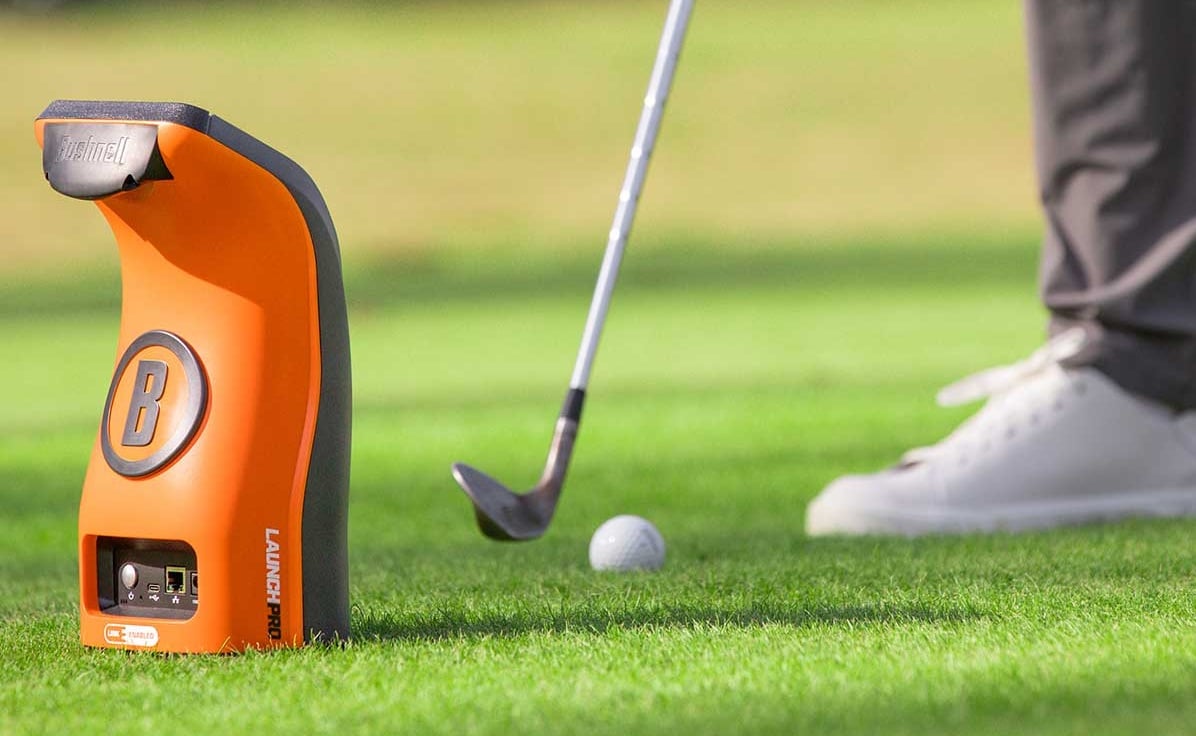
While simulators give you data-packed practice sessions with instant feedback, they can't fully replace the experience of hitting balls into open air. You're missing vital elements that only real ranges provide. Initially, you can't watch your full ball flight indoors, which limits your ability to tune flight path and make real-time club selection adjustments. Secondly, environmental variables matter! Wind, rain, and changing conditions test your gear and technique in ways simulators simply can't replicate. Third, hitting off actual grass gives you honest feedback about ball compression and contact; simulator mats can lie to you about how well you're striking it. You'll also notice distance discrepancies between simulators and courses, sometimes up to 35+ yards with short irons. Additionally, range balls are often scuffed or misshapen, which means you'll develop the ability to adapt to imperfect equipment conditions you'll actually face on the course.
Because most golfers leave the driving range with sore hands and zero improvement, it's time to talk about what makes traditional range practice so frustratingly ineffective.
Here's the thing: you're hitting balls without feedback. No data, no video analysis, just you guessing what went wrong. Studies show weekly group training with feedback destroys range-only practice every time.
The weather doesn't help either. Try refining your swing in 30 mph crosswinds; it's nearly impossible.
Then there's the practice quality problem. You spend 80% of your time on full swings, yet 65% of shots in actual rounds happen within 100 yards! That's backwards. Research confirms that simulator results translate to actual course performance, proving that quality practice environment matters more than ball-beating repetition.
Range balls themselves create another obstacle; they fly differently than your game-day balls, making it impossible to trust your distance control work.
Without pressure simulation or pre-shot routines, your range skills simply don't transfer to the course.
If you want to see real improvement in your golf game, the smartest strategy isn't choosing between simulators and driving ranges; it's using both together in a way that plays to each one's strengths. Start your week with simulator sessions to work on specific swing mechanics. You'll get instant feedback on club head speed, launch angle, and spin rate, data you can't see at the range. Then, take those enhanced techniques to the driving range on weekends to validate everything in real conditions. The key point is: simulators give you the precise metrics, while ranges show you actual ball flight in wind and weather. This combination helps you spot gaps between simulated distances and true carry distances, making your yardage references accurate for course play. The consistent environment of a simulator allows you to isolate and correct specific technique issues before testing them against variable outdoor conditions.

You can absolutely install a golf simulator in either space! Most garages need about 9 feet of ceiling height, 10 feet wide, and 18 feet deep to work comfortably. Basements typically require 9-10 feet of height and at least 15 feet long by 10 feet wide. The reality is, about 50% of home setups end up in garages because they're accessible. Basements offer better year-round control, though, with superior lighting and noise containment!
Golf simulators have mixed results for putting practice. You'll see improvement in stroke mechanics; studies show virtual practice can match traditional methods for developing consistent tempo and face control. The sensors track significant data like launch angle and strike efficiency, which helps you understand your stroke better. However, here's the catch: short screen distance kills depth perception, making it tough to judge speed accurately. You can't replicate real green-reading or varied breaks effectively, so while simulators help with fundamentals, they're limited for realistic putting scenarios.
You'll need at least 8 feet for basic setups, but that's really cutting it close. For most golfers, 9 feet works as the practical minimum for comfortable swings with irons and shorter clubs. The key point is, if you want to use your driver without holding back, you're looking at 10 feet minimum. Taller players over 6 feet? You'll definitely want that 10-foot clearance, maybe even 11 feet to swing freely.
Memberships become cheaper if you're hitting balls regularly. The point is: if you visit once or twice weekly, a Gold membership at $59.98 monthly beats paying $16 per large bucket each time. That's about four sessions to break even! However, casual golfers who practice monthly will spend less on pay-per-session fees. Memberships also grant access to discounted buckets; large buckets drop to $13 after 4 pm for members versus $17 for non-members.
Simulators struggle with short wedge shots, especially under 20 yards. The reality is: shots under 8 yards often register wildly off-target even when struck straight, and high-lofted wedges (58-60 degrees) produce directional errors of 8-12 degrees. However, 50-yard wedge shots measure pretty accurately! Your best bet is practicing wedge distances between 20 and 70 yards on simulators, where the technology works reliably and you'll get useful feedback for improvement.
You don't have to choose just one. If you've got the budget, a simulator gives you year-round practice with instant feedback on every swing metric. Ranges let you feel real weather and work on your short game. The smartest move? Use simulators for winter training and swing analysis, then hit the range when weather permits. Your handicap will thank you for combining both approaches instead of picking sides.

