
You'll need at least 12 feet wide, 15 feet deep, and 9 feet high for a basic setup, but the reality is, those are bare minimums that'll have you worried about ceiling strikes. If you're over six feet tall or want to swing comfortably with a driver, you're looking at 15 feet wide, 18 feet long, and 10 feet high as your sweet spot. Camera-based launch monitors can squeeze into tighter spaces than radar units, which need an extra 5-6 feet of depth behind you. Keep scrolling to see exactly how your height and equipment choices change everything.
Before you start shopping for golf simulators or clearing out your garage, you need to know the cold, hard truth about space requirements, and the numbers might surprise you.
The absolute minimum dimensions for swinging a driver comfortably are 12 feet wide by 15 feet deep by 9 feet high. That's about the size of a small bedroom. However, the reality is that going bigger makes everything better. If you're over six feet tall or have a fast, upright swing, you'll want at least 10 feet of ceiling height to avoid smacking your club into the drywall.
For depth, you need roughly 7 feet behind the tee for your backswing and follow-through. Add your launch monitor's requirements, and suddenly that 15-foot depth feels tight. You also need space behind the screen for proper energy absorption when the ball impacts. Keep in mind that camera-based launch monitors require less depth than radar-based systems, which can help if you're working with limited space.

While minimum dimensions keep you from punching holes in your ceiling, ideal room dimensions convert your golf simulator from a cramped practice cage into an actual haven where you can swing freely. You'll want 18 feet long, 15 feet wide, and 10 feet high for unrestricted play. This setup gives you 10-12 feet from tee to impact screen, plus essential buffer space behind both the screen and your stance. The 15-foot width centers your tee perfectly, accommodating right- and left-handed players without anyone worrying about clipping walls mid-swing. That 10-foot ceiling height works for nearly all golfers, even those with upright swings. These dimensions support massive 200-inch screens and advanced launch monitors like Trackman. A clear hitting zone ensures your club path remains unobstructed throughout the entire swing motion. You're basically creating a legitimate indoor golf experience, not just squeezing equipment into available space!
That perfect 18x15x10 space sounds great on paper, but the reality is, not everyone actually needs all that ceiling height. The point is: your height and club choice dramatically change what you actually require. If you're under 5'6", you can get away with 8.5 to 9 feet since your swing arc naturally stays lower. Taller than 6 feet? You'll want that full 10 feet, maybe even 11. Club type matters too; irons and wedges work fine at 8.5 feet, but drivers absolutely demand 10 feet minimum for a proper swing arc. The best test? Take a slow-motion driver swing in your space. If your club gets uncomfortably close to the ceiling, you need more clearance! When planning for multiple users, always accommodate the tallest golfer's swing and height to ensure everyone can use the simulator comfortably. Your recommended ceiling height should be 6" to 9" taller than your swing height to provide adequate clearance for fixtures and safe operation.
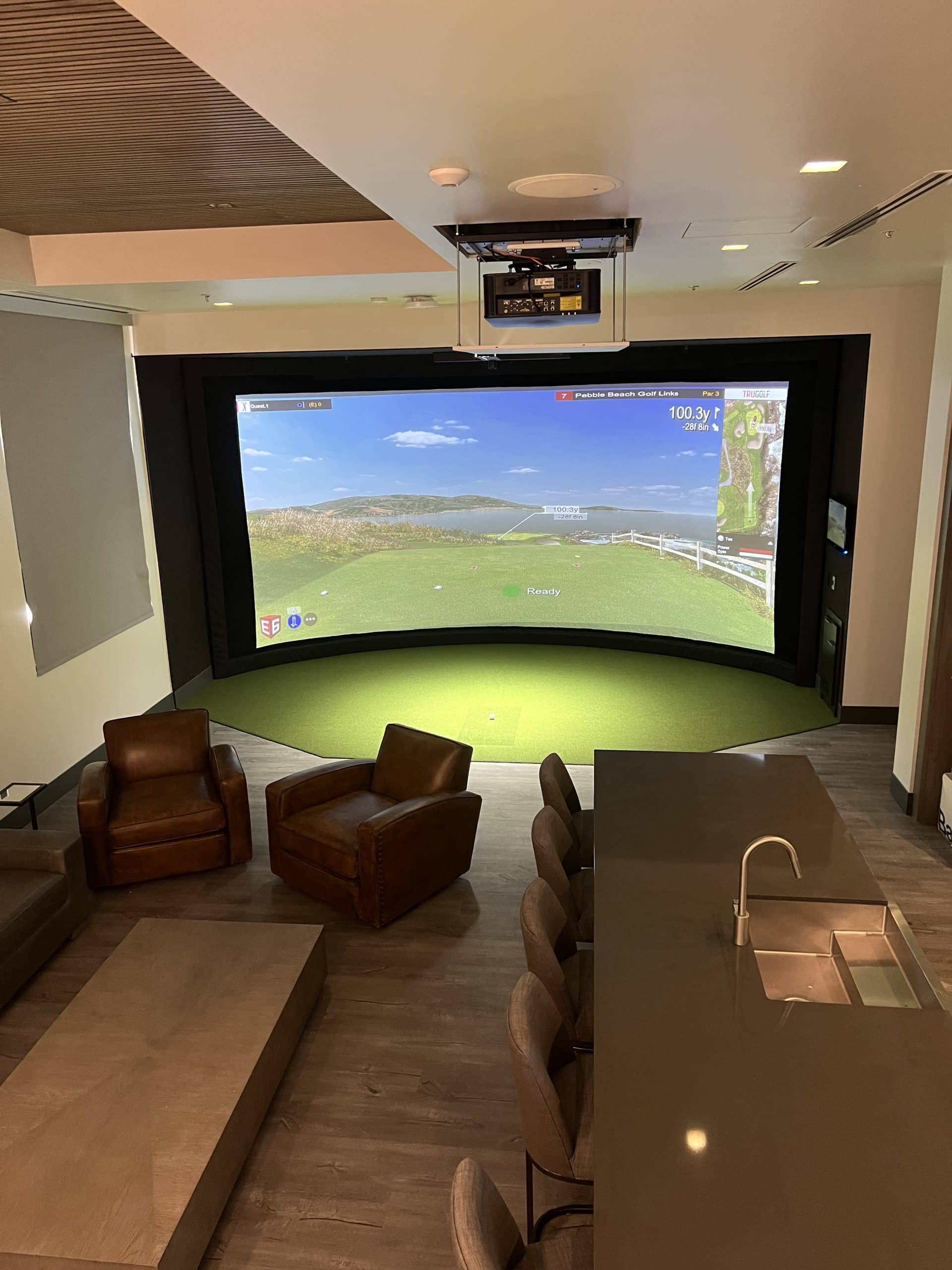
Your impact screen size acts like the anchor point for your entire room layout, dictating how much width and depth you'll actually need to make everything work. Most golfers choose screens between 10 and 12 feet wide, which require rooms at least 12 feet wide after accounting for mandatory 1-foot safety buffers on each side. The important part is that depth matters just as much. You'll need roughly 15 feet minimum to combine adequate swing space (8 to 10 feet from the screen) with proper projector positioning (6 to 8 feet back). Larger screens, say 14 to 16 feet wide, demand even deeper rooms, think 18+ feet, to maintain realistic viewing angles. The screen frame adds 2 inches per side, too, so measure carefully! Your projector's throw ratio directly determines the image width you can achieve at a given distance, so verify compatibility before finalizing your screen dimensions. Standard-size screens start at $299, while custom configurations range from $749 to $1,499, depending on your exact dimensions and whether you need a frame.
Once you've nailed down your screen dimensions, the launch monitor you pick will completely reshape your room's depth requirements, and we're talking about differences of 6 to 8 feet here, which can make or break a basement setup.
Radar units like Trackman 4 need to sit 6-8 feet behind your ball, then require another 8-13 feet in front to track spin and shot shape. That's 16-21 feet total. Camera systems like the Bushnell Launch Pro, positioned beside the ball at impact, work in as little as 10 feet total depth, a massive space saver!
Here's the thing: both technologies need similar width (10-15 feet) and height (9-10 feet), so the real difference is depth. If you're tight on room length, camera-based monitors give you that essential breathing room indoors.
Remember that you'll still need those critical 7 feet behind the tee for backswing clearance, regardless of which launch monitor technology you choose.

Yes, you can absolutely install a golf simulator in your garage or basement! Most work great with just 9-10 foot ceilings. You'll want to measure out at least 15 feet deep by 10 feet wide for comfortable swings. Garages are actually perfect since they've got the height and open space. Just make sure you've got wall padding for safety, and you're checking that there's no ricochet risk from hard surfaces nearby.
Room temperature affects your simulator performance, but not as dramatically as you'd think. In a 40°F garage, you'll lose about half a club's distance with irons compared to warm conditions. The ball itself performs consistently from 32°F to 90°F with less than 1% variation. The bigger issue? Cold equipment feels different in your hands, which can mess with your grip tension and swing fluidity.
You'll want a raised platform system that puts your hitting mat flush with the surrounding putting surface. The best setup uses 1.5-inch foam board panels or stacked rubber foundation mats (2-4 inches high) as your base layer, then top it with quality putting turf. SIGPRO flooring works great since it integrates everything, hitting strip and putting green with built-in cups. For budget builds, try 5/8-inch gym mats under turf.
You don't necessarily need separate circuits, but the important point is, it's highly recommended for reliability. Your simulator equipment typically pulls 2,000-2,500 watts total, and adding a 20% safety margin means you're looking at around 3,000 watts. A dedicated 20A circuit at 120V handles this perfectly and prevents annoying power trips during your swing. Most home circuits share loads with other rooms, which causes problems when everything's running simultaneously.
Yes, you can! A 10-foot ceiling height works for most golfers, since even tall players with drivers typically need around 9 feet of clearance. The key point is: if you've got someone who's 6'5" alongside a 5'8" golfer, that 10-10.5 foot ceiling gives everyone comfortable swing room. The setup doesn't need adjustments between different-height players; just make sure you've hit that 10-foot minimum, and you're good to go.
You've got the numbers now, so it's time to measure your space and see what fits. Don't forget, tight quarters might work for irons, but you'll need those extra couple of feet for driver swings. A 10x15x9-foot room is your sweet spot for most golfers, though you can squeeze by with less if you're willing to skip the big stick. Measure twice, build once!

