

You'll need at least 10 feet wide, 10 feet deep, and 9-foot ceilings for basic camera-based launch monitors, but radar units demand 15 feet wide by 18 feet deep, significantly more space. If you're working with a tight garage or basement, overhead monitors like the Foresight Falcon fit in 14 feet total depth, while floor-based options like the Garmin R50 work under 9.5-foot ceilings where overhead units can't mount. The specific dimensions vary wildly between Trackman, SkyTrak, and Bushnell models, and choosing wrong means your expensive gear becomes a dust collector.
How much space do you actually need to set up a launch monitor in your home? The reality is: it depends on which type you're considering. Camera-based systems are your most space-efficient option, requiring just 10 feet wide by 10 feet deep with 9-foot ceilings. They're perfect for tight garages or basements. Overhead monitors need a similar width but demand 14 to 18 feet of depth. Radar-based units? They're the space hogs of the bunch, requiring at least 15 feet wide and 18 feet deep to track your ball flight accurately. For comfortable play with any system, you'll want 12 feet wide, 20 feet deep, and 10-foot ceilings minimum. That's enough room to swing freely without worrying about clipping walls or ceilings! Keep in mind that tight layouts can lead to increased equipment wear and reduced longevity over time. Your club selection also affects depth requirements, as wedges need less space than drivers during practice sessions.

When you're working with a room that's under 14 feet deep, you'll need to skip the radar units entirely and focus on camera-based or overhead launch monitors. The key point is: radar systems like Trackman 4 need at least 18 feet just for the screen-to-unit distance, which simply won't work in your space.
Your best options are camera-based units like the GCQuad, which can operate with just 8-10 feet from screen to tee. Even better, overhead monitors like the Foresight Falcon and NVISAGE N1 mount above you, eliminating the need for extensive ball flight tracking. These units let you squeeze a full simulator into 14 feet total depth—that's 8 feet screen-to-ball, 6 feet behind you, and 1 foot behind the screen.
Camera-based systems are typically placed beside the golfer for the most accurate swing and ball flight analytics. This side placement means they don't eat into your front-to-back depth requirements, making them ideal for compact rooms where every foot counts.
While depth constraints force you toward camera-based systems, low ceilings create an entirely different challenge, and honestly, anything under 9 feet pushes you into "barely workable" territory. The point is: you'll need floor-based units since overhead monitors require 9.5-10.5 feet of mounting height. The Garmin R50 works under 9.5 feet and sits 1.5 feet to your side, compensating for uneven surfaces. SkyTrak+ handles 8.5-9 feet, depending on your height and swing style. If you're under 5'6" with a neutral swing, you've got more option; 8.5 feet becomes manageable. Taller golfers or upright swings? You're risking wedge shots hitting the ceiling. At 8 feet, expect balls hitting above your screen on short wedges. Ceiling height is critical for performance, as a minimum of 10 feet is recommended for accommodating the full swing arc and ball flight. Your ceiling should exceed swing height by 6 to 9 inches to prevent clubhead contact during the backswing. It's tight, but doable if you fit the profile.

If you're trying to squeeze a launch monitor into a tight space, the overhead versus floor debate isn't just about preference—it's about whether your room actually works. The reality is: overhead units need 9-10.5 feet of ceiling height but only 10 feet of total depth. Floor-based camera systems match that 10-foot requirement, but radar models demand 14-18 feet behind the ball; that's an extra 4-8 feet you'll need!
The width story's interesting, too. Overhead monitors create the largest hitting zones, letting righties and lefties share without repositioning anything. Floor units placed beside the ball eat into that width, though 10 feet still works.
Your ceiling height decides everything. Under 9 feet? Floor units win by default since overhead mounting won't fit.
Understanding the overhead versus floor setup is one thing, but picking between specific models brings actual room measurements into focus. You'll need different amounts of space depending on which unit you choose. The Bushnell Launch Pro demands the most room, 13 feet in front of the ball, 10 feet behind, and 15 feet wide to accommodate both lefties and righties. SkyTrak+ fits tighter spaces better, working safely in 16-foot depth setups with just 10 feet of width. Trackman's radar technology positions beside or behind the ball, requiring comparable depth to camera-based units in controlled environments. The reality is: if you're working with a standard garage bay, SkyTrak+ gives you the most flexibility, while Bushnell needs that extra width for switching between players. The Bushnell Launch Pro combines Bushnell and Foresight technologies, with the Foresight GC3 as the underlying hardware. Both camera-based monitors require specific tee colors, black, blue, or green, for their infrared cameras to track properly.
When you're setting up a golf simulator in a smaller room, the choice between camera and radar launch monitors becomes critical. Camera-based units sit right beside your ball, requiring only about 10 feet of total depth. That's a revolutionary shift for tight spaces! Radar monitors like the Garmin R10, however, need 6-8 feet behind your tee, pushing total room depth to 18-21 feet. The important point is that extra distance isn't optional; it's necessary for accurate ball flight tracking.
Overhead camera systems offer another advantage: they mount 2-4 feet in front of your tee, keeping your floor completely clear. You'll need 9-10 feet of ceiling height, but you won't sacrifice precious depth. The downward-facing cameras also excel at capturing putting and short game data with exceptional accuracy. For dedicated simulator rooms under 15 feet deep, camera-based monitors simply work better than radar alternatives.
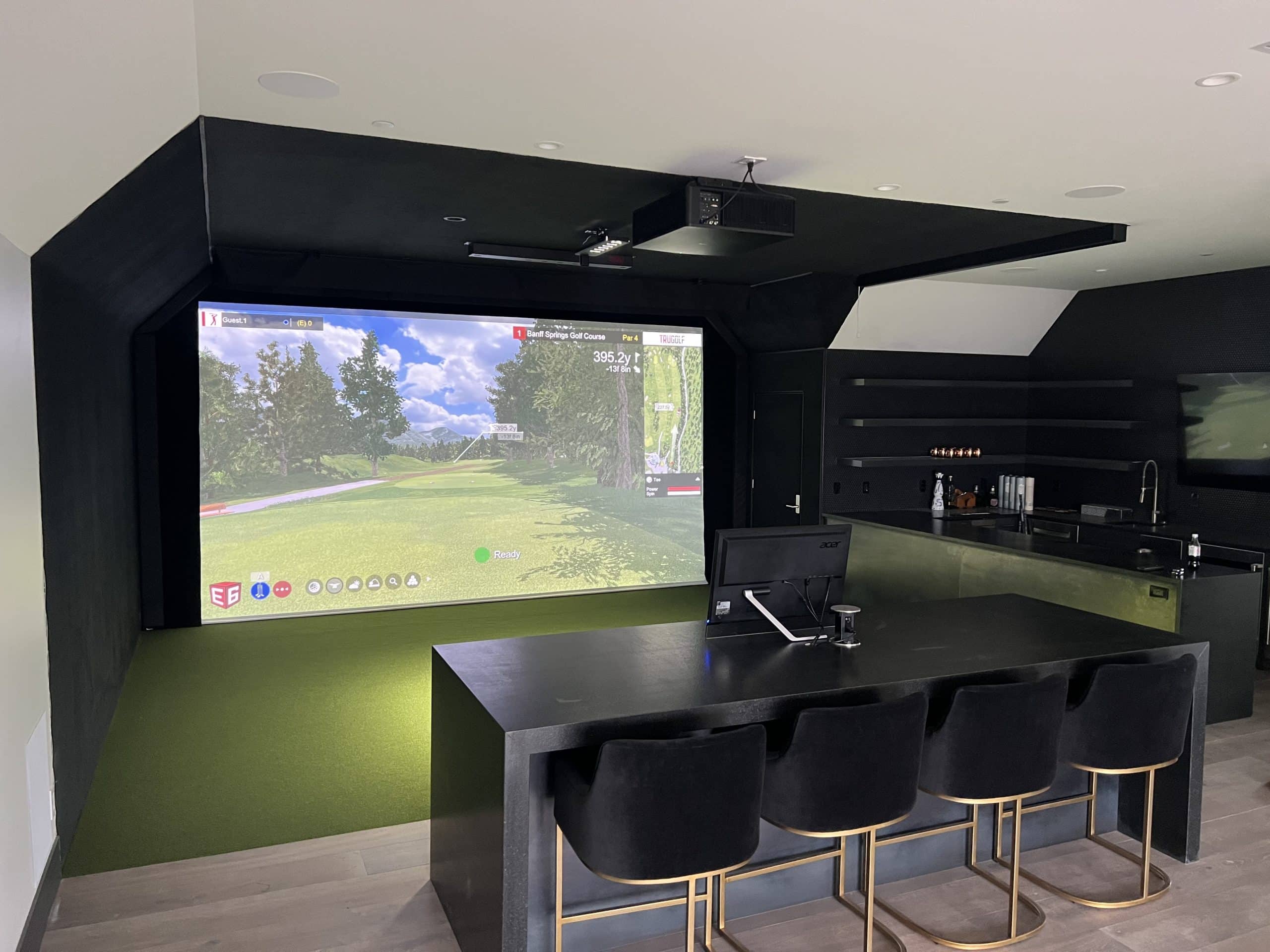
You'll have the easiest time moving floor-standing monitors like the Garmin R10; just grab it and go from your garage to the range. Camera-based units work great for quick indoor-outdoor switches since they need minimal space. However, overhead-mounted systems like the Foresight Falcon or NVISAGE N1 stay put once installed. Radar monitors need considerably more room indoors (18-21 feet), but work anywhere outdoors, making floor units your best bet for flexibility.
You don't need professional installation if you've got basic handyman skills; just a stud finder and power drill will do. Most overhead units include mounting hardware and straightforward calibration instructions with on-screen prompts. That said, professional installation costs $500–$1,000 and guarantees proper leveling from the start, which prevents calibration headaches later. If you're comfortable drilling into ceilings and following step-by-step guides, save the money and tackle it yourself!
Your enclosure netting won't obstruct camera-based monitors at all, but radar units need careful positioning. For radar systems, you'll need exact distances, typically 6-10 feet between ball and unit, and the net shouldn't interfere with the flight path tracking zone. The fact is: metal objects nearby cause signal bounce, so keep your netting's support poles non-metallic. Camera monitors? You're golden, just avoid shadows from overhead nets with proper lighting placement!
Yes, you'll all share the same setup perfectly! Here's why: overhead monitors like the Foresight Falcon mount at a fixed 9.5'-10.5' height and track swings regardless of whether you're 5'4" or 6'5". Floor-standing models like the Garmin R10 sit 6'-8' behind the tee and automatically adjust their radar tracking. The key is maintaining that 9'-10' ceiling and 7' clearance around the hitting area; this accommodates everyone's swing without repositioning equipment between players.
Room temperature barely affects your launch monitor indoors, performance differences are less than 1% between 32°F and 90°F. Your readings stay consistent regardless of temperature drops since you're not dealing with outdoor drag effects. As for lighting, there's no solid data showing it impacts accuracy. Most launch monitors work fine under standard indoor lighting, so you don't need to worry about adjusting your setup's brightness.
You've got the measurements, you've compared the tech, and now it's decision time. Before you drop hundreds (or thousands) on a launch monitor, grab a tape measure and actually check your space. Trust me, nothing's worse than unboxing your new Trackman only to realize your 8-foot ceiling won't work. Match your room's dimensions to the right monitor, and you'll be swinging away in no time!

