
You’ll reach for your sand wedge far more often than just bunker escapes. This club shines on approach shots from 65-90 yards, chip shots around the green where you need height and spin, and any situation demanding a soft landing. The 54-58 degree loft creates the flight path and stopping power you need when precision matters most. Understanding when and why to utilize this versatile club can shave strokes off your scorecard.
Understanding Sand Wedge Loft and Design
The numbers stamped on the bottom of your sand wedge tell you far more about its performance than any marketing buzzword ever will. Most sand wedges sit between 54 and 58 degrees, with 56 being the industry standard. That loft determines everything: trajectory, spin, and how quickly your ball stops on the green.
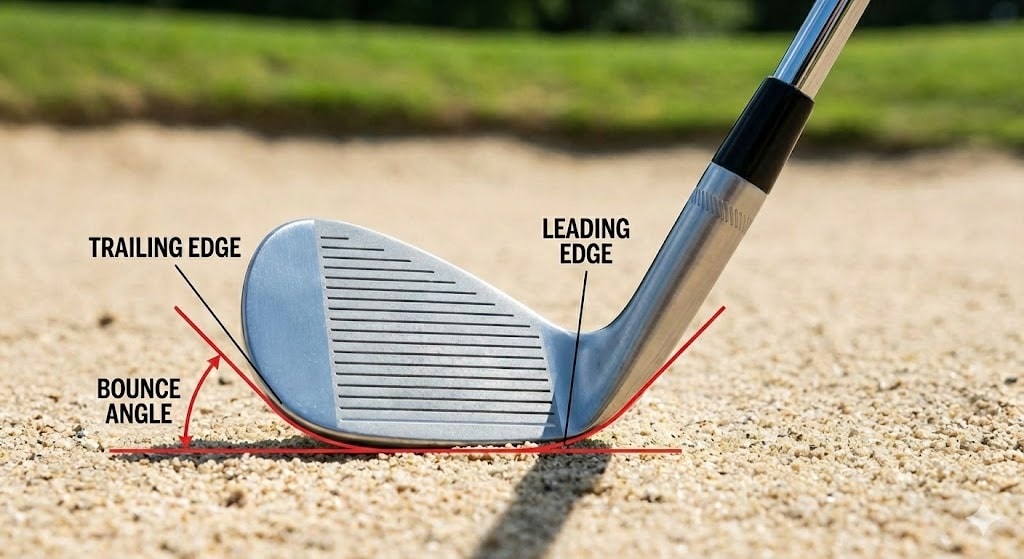
Here’s what actually matters: higher loft (56–58 degrees) launches the ball higher and generates more backspin. Lower loft (54–55 degrees) keeps shots flatter with more roll-out. You’ll also notice bounce angles ranging from 10 to 14 degrees, which prevent the club from digging into sand. The bounce angle measures the distance between the leading edge and the lowest point of the sole, creating that essential resistance against deep penetration. Deep, fluffy bunkers need maximum bounce on your sand wedge to prevent the club from burying too deeply.
The wider, rounded sole distinguishes sand wedges from other clubs. It glides through bunkers instead of burying itself, giving you consistency when conditions get soft. This high bounce angle proves especially effective in soft sand or long grass, where the club needs to skim rather than dig.

Escaping Bunkers With Confidence
Understanding your wedge’s design only gets you halfway to escaping sand, you’ve still got to execute when you’re standing ankle-deep in a bunker with your ball plugged against the lip.
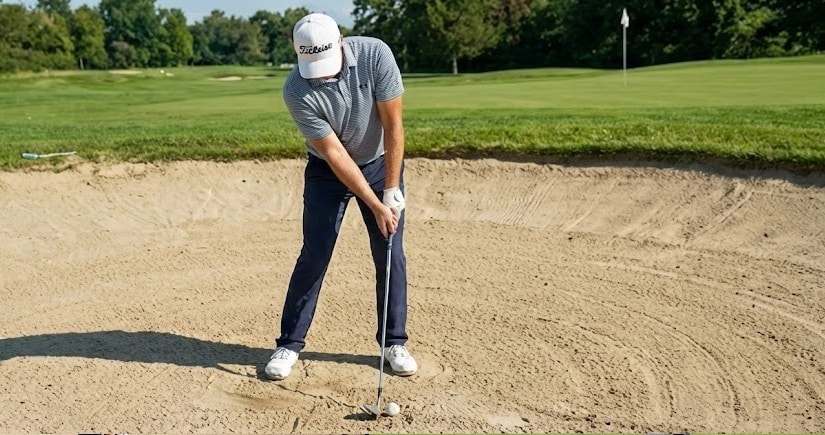
Here’s the truth: you’re not hitting the ball. You’re hitting the sand. Commit to striking one to two inches behind the ball with genuine speed. Hesitation kills bunker shots faster than bad technique.
Open that clubface dramatically, twist the grip until the face points skyward. Dig your feet in, widen your stance, and position the ball forward. Keep your hands low to prevent slicing. Keeping the face open prevents the club from digging in the sand and losing momentum. This works because a higher bounce angle creates a more gradual leading edge that glides through the sand rather than cutting into it.
The magic happens when you let the wedge’s bounce glide through the sand rather than dig. Swing along your body line, accelerate through impact, and finish high. The sand does the work. For optimal results, choose between a 56-degree sand wedge or a 60-degree lob wedge, depending on how much elevation you need.
Mastering Chip Shots Around the Green
Once you’ve conquered the bunker, a different challenge awaits just off the green, and here’s where most golfers overthink themselves into disaster.
Your sand wedge isn’t just for sand. It’s your secret weapon for chip shots, offering 54 to 58 degrees of loft that handles everything from tight lies to fluffy rough.
Here’s what actually works: narrow your stance, position the ball back, and keep 60% of your weight on your lead foot. Grip down the shaft. Your hands stay ahead of the ball, always.
Forget complicated wrist mechanics. Use a simple pendulum motion where your backswing matches your follow-through. This stroke should be simple, resembling a putting motion for maximum consistency. Focus on rocking your shoulders rather than hinging your wrists to promote cleaner, more consistent strikes. This technique mirrors the straight-back, straight-through approach that creates predictable ball contact every time. You can pick a specific landing spot, not the hole itself, and let the ball roll out. The sand wedge delivers a reliable path when you trust the process.
Controlling Distance for Approach Shots
Before you grab your sand wedge for that 80-yard approach, let’s address the biggest distance control myth that plagues amateur golfers: you don’t need a full swing to hit your number.
Your sand wedge’s sweet spot lives between 65 and 90 yards. A full swing typically produces 75 yards or more, but here’s what matters: mastering three distinct swing lengths, full, three-quarter, and half, gives you precise yardage gaps that generic distance charts can’t replicate. Sand wedges with 54°-58° loft typically fly 65-95 yards depending on your skill level, so knowing where you fall in that range is essential.
Build your own distance chart through actual range sessions. Track your carry distances for each swing length, then update them regularly as your game evolves. Using a launch monitor or consistent practice sessions helps you gather accurate data that eliminates guesswork from your game. The higher flight path and steeper landing angle your sand wedge produces means the ball stops quickly, but only when you’ve dialed in your exact numbers through deliberate practice. Keep your grooves clean between shots, since a clubface packed with dirt dramatically reduces spin rates and causes the ball to launch higher with less stopping power.
Choosing the Right Bounce for Course Conditions
While most golfers obsess over loft degrees and shaft flex, bounce angle quietly determines whether your sand wedge glides through turf or digs into the ground like a shovel.
Here’s the structure: soft, soggy courses demand high bounce wedges (10°-14°) that prevent the leading edge from burying itself. Firm, sun-baked tracks require low bounce (4°-6°) for clean contact on tight lies. Most players default to mid bounce (7°-10°) because it handles mixed conditions reasonably well.
Your swing matters too. Steep attackers who take deep divots need a higher bounce for forgiveness. Sweepers with shallow approaches benefit from lower bounce options. Understanding your attack angle and tempo plays a critical role in selecting the right bounce, just as it does when fitting for other clubs in your bag. As Bob Vokey emphasizes, bounce is your friend because it provides forgiveness even when your striking isn’t perfect.
The smart play? Carry wedges with different bounce angles. Course conditions shift with seasons and weather, and one bounce setting won’t handle everything you’ll encounter. This is why fitting for wedges should receive the same attention you give to fitting for drivers.
Frequently Asked Questions
Can I Use a Sand Wedge for Putting From the Fringe?
Yes, you can absolutely use a sand wedge for putting from the fringe, and in many situations, you should. That sharp leading edge cuts through thick grass where your putter blade gets hung up. Position the ball slightly forward, strike the upper half to create topspin, and choke down for better feel. It’s a legitimate scoring weapon once you’ve practiced the distance control.
How Often Should I Replace My Sand Wedge?
You should replace your sand wedge every 75 rounds, that’s the magic number backed by Titleist testing. Don’t fall for the myth that lifespan alone wears out grooves; it’s actual use that matters. If you’re practicing bunker shots regularly, you’ll hit that threshold faster. Check your grooves: if they feel smooth or show dark splotches in the strike zone, performance has already tanked.
Is a Sand Wedge Suitable for Beginners Learning Golf?
Yes, a sand wedge is one of the best clubs you can add to your bag as a beginner. I’ve seen too many new golfers overthink their wedge selection when the answer is straightforward: a 56° sand wedge with around 10° of bounce handles bunkers, chips, pitches, and approach shots inside 90 yards. Dominate this club before buying anything else.
Can I Use a Sand Wedge in Wet Weather Conditions?
Yes, you can absolutely use a sand wedge in wet weather, but you’ll need to adjust your approach. Wet sand is firmer and denser, so grab a lower bounce wedge (4-8 degrees) to prevent that frustrating skip off the surface. Keep your clubface square instead of wide open, position the ball slightly back, and hit down with a slapping motion rather than scooping. Clean those grooves religiously.
Should I Carry Multiple Sand Wedges With Different Lofts?
You probably don’t need two sand wedges. The real question is whether your wedge lofts are properly gapped, aim for 4-degree intervals between clubs. If you’re carrying a 54° and 58°, that’s your sand and lob covered. Adding another sand wedge creates redundant yardages and bag clutter. Instead, focus on mastering one sand wedge and ensuring your gap wedge fills the space above it.
Conclusion: When to Use a Sand Wedge in Golf
Your sand wedge isn’t just a bunker escape tool; it’s one of the most versatile scoring clubs in your bag. You’ll reach for it from greenside bunkers, tight lies around the green, and approach shots between 80-100 yards. Match your bounce to your course conditions, practice those open-face blast shots, and stop treating this club like a specialist. It deserves regular playing time.

About the author
Paul Liberatore
Paul Liberatore is the founder of Golfers Authority and a former four-year golf gear contributor to Sports Illustrated. He tests golf equipment hands-on to help golfers make better buying decisions.