
You'll wait two hours with solvent-based adhesive or a full 24 hours with water-based formulas; there's no shortcut here. I know fast-dry products claim 10-20 minutes, but don't trust them. The grip should feel completely dry, show no tacky spots, and stay locked when you twist it. Rushing this process risks mid-swing slippage that'll wreck your consistency and confidence. The factors below determine your exact wait time.
You've just regripped your clubs and you're itching to hit the range, but here's the dilemma every golfer faces: wait too long and you're wasting precious practice time, but swing too soon and that fresh grip could twist right off mid-swing.
Here's the truth about solvent-based adhesives: they need approximately two hours to fully cure. That's the baseline. I've seen manufacturers claim their fast-dry formulas let you play in 10 to 20 minutes, and some golfers swear by it. But I don't recommend gambling your round on marketing promises. Products like HF-100 are engineered with slower evaporation rates, which minimize ventilation needs but still require patience for optimal bonding.
The solvent must evaporate completely to create a secure bond. Rush this process, and you're risking grip slippage at the worst possible moment. Two hours isn't arbitrary; it's insurance. Keep in mind that cooler and humid conditions can extend this drying time significantly, so factor in your environment before heading to the course. Once your grips are fully cured and installed, regular maintenance like cleaning them every two weeks with dish soap and a soft brush will keep them tacky and extend their lifespan.
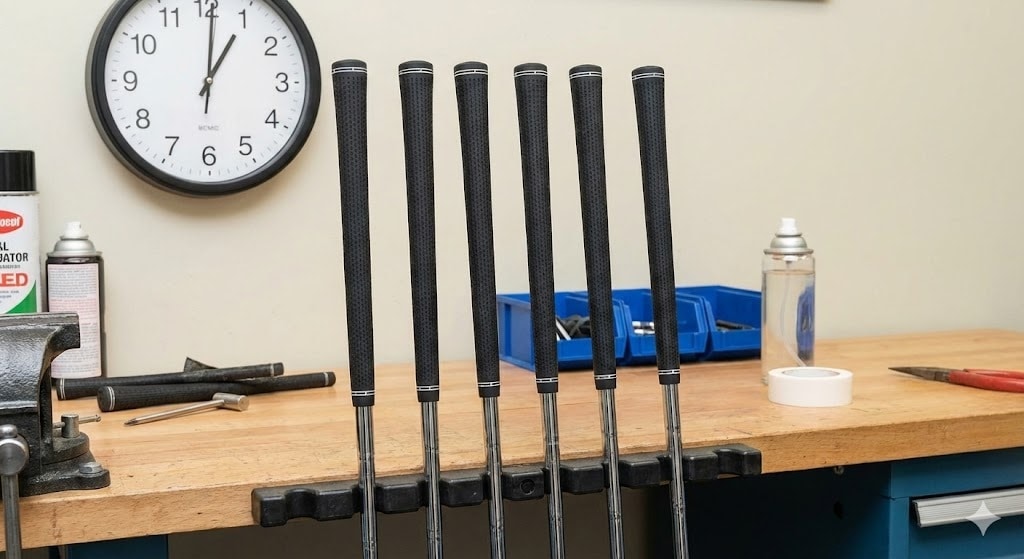
Solvent-based adhesives give you a two-hour window before you're range-ready, but water-based alternatives play by completely different rules. You're looking at a full 24-hour curing period before those clubs should touch a ball.
Here's why: water-based adhesives rely entirely on evaporation to cure, and water simply takes longer to leave the party than volatile solvents. That tape underneath stays wet longer than you'd expect.
Don't rush this. If you swing before the adhesive fully cures, you'll feel that grip shift mid-swing, and you've just compromised the entire bond. Swinging too soon can cause grips from slipping during play and ruin your club control. Store your regripped clubs at room temperature in a ventilated space, and resist any urge to twist or squeeze the grip. Proper waiting time ensures your equipment stays in top condition and contributes to consistent performance on the course. If you're new to the process, expect to spend 15-30 minutes per club during the actual regripping phase.
Cold, damp conditions? Add extra waiting time. Your patience directly determines your grip security.
Before you rush to the range with your freshly regripped clubs, you need to know exactly what "ready" looks like, and I've seen too many golfers blow a perfectly good regrip job by guessing wrong.
Here's your checklist: visually inspect for gaps, bubbles, or adhesive oozing from the ends. Run your hands along the entire grip; it should feel firm, dry, and uniform without tacky spots or soft areas. Look for any smooth spots or cracking that might indicate the grip wasn't installed properly.
Now grab the club and give the grip a deliberate twist. It shouldn't budge. Tug gently near the butt end. Nothing moves? Good.
Take a few practice swings. You're looking for zero slippage, no vibrations, and that familiar feel in your hands. If the grip feels slick or glossy, the installation may have failed, and you'll need to address it before playing. While your grip may feel secure after 30 minutes to an hour, waiting 24 hours is recommended for optimal results. If everything checks out, you're cleared to play.
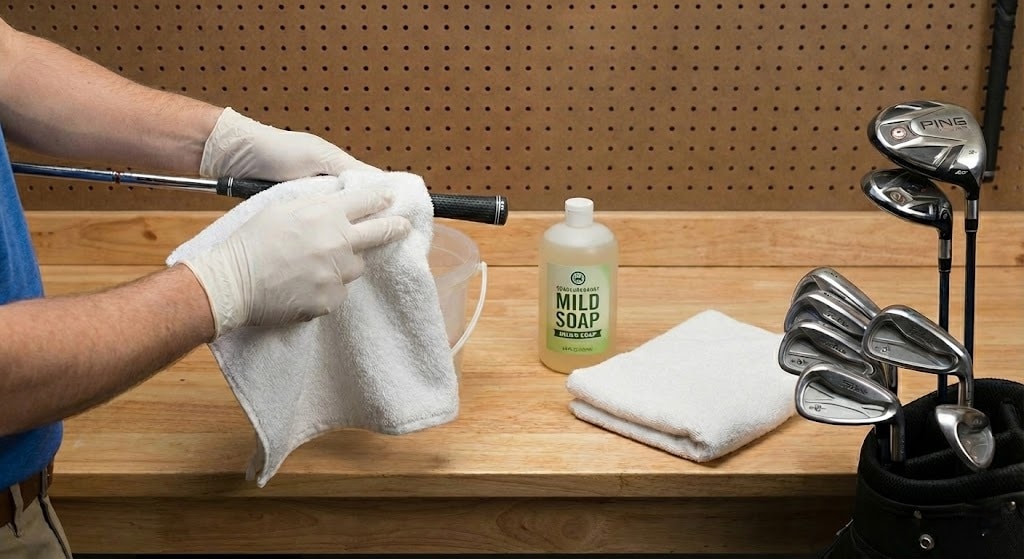
While most golfers assume all regrip jobs dry at the same rate, the reality is far messier, and getting this wrong means you're back at square one with a spinning grip mid-swing.
Your solvent choice matters most. Solvent-based adhesives cure in roughly two hours, while water-based options demand a full 24 hours. That's not marketing fluff, it's chemistry.
Environmental conditions throw another wrench into the equation. Warm, dry conditions accelerate evaporation dramatically. Cool or humid weather? You're waiting longer, period. Heat and humidity not only affect drying time but also accelerate grip wear once you start playing. For best results, work in temperatures above 60°F to ensure proper curing.
Don't overlook grip construction either. Corded and textured grips trap solvent in their grooves, extending dry time beyond smooth alternatives. Softer materials need extra patience to bond without damage. Keep in mind that softer grips wear faster than firmer options, so you'll be repeating this process sooner.
Finally, your technique influences everything. Excess solvent floods the tape, slowing evaporation. Skimp on it, and you'll compromise adhesion entirely.
Rushing to test your new grips before they've properly cured ranks among the costliest mistakes recreational golfers make, and I've watched it happen countless times at my local club.
Here's what actually happens: that grip rotates mid-swing, your clubface opens unpredictably, and you've just created an inconsistency you'll spend weeks diagnosing. Worse, you're gripping tighter to compensate, which kills your swing tempo and accelerates fatigue. This increased tension in hands, wrists, and forearms can fundamentally disrupt your entire swing mechanics.
The real damage goes deeper than one bad round. Premature use stretches the grip material, traps solvent underneath, and weakens the adhesive bond permanently. You've fundamentally shortened your grip's lifespan before hitting your initial shot. Since grips wear down from sweat, oils, dirt, and sunlight exposure, starting with a compromised adhesive bond only accelerates the deterioration process. With proper care and maintenance, grips can serve you well for about a year of weekly play, but only if you allow them to cure completely from the start.
There's also a safety issue nobody discusses: a grip that detaches mid-swing becomes a projectile. I've seen it happen, and it's genuinely dangerous for everyone nearby.
Knowing the risks of premature use naturally raises a practical question: how do you minimize that waiting period without compromising quality?
Here's the truth: preparation beats rushing every time. Before you touch a single club, gather everything: vise, solvent, tape, knife, and new grips. Pre-cut your tape strips to length. This eliminates fumbling mid-process when the solvent's already activating.
Secure each club in a vise with a proper shaft clamp. Your hands stay free, your cuts stay clean, and your alignment stays precise. When removing old grips, a curved blade knife slices through quickly without damaging the shaft.
The real speed hack? Generous solvent application. Spray it liberally inside the grip and on the tape. One smooth motion slides the grip home. Adjust alignment immediately; you've got seconds before it sets. While you're at it, keep a soft-bristled brush nearby to remove any debris from the shaft before applying new tape.

You should regrip your golf clubs every 40 rounds or once a year, whichever comes first. That's the baseline. If you're grinding multiple times a week, cut that to every six months. The "every 12-18 months" advice floating around is often too generous. Don't wait for visible cracks. When your grips feel slick, or you're white-knuckling the club, you've already waited too long.
Your grips need replacing when they feel slick or slippery, forcing you to squeeze tighter just to maintain control. Look for visible cracks, shiny worn spots, or material flaking off. If you're experiencing hand fatigue mid-round or the club twists during your swing, that's your grip telling you it's done. Don't overthink it. When the tacky feel disappears, it's time.
Regripping a single club at home takes you 15 to 30 minutes of active work. If you're doing this for the initial time, budget closer to 30 minutes; you'll fumble with the tape and solvent alignment. Experienced hands knock it out in under 15. The real-time sink? Removing stubborn old grips. That alone can eat 10 minutes. Multiply by your full set, and you're looking at a solid afternoon project.
Yes, the weather absolutely hammers your grips. Hot, humid conditions accelerate breakdown because sweat and moisture degrade rubber compounds faster. Cold weather hardens grips, reducing tackiness and forcing earlier replacement. UV exposure causes cracking and fading that dramatically shortens lifespan. You'll replace grips twice as often playing year-round in harsh climates versus moderate ones. Store clubs in climate-controlled spaces and consider synthetic grips for humidity resistance.
Yes, you should buy one or two extra grips when regripping for the initial time. Here's the reality: mistakes happen. You might tear a grip during installation or find one defective after it's on. Having backups means you're not stuck waiting on a replacement shipment. Plus, bulk purchasing often drops your per-grip cost. Store them in a cool, dry spot, and they'll last for years.
You've done the work, now don't ruin it with impatience. Give solvent-based grips at least 6-8 hours, water-based adhesives a full 24 hours, and you'll be swinging with confidence. Rush the process, and you're risking a twisted grip mid-swing or worse, a club flying out of your hands. Trust me, that extra waiting time beats explaining to your playing partners why your 7-iron just became a projectile.

