The PXG initially burst onto the scene with its military-grade marketing and eye-watering price tags. I rolled my eyes harder than a three-putt from four feet. But after spending three months with the Sugar Daddy III wedges in my bag, I've had to eat a healthy serving of humble pie. These aren't just expensive vanity projects for country club peacocks. They're legitimately some of the most technologically advanced wedges I've tested in twenty years of reviewing golf equipment.
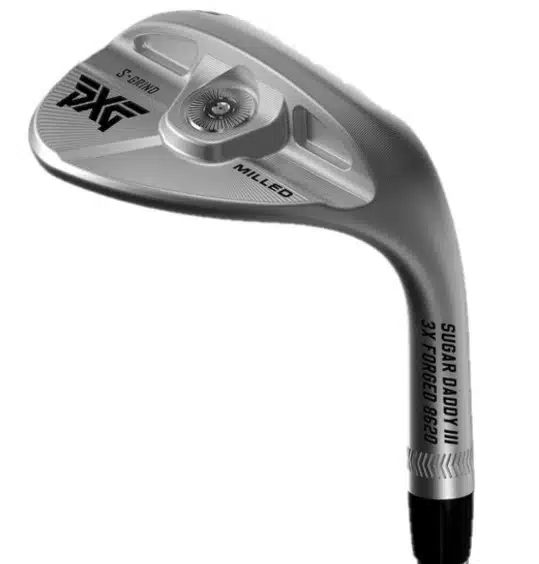
Experience unmatched control and spin with PXG Sugar Daddy III wedges. Expertly crafted with triple forging and CNC milling, they deliver peak performance and customizable sole options to elevate every chip and pitch shot. These wedges are designed for golfers seeking precision and versatility around the greens.
Opening the box on these wedges feels like unboxing a Swiss watch. The chrome finish gleams like it was polished by angels (or the Xtreme Dark DLC coating if you prefer the murdered-out look), and the precision of the milling is immediately apparent. Run your finger across the face, and you'll feel grooves that are noticeably wider and deeper than my old Vokeys. At $299.99 per club, they better feel special, and they do.
What struck me most wasn't the aesthetics, though. It was the weight. These things feel substantial, purposeful. Pick one up and you immediately sense this isn't your typical cast wedge churned out by the thousands. The 100% CNC milling means every single surface has been carved from a solid block of 8620 carbon steel. No shortcuts, no compromises. After testing dozens of wedges over the years from every major manufacturer, I can tell you that the level of precision manufacturing is rare at any price point. The 3X forging process creates an incredibly tight grain structure in the steel that not only enhances durability but delivers that buttery soft feel that better players crave. The estimated 20-30 day delivery time is worth the wait when you consider the level of customization and precision manufacturing that goes into each club.

Let me geek out for a minute on what PXG calls their "wide groove technology." The grooves on the Sugar Daddy III are legitimately 25% wider in cross-sectional volume than standard wedges. More significantly, they bite into the ball cover 0.002 inches deeper than narrow groove patterns. That might sound like marketing mumbo-jumbo, but here's what it means on the course: spin that doesn't quit, even when Mother Nature throws you a curveball.
I tested these wedges during the wettest spring we've had in Oregon in years. While my playing partners were watching their balls release and roll out on approach shots, my Sugar Daddy IIIs were still grabbing and checking like it was bone dry. The wider grooves act like tiny squeegees, channeling water away from the impact zone. On a soaking wet Tuesday morning at my home course, I stuck a 56-degree from 85 yards that had no business stopping. It hit, took one hop, and sucked back two feet. My buddy accused me of using illegal grooves (they're fully conforming, by the way).
The dry condition performance is similarly impressive. From tight lies, these wedges generate tour-level spin rates. I'm talking 8,500+ RPM on full shots with the 56-degree, which is about 800 RPM more than I was getting with my previous gamers. The 3X forging process creates a grain structure in the steel that not only increases durability but also provides a softer feel at impact. After three months of heavy use, including plenty of practice sessions on range mats, the grooves still look fresh.
Here's where PXG surprised me again. Most manufacturers offer different sole grinds, but they're often so subtle that weekend warriors like us can barely tell the difference. The Sugar Daddy III's three options, S, C, and BP grinds, are distinctly different and genuinely useful for different conditions and swing types.
The S Grind is your Swiss Army knife option. It's got moderate bounce with a traditional sole that tapers from heel to toe. This is what I keep in my 52 and 54-degree slots because it handles everything from full shots to bump-and-runs without getting too specialized. If you're only buying one or two wedges, this is your grind. It's versatile enough for firm fairways, fluffy rough, and everything in between.
The C Grind is for you, low-handicappers who like to get creative around the greens. With only 7 degrees of bounce and an aggressive heel and toe relief, this thing slides under the ball like a spatula under a pancake. On firm turf conditions (think summer golf in Arizona), this grind is money. I tested the 60-degree C Grind and was opening the face for flop shots that I wouldn't dare attempt with a higher bounce wedge. Fair warning, though – if you're a digger or play on soft conditions regularly, this grind will have you chunking shots faster than you can say "skull."
The BP Grind sits in the middle, offering a nice compromise between versatility and shot-making capability. Available on the 54, 56, 58, and 60-degree models, it's got enough bounce to save you from steep angles of attack but enough relief to allow for face manipulation. Think of it as the S Grind's more athletic younger brother.

This is where things get interesting (and admittedly, a bit exclusive). PXG offers Precision Weighting Technology that allows for 2-gram increment adjustments during a professional fitting. The weights sit near the center of gravity on the back of the clubhead, and they can genuinely change the feel and performance of the wedge.
During my fitting at PXG's Scottsdale headquarters, we experimented with different weight configurations. Adding weight helped smooth out my tempo on partial shots – something I've always struggled with. The fitter explained that the progressive center of gravity positioning (higher lofts have more mass in the upper blade) helps maintain consistent flight and spin across the loft range. It's not just marketing speak; I could feel the difference, especially on those touchy 30-50 yard shots.
The catch? You can only adjust these weights during a PXG fitting session, not after purchase. It's both a blessing and a curse. On one hand, it guarantees you're properly fit by a professional. On the other hand, if you want to tinker later, you're out of luck. For a $300 wedge, I'd prefer the flexibility to adjust on my own, but I understand PXG's reasoning; most of us would probably make things worse messing with the weights ourselves.
After three months and probably 40 rounds with these wedges, here's what I can tell you about actual on-course performance. From 100 yards and in, these are as good as anything I've played, including my trusty Titleist SM9s and the latest Callaway Jaws. The combination of the wider grooves and soft forged feel gives you tremendous confidence over the ball.
Full shots feel buttery smooth with a distinctive "thwack" at impact that's more muted than cast wedges. The ball flight is predictably penetrating with plenty of spin to attack pins. I've been able to flight wedges lower into the wind without losing that vital stopping power. Partial shots are where these wedges really shine, though. The CNC milling extends across the entire face, so even toe and heel strikes maintain decent spin rates.
Around the greens, the variety of grind options means you can build a setup that matches your short game style perfectly. I went with the 52-degree S Grind, 56-degree BP Grind, and 60-degree C Grind, giving me options for every conceivable shot. The 60-degree C Grind has become my go-to for those terrifying short-sided situations where you need to get the ball up quickly and stop it fast. My conversion rate on shots inside 6 feet has improved noticeably since switching to these wedges, as the consistent spin and control make it easier to dial in those crucial scoring opportunities.
Bunker play deserves special mention. The wider grooves and precise shaping make it easier to control spin and distance from sand. I'm hitting more consistent explosion shots, and the bounce options mean I can match the grind to different sand conditions. The S Grind handles fluffy sand beautifully, while the C Grind excels in firm, wet sand where you need to pick it clean.
Experience unmatched control and spin with PXG Sugar Daddy III wedges. Expertly crafted with triple forging and CNC milling, they deliver peak performance and customizable sole options to elevate every chip and pitch shot. These wedges are designed for golfers seeking precision and versatility around the greens.
Yes, you can legally use PXG Sugar Daddy III wedges in tournament play. They're fully compliant with USGA and R&A equipment regulations, featuring conforming groove specifications and materials. You'll need to finalize all customizations like loft, lie, and weighting before competition, since you can't make adjustments during tournaments. Professional and amateur players widely use these wedges in competitive settings, and there aren't any known tournament restrictions or disputes regarding their legality.
Your PXG Sugar Daddy III wedges come with a one-year limited warranty from the original purchase date. This warranty covers defects in materials and workmanship under normal use conditions. It doesn't cover normal wear and tear, like groove wear or cosmetic damage. You'll need proof of purchase from an authorized PXG retailer to make a claim. If there's a defect, PXG will repair, replace, or refund at its discretion.
Yes, you can get Sugar Daddy III wedges custom-fitted at PXG storefronts. You'll work with expert fitters who'll enhance your wedge performance through individualized loft, lie angle, and sole design adjustments. They'll tailor shaft selection to your swing characteristics and adjust grips to your preferences. The 60-minute fitting session includes establishing baseline performance, dialing in specifications, and analyzing data to provide recommendations. You can also schedule combo fittings for multiple clubs.
You'll notice significant upgrades in the Sugar Daddy III over previous generations. They're triple-forged instead of standard forging, creating a softer feel and tighter grain structure. You get three sole grind options versus two in Sugar Daddy II, plus Precision Weighting Technology for custom fitting that wasn't available before. The wider grooves deliver 25% more volume than competitors, and variable depth milling replaces weight ports for better CG positioning and spin control.
You'll find PXG Sugar Daddy III wedges don't come with stock shafts - they're all custom-ordered. Your most common option is the Energetic Gold Mid 115 steel shaft, offering low launch and excellent control. You can also upgrade to Accra iSeries shafts in 50g, 60g, 70g, or 80g weights if you're seeking lighter options for increased swing speed. All shafts are customizable for length, flex and can be paired with different grips.
The PXG Sugar Daddy III wedges are for serious golfers who demand the best and are willing to pay for it. If you're a single-digit handicapper who plays year-round in varying conditions, these wedges will raise your short game. The technology isn't just marketing fluff; the wider grooves, precision milling, and thoughtful grind options deliver tangible performance benefits.
However, if you play once a month and are happy with your current wedges, save your money. At $300 per club, these are an investment that only makes sense if you're going to fully employ their capabilities. But for those who live and die by their short game, who understand that wedges are scoring clubs that directly impact your handicap, the Sugar Daddy IIIs are worth every penny. They're not just expensive wedges; they're precision instruments that happen to cost what precision instruments should cost.