If you've ever shanked a wedge shot into your neighbor's window during a backyard practice session, you know the gut-dropping feeling that follows. The apologetic walk next door, the awkward exchange of insurance information, the silent promise to yourself that you'll never hit real golf balls in the yard again. Trust me, I've been there. That experience is exactly what drove me down the rabbit hole of practice balls, and after testing more foam, plastic, and wiffle-style training balls than I care to admit, I recently spent a few weeks with the ProActive Sports Pro Flight Practice Balls. Here's what I found.
Experience realistic golf practice with ProActive Sports Pro Flight Balls, designed for true flight feel, safe for tight spaces, and perfect for swing perfection.
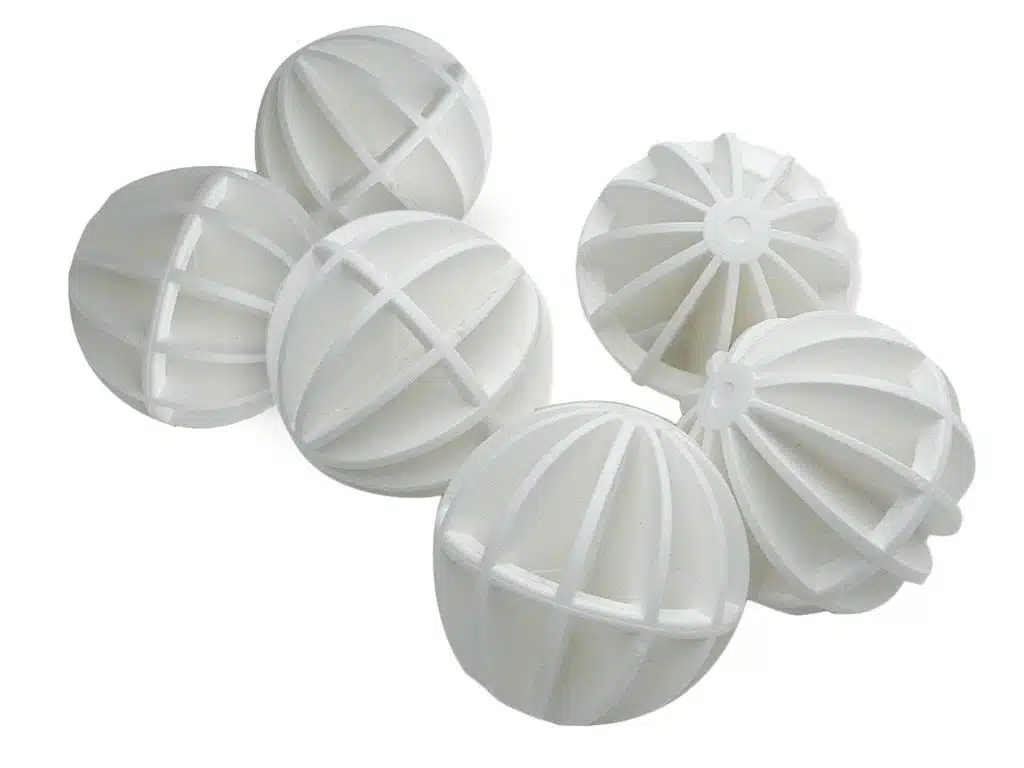
When my set of ProActive Sports Pro Flight balls arrived, I wasn't expecting a premium unboxing experience, and that's not what I got. What I did get was a straightforward mesh storage bag filled with lightweight practice balls that looked ready to be hit. The balls themselves are soft to the touch, and the orange color on the limited-flight foam versions makes them easy to spot in the grass (a bigger deal than you'd think when you're hunting through your backyard after a 30-minute session). There's nothing flashy here, and honestly, that's fine. These aren't trying to be the Titleist Pro V1 of practice balls. They're trying to keep your windows intact while you groove your swing, and the packaging reflects that no-nonsense approach.
The combo pack option, 36 balls split between 24 wiffle-style balls and 12 limited-flight foam balls, gives you a solid inventory to work with. The 18-pack of orange limited-flight balls is also available if you know exactly what you want. Either way, you're getting plenty of ammunition for repeated sessions without having to chase balls every five swings.

Let's talk about the elephant in the room: these balls don't go very far. The Pro Flight practice balls max out at roughly 40 feet, and the foam versions in the broader ProActive Sports line are described as traveling about one-third of the normal distance. If you're hoping to step into your backyard and simulate a full 150-yard 7-iron, you're going to be disappointed. But here's the catch: that's not what these are for, and judging them on distance would be like criticizing a putter for not being a great driver.
The limited-flight design is entirely intentional. The whole value proposition is that you can take full swings in spaces where a real golf ball would be dangerous or impractical. I was hitting these in a section of my yard that's maybe 50 feet deep, and every ball stayed comfortably within bounds. That's the promise, and that's the delivery.
Where I did notice a limitation is in the feedback you get from the short flight. When a ball only travels 40 feet, it's genuinely hard to read the trajectory, shot shape, or any meaningful ball flight data. I hit a few that I'm fairly certain were pulls, but at that distance, everything kind of blurs together. If you're someone who wants to work on a draw versus a fade, these aren't going to help you see the difference. The flight is too compressed to tell much beyond "I made contact" or "I didn't." For what it's worth, ProActive Sports markets these as maintaining true ball flight and path, and, to be fair, I could see a general sense of high versus low shots, but the window for evaluating that is extremely narrow.
I've tested other limited-flight practice balls, including some from Callaway and Titleist's foam options, and the distance limitation is universal across the category. ProActive Sports isn't doing anything dramatically different here. The 40-foot ceiling is competitive with similar products, and in a tight backyard or indoor setting, it's genuinely all you need.
This is where the ProActive Sports Pro Flight balls actually shine, and it's the reason I kept reaching for them even after identifying their limitations. These are repetition machines. If your goal is to build a consistent swing through sheer volume of practice, having a mesh bag full of 36 balls sitting next to your hitting mat is dangerously convenient. I found myself grabbing a wedge during coffee breaks, setting up in the backyard, and ripping through a dozen swings in under five minutes. That kind of frictionless practice access is worth more than most golfers realize.
The training value here is squarely in the swing mechanics and tempo department. I used these primarily with my pitching wedge and 8-iron, focusing on maintaining a smooth takeaway, consistent tempo, and solid contact. And for that purpose, they work beautifully. You can absolutely feel the difference between a clean strike and a chunked or topped shot. The ball comes off the face with a satisfying little pop when you catch it flush, and there's a noticeable difference in the feel (and sound) when you don't. That tactile feedback loop, hit, assess, adjust, repeat, is the foundation of improvement, and these balls facilitate it without requiring you to drive to the range.
That said, I want to be transparent: if you're working on distance gapping between clubs, these won't help. I couldn't meaningfully distinguish between my pitching wedge and my 8-iron distances because both were landing in roughly the same 30-to-40-foot zone. For that kind of practice, you need a launch monitor and real golf balls. But for the golfer who just wants to ingrain a fundamentally sound swing through high-volume repetition? This is the sweet spot.
I should also mention that these are particularly great for beginners. If you're teaching someone to play, a spouse, a kid, a buddy who's never held a club, handing them a basket of ProActive Sports practice balls in the backyard eliminates the intimidation factor. No range fees, no pressure from other golfers watching, and no risk of launching a real ball into someone's car. The low-stakes environment these balls create is genuinely underrated as a learning tool.

The construction of these balls won't win any engineering awards, but it doesn't need to. The foam versions are soft, noticeably softer than a real golf ball, and the wiffle-style balls are the kind of lightweight plastic you'd expect. Neither type will damage anything in your home or yard, which is the primary design requirement. I accidentally skulled a foam ball directly into my wooden fence from about 15 feet away, and neither the ball nor the fence showed any sign of damage. (My conceit, however, took a hit.)
Durability surprised me in a good way. After several weeks of regular use. I'd estimate I hit each ball at least 40-50 times across multiple sessions; the foam balls showed minimal wear. A few had some scuff marks from iron contact, and one had a small divot where I caught it thin with a wedge, but none were cracked, split, or rendered unusable. The wiffle-style balls held up even better, which makes sense given their hollow construction and the way they absorb impact.
The mesh storage bag is a small but appreciated detail. It keeps everything corralled and makes it easy to grab your practice balls and head outside without fumbling around in a drawer. Is it the highest-quality mesh bag I've ever seen? No. But it does its job, and it hasn't torn or frayed after weeks of being tossed around my garage. Sometimes the simple things matter.
One thing worth noting: the softness of these balls means they won't give you the same impact sensation as a real golf ball. There's no firm compression off the clubface; it's a muted, almost pillowy feeling. For some golfers, this won't matter. For others who rely heavily on feel to gauge contact quality, it could be a slight limitation. I fall somewhere in between. I could tell good contact from bad, but the subtle distinction between "good" and "great" was harder to distinguish than it would be with a real ball.
I need to be honest here, because I think realism is where a lot of golfers set their expectations too high with practice balls, and where the ProActive Sports Pro Flight balls have their most notable weakness. The marketing language promises simulated real golf ball flight and path, and while that's technically sort of true in general, the reality is more nuanced.
Yes, when you hit a clean shot, the ball rises and falls in a way that vaguely resembles an actual golf shot. You can see a rough approximation of the trajectory. But the short flight distance (40 feet, remember) compresses everything so dramatically that you're really just getting a suggestion of ball flight rather than a faithful replica. I've tested practice balls from Almost Golf and Birdie Ball that, in my experience, do a meaningfully better job of simulating real flight characteristics, though they typically come at a higher price point. For example, the Birdie Ball's oval-shaped design is specifically engineered to react to spin, showing cuts, hooks, and piercing flight on pure strikes with true ball flight up to 40 yards, which is a fundamentally different level of feedback than what ProActive offers.
Realism is most evident in tempo and timing. The act of setting up to a ball, taking your stance, executing your backswing, shifting, and making contact feels like golf because it is golf, just with a softer ball and a shorter result. For the purpose of building muscle memory and maintaining your swing during the offseason or between rounds, the realism is perfectly sufficient. You're not going to develop bad habits by hitting these. You're just not going to get the full sensory experience of a real golf shot, either.
A review I came across described these as "not a top choice for realism," and I'd agree with that assessment. But I'd add the key caveat that within the budget-friendly limited-flight category, realism is always going to be compromised. The question is whether the trade-off is worth it for the convenience and safety, and for most casual practitioners, I believe it is.
At roughly $6 for a six-pack, the ProActive Sports Pro Flight practice balls are about as budget-friendly as it gets in the practice ball market. That's roughly a dollar per ball, which is effectively disposable pricing. To put that in perspective, a single sleeve of premium golf balls costs four to five times that. You could buy multiple packs of these, lose half of them in the hedge, and still spend less than a bucket of range balls at most facilities.
The combo pack offering 36 balls, a mix of wiffle-style and foam, pushes the per-ball cost down even further and gives you variety for different practice scenarios. Want to hit full swings with the foam balls? Great. Want to practice chip shots with the wiffle balls where flight distance matters even less? Perfect. The variety makes the combo pack the better value in my opinion, especially if you're not sure which style you prefer.
Compared to more premium options like the Almost Golf ball (which runs closer to $3-4 per ball) or the Birdie Ball (even pricier), ProActive Sports occupies the entry-level tier comfortably. You're sacrificing some realism and performance subtlety, but you're gaining accessibility and volume. For a beginner or someone who just wants a bag of practice balls to keep in the garage, this price point is a no-brainer.
Experience realistic golf practice with ProActive Sports Pro Flight Balls, designed for true flight feel, safe for tight spaces, and perfect for swing perfection.
Yes, they're solid for indoor use. They're lightweight with limited flight, about 40 feet max, so you won't destroy your garage or TV. You'll get good feedback on swing mechanics, tempo, and contact, but don't expect realistic ball flight or shot-shaping data. They're best for beginners working on fundamentals in tight spaces. Just watch your ceiling height on full swings. For serious indoor practice, they're a safe, no-brainer pick.
They're not wind-optimized, and you'll notice it. Without a serious aerodynamic dimple pattern or low-spin construction, these practice balls drift more in crosswinds and balloon in headwinds compared to premium balls. You won't get that penetrating flight that cuts through gusts. For calm backyard sessions? Fine. But if it's gusty out, don't trust your line; the wind's gonna push these around more than you'd like.
They're unlikely to break your windows or damage furniture under normal use. These are lightweight plastic balls, not real golf balls. That said, they're harder than foam, so a full-speed swing at close range could ding a single-pane window or scuff soft wood furniture. You're not gonna shatter anything, but don't aim at grandma's china cabinet. Add a net or heavy curtain if you're worried.
You'll get several months out of them with regular use, potentially a year-plus if you're casual about it. They're soft and durable enough to handle thousands of swings. That said, smacking them full-force against hard surfaces daily will chew through them faster. Watch for cracks, dents, or a dead feel on impact. Store them out of heat and sunlight, and they'll hold up way longer than you'd expect for practice balls.
They're not officially approved for golf simulators. No major simulator manufacturer or tracking-system maker lists Pro Flight Practice Balls as compatible. Camera-based systems won't read them reliably, and radar setups like Trackman or Mevo need marked balls for accurate spin data; these aren't that. You can hit them into a simulator screen for basic swing work, but don't expect trustworthy launch numbers. For real data, use premium balls or RCT-equipped options.
The ProActive Sports Pro Flight Practice Balls aren't trying to replace your range sessions, and they shouldn't. What they are is a cheap, convenient, and genuinely useful tool for keeping your swing sharp when you can't get to the course or the driving range. They're the golf equivalent of a jump rope for a boxer, not the main event, but a reliable training tool that keeps you in fighting shape between the real thing.
If you're a beginner looking for a safe, low-pressure way to learn swing fundamentals, these are excellent. If you're a mid-handicapper who wants to groove your tempo during the week without spending money at the range, these deliver. If you're a low-handicapper looking for precise feedback on ball flight and shot dispersion, look elsewhere; you need real golf balls, a launch monitor, or, at a minimum, a higher-end practice ball like the Almost Golf ball.
For the price, the convenience, and the peace of mind that comes with knowing you can take a full swing in your backyard without consequences, the ProActive Sports Pro Flight Practice Balls earn a spot in my garage. They're not glamorous, they're not high-tech, and they won't alter your game overnight. But they'll keep you swinging, and in golf, that's half the battle.