I've tested gloves that cost three times as much and lasted half as long. That's not hyperbole, that's the reality of golf glove shopping for most of us. You drop fifteen bucks on a premium Cabretta leather glove, play three sweaty rounds in the summer, and suddenly it looks like you've been gardening with it. So when I tell you that the FootJoy WeatherSof has been my go-to glove for years, and apparently for over 100 million other golfers too. I'm not just reading marketing copy. I've lived it, round after round, season after season.
The FootJoy WeatherSof is billed as the #1 selling golf glove in the world, and honestly, after spending more time with this glove than probably any other single piece of equipment in my bag, I think that title is well earned. But let me walk you through exactly why, and whether it deserves a spot on your hand too.
Check out our FootJoy WeatherSof golf glove review. See real durability tests, sizing guides, and lock in the lowest price online now!
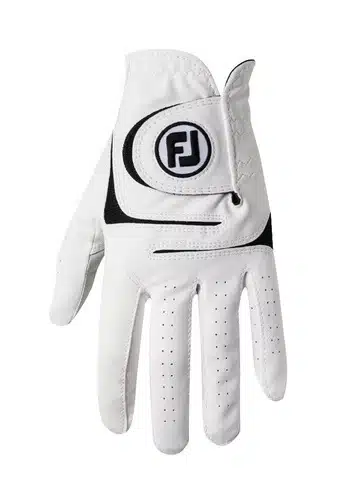
The first time you pick up a WeatherSof, you're not going to be blown away by luxury. Let's just get that out of the way. This isn't a buttery-soft, full Cabretta leather glove that makes you feel like you just upgraded your entire game before hitting a single ball. It's a hybrid, a blend of synthetic materials and strategically placed Cabretta leather, and it looks the part. The predominantly white glove has a clean, classic aesthetic, and FootJoy offers it in black and taupe as well, with four trim color options for the white version. It's understated and professional, which is exactly what I want in a glove.
What did catch my attention right away was how light and flexible it felt in my hand before I even put it on. There's a suppleness to the synthetic material that you don't always get, and the mesh panels across the knuckles are immediately noticeable. It doesn't feel cheap. It feels purposeful. And that distinction matters more than most golfers realize.

Here's where the WeatherSof starts to separate itself from the pack, and it all comes down to FootJoy's decision to use a hybrid construction rather than going all-in on one material. The glove combines what FootJoy calls FiberSof material with Taction2 advanced performance leather and premium Cabretta leather placed in key stress areas, primarily the palm and thumb, where your hands do the most work during a swing.
Let me break that down because it's vital. The FiberSof material forms the backbone of the glove. It's a synthetic that delivers a consistent fit, a soft feel, and, critically, a secure grip. It's the reason the glove feels the same on day one as it does on day fifteen. Full leather gloves tend to stretch and lose their shape over time, especially in warm conditions. FiberSof doesn't do that, at least not to the same degree. It holds its form, which means your grip pressure stays more consistent round after round.
Then you've got the Cabretta leather and Taction2 leather in the areas where you need genuine grip performance and tactile feedback. The palm, the fingers, the thumb, these are the zones where you're making contact with the club, and FootJoy didn't cheap out here. The leather in these areas gives you that traditional, connected feel that pure synthetic gloves often lack. It's a best-of-both-worlds approach, and it works.
I've worn full synthetic gloves that felt like I was gripping the club through a plastic bag, and I've worn full leather gloves that felt incredible for exactly four rounds before falling apart. The WeatherSof lives in a sweet spot between those extremes, and that's by design. FootJoy clearly engineered this glove for the golfer who plays regularly and doesn't want to replace their glove every other week. The leather patches located on the inside of the thumb and palm are positioned exactly where your hands make the most critical contact with the grip, reinforcing that this hybrid approach was carefully thought out.
If the FiberSof material is the foundation, then FiberSof MicroTac is the insurance policy. FootJoy places this enhanced material in the high-stress areas of the glove, think the spots where most gloves start showing wear first. The base of the fingers. The heel pad of the palm. The areas that take a beating every time you grip down on a seven-iron.
What MicroTac does is improve both soft feel and grip performance in those zones while simultaneously adding durability. It's a subtle difference, but you feel it. When I'm hitting balls at the range, and I'm talking about a full bucket, 100-plus balls, the glove doesn't start slipping or bunching up in those stress areas the way lesser gloves tend to. The grip stays secure, the feel stays consistent, and I'm not adjusting my hand position between shots because something feels off.
I'll be honest, when I first read about MicroTac on FootJoy's website, I figured it was just marketing speak. Another buzzword to justify the product description. But after wearing through several pairs and comparing the wear patterns to other gloves in the same price range, I noticed a real difference. The WeatherSof simply holds up better where it matters most. The spots that usually develop holes or thin patches after a dozen rounds? They're reinforced here, and it shows. This is one of those features that you don't appreciate until you've gone through enough gloves to know what premature failure looks like (and trust me, I have).

Let's talk about the PowerNet mesh, because this is one of my favorite features and one that I think gets overlooked. FootJoy placed PowerNet mesh panels across the knuckles and fingers, and their purpose is straightforward: breathability, comfort, and flexibility.
If you've ever played a round in July in the Southeast or really anywhere that humidity turns your hands into slip-and-slide zones, you know that glove breathability isn't a luxury. It's a necessity. Full leather gloves in hot conditions are a nightmare. They soak through with sweat, they get stiff, they lose their grip, and by the back nine, you're peeling the thing off between shots just to let your hand dry out. I've been there more times than I care to admit.
The PowerNet mesh changes that equation. Those panels across the knuckles allow air to flow through the glove, keeping your hand noticeably cooler. And because they're positioned over the knuckles where the glove needs to flex the most during your grip, they also improve the general flexibility of the glove. It's a dual-purpose design element that solves two problems at once. It's worth noting that the mesh stripes stretch more than the leather or synthetic sections of the glove, which means they actively enhance your range of motion right where you need it most during the grip.
I tested the WeatherSof on some genuinely brutal summer days, the kind where you're sweating just standing in the cart, and the difference compared to my old full-leather gloves was notable. My hand stayed drier, the glove maintained its grip, and I wasn't constantly fidgeting with it between shots. Golfalot actually noted that the WeatherSof performs better on hot, sweaty days than all-leather gloves, and it can absorb a little rain and sweat better than full-leather alternatives, too. That tracks perfectly with my experience. It's not a rain glove by any means, but it handles moisture, whether from weather or your own perspiration, with surprising competence.
The flexibility aspect shouldn't be understated either. Golfalot described the WeatherSof as feeling more flexible than higher-end full-leather gloves, and I agree completely. When you make a fist or grip the club, there's no resistance from the material. It moves with your hand rather than fighting against it. That might sound like a small thing, but over 18 holes and 70-plus swings, comfort compounds. A glove that doesn't restrict your hand movement is a glove that lets you play your best.
Getting a good fit in a golf glove is more important than most recreational golfers realize. A glove that's too loose creates bunching, which changes your grip pressure and leads to inconsistency. A glove that's too tight restricts blood flow and fatigues your hand. The WeatherSof addresses this with what FootJoy calls the ComforTab Closure system, and it's complemented by a size range that runs from Small to XXL, which is broader than what you'll find from a lot of competitors.
The ComforTab is essentially a refined Velcro closure on the wrist that provides a secure, adjustable fit. It's not revolutionary technology (it's a tab closure on a golf glove, let's not get carried away), but it's well-executed. The tab is wide enough to allow meaningful adjustment, and it sits flat against the wrist without creating pressure points. I've worn gloves where the closure digs into the back of my wrist or creates a lump that I can feel during my swing. The ComforTab doesn't do that. It closes, it holds, and you forget about it. That's exactly what you want.
The overall fit of the WeatherSof is what I'd describe as true to size with a snug, performance-oriented feel. I wear a large in most gloves, and the large WeatherSof fits me perfectly, snug through the fingers with no excess material in the palm. The FiberSof material contributes to this consistent fit because it doesn't stretch out the way leather does after a few rounds. If you buy a large, it's going to fit like a large for the life of the glove, not just for the first three rounds.
With sizes running from S to XXL and multiple color options available, finding the right fit and look shouldn't be an issue for most golfers. It's a small detail, but having that XXL option is a real plus for larger-handed players who often get stuck choosing between gloves that are too small or going without one entirely.
This is the section where the WeatherSof goes from being a good glove to being an exceptional value, and I want to be specific about why.
FootJoy lists the WeatherSof at $13 on its product page. Thirteen dollars. In a market where premium golf gloves routinely run $20 to $28, that price point is genuinely notable, especially when you consider the durability you're getting. Golfalot reported that a WeatherSof glove may last up to twice as many rounds as a high-end leather glove. I haven't done a scientific study on this, but anecdotally, my experience lines up. I've gotten 15 to 20 rounds out of a single WeatherSof before it starts showing meaningful wear, whereas my Cabretta leather gloves from other brands tend to start deteriorating after 8 to 10.
Think about what that means from a cost-per-round perspective. If you're paying $13 for a glove that lasts 15 rounds, you're looking at less than a dollar per round. If you're paying $25 for a premium leather glove that lasts 8 rounds, you're at over $3 per round. That's a three-to-one value difference. For golfers who play regularly, say, two to three times a week, that adds up to serious savings over a season.
Golfalot even noted that they purchased two gloves for £12 at retail (roughly $15 USD), which pushes the value equation even further. And the durability isn't just about the glove lasting longer in a general sense; it's about the glove maintaining its performance characteristics throughout its life. The synthetic construction with reinforced stress areas means the glove doesn't gradually degrade the way leather does. It performs at a consistent level, and then, when it's ultimately done, it's done. There's no long, slow decline where you're wondering if it's time for a new glove but trying to squeeze another round or two out of it.
Golfalot specifically stated that durability is the main reason they keep coming back to the WeatherSof, and that it doesn't wear or tear like all-leather gloves. That's been my experience exactly. The synthetic-leather hybrid construction is inherently more resistant to the elements and to repetitive stress than pure leather, and FootJoy has clearly tuned this formula over the many iterations of the WeatherSof.
Check out our FootJoy WeatherSof golf glove review. See real durability tests, sizing guides, and lock in the lowest price online now!
Yes, you can wear them in the rain. The synthetic-leather blend handles light rain and sweat way better than a full cabretta glove that'll get soggy and stiff. FiberSof MicroTac material keeps your grip solid in damp conditions. That said, they're wet-weather capable, not wet-weather specialized. If you're playing in a steady downpour, grab FootJoy's RainGrip gloves instead; those are actually built for it.
Grab a flexible tape measure. Wrap it around your lead hand's knuckles, excluding the thumb, for the palm circumference. Then measure from the base of your palm to your middle fingertip for finger length. Cross-reference both numbers on FootJoy's size chart. If you're between sizes, try the smaller one initially. Fingers wider than they are long? Go Cadet. And honestly, recheck every season, hands change more than you'd think.
Yes, they're available for left-handed golfers. You'll want the right-hand glove since lefties wear it on their left (right) hand. Retailers like eBay specifically list "Right Hand Golf Glove For Left Hand Golfer" in the WeatherSof line. Fair warning, labeling is inconsistent across stores. Walmart says "Left Handed," meaning the glove fits the left hand, which is actually for righties. Always double-check which hand the glove fits before buying.
There's no official number from FootJoy, so anyone giving you an exact answer is guessing. Realistically, you're looking at a few weeks to a few months, depending on how often you play. Hit the course 2–3 times a week? Expect roughly three months. Play less and rotate gloves, and you'll stretch that longer. Keep 'em dry, store 'em flat, and they'll reward you.
No, don't toss them in the washing machine. FootJoy doesn't approve of machine washing for WeatherSof gloves, and the agitation and excess moisture can wreck the shape, grip, and material. Your best move is handwashing with mild soap and warm water, gently massaging the fabric, rinse, pat dry with a towel, then air dry. Reshape the glove while it's still damp so it doesn't stiffen up. Check your care label initially.
So who is the FootJoy WeatherSof actually for? It's for the golfer who plays regularly and wants a reliable, comfortable, well-fitting glove that won't destroy their budget. It's for the weekend warrior who plays 30 to 50 rounds a year and doesn't want to spend $200-plus annually just on gloves. It's for the summer golfer who's tired of sweating through leather gloves by the fifth hole. And honestly, it's for anyone who values consistency and practicality over prestige.
Is there a better-feeling glove out there? Sure, if you want to pay double the price for half the lifespan, you can find gloves with a more luxurious initial feel. But the WeatherSof doesn't ask you to make that trade-off. It gives you legitimate Cabretta leather where it counts, synthetic durability everywhere else, genuine breathability through the knuckles, and a price tag that lets you buy three or four at a time without blinking. There's a reason over 100 million of these have been sold. It's not flashy, it's not trying to reinvent the wheel, and it's not going to be the thing your playing partners notice first. But it's going to be the glove that quietly does its job, round after round, without complaint. And in golf, a game that gives us plenty to complain about already, that's worth more than any premium label on the box.