
Pick the ball whose feel you trust on putts and chips. Then make sure its flight and spin suit your full shots. “Soft” and “hard” describe how a ball feels when you hit it. They don’t tell you how far it goes, how high it launches or how much it spins.
Start on the practice green. Roll a 15-footer with each ball and you’ll feel the difference. That’s the five-minute part. You’ll need a few full shots to pick the ball you can play.
The Quick Verdict
Choose the feel you prefer, because no hardness rating or swing-speed number can make that call for you.
If you like a quiet, cushioned feel off the putter and wedges, start with a softer-feeling ball. If you want a crisper click that tells you exactly how you struck it, start with a firmer one. Then check your full shots. A soft ball can still be low-spinning or high-launching. A firm ball isn’t automatically longer, and it isn’t automatically better or worse around the greens.
| Decision point | Softer-feeling ball | Firmer-feeling ball |
|---|---|---|
| What the word describes | A muted, cushioned feel and sound at impact | A crisper, more solid feel and sound at impact |
| What it doesn’t promise | More distance, more spin or a higher flight | More distance, more spin or a lower flight |
| Lean this way if | You putt and chip with more confidence when the ball feels quiet off the face | You want clear feedback on every strike, especially on short shots |
| Real limitation | Feedback can feel vague, so a thin chip or a poorly struck putt is harder to notice | Some golfers find the sound and feel harsh, especially on short putts and chips |
| What to check next | Full-shot flight and greenside spin, which depend on how the ball is built | Full-shot flight and greenside spin, which depend on how the ball is built |
| Best way to decide | Putt, chip and hit full shots with a sleeve of each | The same test, with the same balls, on the same day |

Feel, Compression and Cover Are Three Different Things
Feel is what you sense at impact, compression is how much the ball squashes under load, and the cover is the outer layer that touches the clubface. They’re related, but none of them can stand in for the others.
Feel is the sound and the sensation together, and it’s personal. One golfer’s “soft” is another golfer’s “mushy.” That’s why it’s the first thing to settle, and why only you can settle it.
Compression is a construction measurement, not a feel score. Some brands publish a number and some don’t. Titleist, for example, doesn’t publish an official compression for the Pro V1 or Pro V1x. Swing speed matters in a fitting, but there’s no single number where every golfer should switch from soft to firm.
Cover material affects how the ball reacts to the clubface, especially on short shots. The cover still doesn’t decide the overall feel by itself. Two balls with the same cover material can feel noticeably different, and the next section shows one.
A Softer Ball Doesn’t Automatically Spin More
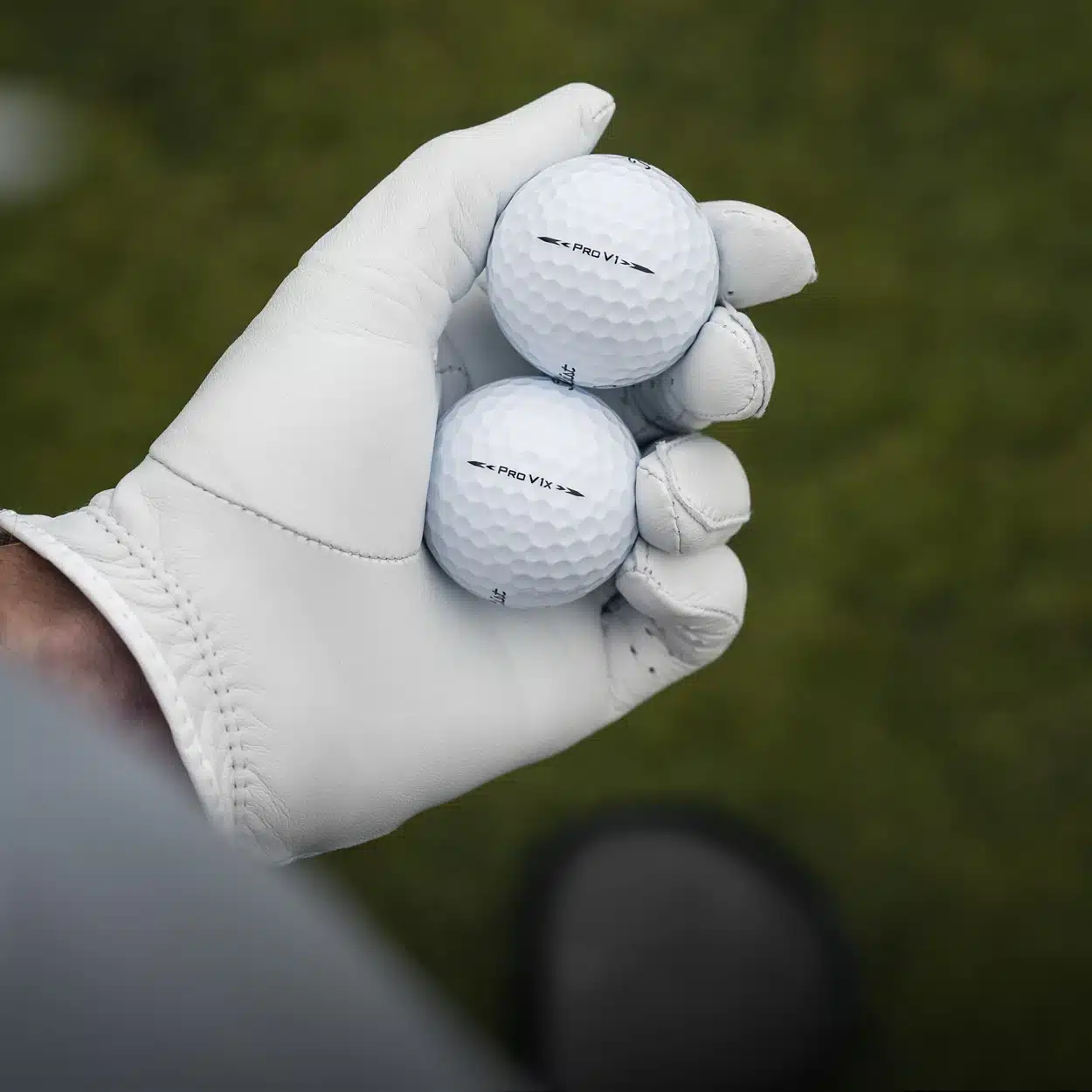
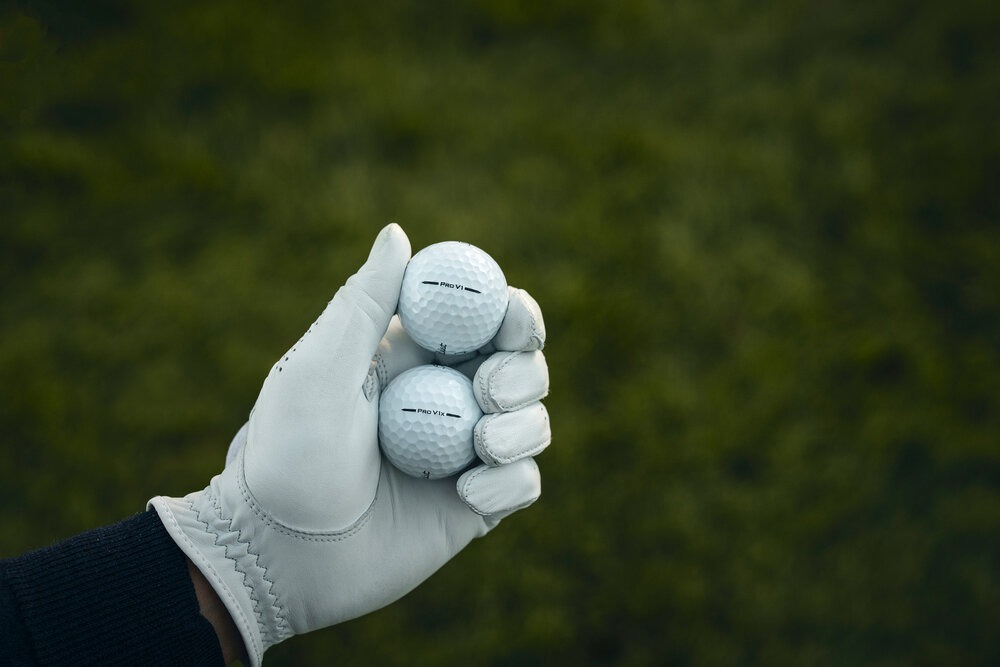
A firmer ball can spin more on full shots than a softer one, and Titleist’s own Pro V1 family shows it.
What Titleist says. These details come from Titleist’s 2025 Pro V1 and Pro V1x launch announcement:
| Titleist specification | Pro V1 | Pro V1x |
|---|---|---|
| Feel | Softer | Firmer |
| Flight | Mid | High |
| Full-shot spin | Lower | Higher |
| Core | High-gradient core | High-gradient dual core |
| Dimples | 388 | 348 |
| Cover | Cast urethane elastomer | Cast urethane elastomer |
| Short game | Designed for short-game control | Designed for short-game control |
| Official compression | Not published by Titleist | Not published by Titleist |
My take. That’s the clearest reason I’d give for not shopping by the word “soft.” The cover is the same and both balls are designed for short-game control. The firmer ball is the one Titleist lists with higher full-shot spin and a higher flight. If you assumed soft means spin, you’d pick the wrong ball for that job. I’m using these two as an example from one maker’s spec sheet, not as a buying recommendation. If you want more on the standard ball, my Titleist Pro V1 review covers it.
What I Don’t Love About Each
Both choices have real limits, and most of them come from expecting the feel label to do more than describe feel.
Softer-feeling ball
- Feedback can feel muted. On a thin chip or a putt struck off the toe, you may not notice the miss until you see the result.
- The word “soft” tells you nothing about spin. Some soft-feeling balls are built for lower spin, and some for more.
- A softer feel isn’t a distance shortcut for a slower swing. The construction still has to match how you launch the ball.
Firmer-feeling ball
- The louder, clickier sound is a deal-breaker for some golfers, especially on short putts.
- Firm doesn’t mean longer. Distance depends on how the ball is built and how you strike it.
- Firm doesn’t automatically mean less control around the green either, but you have to test it before you’ll trust it.
Shopping by the label – Plenty of balls have “soft” right in the name. That tells you the feel the maker is going for. It isn’t a measurement you can compare across brands.
How to Choose: Test a Sleeve of Each
The most reliable way to choose is to play a sleeve of a softer-feeling ball and a sleeve of a firmer-feeling ball side by side, starting on the green and working back to the tee.
- Putt first. Roll 10- to 20-foot putts with each ball. Note which one gives you better distance control, not just which one feels nicer.
- Chip to one landing spot. Watch how each ball checks and rolls out. The feel you like and the result you get are two separate notes.
- Hit full irons. Watch the height and how each ball stops on the green.
- Hit driver last. If you can use a launch monitor, compare launch and spin with the same club.
- Keep it fair. Same day, same clubs, same conditions, so the only thing that changes is the ball.
Who Should Buy Which
Lean soft or firm by what you need on the green, then let the maker’s flight and spin descriptions pick the exact ball.
Softer-feeling ball
- Buy it if the muted sound helps you control putt speed and you still like how full shots fly.
- Skip it if you need a sharper feel to tell when you missed the center.
Firmer-feeling ball
- Buy it if a clear click helps you judge strike on chips and putts.
- Skip it if the sound makes you tentative over short putts.
If flight or spin is the problem: – The golfer whose irons won’t hold greens: Don’t assume a softer ball fixes it. Look at the full-shot spin and flight the maker lists, as in the Pro V1x example above. – The golfer whose drives balloon: Check the maker’s flight and full-shot spin descriptions before thinking about feel. – The golfer who has never thought about it: Start with the putting test. It’s the fastest way to learn whether feel matters to you at all. – Skip the soft label as a shortcut if you’re buying it for distance or greenside spin. The word promises neither. – Skip a firmer ball if its click on short putts still bothers you after a full sleeve.
If a soft-named ball is already on your shortlist, start with its review: Callaway Supersoft, Callaway Supersoft Max, Callaway Chrome Soft X, Srixon Soft Feel or Noodle Long and Soft. If you’re choosing between two Callaway models, see Chrome Soft vs Supersoft.
Frequently Asked Questions
Do soft golf balls go farther for slower swing speeds?
Not automatically. Swing speed is worth bringing to a fitting, but no single speed tells every golfer to play a soft ball. Distance comes from how the ball is built and how you launch it, so test both types with your own driver and irons.
Do soft golf balls spin more around the green?
Not by default. In Titleist’s Pro V1 family, both balls use a cast urethane elastomer cover and both are designed for short-game control. The firmer Pro V1x is the one Titleist lists with higher full-shot spin. Chip with each ball and judge the rollout yourself.
Is compression the same thing as softness?
No. Compression measures how much the ball deforms under load. Softness is how the ball feels and sounds to you. They can be related, but a compression number won’t tell you whether you’ll like the feel off your putter.
Is there a hardness rating I can compare across brands?
No shared feel scale exists across brands, and some makers don’t publish an official compression number at all. Titleist doesn’t for the Pro V1 or Pro V1x. Use each maker’s own flight, spin and feel descriptions, then test.
Final Thoughts on a Softer-Feeling Ball vs a Firmer-Feeling Ball
Try both on the green first. Pick the ball that helps you leave the next putt closer, then check that its flight and spin still fit your full shots.
If the softer one feels good but your approaches run through the green, try the other ball on the same shots before you buy a dozen.

About the author
Paul Liberatore
Paul Liberatore is the founder of Golfers Authority and a former three-year golf gear contributor to Sports Illustrated. He runs the Golfers Authority YouTube channel and the Behind the Golf Brand podcast, and he reviews golf equipment to help golfers make better buying decisions.