
No single soft golf ball is best for everyone. The right one depends on whether you shop by brand, by published compression or by how the ball feels off your putter.
Walk down the ball aisle and nearly every box in the two-piece section says “soft” somewhere on it. The word doesn’t help you choose. The real differences are in what each brand actually publishes, which generation is on the shelf, and how the ball feels on the greens you play.
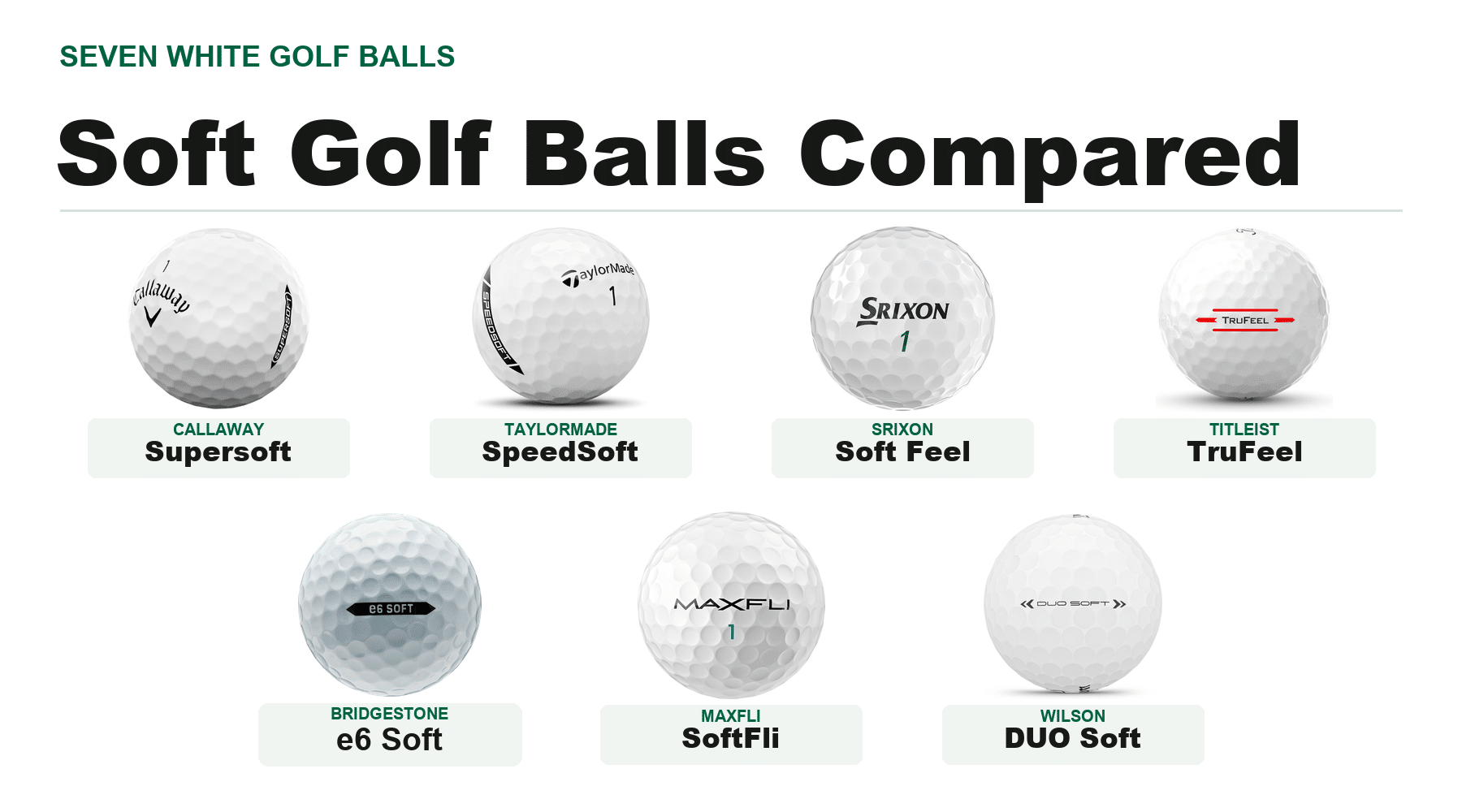
This comparison covers seven current white models: Callaway Supersoft (2025), TaylorMade SpeedSoft (2024), Srixon Soft Feel (14th generation), Titleist TruFeel (2024 redesign), Bridgestone e6 Soft (2025), Maxfli SoftFli (2025) and Wilson Staff Duo Soft (2025).
The Quick Verdict
Pick two balls based on how you want your putts to feel and how much rollout you can live with on a pitch. The table gives you a place to start. Play the same shot with both before you commit to a dozen.
Of the seven balls, the Wilson Staff Duo Soft and the Bridgestone e6 Soft show why the word “soft” doesn’t settle anything. Wilson prints a compression number. Bridgestone doesn’t print one at all. It sells the e6 Soft on a softer, larger core and a design built for high launch and low spin off the tee.
None of these balls will add distance, straighten a slice or lower your scores by itself. Treat “soft” as a description of feel and pick from there.
| If you want… | Start with | Keep in mind |
|---|---|---|
| The lowest published compression here | Wilson Staff Duo Soft | The 37 is Wilson’s marketing figure. Broader “softest” claims aren’t fully confirmed. |
| A Callaway two-piece soft ball | Callaway Supersoft (2025) | No Callaway compression figure is confirmed for this comparison. Supersoft Max is a separate ball. |
| A TaylorMade soft ball with published specs | TaylorMade SpeedSoft (2024) | TaylorMade describes compression only as below 50, not as an exact number. |
| An ionomer soft ball with a firmer published number | Srixon Soft Feel (14th generation) | It’s ionomer, not urethane, even if a listing says otherwise. |
| A Titleist entry-level soft ball | Titleist TruFeel (2024 redesign) | Retailers may label it “2026 TruFeel.” The TruFeel AIM 360 is a different ball. |
| A Bridgestone soft ball built for high launch and low driver spin | Bridgestone e6 Soft (2025) | Bridgestone prints no compression number. The plain e6 from 2023 is an earlier ball. |
| A Maxfli soft ball | Maxfli SoftFli (2025) | Its compression figures conflict, so don’t buy it on a number. |
How the Seven Soft Balls Compare on Paper
The clearest differences are in published compression, cover type and dimple count, and several brands leave real gaps. “Not confirmed” means the spec isn’t published or couldn’t be verified for the current generation. It does not mean the ball is missing that feature.
| Spec (white ball) | Callaway Supersoft | TaylorMade SpeedSoft | Srixon Soft Feel | Titleist TruFeel | Bridgestone e6 Soft | Maxfli SoftFli | Wilson Staff Duo Soft |
|---|---|---|---|---|---|---|---|
| Generation to match | 2025 | 2024 | MSOFT-FEEL14 | Code 26TFEEL | 2025 | 2025 | Current U.S. model (2025, WG20091) |
| Construction | Two-piece | Two-piece | Two-piece | Two-piece | Two-piece | Two-piece | Two-piece |
| Cover | Hybrid Cover (Callaway’s name) | Soft ionomer | Ionomer | TruFlex (Titleist’s name) | Soft seamless Surlyn (ionomer) | Not confirmed | Not confirmed |
| Compression | Not confirmed | Below 50 (TaylorMade’s wording) | 58 (stated) | Not confirmed | Not published | Conflicting figures | 37 (marketed) |
| Dimples | Not confirmed | 322 | 338 | 376 | Not published | Not confirmed | Not confirmed |
Every value in this table comes from the manufacturers’ current product information. Nothing in it is a performance claim. Dimple count and cover type describe how a ball is built, and they don’t predict your carry or spin.
Supersoft vs SpeedSoft: The Pair Most Buyers Ask About
On published specs, the Callaway Supersoft (2025) and TaylorMade SpeedSoft (2024) are close. Both are two-piece balls, so feel and look should settle the choice.
Here are the differences you can actually verify:
- Generation: The Supersoft is the 2025 model and the SpeedSoft is the 2024 model. Check the year on the box before you compare.
- Published detail: TaylorMade gives a dimple count (322) and describes compression as below 50. No Callaway compression or dimple figure is confirmed here.
- Cover naming: Callaway calls its cover a Hybrid Cover, and TaylorMade calls its cover soft ionomer.
- Variants: Supersoft Max is a separate Callaway ball, and SpeedSoft Ink is a graphic version of SpeedSoft. Neither changes this comparison.
Neither ball has an on-paper advantage that should override your own feel test.
What I Don’t Love About Each
My biggest gripe with this group is the missing numbers: only three of these seven balls have a compression figure you can actually use, and only Srixon’s is a plain stated number.
Callaway Supersoft (2025)
You can’t rank it on paper. No Callaway compression or dimple figure is confirmed for this ball, so it comes down to how it feels against Duo Soft or Soft Feel. Watch the box too. The Supersoft Max is a separate model, so make sure you’re grabbing the standard ball.
TaylorMade SpeedSoft (2024)
“Below 50” is a range, not a number. Don’t assume it’s softer or firmer than the Supersoft until you’ve putted both. And if you see SpeedSoft Ink, that’s the graphic version of the same line, not a different ball.
Srixon Soft Feel (14th generation)
At a stated 58, it has the highest published compression in this group, so don’t expect it to feel like the softest ball here. It’s also an ionomer ball. If a listing calls it urethane, go with Srixon’s own information.
Titleist TruFeel (2024 redesign)
It’s a two-piece ball with a TruFlex cover and 376 dimples, but Titleist doesn’t publish a compression number, so you’re buying it on feel. The year on the listing won’t help much either. Some retailers call it the “2026 TruFeel,” so match the 26TFEEL product code. And the TruFeel AIM 360 is a different ball.
Bridgestone e6 Soft (2025)
Bridgestone doesn’t print a compression number, so you can’t rank it on paper. The box is the bigger trap. The plain 2023 e6, also two-piece with a Surlyn cover, still sits next to it in some stores, and some listings call the new ball “Soft Feel,” which is easy to confuse with Srixon. Look for “e6 Soft” and 2025.
Maxfli SoftFli (2025)
Its compression numbers don’t agree. A retailer label says one thing and a separate claim says another, so ignore any single number you see on a listing.
Wilson Staff Duo Soft
The 37 is Wilson’s own marketing figure, and the bigger “softest ball” claims are only partly confirmed. A low number tells you how the ball compresses. It doesn’t tell you how far it’ll fly for you.
Who Should Buy Which
Buy by brand and by the one spec you care about, then let a putting test make the final call.
Callaway Supersoft (2025)
- Buy it if you already trust Callaway and want its standard soft ball. Putt it against your other finalist before you buy a dozen. See my Supersoft review or its chapter in my ball walkthrough.
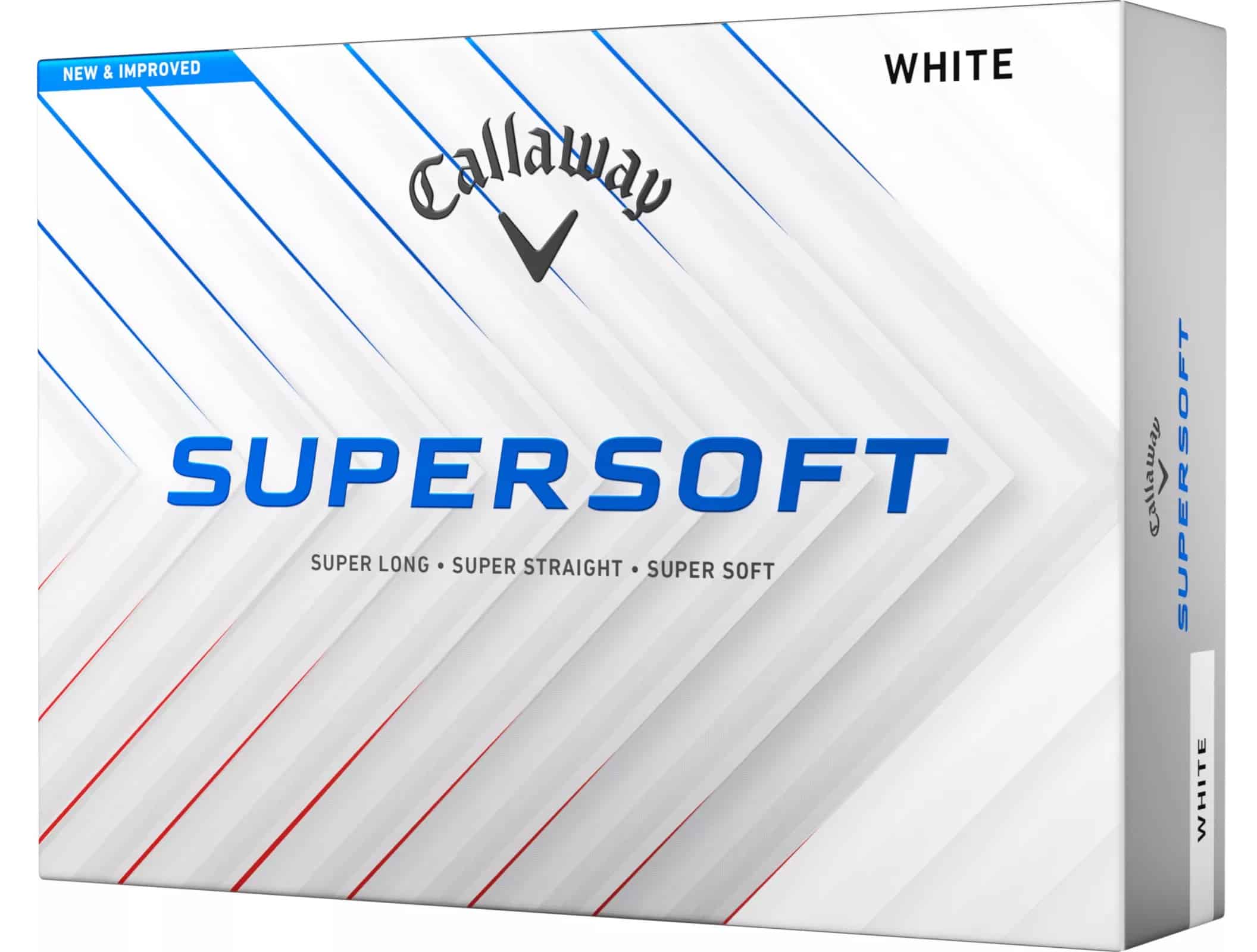
Unlock your best game with Callaway Supersoft golf balls, engineered for exceptional distance, incredible softness, and precise control to elevate every shot.
TaylorMade SpeedSoft (2024)
- Buy it if you play TaylorMade and want a soft ball with a published dimple count and compression range. The standard white version has the markings shown here.

Upgrade your game with TaylorMade SpeedSoft Golf Balls. TaylorMade's softest ball delivers high launch, reduced driver spin, and smooth touch. Order today!
Srixon Soft Feel (14th generation)
- Buy it if you want a soft ball with a published compression of 58.
- Skip it if you’re specifically looking for the lowest advertised compression in this comparison.

Srixon Soft Feel golf balls deliver an unmatched blend of soft feel and impressive distance, ideal for golfers seeking straighter shots and greater control around the greens. Featuring the advanced FastLayer Core technology, these balls offer enhanced speed, reduced sidespin, and a softer impact sensation that improves playability for mid to high handicappers.
Titleist TruFeel (2024 redesign)
- Buy it if you play Titleist and want its entry-level soft ball. Order the standard white version with the 26TFEEL code for the same markings shown here.

Shop Titleist TruFeel Golf Balls for ultra-soft feel and long distance. Built with a TruTouch core and 3.0 TruFlex cover for greenside control. Order online!
Bridgestone e6 Soft (2025)
- Buy it if you want a soft two-piece ball that Bridgestone built to get up in the air without much driver spin.
- Skip it if a published compression figure is important to you.

Bridgestone e6 golf balls combine modern technology with a soft feel and impressive distance, making them a top choice for golfers who want more accuracy and power on the course. Beginner or pro, these balls give you consistent performance.
Maxfli SoftFli (2025)
- Buy it if you’re open to a Maxfli ball and you’ll decide by feel.
- Skip it if you need a single confirmed compression figure.
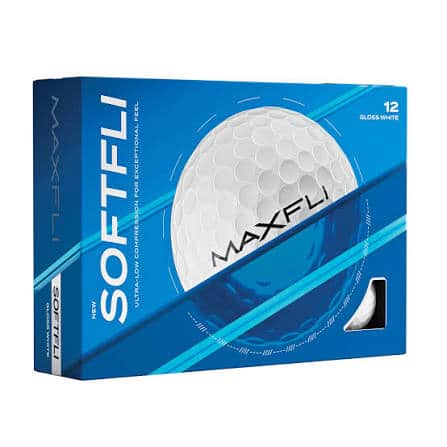
Shop Maxfli SoftFli Golf Balls for ultra-soft feel and effortless distance. Built with 35 compression, 2-piece construction, and a durable cover. Buy now!
Wilson Staff Duo Soft
- Start here if a low published compression is what you’re after. Wilson markets it at 37.

Experience unmatched softness and top distance with Wilson Soft DUO Golf Balls, engineered for maximum energy return, straight flight, and ultimate feel.
How to Test Two Finalists Before You Buy a Dozen
The fastest way to choose between two soft balls is to putt and chip both on the same practice green, back to back. This is a test for you to run, not one I ran on all seven balls for this page. Buy a sleeve of each finalist and do this:
- Mark them clearly. Use a line or dot so you never mix them up.
- Putt from the same three spots. Pick a short putt, a medium putt and a lag putt. Listen to the sound and notice which ball you’d trust over a short one.
- Chip from one lie. Hit both balls from the same spot off the fringe and watch how each one releases on landing.
- Hit a few full shots if you can. A range or a launch monitor will show your own carry and stopping with each ball. Your numbers matter more than anything printed on the box.
- Buy the one you trusted more. If you can’t tell them apart, the ball doesn’t matter much for your game. Pick the one you can easily find again.
Run this test a second time on a different day before you commit, because feel on a cold morning can differ from feel on a warm afternoon.
What This Comparison Leaves Out
A few soft-category balls are missing on purpose, either because they don’t match their current generation or because they belong on another page.
- Bridgestone e6 (2023) and e6 Treadline: The plain e6 is the earlier 2023 ball, and Bridgestone’s current lineup lists the e6 Soft in its place. The e6 Treadline is a separate variant. This comparison uses the standard white 2025 e6 Soft.
- Titleist Tour Soft: It’s a different Titleist model from the TruFeel compared here.
- Titleist Velocity: Its softer-core and compression claims couldn’t be confirmed, so it doesn’t belong in a soft-ball comparison.
- TaylorMade Soft Response: It’s a separate TaylorMade model and not a substitute for SpeedSoft. This page compares across brands, so same-brand pairs stay on their own pages.
- Titleist TruFeel AIM 360 and SpeedSoft Ink: Both are variants. This comparison uses the white standard balls.
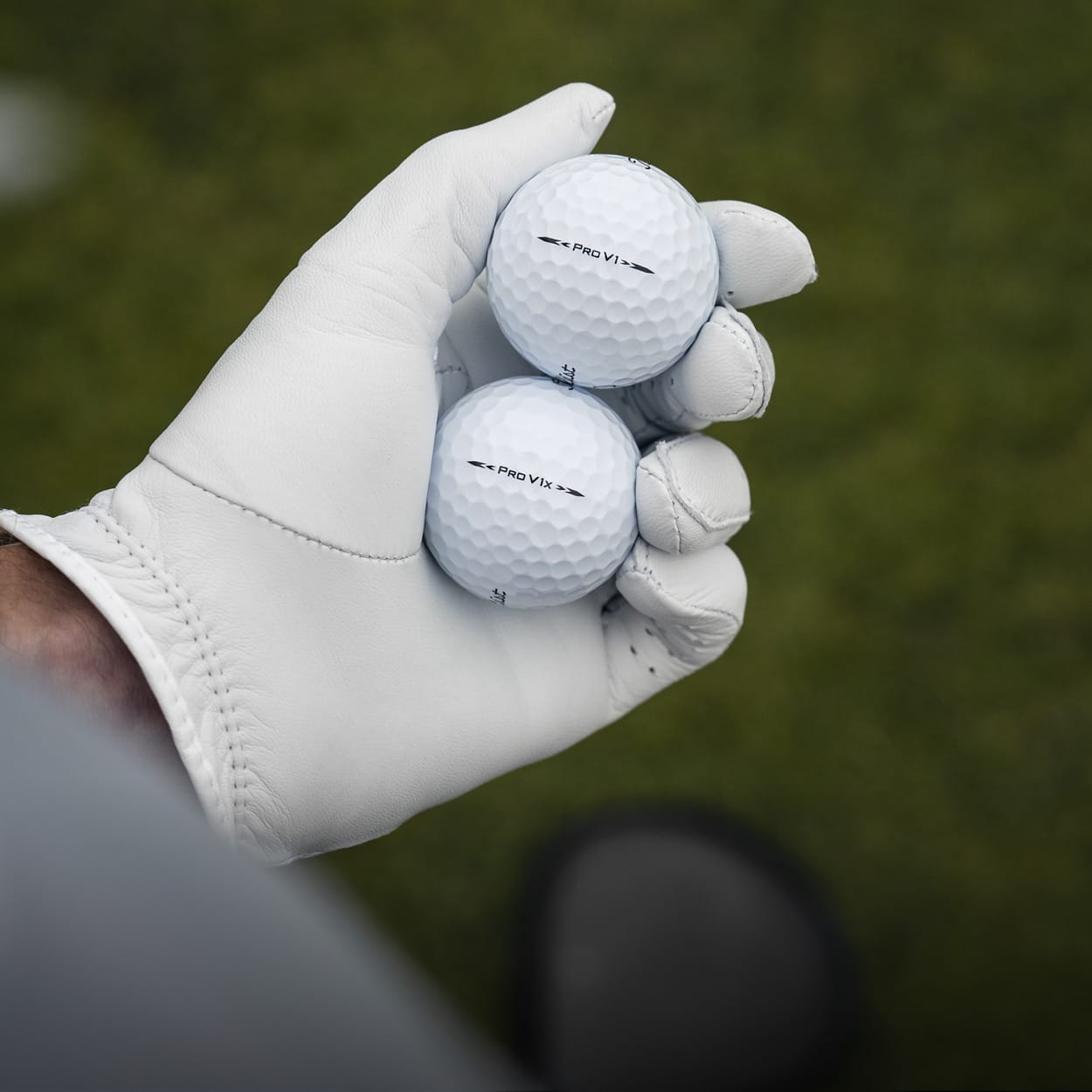
- Titleist Pro V1: It’s a tour urethane reference, not a low-compression soft ball (see the FAQ below).
Frequently Asked Questions
Which ball in this comparison has the lowest published compression?
The Wilson Staff Duo Soft, which Wilson markets at 37. The TaylorMade SpeedSoft is described only as below 50, and the Srixon Soft Feel is stated at 58. The Maxfli SoftFli can’t be ranked because its published figures conflict. Bridgestone doesn’t print a number for the e6 Soft, and no manufacturer number is confirmed for the Callaway Supersoft or TruFeel.
Is the TaylorMade SpeedSoft Ink a different ball from the white SpeedSoft?
No. The SpeedSoft Ink is a graphic version of the 2024 SpeedSoft line. This comparison uses the white SpeedSoft, so choose the Ink only if you want the look.
What’s the difference between the Bridgestone e6 and the e6 Soft?
The plain e6 is the 2023 ball, a two-piece design with a large gradient core and a seamless Surlyn cover. The e6 Soft is the 2025 ball in Bridgestone’s current lineup. Bridgestone gives it a softer, larger core and a soft seamless Surlyn cover, and designs it for high launch and low spin off the tee. This comparison uses the 2025 e6 Soft. Some stores still sell the 2023 e6 next to it, so check the name and year on the box.
Is the Titleist Pro V1 a soft golf ball like these?
Not in the same sense. The 2025 Pro V1 is Titleist’s tour reference ball with a cast urethane elastomer cover, and Titleist doesn’t publish an official compression figure for it. It isn’t built as a low-compression two-piece ball like the seven compared here. My Titleist Pro V1 review covers it in detail.
Final Thoughts on Soft Golf Balls Comparison
Here’s where I land. If you want the lowest published compression, start with the Wilson Staff Duo Soft. If you want the fullest spec sheet, that’s the Srixon Soft Feel. If you’re loyal to a brand, the Callaway Supersoft, TaylorMade SpeedSoft, Titleist TruFeel, Bridgestone e6 Soft and Maxfli SoftFli are each that brand’s soft ball in this comparison, and none of them wins on paper. So don’t let the word “soft” on the box make the call. Pick two, buy a sleeve of each and run the putting test above. The one you trust over a short putt is your ball.

About the author
Paul Liberatore
Paul Liberatore is the founder of Golfers Authority and a former three-year golf gear contributor to Sports Illustrated. He runs the Golfers Authority YouTube channel and the Behind the Golf Brand podcast, and he reviews golf equipment to help golfers make better buying decisions.