
Golf simulators nail the crucial stuff, high-end systems measure ball speed and spin within 1-3% of outdoor monitors, so a 171.5 mph drive reads between 169-174 mph. The reality is: they struggle with what makes golf hard. You'll score 5-10 strokes lower than real rounds because every lie is perfect, greens stay consistent, and rough penalties get simplified. Your short game data? Take it with a grain of salt, since putting lacks real depth perception. Keep going to find out exactly when you should trust your numbers.
When you're dropping serious money on a golf simulator, you're probably wondering if the numbers you'll see on screen actually match reality. The important point is: high-quality systems measure ball speed and spin within 1-3% of what outdoor launch monitors capture. They use high-speed cameras or radar to grab data immediately after impact, giving you precision within just a few percentage points. Take ball speed, for example—if you're hitting a driver at 171.5 mph (the PGA Tour average in 2024), your simulator should read between 169-174 mph. The key is direct measurement versus estimation. Systems like aboutGolf's 3Trak actually capture thousands of data points per second using rotating marks on the ball, avoiding guesswork entirely and providing numbers you can trust! Launch angle is another critical metric that cameras capture visually while radar systems infer it from the ball's initial trajectory. The simulator also tracks club path and face angle to help you understand why shots curve the way they do.

While golf simulators nail the ball flight data with impressive precision, they stumble regarding replicating everything that makes outdoor golf so unpredictable and challenging.
Weather's a massive factor, you won't face that 20mph side wind pushing your ball offline, and the absence of temperature and humidity changes means missing those 30-40 yard distance variations with longer clubs. You're also getting perfectly flat lies every single shot, while real courses rarely give you that luxury outside the flattest states.
Here's the thing: your short game gets unrealistically easy. Putting becomes tougher due to depth perception issues, but chipping's more forgiving since you can't feel true grass resistance. Most golfers score 5-10 shots lower on simulators, partly because bad shots receive more forgiveness, and you'll never lose a ball! Poor setup quality can distort your entire game experience, leading to inconsistencies in tracking that make practice sessions less valuable than they should be. However, many golfers still find simulators deliver a realistic experience for swing mechanics, making them excellent tools for developing fundamental technique.
Your simulator's accuracy lives or dies based on how well you've got it set up and calibrated, and most golfers completely overlook this critical step. Poor sensor calibration throws off clubhead speed and launch angle measurements, making your data worthless for improving your game. If your sensors aren't aligned properly, you'll see ball flights that make zero sense. Camera-based systems need proper lighting too, shadows or excessive brightness mess with tracking, causing the same issues as bad calibration. Even your hitting mat matters! An improper surface generates inconsistent ball interaction data. The point is: radar monitors struggle with spin estimation on off-center hits, while camera systems track it actively for better precision. Environmental factors like lighting can significantly affect sensor accuracy, compromising the reliability of your performance measurements. Sufficient space for sensor placement is crucial for capturing clean signals without interference from nearby walls or objects. Regular calibration guarantees your simulator reflects real-world performance, not fantasy golf.

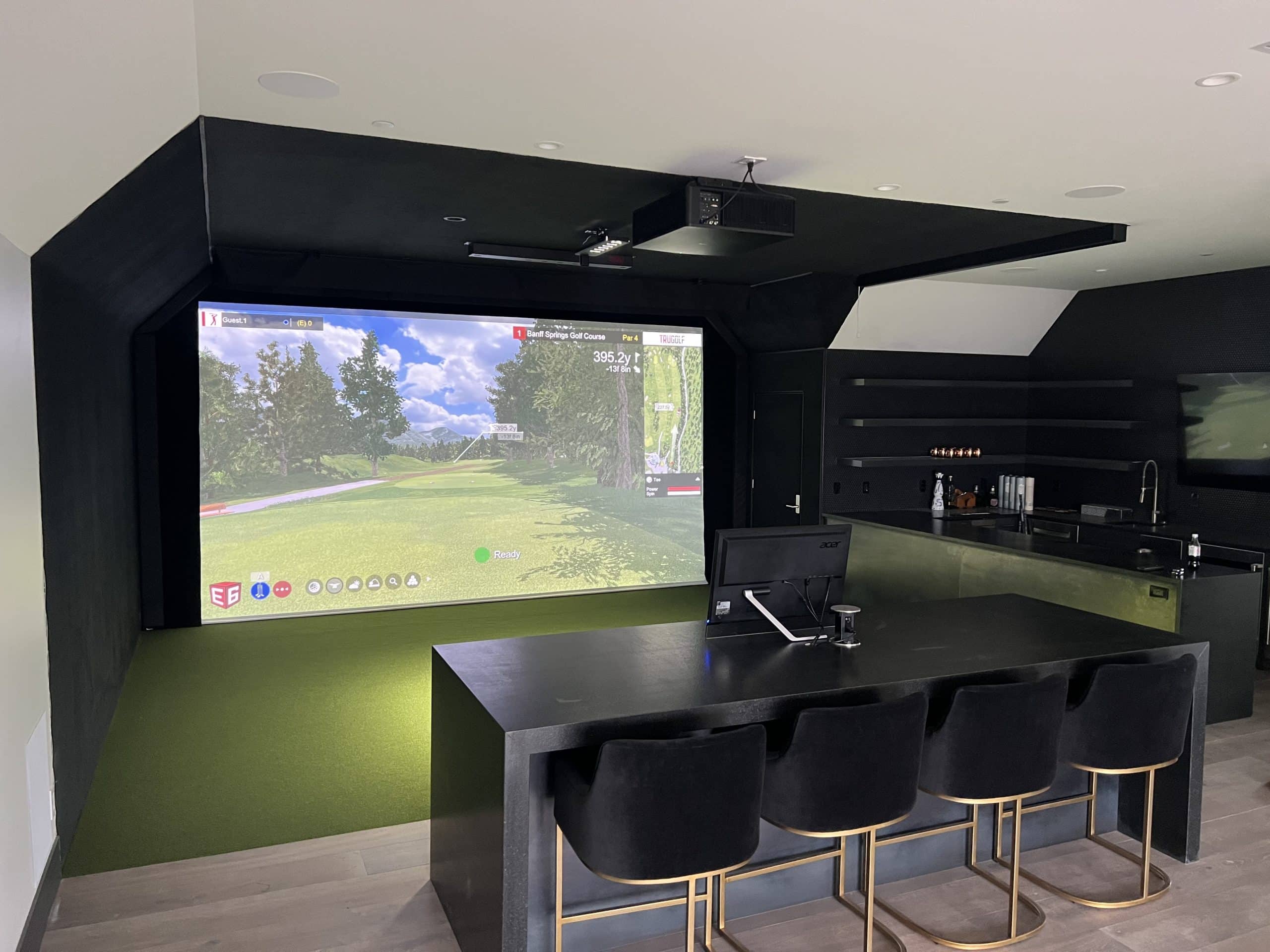
If you've ever crushed drives and drained putts on your home simulator, then stepped onto a real course expecting fireworks only to card scores that look like your old handicap never budged, you're not imagining things. Simulator scores typically run 5-10 strokes lower than reality, and here's why: those greens never bobble, staying pure and consistent every single time. You'll knock down twenty putts per round indoors, something that's nearly impossible outside. Plus, every shot comes from a perfect, flat lie, while real courses throw dirt, slopes, and gnarly rough at you. Simulators calculate rough penalties as simple distance percentages instead of true resistance, making recovery shots way easier. Your short game flourishes on uniform mats that can't replicate actual turf variability. Missing from your practice is the mental pressure of playing through uneven lies and awkward stances that test your ability to trust your swing under real conditions. The square setup with alignment aids, like projectors and floor lines, lets you nail perfect positioning every single swing, a luxury you don't get when addressing the ball on uneven fairways. That controlled environment breeds unrealistic expectations!
Knowing when to actually trust your simulator numbers can make the difference between real improvement and just fooling yourself with inflated stats.
Here's what you should trust: ball speed readings are rock-solid reliable since they're captured immediately at impact. Your carry distances? Premium systems nail these within 1-2%, so that 150-yard shot outdoors will measure 148-152 yards on quality simulators. Club path, face angle, and attack angle data give you actionable feedback on consistent swing flaws you can actually fix. High-end simulators also provide detailed spin rate measurements that help you understand how your shots will react on landing.
What you shouldn't trust: putting and chipping data. Simulators turn green reading into simplified aim-and-speed mechanics, completely missing friction, grain, and those subtle breaks that wreck your short game outdoors. Focus on full-swing metrics for genuine improvement!
You can use any golf ball in most simulators, but it depends on your system. Camera-based units like SkyTrak work great with standard premium balls (Pro V1, TP5, Chrome Soft) since they read dimples and markings. Radar-based systems like the Rapsodo MLM2PRO work with any ball, too, but the catch is, you'll need special RPT balls from Titleist or Callaway to get accurate spin data indoors. No foam or plastic balls, though!
You'll need at least 10 feet of ceiling height for accurate readings with most launch monitors. Here's why that matters: when you swing a driver, the club reaches 8-9 feet high, and the monitor needs to track the full arc. For room space, aim for 10-12 feet wide and 15-18 feet deep. Taller than 6 feet? Add another foot to that ceiling minimum.
During winter months, pros lean heavily toward simulators because real courses simply aren't accessible. When snow covers fairways and temperatures drop, you'll find most professionals practicing indoors with launch monitors that give them precise data on every swing. They can't maintain their game on frozen turf, so they rely on simulator technology for consistent feedback. In 2023 alone, six million more golfers used simulators than actual courses during off-season training.
Yes, simulator practice will lower your handicap on real courses. Data shows 88% of simulator owners improved their game, with average scores dropping 5.27 strokes per round. The immediate feedback on club path, face angle, and spin rate helps you fix flaws faster than traditional practice. You'll build consistency through more repetitions without range limitations, and the data-driven approach roots out problems efficiently, translating directly to better outdoor performance.
You should recalibrate every 1–2 months for routine maintenance. The key point is, you'll also need immediate recalibration if you notice wonky ball flight data, move your unit even a few centimeters, or update your software. Changes in room lighting can throw things off, too! Before calibrating, make sure your hitting mat's perfectly level and clean those sensors with a soft cloth for the best results.
Golf simulators give you solid data you can trust; ball speed and spin rates stay within 1-3% of reality. But the reality is: they can't replicate real course conditions like uneven lies, wind gusts, or that weird mud on your ball. You'll probably score 5-10 strokes better on the sim than outside. Use them for swing work and club data, but don't expect your virtual scores to transfer directly to the actual course!

