
The Garmin R10 turns 5 this year, and it’s seriously incredible that not only is there still a good reason to talk about it in 2026, but there may actually be more reasons now than ever before to buy it.
Garmin dropped the R10 price from $600 to $500 and also just announced a huge upgrade to their native Home Tee Hero golf simulator software. That means that, even after half a decade, the R10 is actually improving.
There was never anything wrong with the R10’s portability, ease of setup, accuracy, and overall suite of data metrics. So, to now get an R10 that’s even more affordable and even more fun to use, is just good news all around.
But does that mean it’s your best way to spend $500 on a launch monitor? After all, competition has arrived, and it’s legitimate competition. The R10 no longer enjoys the affordable launch monitor monopoly it had when it first debuted in 2021.
So, in the current 2026 market, where does the R10 stand? Does it still deserve consideration when your money has more options than ever before?
I’m going to make the case that it absolutely does. And here are five specific reasons why the Garmin Approach R10 remains one of the smartest investments in golf technology.

Experience advanced golf tracking with the Garmin Approach R10, a premium launch monitor delivering precise data and improving your game effortlessly.
There’s a reason the R10 is still the best-selling launch monitor in its price category approaching five years after release. It’s because Garmin built something that actually works. They did it right the first time.
Have you noticed how many of these affordable launch monitors have continued to go through a series of product updates? And that’s a good thing. I love seeing everyone continue to tweak and improve. But then there’s Garmin. And until this new Home Tee Hero improvement that I’ll talk about in just a minute, they haven’t really had to do much to the R10. It’s just continued to work well over and over again.
Also, because consumers know and trust Garmin and its reputation for unmatched build quality and warranty protection, the R10 seems like it’s still a very comfortable, familiar safe spot for consumers who might be less trusting of less familiar brands.
The R10 established what affordable launch monitors should deliver, and then it kept delivering it year after year. This is also the first product that brought simulator golf to an accessible price point. Native sim software as part of a launch monitor ecosystem is the norm now, but Garmin were the ones to establish that with the R10.
Before the R10 proved there was massive demand for sub-$1,000 launch monitors with real simulator capability, nobody else was building them. Products like the Rapsodo MLM2PRO and Swing Caddie SC4 Pro exist because the R10 showed there was a market.
The point is that buying from an established brand with a product that’s proven matters. It gives you confidence. You know this is Garmin. They’re going to stand behind their product, and if you’re already in their ecosystem with a watch, rangefinder, or GPS, you get even more benefit as you grow with the brand.
When you buy an R10, you’re not gambling on an unknown or left wondering about product support and customer service. You’re investing in a proven device from a proven company.
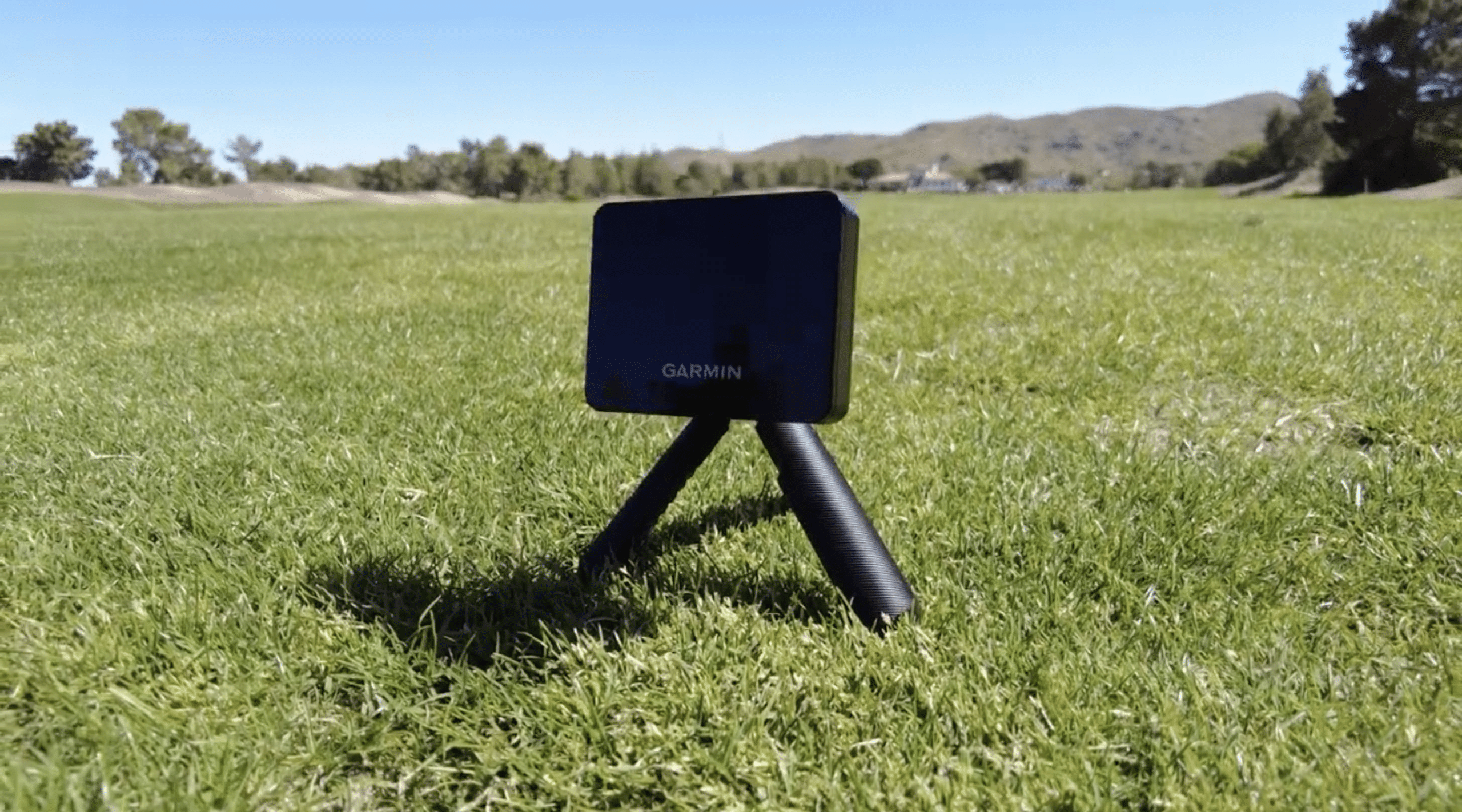
Alright, my next reason for why I think the Garmin R10 absolutely still makes sense in 2026 is because it just got less expensive even as they improved the software.
The price dropped from $599.99 to $499.99. I told you the competition was heating up. And that’s been good news for consumers. In this case, it means you can save $100 on an R10.
At $500, the R10 undercuts nearly every competitor in its class. The Rapsodo MLM2PRO and Square Golf Launch Monitor both start at $700.And the Swing Caddie SC4 Pro runs $600. Something like the FlightScope Mevo Gen 2 costs $1,300.
And sure, some of those devices offer features the R10 doesn’t have. Built-in cameras. Photometric technology. Direct club path measurement. But none of them offer quite the same combination of proven reliability, broad simulator compatibility, comprehensive data metrics, and an ecosystem integration that the R10 delivers for literally half the price of some competitors.
So when it comes to value and what you’re actually getting for $500, the R10 stacks up very favorably. Actually, I think this price is kind of nuts. It’s crazy to me to think what you can get for $500.
With the R10, you get 20 different data metrics including carry distance, total distance, ball speed, club speed, launch angle, spin rate, smash factor, apex height, club path, face angle, attack angle, and more.
You get compatibility with multiple third-party simulated platforms including GSPro, E6 Connect, Awesome Golf, and Creative Golf. You get five free E6 courses right out of the box. And you’re getting a device small enough to fit in your golf bag without taking up a ton of space.
But the real kicker is the Home Tee Hero access through the Garmin Golf membership. Yes, you’ve got to pay $99 a year or $9.99 monthly, but that unlocks 43,000 mapped courses in Garmin’s animated simulator environment.
I’ll talk more in just a second about some of the improvements, but for now, just understand that Home Tee Hero used to be so-so. Now it’s much closer to the real deal.
So what I’d say is that the competition has definitely caught up to the R10 in some areas. But they haven’t caught up to its value proposition. Not even close.
I’ll be honest: When I was heading to the PGA Show this year, I kind of thought we might see Garmin roll out a new version of the R10. I never expected them to do what they did, but after seeing it, I think it’s really smart.
Like I’ve been talking about, the R10 still worked just fine. There really wasn’t anyone complaining about it as an accurate, easy-to-use launch monitor.
And it was for sure cool that you could also use it with third-party simulator software. But where it was falling behind was with its own native sim software. The Home Tee Hero feature.
I mean, it was OK. But compared to the standard in 2026, the original Home Tee Hero felt more like playing a video game than a lifelike golf simulator experience.
And I’m not saying the new and improved Home Tee Hero software is the absolute best option out there, but it’s so much better than before.
Here’s what Garmin did.
When they released their $5,000 Garmin R50, they included a much more graphically enhanced version of Home Tee Hero. But they locked Garmin R10 users out. If you had the R10, you were stuck with the crappier Home Tee Hero even though you had to pay the same $99 a year subscription cost.
Anyway, now R10 users get the same Home Tee Hero version as R50 users. And, like I said, it’s way better than the original. Far better graphics and much more attention to detail.
But now it gets even better. At the PGA Show, Garmin debuted their new Enhanced Courses feature. The way it works is Garmin is taking the most famous courses in the world (like Augusta, Pebble Beach, TPC Sawgrass, etc.) and spending even more to make them even more tricked out. Better details. More little nuances. Just a more lifelike and immersive course rendering. Pretty cool, right? Especially because you don’t have to pay anything extra to play them.
They also released a new practice feature that lets you go into any of the Home Tee Hero courses and hit whatever shot you want as many times in a row as you want to.
At first when I saw this, I thought, “who cares?,” but I can see how this could be fun and even useful. Maybe you want to prepare for a specific tee shot you’re going to be facing in an upcoming round. Or maybe you just want to play Pebble Beach Number 7 over and over. Whatever. It’s cool to have an additional feature.
And, finally, Garmin also now has the PGA Tour schedule synced up in its Home Tee Hero software. So you can automatically jump to the same course that the pros are playing on any given week. It's kind of fun to check out the courses on the simulator at the same time that you’re watching them on TV. Especially now that the graphics are so much better.
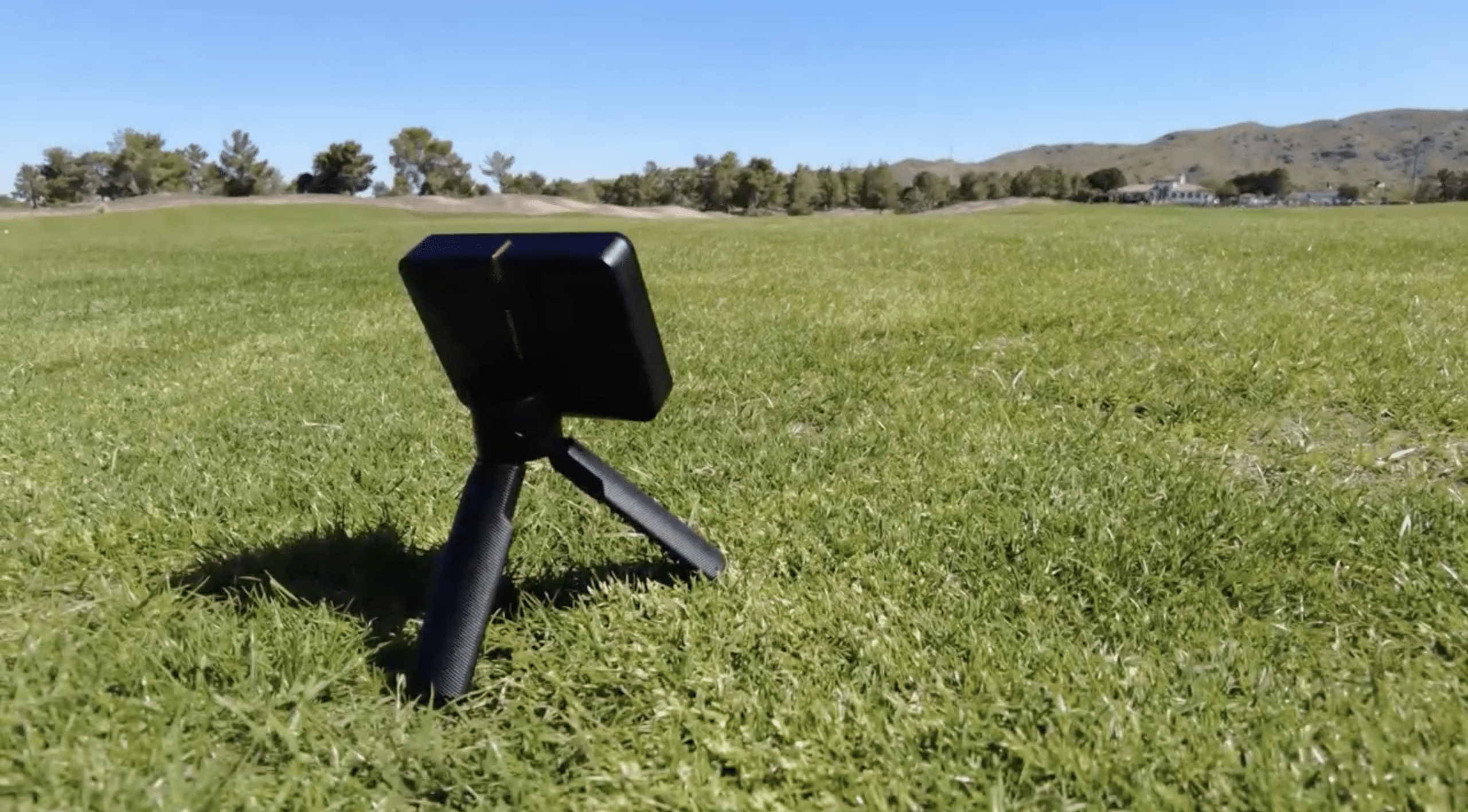
The last time I talked about the R10, I made the point that it’s nice to have an affordable launch monitor that just works so consistently.
I test a lot of launch monitors. And, honestly, most of them are overall really impressive. It’s kind of crazy how good this technology has gotten.
But that said, a lot of the less expensive devices do struggle with overall consistency. They miss some shots here and there. The accuracy can get a little out of whack in certain conditions or with different length clubs.
And I’m not calling the R10 perfect. I mean, look, it’s only $500.
But I will say that it performs more consistently and reliably than it has any right to. When I compare the overall lack of frustration with setting up and using the R10 over and over to doing that with other launch monitors around this same price, I find myself appreciating that the R10 is just easy and dependable.
I think that’s one of the biggest reasons why it’s still a launch monitor I’ll grab for a quick simulator session at a friend’s house or for some social setting. It’s just a really easy device to get up and running quickly with.
And that’s especially true outdoors. In my experience, the R10 reads shots hit off of natural grass perfectly fine. I can’t say the same about every launch monitor, even ones costing much more than this.
Another big advantage is the portability. It’s so small. I mean, the carrying case is kind of big, but sometimes I just put the R10 and the tripod in my golf bag without the case and it works perfectly fine.
So for a launch monitor that’s a really reliable grab-and-go option, the R10 is still one of my favorites.
Probably the biggest advantage that Garmin has over all of its competitors is that they are Garmin and the other companies are not.
Because Garmin has such an extensive catalog of products and because they’ve linked all of those products together with common features and personalized data tracking that’s all kept under a user’s account in the app, Garmin makes it easy to become a power user the way that an Apple user might go all-in on that ecosystem.
None of the R10’s competitors can offer anything remotely similar. The MLM2PRO, the SC4 Pro, the Square, the Mevo Gen 2, they’re all pretty much standalone devices.
The Garmin ecosystem creates a network effect where each device makes the others more valuable. It makes it so that there’s one central hub for all of your golf tech. One place to store your data, track your improvement, compare practice sessions, etc. If you wear a Garmin golf watch and also use an R10, you can see all of my on-course and practice session data in one place.
The one product that I’d say comes closest to this is the brand new Shot Scope LM1 launch monitor, which is only $200. Shot Scope, like Garmin, has its own line of golf watches and its own overall ecosystem. But the LM1 only gives you five data metrics, compared to the 20 you get with the R10. Also, when it comes to build quality, Shot Scope just isn’t on the same level with Garmin. So, really, the LM1 and R10 isn’t an apples-to-apples comparison.
Also, that Garmin Golf membership we talked about earlier can apply to any Garmin device you own. So if you’ve got a Garmin watch, rangefinder, and launch monitor, you’re still only paying one subscription fee for the whole network.
If you’re the type of person who likes to stick to one technology stack, Garmin is a good one to invest in.
Experience advanced golf tracking with the Garmin Approach R10, a premium launch monitor delivering precise data and improving your game effortlessly.
While it won't perfectly match the precision of a $20,000 unit, the R10 is remarkably accurate for its price point. It uses radar technology to track ball speed, launch angle, and direction. For most amateur golfers, the 1–2% variance in distance compared to high-end units is negligible for practice purposes.
The R10 comes with a free version of the Garmin Golf app that includes basic driving range stats. However, to access the Home Tee Hero simulator (which features over 42,000 virtual courses) and store video clips in the cloud, a monthly or annual subscription is required.
Yes. This is one of its biggest selling points.
Indoors: You need at least 8 feet of space from the ball to the net and 6–8 feet from the unit to the ball for the radar to read accurately.
Outdoors: It excels at the range where it has plenty of space to track ball flight.
Since its launch, Garmin has released significant firmware updates. When used with Titleist Pro V1 RCT (Radar Capture Technology) balls, the R10 can measure spin much more accurately indoors. Without these balls, the unit uses algorithms to calculate spin based on other launch data.
One reason the R10 stays relevant is its versatility. It is compatible with some of the best simulation software in the industry, including:
The Golf Club (TGC) 2019 (For high-end PC simulation)
E6 Connect (iOS and PC)
Awesome Golf (Great for kids and coaching)
There’s no question that a lot has changed in the five years since the Garmin R10 was first released. Back then, there really wasn’t anything like it. Now, because it was so good, there are a bunch of copycats.
But the thing is, the R10 is still totally relevant. In fact, when you consider that the native sim software has now improved, that the overall Garmin ecosystem has grown substantially, and that the price just got knocked down $100, I honestly think it would be foolish to dismiss this product as outdated. It’s not.
The R10 completely holds its own in 2026. There are fancier (and far more expensive) options. And there are a couple of less expensive options, though none come close to delivering what you’re getting with the R10.
If you want one device that handles range sessions and sim sessions and you want to keep the budget under control, I recommend the R10 for all the same reasons I’ve been recommending it for five years. It’s still that good.
What do you guys think? I know a bunch of you have an R10. Are you still using it? Would you buy it again? Let us know in the comments as it may help someone who’s thinking about this.
Thanks for watching. Like and subscribe if you would, please. And I’ll see you out on the course.

