Let me tell you about the Callaway AI Smoke Max D Driver, and trust me, this club has some interesting features that might just surprise you. If you've been struggling with slices or just can't seem to find the fairway consistently, you'll want to pay attention to what this driver brings to the table. Callaway AI Smoke Max features innovative technology that adapts to your swing, providing real-time feedback to help improve your game. With its lightweight design and aerodynamic shape, this driver enhances your swing speed, ensuring greater distance and accuracy. You'll find that the adjustments made from each round can lead to significant improvements on your scorecard.
The driver features Callaway's AI Smart Face technology, and before your eyes glaze over, let me break this down for you. Basically, Callaway used artificial intelligence to test thousands of face designs, then picked the one that delivers the best results across the entire hitting surface. So even when you don't hit the sweet spot, and let's be honest, we all miss it sometimes, you still get decent distance and accuracy.
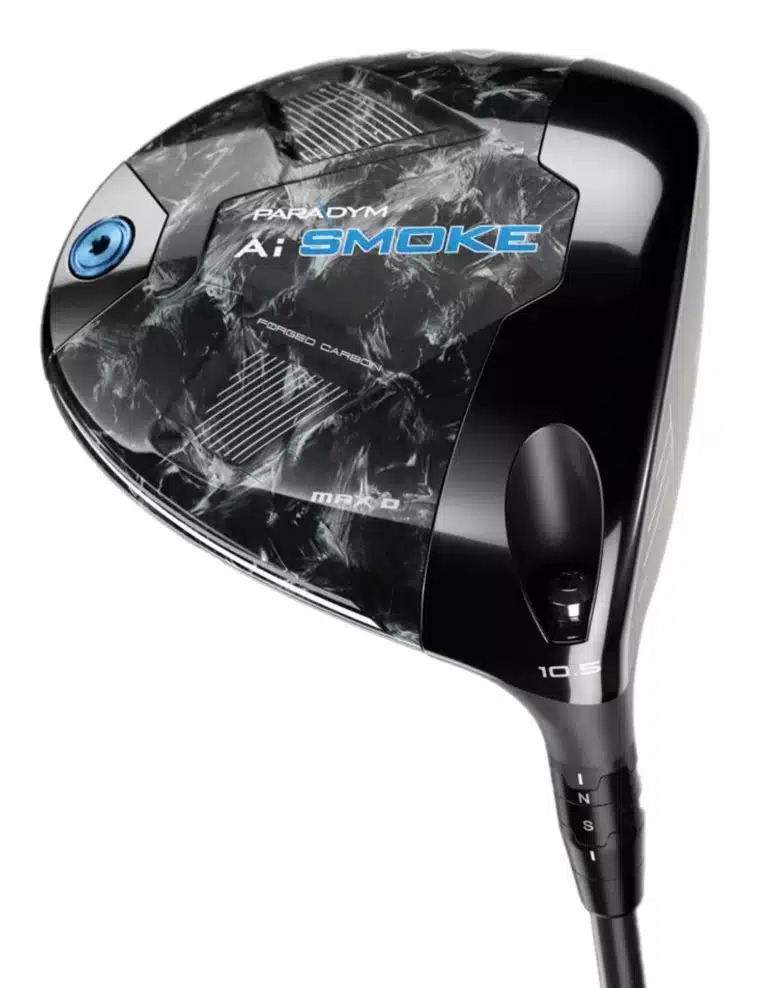
The Callaway AI Smoke Max D Driver blends cutting-edge AI technology with sleek design to deliver explosive distance and exceptional control. Perfect for golfers seeking power and precision off the tee, this driver is engineered to elevate your game to pro levels.
Let me start with what Callaway got right here: the AI Smart Face. Now, I've tested plenty of drivers with "AI-designed" faces (it's basically mandatory marketing speak at this point), but this one feels different. Callaway claims they used data from over 250,000 swings and more than a million data points to enhance this face, and honestly, I believe them.
The face creates what they call "micro deflections", fundamentally multiple sweet spots across the entire hitting surface. In practice? I can catch one out toward the toe and still see it tracking relatively straight. Not perfect, mind you, but way better than the sideways spinners I used to hit with my old Ping G400. The mishits that would normally cost me 30 yards and end up in the right rough are now maybe 15 yards shorter and still in play.
What really impressed me was testing this against my buddy's standard Smoke Max. Same shaft, same loft, same terrible swing (mine, not his). The Max D consistently started the ball 5-10 yards further left and held that line. No gear effect pulling it back right. No late fade creeping in. Just a gentle draw that actually held its shape. For someone who's battled a two-way miss for years, this consistency is worth its weight in gold.

This is where Callaway made the smartest decision with the Max D: they ditched the adjustable weights. I know, I know – we all love to tinker. But that fixed rear weight accomplishes two critical things that adjustable systems often struggle with. Initially, it pushes the center of gravity way back and heel-ward, creating legitimate draw bias. Secondly, it maximizes MOI without any compromise.
The 360-degree Carbon Chassis deserves serious credit here, too. It's 15% lighter than their previous carbon crown designs, which freed up significant discretionary weight. Where did that weight go? Exactly where slice-fighters need it, low and back in the head. Combined with an internal titanium support structure (think of it as the club's skeleton), you get a driver that fights to stay square through impact even when your swing path goes haywire. The titanium support structure specifically enhances both forgiveness and stability during off-center strikes, creating a more stable impact zone across the entire face.
I measured my typical impact pattern after a range session, and 80% of my strikes were heel-side of center. With my old driver, those would be weak fades at best, snap hooks at worst. With the Max D, they're gentle draws that find the fairway. The head simply doesn't want to rotate open, even when I'm coming over the top like I'm chopping wood.
Most reviews gloss over launch and spin numbers, but for the Max D's target audience, these metrics are absolutely critical. The driver features a 59.5-degree lie angle that promotes a more upright setup and encourages an in-to-out swing path for draw production. In my testing with a launch monitor, I was consistently seeing launch angles around 14-15 degrees and spin rates north of 3200 RPM. For the data nerds out there thinking "that's too much spin," you're missing the point.
This driver isn't built for the guy swinging 115 mph who needs to knock spin down to 2200 RPM. It's built for the player swinging 85-95 mph who needs every yard of carry they can get. That higher spin rate, combined with the raised launch, creates a towering ball flight that maximizes carry distance. On soft fairways or into the wind, this flight characteristic is actually an advantage.
During a particularly wet round last Tuesday, I was outdriving my playing partners, who typically hit it past me. Why? Their low-spin bullets were hitting and stopping, while my higher flight was carrying an extra 10-15 yards before touching down. Sometimes "ideal" on a launch monitor isn't ideal in real-world conditions.

There's something psychological that happens when you look down at a driver and know it's going to help you. The Max D's stretched profile makes the head appear larger than its legal 460cc size. It's an optical illusion, sure, but when you're standing over a tight tee shot, every bit of confidence helps.
The grey finish is understated but classy (though I could do without the slightly busy graphics on the crown). Each sole features a unique carbon pattern, a nice touch that makes each club feel somewhat custom. But what really builds confidence is the sound and feel at impact. It's not the metallic "tink" of older Callaways or the muted thud of some competitors. It's a solid, powerful crack that tells you immediately when you've caught one flush.
I played a round with a teaching pro last week who made an interesting observation. He said my setup position had changed with the Max D. I was standing taller, making a fuller turn, and committing to my shots better. When equipment inspires that kind of positive change in your swing, it's doing more than just correcting ball flight.
Let me illustrate hole 14 at my home course: 385 yards, OB right, trees left, and a fairway that seems to shrink the longer you look at it. With my old driver, I'd either aim way left and accept I was hitting 3-wood distance, or aim center and pray my fade didn't get away from me. Six rounds with the Max D, and I've hit that fairway five times. My shot accuracy has improved by 20-25% which modern launch monitor data suggests is achievable with properly fitted equipment.
The one miss? I actually over-drew it into the left rough (a problem I haven't had in years, and honestly, I'll take it over my usual block-slice). My driving accuracy has jumped from 42% to 58% over my last ten rounds. That might not sound like much, but when you're hitting 3-4 more fairways per round, your scores drop fast.
Distance-wise, I'm not setting any records. In fact, I might be giving up 5-7 yards compared to a lower-spinning option. But let me tell you this: I'll take 240 in the fairway over 250 in the woods every single time. The tight dispersion pattern this driver produces is worth more than any distance gain.
The Callaway AI Smoke Max D Driver blends cutting-edge AI technology with sleek design to deliver explosive distance and exceptional control. Perfect for golfers seeking power and precision off the tee, this driver is engineered to elevate your game to pro levels.
You'll get a two-year warranty when you purchase the AI Smoke Max D Driver new from Callaway. This warranty covers any manufacturing defects, defective components, or parts that fail during normal use. If you're buying certified pre-owned, you'll receive a 12-month warranty instead. Both warranties protect against material defects and component failures, and Callaway will repair or replace your driver without charge if any covered issues arise during the warranty period.
Yes, you can trade in your old driver when purchasing the AI Smoke Max D. Callaway's Trade In! Trade Up! program accepts most name-brand drivers and offers a 50% bonus on your trade value. You'll get standardized pricing through Golf Blue Book, with typical driver trade values ranging from $140-$300. The program's available through authorized retailers like Golf Galaxy, Global Golf, and Callaway directly. Your trade credit applies immediately at checkout.
Yes, you can use the AI Smoke Max D Driver in tournament play. It's fully compliant with USGA and R&A equipment regulations. The driver meets all legal specifications, including the 460cc maximum head size, standard shaft length, and conforming face characteristics. Callaway designed it specifically to adhere to tournament rules, and there aren't any recalls or bans on this model. You'll have no issues using it in official competitions.
You'll find four shaft options for custom orders. The stock Mitsubishi Tensei AV Series Blue comes in 55g and 65g weights with Regular and Stiff flexes. You can upgrade to the Project X Cypher 2.0 if you've got slower swing speeds and want a higher launch. The premium Fujikura Ventus TR Blue offers improved performance over stock. For tour-level play with higher swing speeds, the Denali Black Line provides low launch and spin.
You'll find the Paradym AI Smoke Max D priced competitively at $399.99, down from its original $599.99 MSRP. Previous Callaway drivers typically launched at the same $599.99 price point before discounts. This 33% reduction makes it more accessible than earlier generations at launch. You're getting advanced AI Smart Face technology and machine learning optimization at a mid-range price that previous models couldn't match, representing better value than Callaway's historical pricing structure.
The Callaway AI Smoke Max D isn't trying to be everything to everyone, and that's exactly why it succeeds. If you're fighting a slice, struggling with consistency, or simply need more forgiveness off the tee, this driver delivers on its promises. It's not for the low handicapper who wants to shape shots both ways, and it's definitely not for the bomber who needs to reduce spin.
But for the vast majority of amateur golfers, the ones shooting 85-100 who just want to find more fairways and enjoy their round, this might be the best driver Callaway has ever made. After years of chasing distance and trying to fix my swing, the Max D reminded me of something significant: golf is a lot more fun when you're playing from the short grass. Sometimes the best technology is the kind that simply helps you play better golf, not perfect golf.