
If your V5 Shift still works, the V6 Shift isn’t going to change your round. Here’s where the two actually differ, and when the V7 Shift is the smarter place to look.
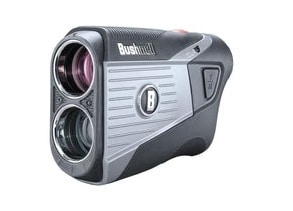
The Bushnell Tour V5 Rangefinder delivers pro-level accuracy with lightning-fast pin acquisition, making it a must-have tool to improve every golfer’s performance.
The Quick Verdict
Keep a working V5 Shift. The V6 Shift does the same core job. The differences I can point to are a locking Slope-Switch and a published IPX6 water-resistance rating, and neither one is enough to retire a rangefinder that’s still giving you good numbers.
The plain Tour V5 is a different story, because it can’t do slope at all. If that’s the one you own and you want slope, or if your V5 has quit on you, keep in mind that both Shift models are discontinued. That’s when the V7 Shift deserves a look, before you go chasing an older V6.

First, Which V5 Do You Actually Have?
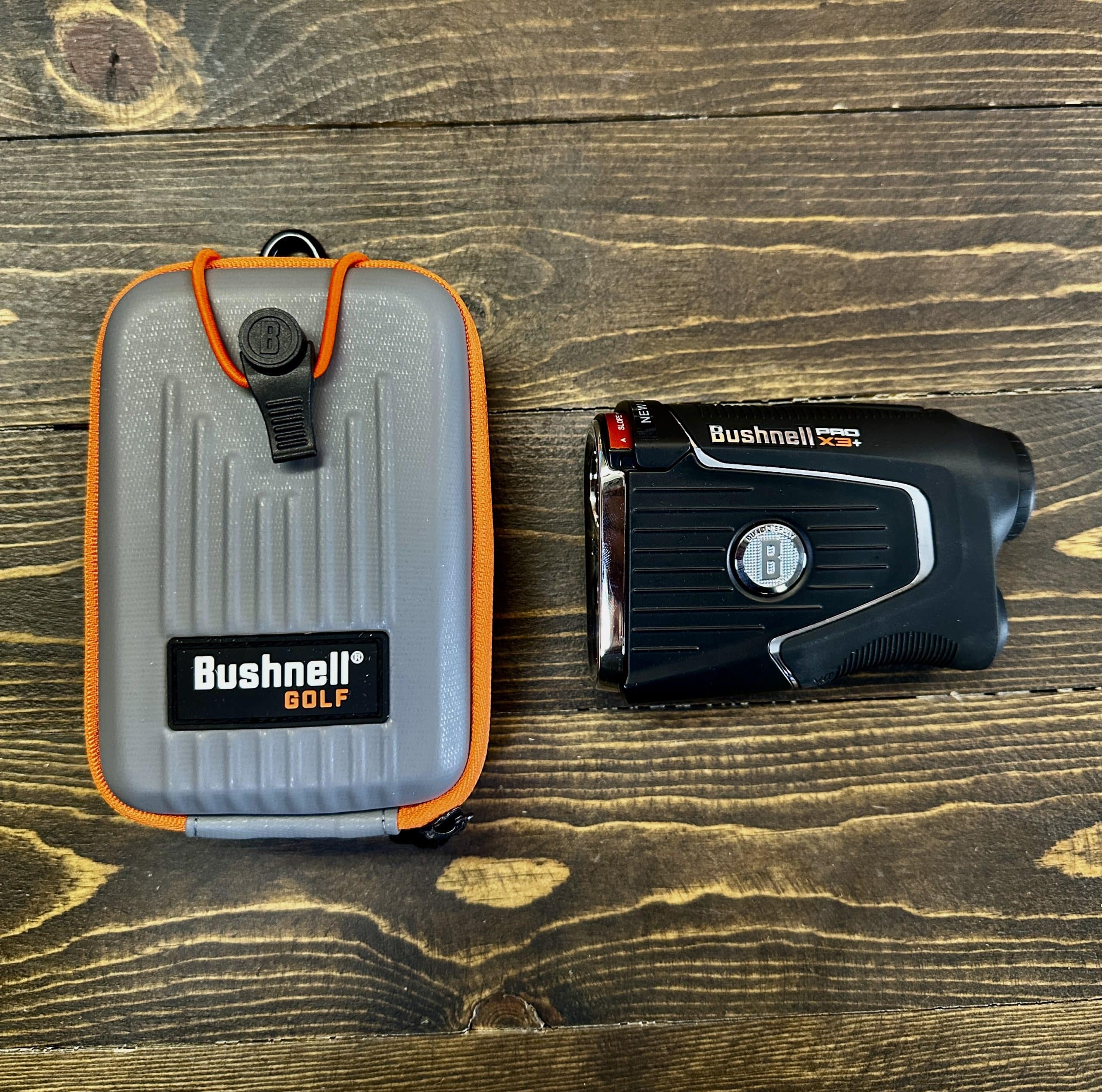
There are two V5s, and they aren’t the same rangefinder. The plain Tour V5 has no slope. The Tour V5 Shift (model 201911) is the slope version from the same generation. Slope gives you a playing distance that accounts for uphill and downhill, and on the Shift you can switch it on and off.
The surest way to tell them apart is the model number on the label. 201911 is the Shift, and it pairs that with a slope switch on the side of the housing. Other than slope, the plain V5 has most of the core hardware you’ll see in the table below, including Visual JOLT.
And the V6? Every V6 in this article is the V6 Shift, the slope version. If you see a V6 listing that doesn’t say Shift, check it for slope before you assume anything here applies. For the full rundown on the older Shift by itself, here’s my Bushnell Tour V5 Shift review.
Bushnell Tour V4 vs Bushnell Tour V5: Is the Plain V5 an Upgrade?
Going from a Tour V4 to the plain Tour V5 gets you more magnification and, on the 201660 and 201661, a longer rated range. Depending on which V4 you own, it can also cost you slope.
Bushnell made more than one V4, so start with the model number again. Model 201660 is the standard Tour V4, and it has no slope. Model 201661 is the Tour V4 Slope, where you cycle between slope-adjusted and straight distance using the POWER and FIRE buttons. And the Tour V4 Shift is model 201760, a separate rangefinder where you slide the logo to turn slope on and off.
Here’s why that matters. The plain V5 has no slope. So if you’ve got a 201661 or a 201760 and you’ve been playing to slope numbers in your Saturday game, swapping to a plain V5 takes that away. In that case you’d want the V5 Shift from the table below, or the V7 Shift.
If you’ve got the 201660, it’s a straighter trade. Every V4 here is 5x and the V5 is 6x, so the flag fills more of the eyepiece. Bushnell rates the 201660 and 201661 from 5 to 1,000 yards, against 5 to 1,300 for the V5. Those are general ranges, not flag numbers, so the longer one isn’t a reason to switch on its own. Both claim 1-yard accuracy.
The flag lock isn’t as big a jump as you might expect. The V4 manual describes PinSeeker giving you a visual indicator and a JOLT vibration when it detects the flag, though it doesn’t promise it’ll always find it. The V5 has PinSeeker with Visual JOLT. You’re not going from silence to a buzz.
The plain V5 has the BITE magnet built in. Bushnell’s V4 manuals don’t confirm a built-in magnet one way or the other, so look at your own unit before you count that as a gain. Bushnell says the standard V4 isn’t waterproof, same as the V5, and the V4 models run on a replaceable CR2.
If your 201660 still ranges fine and you’ve never wished the flag looked bigger, I’d keep it. If it’s dead, keep in mind that Bushnell has discontinued the plain V5.
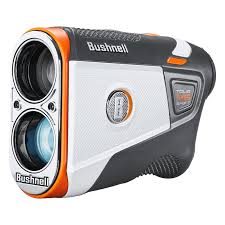
The Bushnell Tour V6 golf rangefinder sets a new standard in accuracy and speed, helping golfers of all levels measure distances with confidence and elevate their performance on every hole.
Bushnell Tour V5 vs Nikon COOLSHOT 50i: The Slope Fork
If you’re looking at a plain Tour V5 but you keep thinking about slope, the original Nikon COOLSHOT 50i is worth weighing, because it has slope and the plain V5 doesn’t.
Make sure it’s the original 50i, not the COOLSHOT 50i GII that Nikon announced as a separate model in 2025. The original also isn’t one of Nikon’s stabilized models, so don’t mix it up with those.
A lot of the basics line up. Both are 6x. Both have a magnet built in, so either one goes on the cart bar. The 50i takes a CR2. And both tell you they’ve locked the flag with a vibration and a visual signal. On the V5 that’s Visual JOLT. On the 50i it’s a red lock indication.
Slope is the real split. The 50i uses Nikon’s ID slope technology. When you measure in straight-distance mode, a green LED on the outside of the housing flashes to show slope isn’t in use. Say you’re playing a club event where slope isn’t allowed. Your playing partners can see that light instead of just taking your word for it. The plain V5 never has slope to begin with, so it has nothing to show.
The 50i also uses a red OLED display with five brightness settings. That way you can turn it up on a bright afternoon and back down when it’s overcast.
On weather, Nikon rates the 50i as IPX4-equivalent rainproof under its own test conditions. Bushnell says the plain V5 isn’t waterproof. If a published rain rating matters to you, Nikon gives the 50i one. It’s a rain rating, though. It doesn’t tell you anything about dunking it, so keep it out of the pond.
Here’s how I’d split it. If you don’t want slope and you like Bushnell’s JOLT, the plain V5 does the job. If you want slope on a 6x magnetic laser and you like having a straight-mode light other people can see, the 50i is the better fit.
The V5 Shift and V6 Shift Do the Same Job
Put these two side by side and the jump from 5 to 6 is a lot smaller than the name makes it sound.
Both are 6x lasers with slope you can turn off using a physical switch. On the V5 Shift it’s a slider with a red slope indicator. The V6 Shift uses a locking Slope-Switch. Both have the BITE magnet built in, so they’ll stick to a metal cart bar without a separate clip. And both have PinSeeker with Visual JOLT, which I’ll get to in a second.
Bushnell rates both from 5 to 1,300 yards with 1-yard accuracy. On the V5 Shift, that 1,300 is the max on suitable reflective targets, not a flag. Bushnell rates its flag range at 400 yards.
| Feature | Bushnell Tour V5 Shift | Bushnell Tour V6 Shift |
| Model numbers | 201911 (support also lists 201911P) | 202321P, 202321, 202322 |
| Slope | Yes, side slide switch | Yes, locking Slope-Switch |
| Slope can be turned off for tournament play | Yes | Yes |
| Magnification | 6x | 6x |
| Range (Bushnell spec) | 5 to 1,300 yards | 5 to 1,300 yards |
| Accuracy (Bushnell spec) | 1 yard | 1 yard |
| Flag lock | PinSeeker with Visual JOLT (vibration plus red ring) | PinSeeker with Visual JOLT (vibration plus flashing red ring) |
| Cart mount | Built-in BITE magnet | Built-in BITE magnet |
| Water protection | Water resistant, no IP rating listed, not waterproof | IPX6 water resistance, not waterproof |
| Status | Discontinued; Bushnell points to the V7 Shift | Discontinued; replaced by the V7 Shift |
For more on the newer one, here’s my Bushnell Tour V6 review.
The IPX6 Rating Sounds Bigger Than It Is
The V6 Shift carries a published IPX6 water-resistance rating. Bushnell’s V5 Shift material doesn’t list an IP rating.
But IPX6 means water resistant, not waterproof. Bushnell gives both models the same care rules: stay out of heavy rain, keep them away from direct streams of water, and never submerge them. So the rating doesn’t let you treat the V6 Shift any differently when the weather turns. What you get is a published rating on the spec sheet.
If you’re picking between the two and that rating matters to you, lean V6 Shift. If you already own a working V5 Shift, it’s not worth replacing over a rating.

Visual JOLT Isn’t a Reason to Upgrade. You Already Have It.
Visual JOLT isn’t new on the V6 Shift. The V5 Shift already has it, and so does the plain V5.
And if you’re wondering what the heck Visual JOLT is, it’s how the rangefinder tells you it locked onto the flag. On the V5 Shift you get two short vibration bursts and a red ring lights up at the edge of the display. The V6 Shift also buzzes and flashes a red ring.
PinSeeker is what picks the target. On the V5 Shift, when the laser sees more than one thing, it shows you the closer one. The idea is to pick out the flag instead of the trees behind it.
Here’s a tip for V5 Shift owners. A number with no buzz doesn’t automatically mean a bad reading. Bushnell’s manual says a single-object return can give you a distance without JOLT firing.
When the V7 Shift Is Worth a Look
If your V5 has quit, or you’ve got the plain V5 and slope is what you’re after, check out the V7 Shift before you go hunting for a discontinued V6.
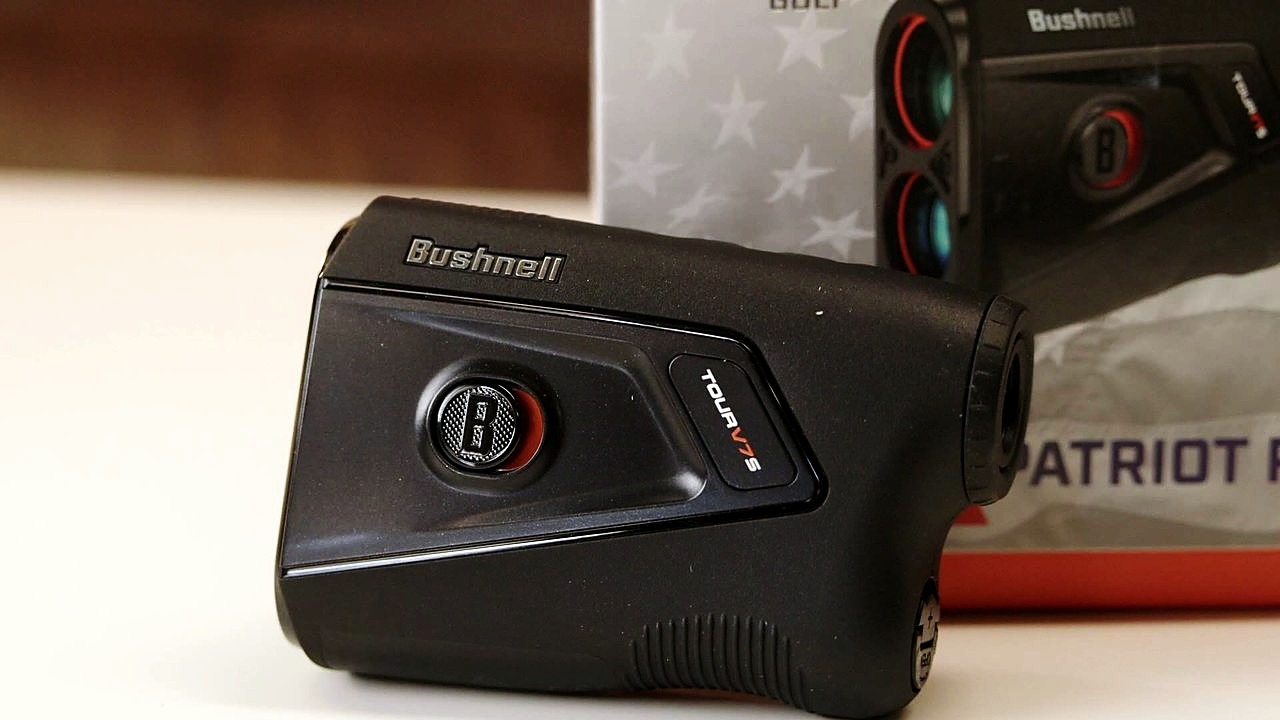
Bushnell replaced the V6 Shift with the V7 Shift and points V5 Shift shoppers there too, and this one actually changes what you see. It’s the first Bushnell with a dual-color OLED display. It shows the line-of-sight distance in red and the slope-adjusted number in green, both at the same time. It also adds Link-Enabled club recommendations. The catch is that those need data from a session on a Bushnell or Foresight launch monitor, so if you’ll never hit balls on one, don’t factor that feature in. You won’t get either of those things on a V5 Shift or V6 Shift. If you want to see where it fits in the whole lineup, here’s my breakdown of Bushnell golf rangefinders.
What I Don’t Love About Each
Each of these has a catch you should know about before you count on it.
Bushnell Tour V5 Shift
It runs on a CR2 battery you’ll have to replace. And since it’s discontinued, any one you find now is old stock or used. The condition and what’s in the box come down to that seller.
Bushnell Tour V6 Shift
The IPX6 rating is the easiest thing in this comparison to read too much into, because a rating isn’t waterproofing. And it’s been replaced too, so you get the same old-stock-or-used gamble you’d get with a V5 Shift.
Who Should Buy Which
Most V5 Shift owners should keep what they’ve got. Here’s how the rest splits.
Keep the Bushnell Tour V5 Shift if:
- It still ranges and the slope switch still works.
- The red ring was the main thing pulling you toward the V6.
- You already look after it when the weather turns.
The Bushnell Tour V5 Rangefinder delivers pro-level accuracy with lightning-fast pin acquisition, making it a must-have tool to improve every golfer’s performance.
Choose the Bushnell Tour V6 Shift if:
- You’re deciding between the two and you want the IPX6 rating.
- You find one at a price that makes sense next to the newer V7 Shift.
- You’re fine owning a rangefinder Bushnell no longer makes.
The Bushnell Tour V6 golf rangefinder sets a new standard in accuracy and speed, helping golfers of all levels measure distances with confidence and elevate their performance on every hole.
Look at the V7 Shift instead if:
- Your V5 is dead or on its way out.
- You own the plain V5 and want slope.
- You want both distances on screen in two colors.
- You can get time on a Bushnell or Foresight launch monitor.
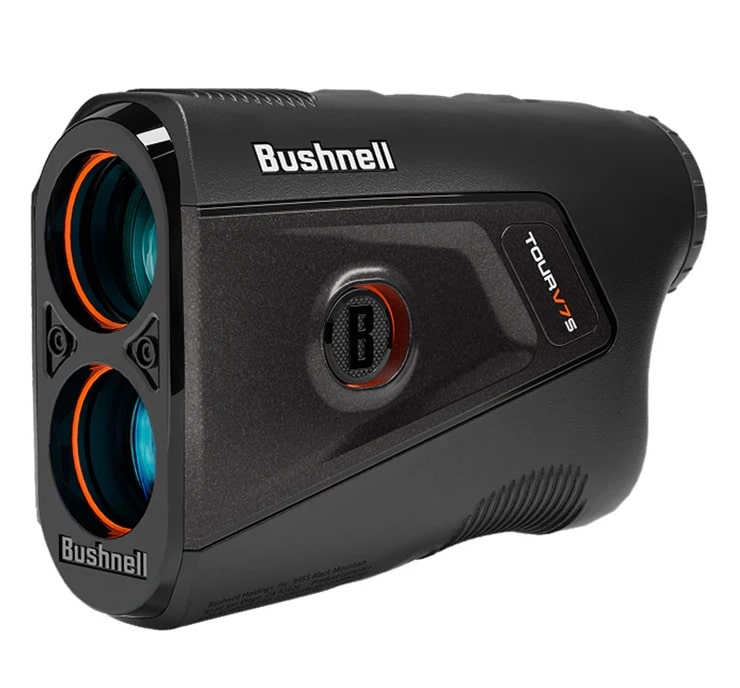
Experience unrivaled accuracy with the Bushnell Tour V7 Shift. Featuring PinSeeker with Visual JOLT, improved slope algorithms, and a built-in BITE magnetic mount. Get the most consistent yardages in golf. Shop the V7 today!
Frequently Asked Questions
What’s the difference between the Bushnell Tour V5 and the V5 Shift?
Slope. The V5 Shift gives you a slope-adjusted number and a side switch to turn it off. The plain Tour V5 can’t do slope at all. If slope is the reason you’re buying, the listing has to say Shift.
Does the V5 Shift have Visual JOLT?
Yes. It buzzes and lights a red ring when it locks the flag. The V6 Shift has Visual JOLT too, so it’s not a reason to upgrade.
Is the Bushnell V6 Shift waterproof?
No. IPX6 is a water-resistance rating. Bushnell’s care rules for the V6 Shift match the ones for the V5 Shift, so look after it the same way.
Can I use the V5 Shift or V6 Shift in a tournament?
Both let you turn slope off, and that’s what tournament play requires. But the committee running an event can still ban distance-measuring devices with a local rule. Check before you tee off, because switching slope off doesn’t get around that.
Final Thoughts on Bushnell Tour V5 Shift vs Bushnell Tour V6 Shift
A working V5 Shift stays in the bag. The V6 Shift isn’t a big enough step to justify replacing it.
If your V5 is done, or it’s the non-slope one and you’ve decided you want slope, skip the sideways move and go straight to the V7 Shift. And to see how that stacks up against everything else, start with my best golf rangefinders list.

About the author
Paul Liberatore
Paul Liberatore is the founder of Golfers Authority and a former three-year golf gear contributor to Sports Illustrated. He runs the Golfers Authority YouTube channel and the Behind the Golf Brand podcast, and he reviews golf equipment to help golfers make better buying decisions.