Most golf GPS devices force you into a frustrating compromise. You either get a basic unit that only gives you a front, center, and back number, or you pay $500 for a smartwatch that demands an annual subscription fee to show you the slope of the green. You end up paying for a bunch of fitness tracking features you don't actually want, while the golf data you need is locked behind a paywall.
I've tested dozens of GPS units, and Voice Caddie has quietly built a lineup that solves this problem. They focus entirely on golf data; they don't charge subscription fees, and they build devices for people who want accurate numbers without the bloat. I'm going to break down their five best devices, from premium watches to clip-on voice units.
The decision really comes down to how much data you want to process before you hit the ball. If you want every variable mapped out on your wrist, you need a watch. If you want a number yelled at you so you can pull a club and hit, you need a voice unit. Here is how the lineup actually performs.


Most premium golf watches require you to constantly swipe and tap to find the information you need. You get to your ball, you wake up the watch, you swipe to the hazard screen, you swipe back to the green view, and you hold up your group. That's because the software is built like a smartphone, forcing you to navigate menus when you should be thinking about your shot.
So when a watch costs $349.99 and claims to do the thinking for you, I immediately start looking for the catch. Let me show you what I found.
The Super OLED touchscreen is the first thing that separates this watch. It is a 1.2-inch display that stays completely readable even in direct sunlight, which matters because most GPS watch screens wash out at the exact moment you need them. But the screen is not what justifies the price. That is the V.AI 3.5 system. What that means in practice is the watch tracks your location on the hole and automatically changes the screen. When you are on the tee, it shows you the full course layout with hazards and a driver distance arc so you can plan your tee shot before you even tee it up. When you hit your drive and walk to the ball, it automatically zooms in to the Approach View, rotating to match your angle. When you get to the green, it switches to the Smart Putt View. You never have to touch the screen.
The data it gives you is aggressive. It calculates slope-adjusted distances, tracks real-time wind speed and direction, and recommends a club based on the conditions and your historical shot data. The green undulation maps use heat maps and arrows to show you exactly how the green breaks. If you want to practice, it has a tempo mode that measures your swing rhythm. It tracks every shot and putt automatically, giving you a full scorecard at the end of the round. The battery lasts 12 hours in golf mode, which is enough to cover 36 holes on a single charge. And there are no subscription fees.
The catch is the sheer volume of information. The Smart Putt View gives you directional slope guidance, and for some players, seeing all those arrows and numbers on the green causes analysis paralysis. The casing is also relatively thick to hold the battery, which might feel bulky on a smaller wrist. The auto-tracking can also miss a very soft tap-in, requiring a manual correction.
This is for serious, data-driven golfers who want maximum strategic information on the course without paying an annual fee. If you want a slim, everyday fitness watch that also happens to have golf features, look at something else.
But what if the problem isn't information overload, it's that you keep making the same swing mistake round after round and no amount of yardage data is fixing it? That's where the Voice Caddie T9 comes in.

Luxury golf tech with advanced GPS, swing analysis, and smart features designed for premium performance on the course.

A lot of golfers buy a GPS watch to get better, but all they actually get is a digital yardage book. You look at the number, you hit the shot, and you learn nothing about why you missed the green. The watch tells you the distance, but it doesn't help you fix the swing that caused the chunked iron.
At $249.99, the Voice Caddie T9 claims to improve your mechanics actively, so the question is whether any of it actually holds up on the course.
The T9 has a feature called Tempo Practice Mode, and it changes how you use a golf watch. It measures the ratio between your backswing and your downswing, giving you immediate feedback on your transition speed. The design forces you to stop rushing your transition, because the ratio number tells you immediately when your downswing is outrunning your backswing. You can pull up the same data on the course after a bad shot to see whether tempo was the issue. Most GPS watches have no equivalent to this.
It still does all the heavy lifting of a premium watch. It uses the V-Algorithm 3.0 to give you slope-adjusted distances that account for elevation changes, and you can toggle that feature off for tournament rounds. It has the same heat-mapped green undulation with directional arrows as the more expensive models. The Active Green feature automatically rotates the map so the front of the green is always facing you, no matter what angle you are approaching from. It tracks your shots and putts automatically, and the reflective LCD screen is built specifically to fight glare, staying readable even in direct sunlight. The battery lasts for 27 holes, and it comes preloaded with 40,000 courses worldwide.
The catch is the proprietary charging cable. It is one more specific cord you have to remember to pack when you travel, and losing it means your watch is dead until a replacement arrives. The single-button and touchscreen interface also has a learning curve, and accessing your scorecard mid-round takes a few rounds to figure out. I also found that the MyVoiceCaddie app can be inconsistent with logins when you try to sync your data after the round.
This is for players who want high-end green reading and slope data, plus a tempo training tool they can actually use on the course. If you hate proprietary chargers or need seamless app integration for post-round analytics, it might frustrate you.
But what if the proprietary charger and the app reliability issues are dealbreakers for you, and you need something that works without the friction? That's where the Voice Caddie A3 comes in.

Experience golf like a pro with the Voice Caddie T9 GPS Watch, advanced shot tracking, slope-calculated yardages, and green undulation heat maps in a sleek color touchscreen design.

Water damage kills more golf electronics than cart path drops. You get caught in a sudden downpour on the back nine, your jacket leaks, and your $300 watch shorts out. Most brands bury their water resistance ratings in the fine print because their watches can barely survive heavy sweat, let alone a rainstorm.
At $199.99, the Voice Caddie A3 is the most affordable watch on this list, so the real question is what you're actually giving up for that price, and the answer is less obvious than you'd expect.
The A3 is the only watch in this lineup with a confirmed IPX7 waterproof rating. That means it can survive being submerged in a meter of water for 30 minutes. You do not have to panic and stuff it in your bag when the sky opens up. It is built to survive the elements, and that alone separates it from the T9 and T11 Pro, which have no stated waterproof rating.
You still get a 1.3-inch color touchscreen, which is actually slightly larger than the screens on the T9 and T11 Pro. It gives you slope-adjusted distances that you can toggle off for tournaments, and it includes green undulation data so you can read the breaks before you hit your approach. The Smart Course View gives you Course Zoom, an Aim Point feature, and a Drive Landing Area so you can plan your tee shot visually. The Smart Green View includes Pin Reload, which lets you manually adjust the pin position on the watch face for precise yardages to the actual hole location. It tracks your shots automatically and has a basic fitness mode for walking, running, and cycling. The watch weighs 50.5 grams with the band and 31.4 grams on its own, and it does all of this without charging you a subscription fee for the 40,000 preloaded courses.
The catch is the battery life. The battery only lasts 10 hours in golf mode. If you play 36 holes in a day, it is going to die on the back nine of your second round. It also has zero smartwatch notifications. It will not tell you when you get a text message or let you control your music.
This is for the budget-conscious golfer who plays in unpredictable weather and wants green undulation data without paying a subscription fee. If you need your watch to last for two rounds on a single charge or want smartphone alerts on your wrist, look at something else.
But what if wearing a watch on your wrist is the actual problem, and you'd rather not have anything on your arm at all when you swing? That's where the Voice Caddie VC4 comes in.
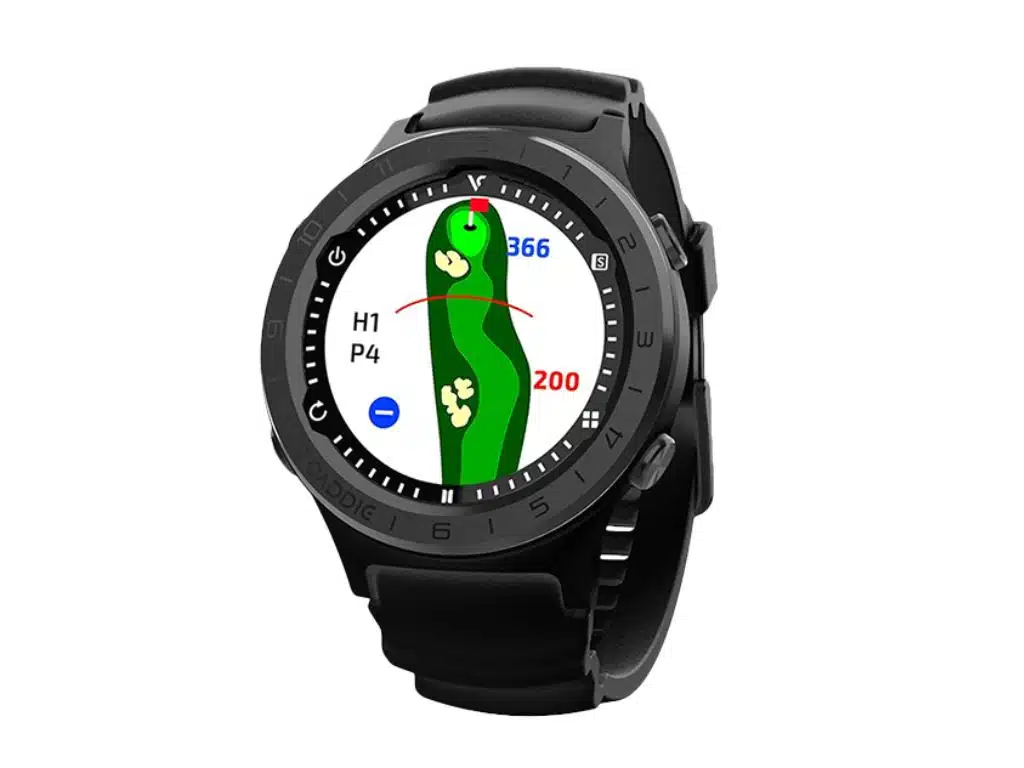
The Voice Caddie A3 GPS Watch redefines golfing precision, delivering exact distances and smart course insights. Elevate your game with cutting-edge technology designed for pros and enthusiasts alike.

Sometimes looking at a screen is the worst thing you can do for your golf game. You get to your ball, you look at a tiny map, you see the bunker on the left, you see the water long, and suddenly you are thinking about all the places you cannot hit the ball. Visual data creates visual anxiety, and for a lot of golfers, the best pre-shot routine is the simplest one.
If a device costs $129.99 and doesn't even have a screen, it has to justify its existence entirely on accuracy and convenience.
The Voice Caddie VC4 weighs 0.85 ounces and clips to the back of your hat. You press a button, and it speaks the distance to the center of the green. You double-click it, and it gives you the front and back numbers. The entire interaction is one button press. There is no waking up a screen, no swiping, no zooming. You get a number and pull a club, which is the fastest pre-shot routine GPS technology allows.
It is much smarter than it looks. It uses Voice Caddie's proprietary V-Algorithm to calculate slope-adjusted distances based on PGA and LPGA Tour trajectory data, so the number it gives you is the actual play-as yardage accounting for elevation. It also uses Active Green Info, which means the front and back distances change dynamically based on your angle of approach, so you always get the most accurate reading from where you are actually standing. The battery lasts for up to 54 holes on a single charge, and it automatically recognizes the course and the hole you are on. It supports four languages and has a tournament mode that turns off slope for legal play.
The catch is the pacing of the voice output. It is deliberate. You have to pause and wait for it to finish speaking the full yardage, which can feel slow if you are in a rush. Because there is no screen, you get absolutely no hazard distances, no hole flyovers, and no green layouts. If you want to use the manual shot distance measurement, you have to memorize a specific sequence of button presses, which is less intuitive than tapping a touchscreen.
This is for golfers who want to play fast and prefer auditory information over staring at a screen. If you need exact distances to carry a fairway bunker, this may not be the right fit.
But what if even $129.99 is more than you want to spend on a GPS device right now? That's where the Voice Caddie VC300SE comes in.

Experience precision golf with the Voice Caddie VC4 GPS, offering voice distance output, elevation changes, and over 40,000 course maps worldwide.

The problem with cheap golf technology is that it usually requires a ton of setup. You buy a budget device, and you spend the first three holes of your round trying to get it to connect to your phone or find the right satellite. By the time it works, you are already frustrated and out of rhythm.
When a GPS unit costs $99.99, the construction either justifies the price or it doesn't.
The VC300SE is the simplest device Voice Caddie makes. It weighs one ounce. You turn it on, you clip it to your hat, and you press the button. It tells you the distance to the center of the green. You double-click it for the front and back. That is the entire experience. There is no app to download, no phone to sync, and no subscription fee to pay. The touch-sensitive interface means you don't even have to press a hard button; you tap it, which works fine with a golf glove on or in wet weather. The automatic course and hole recognition means it finds your location the moment you turn it on, with no manual searching required.
It tracks your shot distance if you hold the button where you hit from and tap it again where the ball lands. The battery lasts for 8 hours, which covers two full rounds, and it comes preloaded with 40,000 courses worldwide. The voice output is clear, and the volume is adjustable across multiple levels, so you can hear it in wind without bothering your playing partners. It supports four languages, and all course updates are free through the VC Manager desktop software, so there are no hidden costs down the road.
The catch is the lack of slope adjustment. The distances it gives you are straight-line yardages only, unlike the VC4, which calculates the play-as distance based on elevation. If you are playing a course with significant uphill or downhill shots, you have to do the math yourself. It also has no hazard distances, no layup data, and no hole flyovers. Satellite acquisition can be slow in a parking lot surrounded by heavy tree cover, so you need to turn it on a few minutes before you tee off.
This is for beginners, seniors, or anyone who wants a completely frictionless way to get basic yardage. If you play hilly courses and need slope calculations, spend the extra thirty dollars on the VC4.
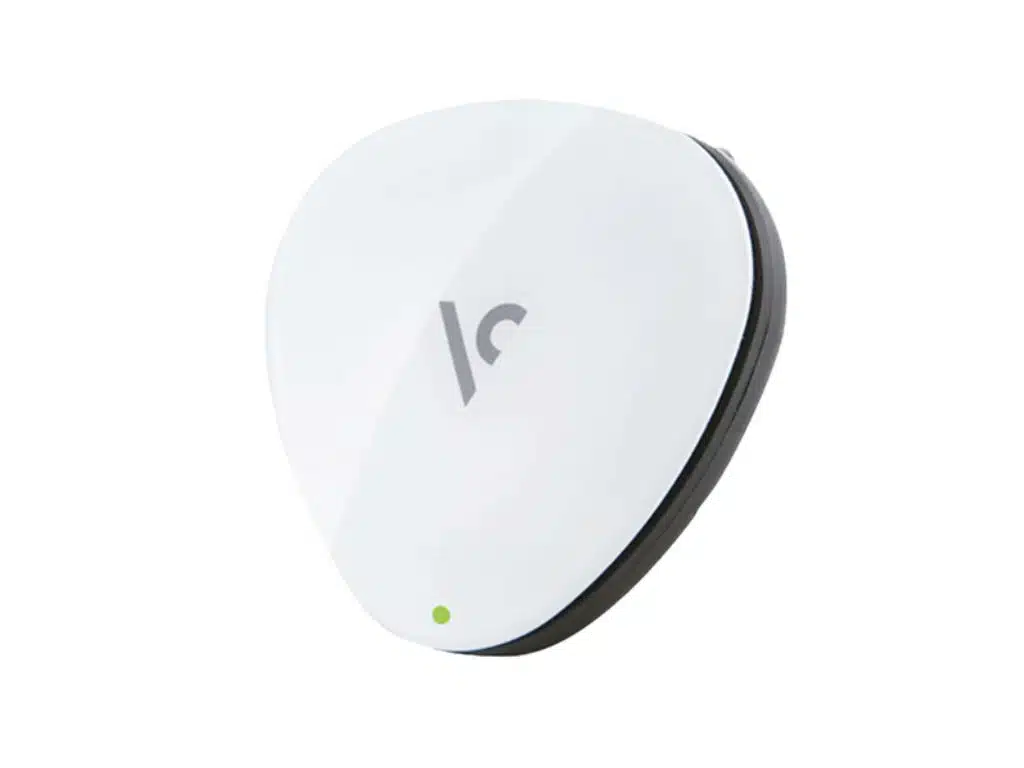
The Voice Caddie VC300SE Golf GPS delivers pinpoint accuracy and effortless distance tracking, giving golfers a winning edge with pro-level performance.
The Voice Caddie T11 Pro is widely recognized as the flagship model and the best overall option in the lineup. It features an ultra-bright OLED display, real-time green undulation heatmaps, approach views, integrated swing tempo tracking, and wind direction data when paired with the MyVoiceCaddie app. If you are looking for a budget-friendly or mid-tier alternative, models like the Voice Caddie T9 or A3 Hybrid offer excellent value with core GPS and slope features at lower price points.
Voice Caddie watches stand out primarily through their advanced green graphics and active feedback features:
Yes, provided Slope Mode is turned off. Under USGA and R&A rules, distance-measuring devices (DMDs) are allowed in competitions as long as slope-adjustment functions are disabled. Voice Caddie watches include a quick toggle setting (Tournament Mode) that disables slope calculations and green undulation graphics, rendering the device fully compliant with official tournament play.
No, there are no recurring subscription fees. All course maps, green undulation data, software updates, and sync features with the MyVoiceCaddie mobile app are included with the purchase of the device. Over 40,000 global courses come pre-loaded, and periodic map updates can be downloaded for free via Bluetooth or the PC Sync software.
Most modern Voice Caddie T-Series watches (like the T9 and T11 Pro) offer 10 to 12 hours of battery life in full Golf GPS mode, which is easily enough to last for two complete 18-hole rounds back-to-back. In standard watch/daily wearable mode, the battery typically lasts between 7 to 10 days on a single charge depending on brightness settings and Bluetooth connectivity.
If you want the most data possible and you hate the idea of paying a subscription fee, buy the T11 Pro. The OLED screen and the automatic view switching make it one of the most capable course management tools you can put on your wrist at this price point.
If you want to actively improve your swing while you play, get the T9. The tempo training mode is a real advantage for players who struggle with transition speed, and you still get the slope and green undulation data at a price that's $100 less than the T11 Pro.
If you are on a strict budget but still want green reading capabilities, the A3 is the clear winner. The waterproofing is a genuine differentiator, just remember to charge it after your round.
If you hate screens and want to play as fast as possible, buy the VC4. The voice-delivered slope calculations are accurate, and it completely removes visual distractions from your pre-shot routine. If you want the absolute cheapest entry point and you only need basic yardages, the VC300SE gets the job done.
What do you guys think? Let me know in the comments. And if you want to see more honest gear reviews where I cut through the marketing BS, make sure you subscribe. I will see you out on the course.