
Launch monitors with swing video are absolutely worth it if you’re serious about improving, because seeing your swing flaws beats guessing every time. Budget models start around $600, mid-range options run $1,000-$3,000, and they’ll show you ball speed, launch angle within ±0.74°, spin rate, and exactly where you’re making contact. The video bridges the gap between raw numbers and actually understanding what’s happening, you’ll catch that club face opening at impact or your weight shifting too early. Stick around to uncover which models deliver the best bang for your buck.
Who Actually Needs a Launch Monitor With Swing Video?
Who really needs a launch monitor that comes with swing video capabilities? If you’re a coach, it’s practically vital that you can spot subtle flaws invisible to the naked eye and show students exactly why adjustments matter, not just what to change. Serious amateurs benefit hugely because understanding the gap between what’s happening and why accelerates improvement beyond numbers alone. When you identify issues like hip stalling or clubface opening paired with visual feedback, those abstract metrics become actionable. Even if you practice remotely without regular instructor access, stored videos create a self-monitoring system. You’ll quickly identify when your swing deviates from established benchmarks. Video provides what numbers alone cannot: visual evidence similar to how early golf instruction evolved in the 1990s, when slow-motion video analysis first began complementing traditional teaching methods. The ability to review swings later with associated performance data transforms practice sessions into structured learning opportunities. The key point is: video alters data into understanding!

What Launch Monitors With Video Actually Measure?
Understanding the “why” behind your swing matters, but you also need to know exactly what these video-equipped launch monitors are actually tracking when you step up to hit. The core measurements include ball speed, captured through high-speed cameras analyzing 200 images in the initial 30cm of flight, or radar detecting frequency shifts. You’ll get launch angle data, accurate within ±0.74°, by comparing sequential images through the launch window. Spin rate comes from cameras identifying dimple patterns or radar tracking the ball’s rotation. Club metrics reveal your clubhead speed, path (ranging from 2.4° to -2.8°), and face angle at impact. Camera-based systems can also pinpoint the exact impact location on the club face, showing you whether you’re hitting toe, heel, or center. The smash factor ratio reveals how efficiently you’re transferring energy from club to ball, serving as a key indicator of contact quality. Ultimately, flight metrics show apex height, carry distance, and how far left or right you’re missing your target!
How Swing Video Makes Your Numbers Instantly Actionable?
While launch monitors spit out impressive numbers like 165 mph ball speed or 12.3° launch angle, those figures won’t fix your slice unless you can actually see what’s causing them. The key point, video bridges that gap instantly. When you watch your swing alongside the data, you’ll understand why you’re losing 20 yards: maybe your club path is 5° out-to-in, creating that frustrating banana ball. Slow-motion playback reveals the exact moment your hips stall, or your wrists flip early. You can compare your swings side-by-side with a pro’s, spotting differences in posture or weight transfer. Recording multiple swings helps you capture variations and identify consistent patterns that reveal your most persistent flaws. High-definition footage also captures crucial details like club position and follow-through that numbers alone can’t convey. This visual framework alters confusing numbers into clear action steps, like widening your stance or delaying your release, leading to faster improvements than guessing ever could.
Launch Monitor Pricing: What Video Features Cost?
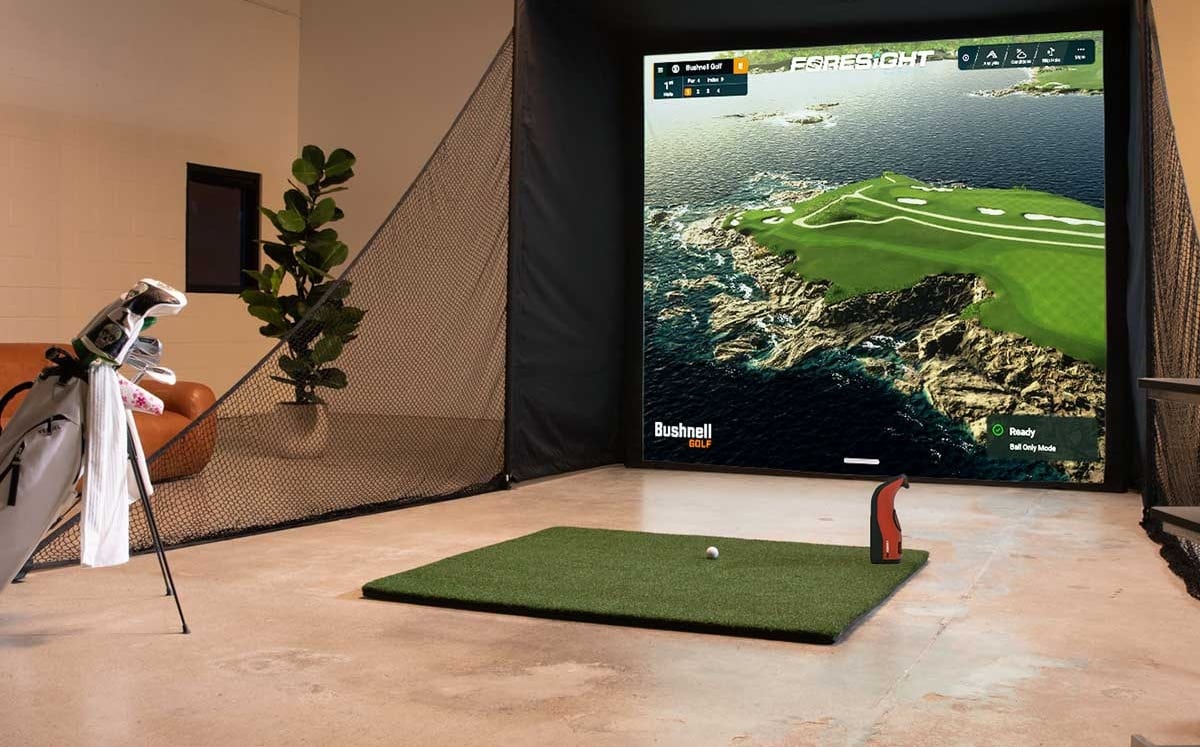
Now that you’ve seen how video turns raw data into real fixes, you’re probably wondering what these cameras and slow-motion features actually cost. The reality is: budget models with video start surprisingly low. The Swing Caddie SC4 Pro runs $599.99 with no subscriptions, while the Square Golf matches that price using photometric camera tech. You’ll find the Rapsodo MLM2PRO at $699.99 with dual optical cameras included.
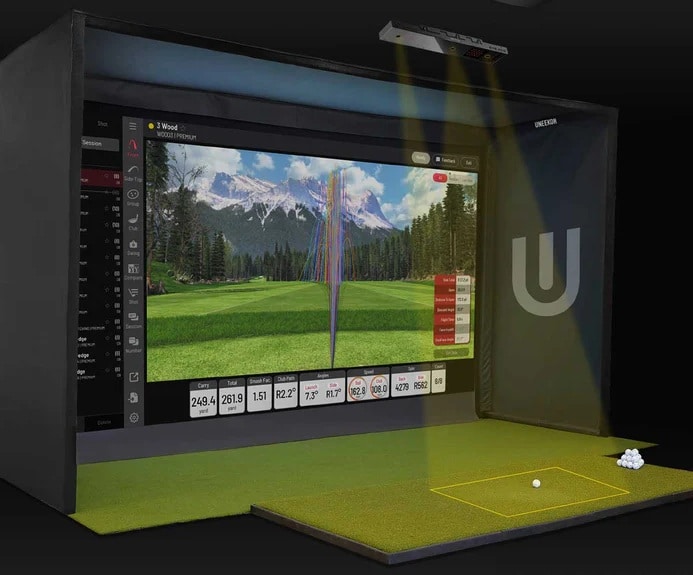
Mid-range options jump to $1,000-$3,000. The Uneekor Eye Mini Lite costs around $2,500 with dual high-speed cameras, while the Rapsodo MLM2PRO Pro Package hits $2,798 for advanced video analysis.
Watch out for subscription traps! Garmin’s R10 costs $599.99 upfront but locks premium video behind ongoing fees. Rapsodo offers a $499 lifetime membership that eliminates annual charges completely. Remember that software incurs ongoing costs, with many platforms transitioning from one-time purchases to annual subscriptions that can add hundreds to your total investment.
Which Video-Enabled Models Deliver the Best Value?
How do you separate genuine value from marketing hype when shopping for video-enabled launch monitors? The important aspect is that the Full Swing KIT delivers 16 data points plus 4K video replay, which is good enough for Tiger Woods, making it worth the premium if you’re serious about improvement. The TruGolf LaunchBox offers killer value with camera and infrared tracking, plus the fastest ball flight tracer available, and you’ll get 27 E6 Connect courses with zero subscription fees. Square Omni shocks the market by packing four cameras at the most affordable price point for photometric tracking, shipping March 2026. Compare this to radar-only units, and you’ll see why camera-based feedback changes practice sessions into genuine learning opportunities! For golfers who want premium photometric technology and accuracy, the Foresight GC3 Ball Enabled Bundle provides extensive ball and club data that fitting professionals rely on for detailed performance analysis. The Garmin R50 stands out with its rendered course experiences, including the rare availability of Augusta, which is seldom found on competing platforms.
How Long It Takes Most Golfers to Break 100
For most golfers picking up the game for the initial time, breaking 100 takes somewhere between one and two years of regular play and practice. If you’re particularly talented and commit to weekly rounds, you might crack that barrier in just six months. The reality is, about 50% of beginners achieve this milestone within their first two years, while most players will at least break 120 during their first season.
Your timeline depends heavily on how often you play. Weekly golfers have a 60% success rate at breaking 100, compared to just 35% for monthly players. The good news? Once you’ve been golfing consistently, 86% of players eventually break 100 at least once. With proper fundamentals, course management, and patience, you’ll get there faster than you think!
Breaking 90 typically requires 2 to 5 years of dedicated play, representing the next significant milestone in your golf journey. Regular practice can lead to breaking 90 in as little as 1 to 3 years, while talented beginners may achieve this in their first season. Some dedicated players have dropped their handicap from 28.8 to 10.2 in under a year using focused practice plans.
Which Video-Enabled Models Deliver the Best Value?
How do you separate genuine value from marketing hype when shopping for video-enabled launch monitors? The important aspect is that the Full Swing KIT delivers 16 data points plus 4K video replay, which is good enough for Tiger Woods, making it worth the premium if you’re serious about improvement. The TruGolf LaunchBox offers killer value with camera and infrared tracking, plus the fastest ball flight tracer available, and you’ll get 27 E6 Connect courses with zero subscription fees. Square Omni shocks the market by packing four cameras at the most affordable price point for photometric tracking, shipping March 2026. Compare this to radar-only units, and you’ll see why camera-based feedback changes practice sessions into genuine learning opportunities! For golfers who want premium photometric technology and accuracy, the Foresight GC3 Ball Enabled Bundle provides extensive ball and club data that fitting professionals rely on for detailed performance analysis. The Garmin R50 stands out with its rendered course experiences, including the rare availability of Augusta, which is seldom found on competing platforms.
Frequently Asked Questions
Can I Use Swing Video Features Indoors With Limited Space?
Yes, you can use swing video features indoors with limited space, though you’ll need at least 9x10x14 feet for basic functionality. Camera-based monitors like Uneekor and SkyTrak work best since they don’t need as much depth as radar units. The key point is, you’ll want 10-12 feet from the tee to screen and proper lighting for clear video capture. Even in tight spaces, most modern launch monitors capture swing footage effectively!
How Long Should I Wait Between Video Reviews to Track Real Progress?
You’ll want to wait one to two weeks between formal video reviews to see real progress. The point is, recording weekly or bi-weekly gives your body enough time to actually absorb the changes you’re working on. If you compare videos daily, you won’t notice much difference and might get discouraged. That said, you can still record every practice session to build your catalog, just save the detailed side-by-side comparisons for those weekly or bi-weekly check-ins when meaningful improvements show up.
Do I Need Professional Coaching to Interpret Swing Video Data Effectively?
You don’t necessarily need a pro to benefit from swing video. Modern apps can automatically extract key metrics like forward tilt angle and swing phase segmentation, giving you objective data without expert interpretation. However, here’s the matter: coaches help you prioritize which issues to fix initially and provide customized feedback that accelerates improvement. If you’re stuck despite clear video evidence, a few remote coaching sessions combined with self-analysis deliver the best results!
Can Swing Video Work in Low-Light Conditions at Covered Ranges?
Swing video at covered ranges struggles in low-light conditions. Camera-based systems need proper lighting to eliminate motion blur and capture your swing accurately. Without enough light, you’ll get distorted feedback that won’t help your game. The reality is: even a 500-lumen light proved insufficient for clear high-speed video. If your covered range has dim or inconsistent lighting, you’re better off with radar-based monitors that don’t rely on cameras for accurate data.
Are Swing Videos Automatically Saved or Do I Manually Record Each Shot?
It depends on your launch monitor. Devices like the Rapsodo MLM2PRO, FlightScope Mevo+, and Full Swing KIT automatically capture and save every swing without you lifting a finger; the cameras record, sync with your data, and store everything through their apps. However, if you’re using monitors without built-in cameras, like the GC3 or SkyTrak+, you’ll need to manually set up external cameras and pair them through software to sync videos with shot data.
Conclusion: Golf Launch Monitor with Swing Video
You’ll get the most value from a video-enabled launch monitor if you’re serious about improving your swing mechanics, not just tracking distance. If you’re happy hitting balls without detailed feedback, save your money and stick with basic models around $500. But if you want to connect your launch data to what’s actually happening in your swing, spending $2,000-$3,000 on video integration will change your practice sessions into real coaching opportunities.

About the author
Paul Liberatore
Paul Liberatore is the founder of Golfers Authority and a former four-year golf gear contributor to Sports Illustrated. He tests golf equipment hands-on to help golfers make better buying decisions.