
If your original Series 3 Max still works, you don’t need the Max+. Here’s what’s actually different between the two, and which golfer each one fits.
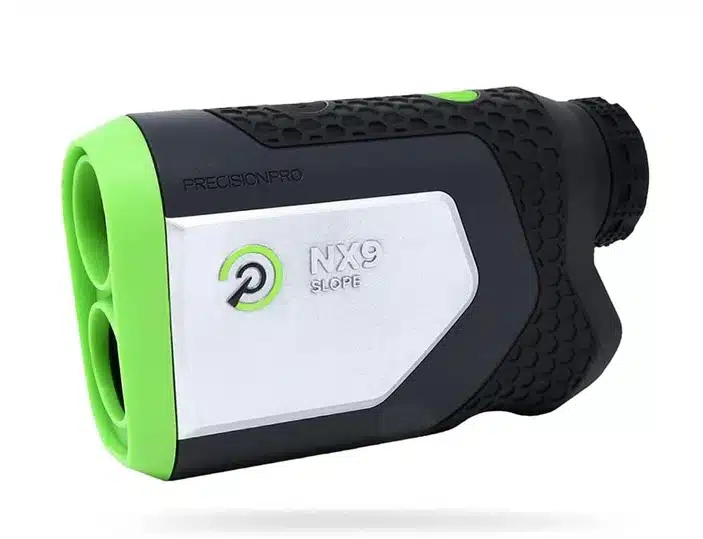
Unlock precision on the golf course with the Precision Pro NX9 Slope Rangefinder. Engineered for accuracy, it delivers quick, reliable distances and slope readings to elevate your game. Whether targeting fairways or greens, this device ensures confident, data-driven shots every round.
The Quick Verdict
Keep a working Series 3 Max. Both rangefinders do the same core job. Each has a physical slope switch, a pulse vibration when it locks onto a target, and a magnet that sticks to the cart.
The 2024 Max+ changes how you live with it. You pick the display color yourself with a button. It has a published IPX4 water rating. And it runs on an internal battery you charge over USB-C.
If those things matter to you, or you’re choosing between the two right now, go with the Max+. If your original is still giving you good numbers, none of those changes is a reason to retire it.
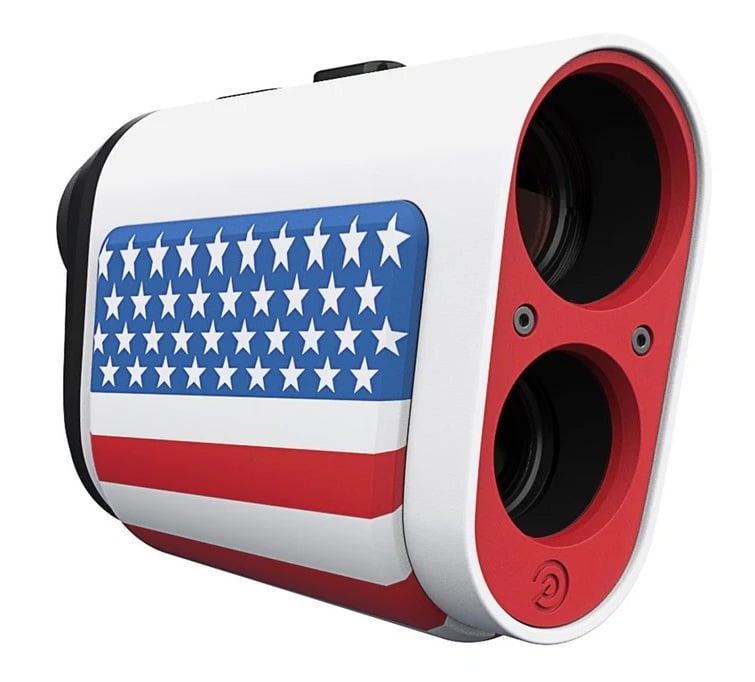
The Precision Pro NX10 Slope Rangefinder combines pinpoint accuracy with slope measurement. It's designed to make every shot easier to plan.
First, Which One Do You Have?
This one’s easy. Blue Tees introduced the original Series 3 Max in April 2021 and calls the Max+ the 2024 iteration. If you bought yours before 2024, you have the original.
That matters, because the two get mixed up. Blue Tees’ old Series 3 Max product link now lands on the Max+ page, so if you own the original and look up specs, make sure what you’re reading isn’t for the Max+.
If you want to see the first version, I made a video on the original Blue Tees Series 3 Max back in March 2023.
The Series 3 Max and Max+ Do the Same Job
Put them side by side and the core rangefinder hasn’t changed much.
Both have slope with a physical switch, so you can tell whether slope is on just by looking at the housing. There’s no menu to dig through. Switch slope off and you get line-of-sight numbers, which Blue Tees calls tournament legal. Both buzz with a pulse vibration when they lock a target. That buzz tells you it locked onto something, not that it’s the flag, so make sure the number fits the shot before you pull a club. Both also have a magnetic strip built into the body, so they’ll stick to a metal cart bar without a separate mount.
| Feature | Blue Tees Series 3 Max | Blue Tees Series 3 Max+ |
| Generation | Original, introduced April 2021 | 2024 iteration |
| Max range (Blue Tees claim) | Up to 900 yards | 900 yards on Blue Tees’ comparison table; 5 to 1,000 yards in the manual |
| Slope | Yes, physical slide switch | Yes, physical switch on the housing |
| With slope off | Line-of-sight readings Blue Tees calls tournament legal | Tournament legal, per Blue Tees |
| Lock feedback | Pulse vibration with Pin Lock | Flag Lock with pulse vibration |
| Display | Auto Ambient Display that adapts to light | Red/black LCD; you pick the color with a button |
| Cart magnet | Built-in magnetic strip | Built-in magnetic strip on the side |
| Water protection | “Water resistant,” no IP rating listed | IPX4, splash and rain resistant, not waterproof |
| Yards/meters | Hold Mode for three seconds | Hold the Mode button |
| Focus | Adjustable eyepiece | Adjustable focus ring |

The Max+ has 6x magnification, and Blue Tees claims ±1-yard accuracy. It has a standard Golf mode for point-and-shoot and a continuous scan mode that keeps updating as you pan from the front lip of a bunker to the pin. If you want the whole story on the newer one, here’s my Blue Tees Series 3 Max+ review.
Don’t Pick Either One on 900 vs 1,000 Yards
Blue Tees advertised the original Max at up to 900 yards. For the Max+, its comparison table says 900 yards and its manual says 5 to 1,000 yards. So Blue Tees doesn’t even agree with itself.
And it doesn’t matter. On a golf course you’re ranging flags, bunkers and trees, nowhere near the top of either claim. Max range is a spec-sheet number, not a reason to pick one over the other.
Auto Display or Pick Your Own Color?
This is the difference you’ll notice on the course.
Blue Tees says the original’s Auto Ambient Display adapts to the light by itself. You don’t touch anything.
The Max+ goes the other way. It has a red/black LCD, and you choose the color with a button.
Here’s where that shows up. Say you’ve got an early tee time and the sun is coming up right behind the green. With the original, the display adjusts and you take your number. With the Max+, you decide which color reads better against that background and press the button. Some golfers want that control. Others want one less thing to think about while they’re standing over a 7-iron.
If you like how your original’s display handles the light, that alone is a reason to keep it. If you’ve always wished you could pick the color yourself, that’s a point for the Max+.
IPX4 Is a Real Number, But It’s a Small One
Blue Tees calls the original Max “water resistant” and leaves it there. There’s no IP rating.
The Max+ is rated IPX4, which covers splashes and rain. It isn’t waterproof, and Blue Tees’ own Max+ manual is cautious about moisture.
So when it starts spitting on the back nine, the Max+ has a published number behind it. That doesn’t mean you can leave it in the cup holder through a downpour. Once the weather turns, treat both of them the same way and put them away.
If you play a lot of wet golf and you’re choosing between the two, I’d rather have a rating than an adjective. If you already own an original and you take care of it, a rating isn’t worth replacing it over.
The Max+ Charges Over USB-C
The Max+ runs on an internal lithium-ion battery that you charge over USB-C, and a USB-A to USB-C cable comes in the box. Blue Tees claims about 50 rounds, or more than 5,000 actuations, per charge. If that number holds up, most golfers won’t be charging it very often. Plug it in before a golf trip and forget about it.
The catch is that the battery is built in. When it’s empty, you can’t drop in a spare on the 9th tee. If you’re the guy who never remembers to charge anything, keep that in mind.

What I Don’t Love About Each
Both have a catch you should know about before you count on them.
Blue Tees Series 3 Max
It has no published water rating, just the words “water resistant.” And Blue Tees’ manual library has no manual for the original, only the Max+ one.
Blue Tees Series 3 Max+
IPX4 is a splash rating, and it’s easy to read more into it than that. The battery is sealed inside, so once it’s dead you’re done until you find a charger. And if you liked a display that sorted out the light on its own, on the Max+ you’re the one pressing the button.
Who Should Buy Which
Most original owners should keep what they’ve got. Here’s how the rest splits.
Keep the Blue Tees Series 3 Max if:
- It still ranges and the slope switch still turns slope on and off.
- You like that the display handles the light without you touching it.
- You don’t play much in the rain, or you already put it away when the rain starts.

Shop Blue Tees Series 3 Max Golf Rangefinder for pinpoint accuracy. Features slope switch, flag lock vibration & magnetic cart strip. Order yours online today!
Choose the Blue Tees Series 3 Max+ if:
- You’re choosing between the two and want a published water rating, even a splash-level one.
- You want a rechargeable battery you charge with a USB-C cable.
- You’d rather pick red or black yourself.
Best for: golfers who want to choose the display color themselves and charge over USB-C.
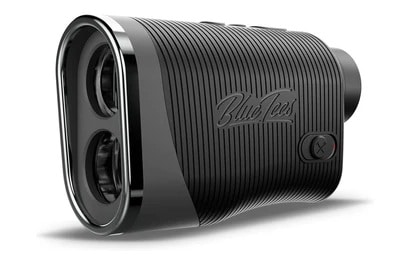
Blue Tees Series 3 Max+ golf rangefinder delivers accurate, long-range distance readings with easy targeting to improve your game on every course.
Frequently Asked Questions
What’s the difference between the Precision Pro NX9 and NX10?
On paper they list the same range, 6x optics, slope setup and battery. The NX9 is smaller and lighter. The NX10 is bigger and has swappable side plates and faceplates in more than 30 designs.
Is the NX10 newer than the NX9?
I wouldn’t pick by the higher number. Precision Pro launched the NX10 on June 8, 2022. It was showing off the newly redesigned NX9 in a video by December 2022, but it hasn’t said when that version first became available. So there’s no clean answer on which came first, and it wouldn’t change my pick anyway. Choose on size, weight and skins.
Are the NX9 and NX10 tournament legal?
Both have an external slope switch, and with slope off they’re tournament legal. The NX10’s switch has a visible indicator so your playing partners can see it. A committee can still ban distance-measuring devices with a local rule, though, so check before you tee off.
What battery do the NX9 and NX10 use?
Both use a replaceable CR2, rated at about 50 rounds per battery. Precision Pro used to give out free batteries for life, but that program ended in spring 2025. If a retailer page still advertises it, don’t count on it.
Which is more accurate, cameras or radar?
I’m not going to hand you a winner here, because the two platforms do not publish matching accuracy specifications you could compare fairly. Uneekor does not publish a tolerance figure for the XO2, so there is no like-for-like number to put next to a radar claim. What I can tell you is that they measure differently: photometric cameras read the ball and club directly in a small zone at impact, while full-flight radar observes the ball down range. If you want to read how TrackMan characterizes its own accuracy, start with our page on how accurate TrackMan simulators are.
Final Thoughts on Precision Pro NX9 (Redesigned) vs Precision Pro NX10
Their spec sheets list the same range and optics in different bodies. If you walk and want the thinner, lighter one, go NX9. If you want a rangefinder you can make your own, go NX10.
If neither one fits what you’re after, start with my best golf rangefinders list.

About the author
Paul Liberatore
Paul Liberatore is the founder of Golfers Authority and a former three-year golf gear contributor to Sports Illustrated. He runs the Golfers Authority YouTube channel and the Behind the Golf Brand podcast, and he reviews golf equipment to help golfers make better buying decisions.