
The point about choosing between 7-way and 14-way golf bags is not about which one’s “better,” but which matches how you play. If you’re walking 18 holes, weight matters, but the divider count doesn’t decide what a bag weighs, so compare the listed weight of the exact bags. If you’re riding in a cart, a 14-way top gives each club its own opening at the cuff, which helps keep your $2,000 clubs apart. Just check whether the dividers run the full length of the bag. Understanding the 5-way golf bag advantages explained can also influence your decision. These bags often offer a lightweight design and compact form, making them ideal for players who prioritize mobility on the course. Additionally, the organization of clubs in a 5-way bag can lead to quicker access during gameplay, enhancing overall performance.
| Feature | 7-way top | 14-way top |
|---|---|---|
| What the number means | Seven openings or groups at the top cuff | Fourteen openings at the top, often one per club |
| Full-length dividers | Not a given; check the exact bag | Offered on some models, but a 14-way top alone doesn’t mean full length |
| Bag types | Shows up on some stand bags; the count doesn’t define the bag type | Common on cart bags and also offered on stand bags |
| Club organization | More groups than a 4-way or 5-way, with clubs sharing each opening | A separate opening for each club position |
| Clubs you can carry | Seven openings doesn’t mean seven clubs | Fourteen openings doesn’t mean you have to carry fourteen |
| Weight | The count doesn’t set the weight; compare the listed weight of each bag | The count doesn’t set the weight; a 14-way isn’t automatically heavier |
| Grip tangling | More groups than a 4- or 5-way, but the count alone doesn’t settle tangling | Separates clubs at the cuff; full-length dividers and fit still matter |
| Top opening size | Not set by the count; check the bag’s listing | Not set by the count; check the bag’s listing |
| Rules | The count doesn’t set your club limit; Rule 4.1b caps you at 14 clubs | Not required by the rules; Rule 4.1b governs the clubs you carry |
Weight Differences and Their Impact on Your Game
When you’re choosing between a 7-way and 14-way golf bag, you might assume the 14-way is always the heavier bag. That’s not a safe rule. No set weight follows from the divider count, so compare the listed weight of the exact bags you’re looking at. The key point is that whatever the bag weighs empty, it adds up once you’ve loaded it with clubs, balls, and gear.
You’ll feel it most around holes 12 through 18, when fatigue kicks in. Carrying a heavy bag affects your swing consistency and drains your stamina faster. This physical strain can lead to tension in your back, shoulders, and neck, making each swing progressively more uncomfortable. Research shows that carrying clubs increases compressive force on the spine and leads to lactic acid build-up, which accelerates fatigue and raises your injury risk. Modern bags like the PING Hoofer address this concern with SensorCool Technology and ergonomic padding systems that help reduce strain even with heavier loads. Think about it: if your bag weighs over 20% of your body weight, you’re risking injury and compromising your performance! So if you walk, pick the lighter bag by its listed weight, not by its divider count, and save your energy for the shots that matter.
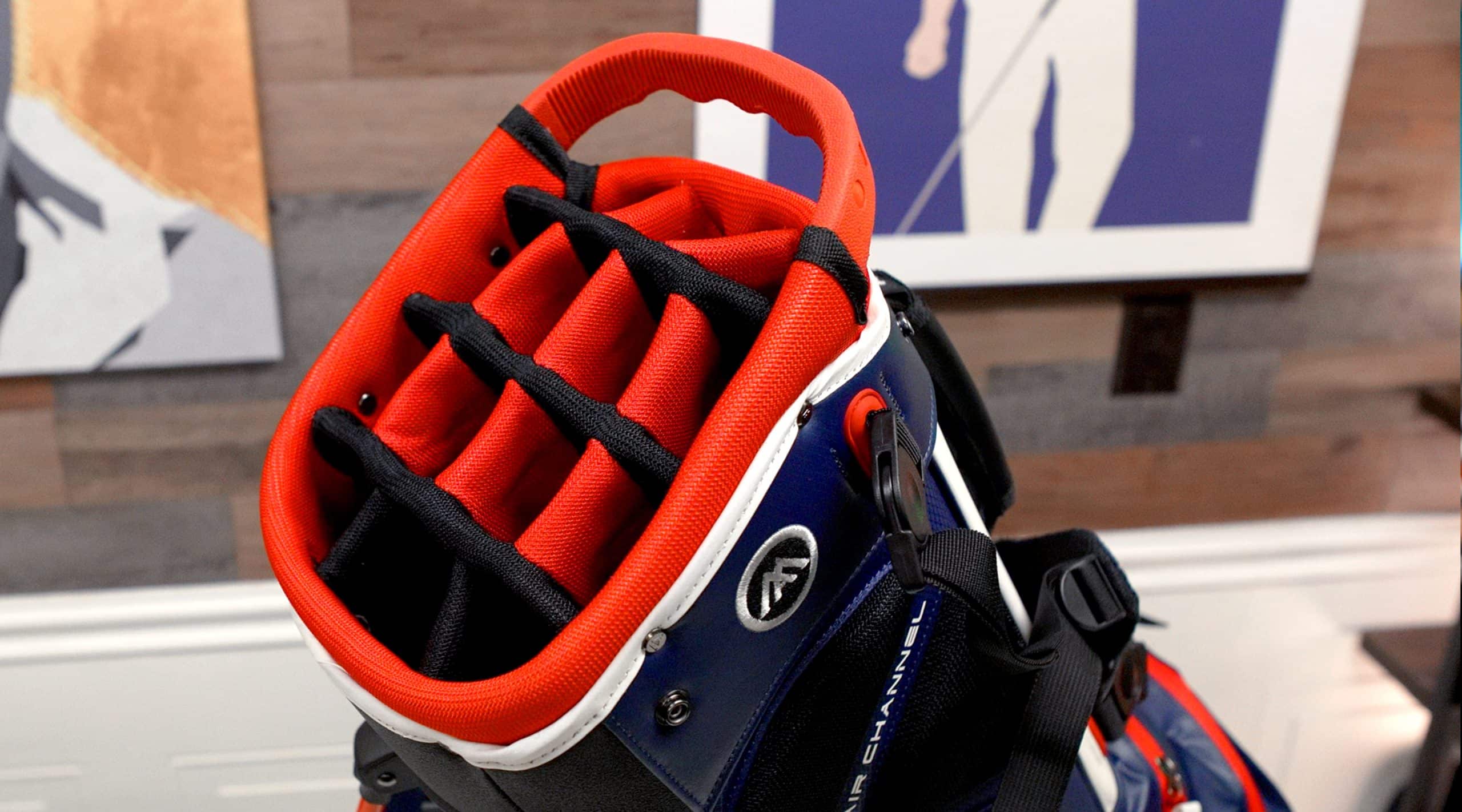
Club Organization Systems Compared
While weight matters for your endurance, the way your bag organizes clubs directly impacts every single shot you take. The important point, a 14-way top gives each club its own opening at the cuff. With a 7-way top, several clubs share each opening. How much they tangle comes down to the bag’s design and how you load it, not just the count.
Think about it: when you’re standing over a significant approach shot, you don’t want to waste time untangling your 8-iron from your 9-iron! Beyond the hassle, this club clatter can actually damage your equipment over time, wearing down grips and scratching club heads. Premium bags address this with microfiber-wrapped dividers that prevent scuff marks and reduce noise when clubs move during transport. The 14-way system lets you arrange clubs however you want, by distance, shot type, or whatever makes sense to your brain. You can even group your scoring clubs separately from your tee shots. Sure, 7-way bags work fine, but they limit your options. Plus, maintaining a temperature-controlled environment for your clubs starts with proper separation in your bag, preventing moisture buildup between tightly packed clubs that can lead to rust and deterioration.
Protection Levels for Your Equipment
Beyond organizing your clubs, you’ll want to protect your investment, and that’s where the divider count really shows its value. A 14-way top keeps each club in its own opening at the cuff. How well it keeps clubs apart lower down depends on whether the dividers run the full length of the bag, so check that before you count on it. Meanwhile, 7-way bags group clubs together, which means more contact and potential scratches.
Here’s the thing: a 14-way top doesn’t always mean full-length dividers that run down the bag, so check the exact model. The full-length dividers can actually extend your golf bag’s overall lifespan by maintaining its structural integrity. Premium bags like the Vessel Lux Pro feature reinforced dividers at the top to ensure durability against wear from repeated club insertion and removal. If you’ve spent good money on premium clubs, you’ll appreciate how individual slots protect against dings and dents. Even moisture becomes less of an issue; separated clubs don’t trap water between them as grouped ones do. Your putter especially benefits from its own dedicated slot in a 14-way system!
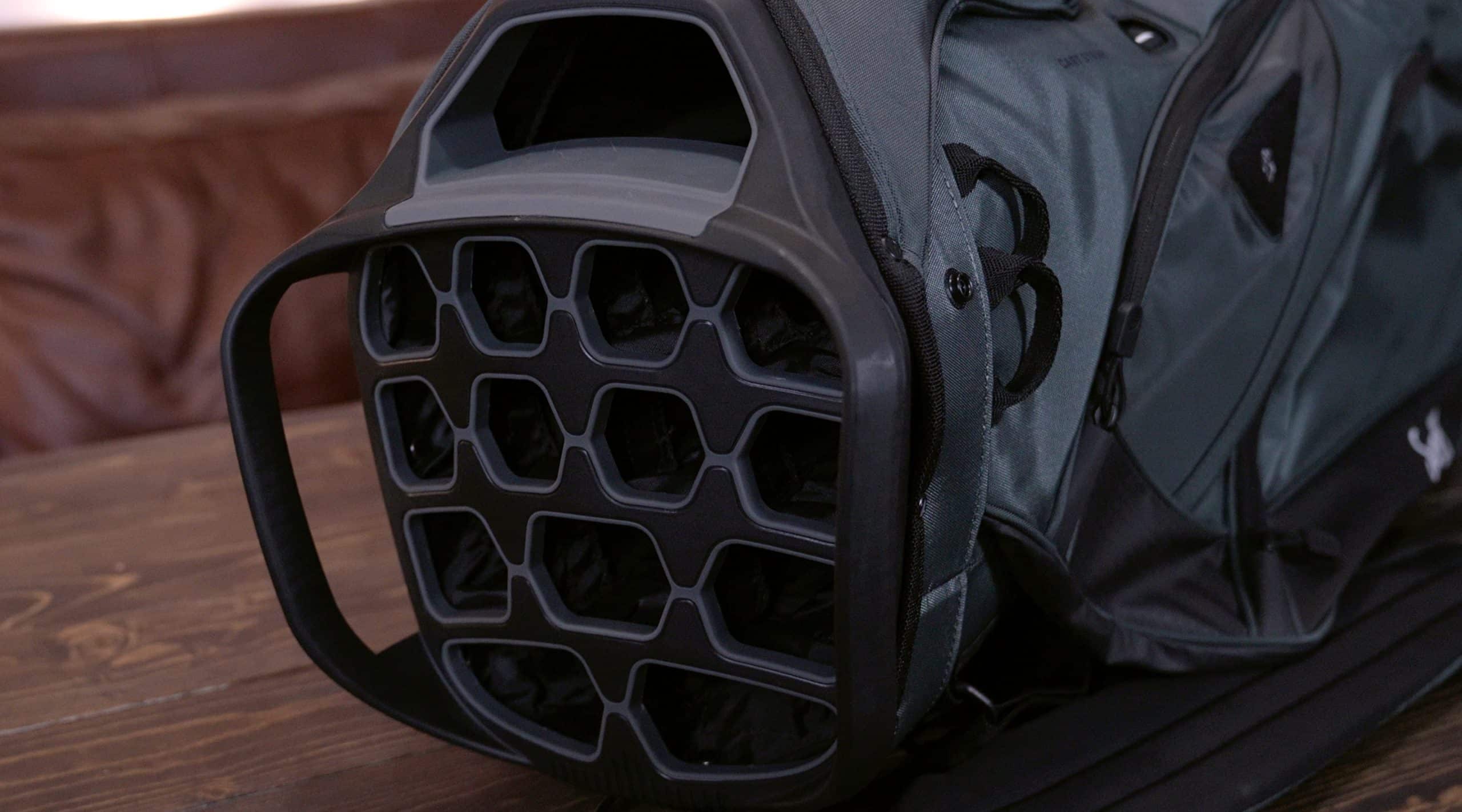
Walking vs. Cart Play Considerations
If you’re deciding between a 7-way and 14-way bag, how you play makes all the difference. Walking golfers want a light bag since every pound counts over 18 holes. Just don’t assume the 7-way is the lighter one. The divider count doesn’t set the weight, so check the listed weight on each bag. The club noise from clubs rattling in fewer dividers is also less noticeable when walking compared to riding.
Cart players, though, can enjoy the luxury of 14-way dividers. You’re not carrying anything, so why not enhance organization? Each club gets its own protected slot, and you’ll spot missing clubs instantly. Plus, the individual openings keep clubs apart at the top, and if the dividers run full length, they stay apart lower down too. Some 14-way bags feature an internal base divider that prevents club jams at the bottom, solving a common frustration for cart players.
Here’s the thing: if you mix both styles, consider a hybrid bag. Yes, they’re slightly heavier than traditional walking bags, but you’ll get versatility. The key is matching your bag to your most common playing style; there’s no point hauling a heavy cart bag if you walk most rounds.
Price Points and Value Analysis
When you’re ready to buy a new golf bag, the price difference between 7-way and 14-way models might surprise you. Both styles hover around similar price points, with budget-friendly 14-way options like the Maxfli Honors costing under $200. The important point is, you’ll find premium 14-way bags commanding higher prices, but they’re protecting your investment! Just check whether a 14-way bag also has full-length dividers, since the top count doesn’t promise them.
You’re looking at spending anywhere from $129.99 for basic models to nearly $500 for luxury options like the Ghost GT 14 Maverick. Premium bags like the Vessel Lux use full-length, fully enclosed dividers, priced between $400 and $450. The sweet spot? Mid-range bags around $250, like Sun Mountain’s Ultra-Lightweight Stand Bag, give you 14-way organization without breaking the bank. Top-rated options like the Titleist Hybrid 14 Stay Dry combine lightweight construction at just 2.5 kg with full waterproofing and trolley compatibility. The Ask Echo 2025 ST-14 Way Stand Bag exemplifies this value proposition at a sale price of $229.99, offering full-length dividers with premium features typically found in higher-priced models.

What Professional Golfers Actually Use
Tour professionals’ bag choices might surprise you; they’re not all using the same setup you’d expect! While 14-way dividers have gained popularity among pros in 2026, there’s no unanimous standard on tour. You’ll see plenty of pros choosing 6-way bags, especially when they’re walking the course without a caddie. In fact, over 100 Tour pros currently trust Vessel bags for their performance needs on both the PGA and LPGA tours.
Here’s what really drives their decisions: playing style and course conditions matter more than following trends. Cart riders typically grab 14-way bags for maximum club protection, while walking players often prefer lighter 6-way options. The pros arrange their clubs strategically too; they’ll group wedges together for quick access, position their putter perfectly, and organize based on how often they’ll need each club during their round.
Making the Right Choice for Your Playing Style
Now that you’ve seen what the pros do, let’s figure out what’ll work best for your game. Your playing style determines everything! If you’re a walker who carries your bag, put the bag’s listed weight first; a 7-way top doesn’t make a bag lighter on its own. But the reality is: if you’re riding in a cart most rounds, grab a 14-way bag for better organization.
Think about your typical round. Do you walk 18 holes twice a week? A light bag with dual straps will save your shoulders. Only play weekends and ride? The 14-way’s extra storage compartments are perfect for your rangefinder, snacks, and rain gear. Some players switch between walking and riding; that’s where hybrid bags shine with moderate dividers and decent portability. Remember that your bag weight should stay under 20% of your body weight to prevent fatigue and maintain comfort throughout your round. Hybrid golf bag features and benefits include customizable storage options that cater to both seasoned golfers and beginners alike. Additionally, many models come equipped with water-resistant materials, ensuring your gear stays dry regardless of the weather. Investing in a hybrid bag can greatly enhance your overall golfing experience by combining convenience with functionality.
Frequently Asked Questions
Can I Convert a 14-Way Bag to 7-Way by Removing Dividers?
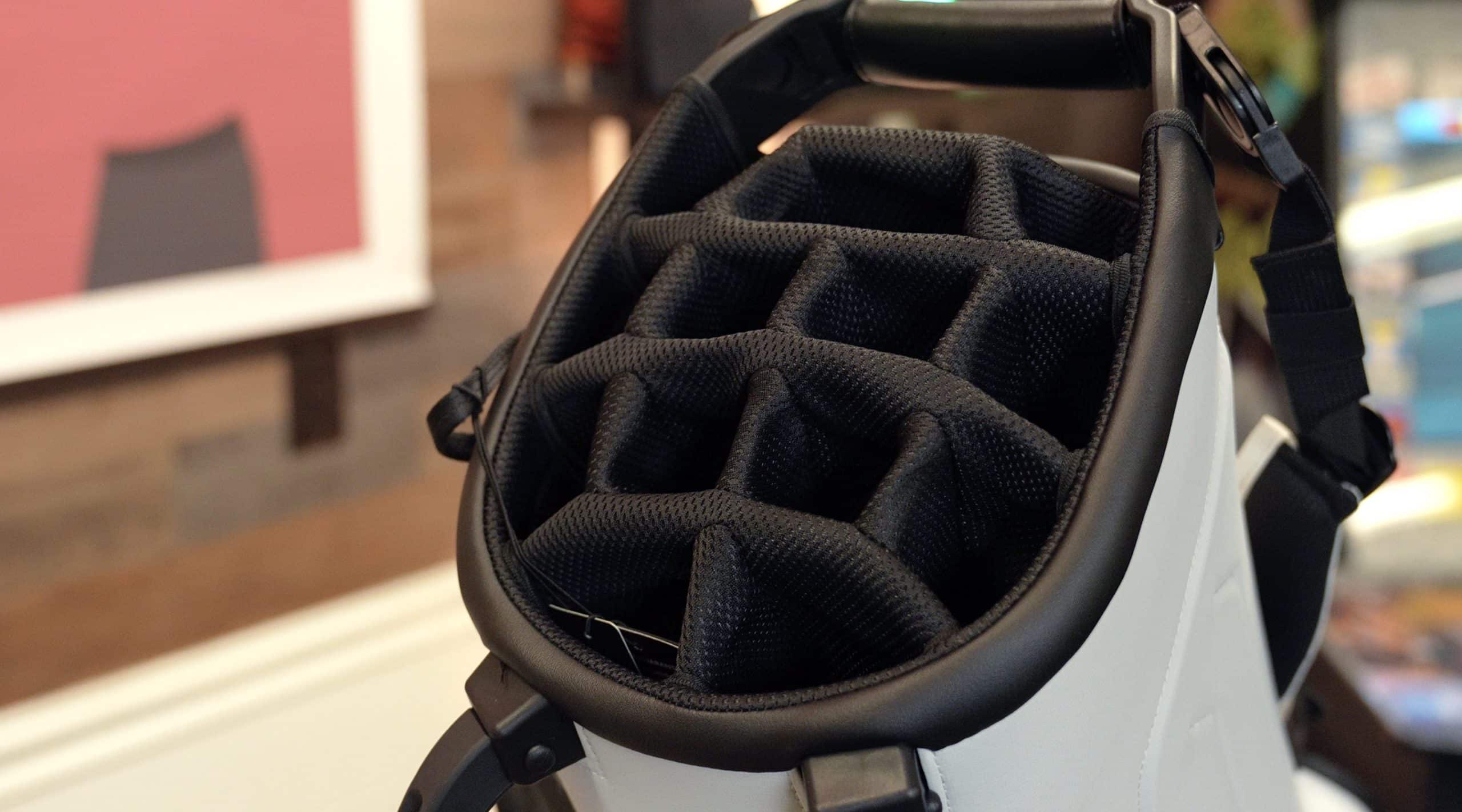
Don’t count on it. Vessel, for one, sells its Player V Pro with either a 7-way or a 14-way top that you pick when you buy, and it doesn’t list removable dividers. Check the exact bag before you try to change anything. If you want fewer openings, buy the 7-way, or just leave a few slots empty in your 14-way.
Do 7-Way or 14-Way Bags Fit Better in Golf Cart Holders?
The divider count won’t tell you. Top opening size isn’t set by whether a bag is a 7-way or a 14-way, so check the bag’s listed top size against your cart’s holder before you buy.
Which Bag Type Is Easier to Clean and Maintain Regularly?
It comes down to the layout. While 14-way bags keep clubs separated nicely, you’re looking at 14 individual slots versus just 7 larger sections. Either way, a quick wipe-down after each round keeps both in good shape.
Are There Hybrid Bags Combining Both 7-Way and 14-Way Sections?
Not in one top, but some bags let you choose. The Vessel Player V Pro comes with your choice of a 7-way or a 14-way top, both with full-length dividers, so you pick the layout when you buy it. It weighs 7.55 pounds as a 7-way and 7.75 pounds as a 14-way, which isn’t too heavy. The point is: they’re perfect if you sometimes walk and sometimes ride. Major brands like Mizuno and Bag Boy now make these versatile options.
Do Airlines Charge Differently for 7-Way Versus 14-Way Travel Bags?
No, airlines don’t charge differently based on whether you’ve got a 7-way or 14-way travel bag. They’ll hit you with the same $25-45 fee regardless of your bag’s dividers. Here’s what matters: your bag’s weight and size! Airlines care if you’re under 50 pounds and within dimension limits. Southwest lets you fly two bags free, while American charges $35 online. Your divider count won’t affect the price at all.
Conclusion For 7-Way vs 14-Way Golf Bag
Your perfect golf bag comes down to how you actually play. If you’re walking most rounds and want a simple setup, a 7-way works; just check the listed weight, since the divider count doesn’t decide it. But if you’re riding in carts and want maximum protection for your investment, the 14-way makes more sense. The reality is: there’s no wrong choice! Just match the bag to your style, and you’ll be set. Your shoulders (and clubs) will thank you later.

About the author
Paul Liberatore
Paul Liberatore is the founder of Golfers Authority and a former three-year golf gear contributor to Sports Illustrated. He runs the Golfers Authority YouTube channel and the Behind the Golf Brand podcast, and he reviews golf equipment to help golfers make better buying decisions.