Women’s vs. Men’s Golf Clubs: The Real Differences
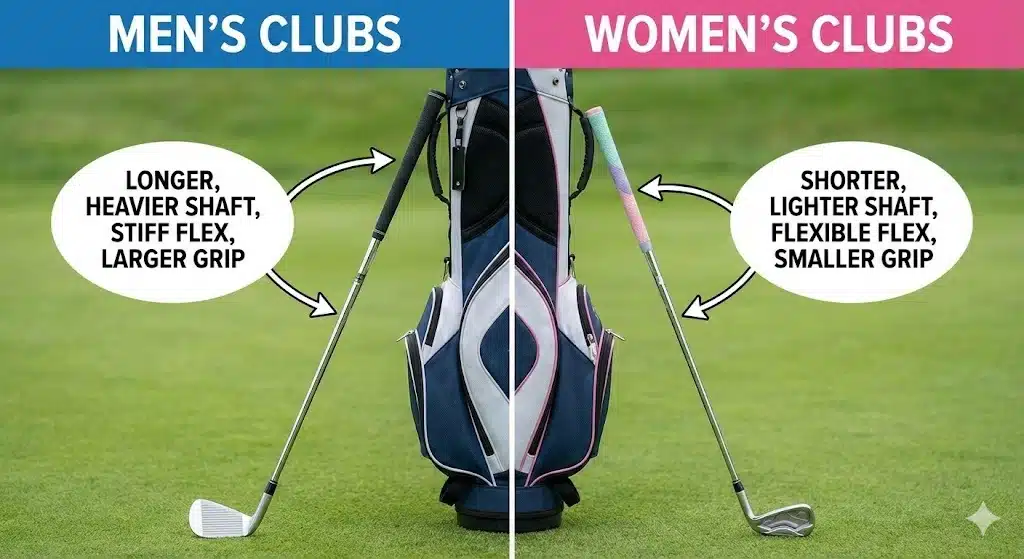
The biggest differences between women’s and men’s golf clubs come down to five key specs: women’s clubs are about an inch shorter, 10-50 grams…
Golfers Authority
The biggest differences between women’s and men’s golf clubs come down to five key specs: women’s clubs are about an inch shorter, 10-50 grams…
Don’t just toss your old clubs in the garage; you’ve got options that range from cold hard cash to a nice tax write-off. Start…
Offset golf clubs feature a clubface positioned slightly behind the hosel’s leading edge, giving your hands extra milliseconds to square the face before impact.…
Modern golf clubs are made from titanium or stainless steel for club heads, graphite or steel for shafts, and rubber or synthetic compounds for…
Here’s the straight answer: if your driver swing speed falls between 85-95 mph, you need regular flex; speeds of 95-105 mph call for stiff…
Hybrid and rescue clubs are the exact same thing; TaylorMade simply trademarked “rescue” in 2003 as a marketing term, and the confusion has plagued…
Don’t let the marketing fool you; Titleist Pro V1 and Callaway Chrome Soft perform nearly similarly despite their different constructions. You’ll see ball speeds…
The real difference between graphite and steel shafts comes down to your swing speed and physical needs, not marketing claims. If you’re swinging under…
To determine your ideal golf shaft flex, forget the manufacturer’s letter labels—they’re inconsistent across brands. Instead, focus on your swing speed: over 105 mph…
There’s no single “pro putter” you can buy to fix your stroke; tour players use everything from Scotty Cameron blades to TaylorMade Spider mallets…
Milled putters give you that firm, precise feedback that tells you exactly where you made contact, while insert putters offer a softer feel that…
The blade vs. mallet debate isn’t about which putter is superior; it’s about matching engineering to your stroke. If you’ve got an arcing stroke,…