
There are more putter grips out there than anyone can keep track of. Thick ones, thin ones, tapered, non-tapered, counterbalanced, you name it. So when SuperStroke announced the TLT (True Lie Technology) grip as part of their Zenergy line, I was genuinely intrigued. This wasn’t just another grip shape or texture tweak. This was SuperStroke essentially rethinking the relationship between your hands, the shaft, and the putter face at impact. The premise? An off-axis core that angles the shaft inside the grip to promote a natural forward-leaning hand position, the kind of position putting instructors have been begging us to adopt for years.
I’ll be honest: I was skeptical. The idea of a grip doing something fundamentally different with the shaft angle sounded like marketing speak. But after looking closely at how the TLT is built to work with a zero-torque putter head that was specifically designed for it, I have some strong opinions. Let’s get into it.
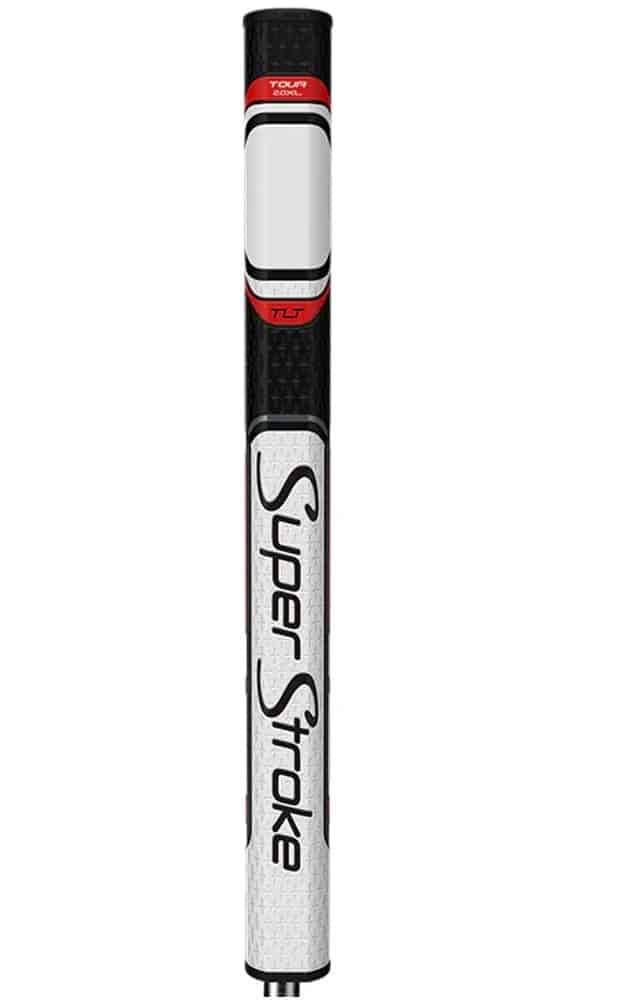
Master your stroke with the SuperStroke TLT Off-Axis Putter Grip. Its unique off-axis shape promotes proper hand alignment and reduces wrist tension for ultimate control and on-course consistency.
Quick Overview
- The off-axis core angles the shaft to promote natural forward shaft lean at address without feeling forced or gimmicky.
- Multi-Zone Texturing and soft polyurethane outer layer deliver a balanced combination of tactile feedback, comfort, and responsiveness.
- The grip is designed specifically for zero-torque, face-balanced putters and offers limited benefit for toe-hang models.
- Three size options (Pistol 1.0, Pistol 2.0, and Tour 2.0XL) accommodate different hand sizes, grip styles, and weight preferences.
- It lacks Tech-Port and CounterCore compatibility, making it unsuitable for players dependent on SuperStroke’s modular weight system.
Out of the Package, This Grip Means Business
The first thing you’ll notice is the colorway. There’s a White/Red option, and it looks sharp. It’s clean, modern, and distinctly SuperStroke without being loud. There’s also a White/Silver version if you prefer something a bit more understated. Either way, these grips photograph well and look premium when installed on a putter. That might sound superficial, but let’s not pretend we don’t care about aesthetics. Confidence on the greens starts with liking what you see when you look down.
But beyond the visuals, the detail that matters is the embossed ridge running along the top of the grip. That’s SuperStroke’s enhanced SPYNE Technology, and it’s meant to be felt the moment you wrap your hands around the grip. It’s designed to be subtle enough to guide your hand placement without screaming at you. The ridge is there to tell your hands exactly where to sit. This thing has a point of view about how you should be gripping your putter, and honestly, I like that.
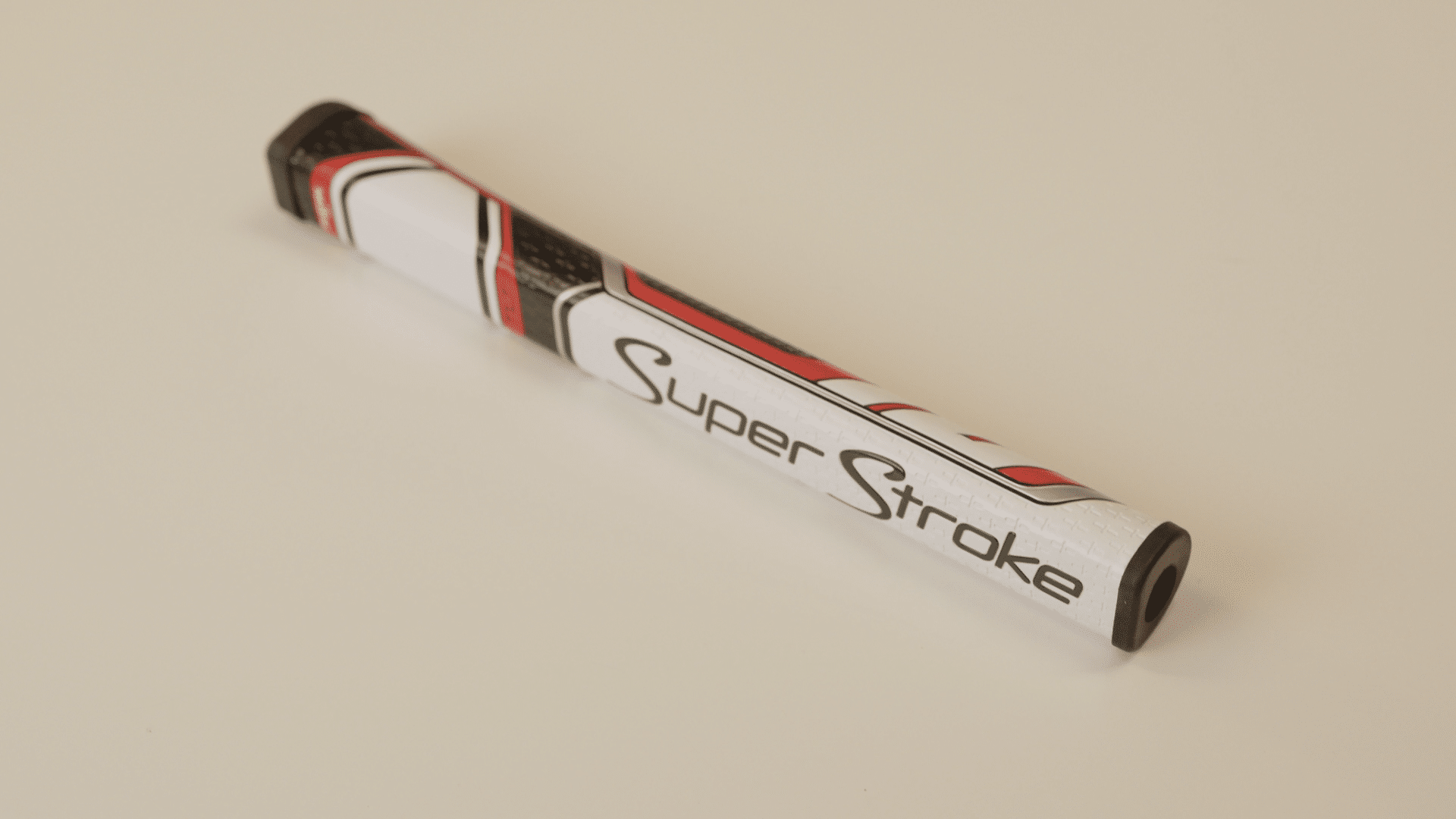
The SuperStroke TLT Off-Axis Putter Grip Review – Core Changes Everything About Your Setup
This is the headline feature, and it’s the one that made me most skeptical going in. SuperStroke’s TLT design uses an off-axis core, meaning the shaft doesn’t run straight through the center of the grip the way you’re used to. Instead, the shaft is angled inside the grip to naturally create a forward-leaning hand position at address. In other words, the grip is doing the work that you’ve been trying to force your hands and wrists to do for years.
Let me put this in practical terms. If you’ve ever taken a putting lesson, your instructor probably told you to get your hands slightly ahead of the ball at address. Forward press. Shaft lean. Whatever terminology they used, the goal was the same: reduce wrist breakdown through the stroke and promote a more consistent, pendulum-like motion. The problem is, most of us set out with good intentions and then slowly drift back to old habits, especially under pressure. The TLT grip essentially bakes that forward lean into the equipment itself.
Once it’s installed, the idea is that your hands fall into a forward-press position at address without you thinking about it. And here’s the key, it’s not supposed to feel forced or awkward. It should feel like where your hands were supposed to be all along. Training aids that try to manipulate your grip position tend to feel gimmicky after a few minutes. The TLT is designed to avoid that. The internal geometry of the grip aligns the shaft in a way that your hands just follow, maintaining a neutral position while still achieving that coveted forward lean.
Now, one important caveat: this grip is designed to complement zero-torque putters, those lie-angle-balanced models that are becoming increasingly popular. If you’re using a traditional toe-hang putter, the TLT might not deliver the full benefit of its design. SuperStroke is clearly targeting a specific and growing segment of the putting market here, and they’re not shy about it. If you’re already in the zero-torque camp (or considering it), this grip was built for you. If you’re not sure what kind of putter balance you have, it’s worth checking before you invest.
Paired with a zero-torque putter, the combination makes a lot of sense. The grip’s off-axis core and the putter’s zero-torque design are meant to work together to cut down on the hand and wrist compensations you might not even realize you’re making. The core geometry is specifically intended to allow putters to set up and perform as the manufacturer designed them.
Multi-Zone Texturing Delivers Real Feedback Where It Matters
I’ve always believed that a putter grip’s texture is one of its most underrated qualities. You can have the perfect shape, perfect size, and perfect weight, but if the surface doesn’t communicate with your hands, you’re missing half the equation. SuperStroke clearly agrees, because the TLT features what they call Multi-Zone Texturing, different surface patterns strategically placed in the areas where your hands are most sensitive.
In practice, this means the grip feels different depending on where your fingers and palms make contact. The high-sensory zones, primarily where your thumbs and the pads of your hands rest, have a slightly more pronounced texture that provides tactile feedback without being abrasive. The areas where you need comfort and stability have a smoother, softer feel. It’s a thoughtful approach that puts texture where your hands need it most.
The outer layer is made from a soft polyurethane material built for comfort. If you tend to grip the putter too tightly, the combination of the polyurethane surface and the textured zones is designed to help you relax your grip pressure. When your hands feel secure and informed, they naturally ease up. It’s not magic, it’s just smart material science. Compared to firmer grips, the TLT aims for a nice balance between softness and responsiveness. You’re not squeezing a marshmallow, but you’re also not holding a piece of rigid rubber. It sits right in that sweet spot where you can feel the putter head throughout the stroke without your hands going numb.

No Taper Technology Keeps Grip Pressure Honest
If you’ve used SuperStroke grips before, you’re probably familiar with their No Taper design philosophy, and it’s present here in the TLT. For the uninitiated, most traditional putter grips taper, they’re thicker at the top and thinner toward the bottom. The problem with that design is it naturally causes your dominant hand (the lower hand on the grip) to squeeze harder, creating uneven grip pressure. Uneven pressure leads to manipulation. Manipulation leads to inconsistency. Inconsistency leads to three-putts. (And three-putts lead to suffering, as a certain Jedi master might say.)
The TLT maintains a consistent profile from top to bottom, which encourages both hands to apply equal pressure throughout the stroke. This is one of those features that’s hard to quantify on a practice green but reveals itself over 18 holes. By the back nine, when fatigue starts creeping in and your focus drifts, a grip that’s already managing your pressure for you is worth its weight in gold.
Where this should matter most is on longer putts, the 20- to 30-footers where distance control is everything. Even grip pressure helps keep your backstroke length consistent and keeps your follow-through from decelerating the way it can when you clench the grip with your trail hand. It’s a subtle thing, but putting is a game of subtle things. The players who manage the small details are the ones who make more four-footers when it counts.
Combined with the TLT’s off-axis forward lean, the No Taper design creates a grip that’s essentially doing two jobs at once: positioning your hands correctly and keeping them relaxed while it does it. That’s a powerful combination, and it’s one of the main reasons I think this grip stands apart from others in the Zenergy lineup. It’s worth noting that the TLT was developed in response to demand from everyday golfers and tour professionals alike, which speaks to how universally relevant proper grip pressure and hand positioning really are.
Three Sizes Give You Options, But Choose Wisely
SuperStroke offers the TLT in three sizes: Pistol 1.0, Pistol 2.0, and Tour 2.0XL. All three share the same 0.58-inch core size, and all three are available in both right- and left-handed versions. But the differences between them are meaningful, and choosing the right one matters more than you might think.
The Pistol 1.0 measures 1.14 inches wide and 10.60 inches long, weighing in at 88 grams. It’s the heaviest of the three, and it has a slimmer profile that will feel familiar to anyone who prefers a more traditional pistol-style grip. If you like to feel the putter head and want maximum feedback, this is probably your best bet. The added weight in the grip also shifts the balance point slightly, which can help players who want a heavier feel in their hands.
The Pistol 2.0 bumps the width up to 1.32 inches while keeping the same 10.60-inch length, but drops the weight significantly to just 56 grams. This is the one I’d point most players toward. The wider profile is meant to quiet the hands, not as dramatically as an oversized grip, but enough to reduce any tendency toward manipulation. At 56 grams, it also lets the putter head do more of the work, which pairs beautifully with the forward-lean design.
The Tour 2.0XL is the longest option at 13.75 inches, with a 1.14-inch width and 67-gram weight. This is designed for players who use a longer grip zone or who prefer to anchor their putting stroke with a bit more grip length. It’s a niche option, but for the right player, it could be a breakthrough. It could suit a claw grip especially well, since the extra length gives your lead hand more real estate to work with.
One thing to note: the TLT is part of the Zenergy line, which means it does not feature Tech-Port or CounterCore compatibility. If you’re currently using a CounterCore weight system in your existing SuperStroke grip, switching to the TLT means giving that up. For me, that wouldn’t be a dealbreaker, because the benefits of the TLT’s design tip the scales, but it’s something to keep in mind before you commit.
Master your stroke with the SuperStroke TLT Off-Axis Putter Grip. Its unique off-axis shape promotes proper hand alignment and reduces wrist tension for ultimate control and on-course consistency.
- Improved Shoulder Alignment
- Reduced Wrist Action
- Enhanced Feedback and Feel
- Steep Learning Curve
- Specific to One Style
- Installation Difficulty
Frequently Asked Questions
Does the Superstroke TLT Off-Axis Grip Come With a Manufacturer Warranty?
SuperStroke doesn’t explicitly state a manufacturer warranty for the TLT Off-Axis Putter Grip on its official product pages. You won’t find details about defect coverage duration or repair and replacement terms anywhere on the site. Their returns policy lets you return defective grips, but only if they’re unused, within 30 days, and in original packaging. If you’re concerned about long-term coverage, you should contact SuperStroke directly for clarification.
Can You Use This Grip in Official PGA Tour Tournament Play?
Based on available information, you’ll likely be able to use the SuperStroke TLT Off-Axis grip in official PGA Tour tournament play. SuperStroke grips rank No. 1 on Tour, and TLT grips have already been spotted in Tour use. The grip doesn’t feature any non-conforming indicators like adjustable weights. However, since the specs don’t explicitly mention USGA or PGA Tour conformance, you should verify approval before competing.
What Colors Are Available for the Superstroke TLT Off-Axis Grip?
You’ll find the SuperStroke TLT Off-Axis grip in two primary color combinations: Red/White and White/Silver. If you’re looking at the Pistol 2.0, you can also grab a White/Red/Black variant. These colors are available across all three sizes, and you’ll find both left-hand and right-hand versions in each option. Pricing stays the same regardless of which color you choose.
How Long Does the Superstroke TLT Off-Axis Grip Typically Last?
While there’s no specific lifespan stated, you can expect solid durability thanks to the polyurethane outer layer, which provides a soft feel and longevity under repeated use. The Multi-Zone Texturing resists rapid wear, and the embossed SPYNE ridge holds up against deformation. You’ll extend its life by following proper installation with epoxy and maintaining your shaft’s surface to prevent slippage over time.
Is the Superstroke TLT Off-Axis Grip Legal Under USGA Rules?
Yes, the SuperStroke TLT off-axis grip appears legal under USGA rules for putters. Its lengths (10.60–13.75 inches) exceed the 10-inch minimum required for non-circular grips where the grip and shaft axes don’t coincide. USGA Rule 3.b(4) prohibits off-axis grips on irons and woods but allows exceptions for putters. However, you shouldn’t treat this as a final ruling. You’ll want to check USGA’s equipment database for official conformity confirmation.
Final Thoughts: A Grip That Actually Does What It Promises
So, is the SuperStroke TLT for everyone? No. If you’re putting with a blade that has significant toe hang and you love an arcing stroke, this grip wasn’t designed with you in mind. And if you’re deeply committed to the CounterCore system, you’ll have to make a choice.
But if you’re part of the growing number of golfers using zero-torque putters, or if you’ve been told a hundred times to get your hands forward at address and just can’t seem to make it stick, the TLT might be the most meaningful equipment change you make this year. It’s not a training aid. It’s not a gimmick. It’s a thoughtfully engineered grip that uses internal geometry to solve a real problem that plagues recreational golfers everywhere. At a price point that’s in line with other premium SuperStroke offerings, it’s a low-risk investment with genuinely high upside. I didn’t expect a putter grip design to make me rethink setup, but on paper this one does. If you putt with a zero-torque putter, the SuperStroke TLT deserves a spot on your shortlist.
I also cover the P2 React Tour and P2 Vibe Max if you want to compare putter grips.

About the author
Paul Liberatore
Paul Liberatore is the founder of Golfers Authority and a former three-year golf gear contributor to Sports Illustrated. He runs the Golfers Authority YouTube channel and the Behind the Golf Brand podcast, and he reviews golf equipment to help golfers make better buying decisions.