
SpeedTrac takes the three or four weighted sticks you normally get with a speed-training system and puts the whole thing into one club. You get four different loads, three weight positions, and 12 total setups for $179.
That alone makes it interesting. But the biggest difference is the head. This doesn’t look like a shaft with a ball screwed onto the end. It looks and sets up more like a golf club, so you can actually see a face when you swing it.
Is SpeedTrac worth buying?
Yes. If you want to work on speed and don’t want several weighted clubs rolling around in your garage, SpeedTrac gives you a simple way to do it. You get light, driver-like, and heavy training in one 43-inch club, plus an included 10-swing program that tells you what to do with it.
It doesn’t measure your swing speed and you can’t hit balls with it. So this isn’t an all-in-one practice club. It’s a dedicated speed trainer, and for the golfer who will actually follow the program, I think the design makes a ton of sense.
Quick Overview
- SpeedTrac costs $179, with $249 shown as the comparison price.
- Four head-load setups run from 160 grams to 255 grams.
- Each load can sit in the heel, center, or toe for 12 total configurations.
- The trainer is 43 inches long and uses a molded training grip.
- The included program calls for 10 swings per session, and Performance Golf advertises a 365-day guarantee.

SpeedTrac Specifications
SpeedTrac is a 43-inch, swing-only speed trainer with four head loads and 12 total setups.
| Specification | Detail |
|---|---|
| Current price | $179 |
| Displayed comparison price | $249 |
| Length | 43 inches |
| Head-load setups | 160g, 195g, 230g, 255g |
| Weight positions | Heel, center, toe |
| Total configurations | 12 |
| Grip | Molded training grip |
| Intended use | Practice swings only |
| Included instruction | 10-Swing SpeedTrac Training System |
| Advertised guarantee | 365 days |
Those four weights describe the complete head setups, not the total weight of the entire club.
The Club-Shaped Head Is Why I Like It
Most speed trainers feel exactly like what they are. A shaft with a weight on the end. They can still do the job, but the second you put one down and grab your driver, everything looks different.
SpeedTrac gives you an actual head with a face.
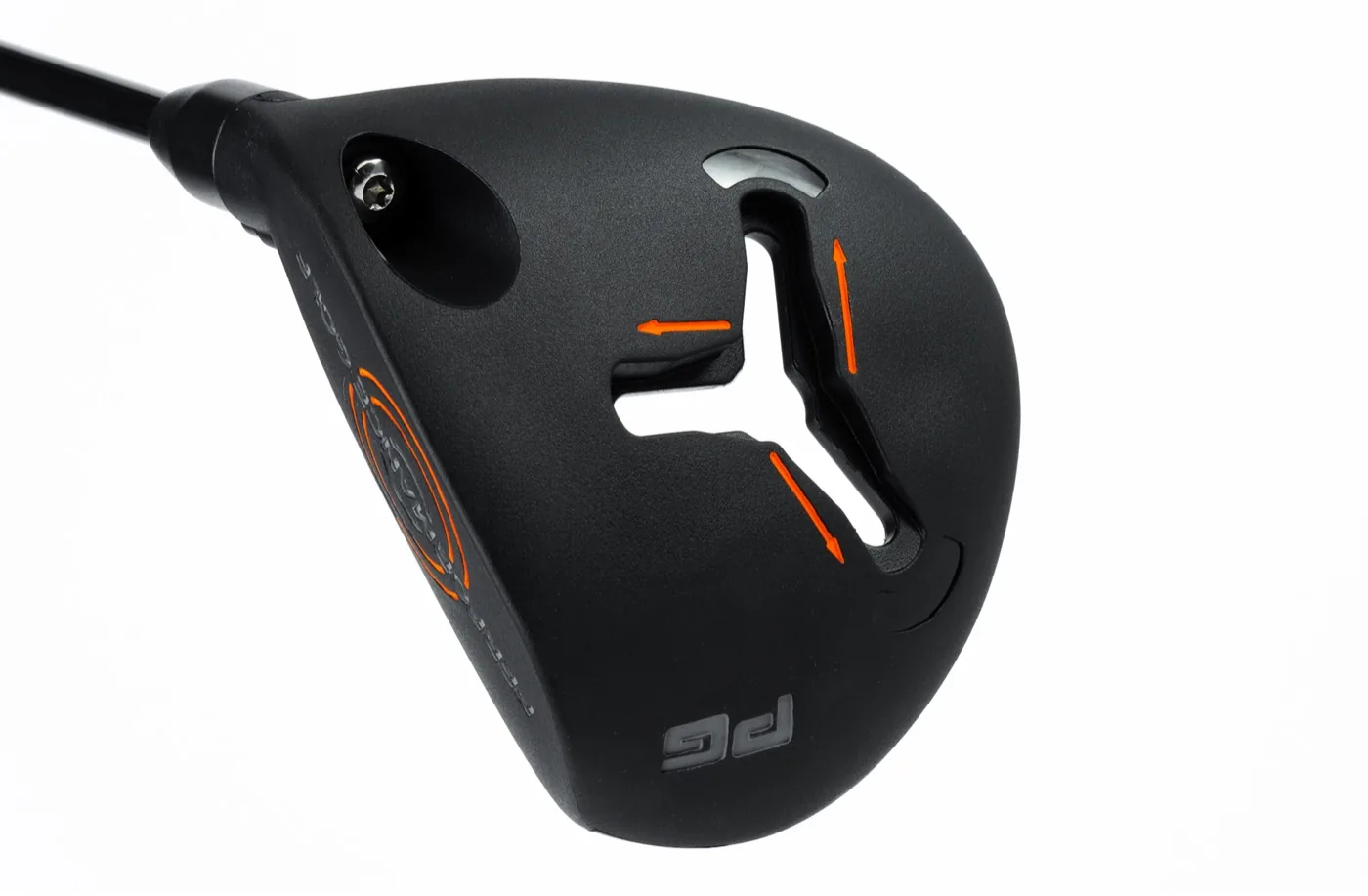
That sounds like a small change. It isn’t. You can set the club down, see where the face is pointing, and make a swing with something that looks a lot closer to the club you’re trying to move faster.
The weight also sits out in the head instead of directly on the shaft. So when you swing it, you aren’t just feeling a heavier or lighter stick. You’re feeling a clubhead moving around you.
I prefer that because if I’m going to spend time making fast swings, I’d rather look down and see a clubface than a round chunk of metal.
The molded grip helps too. Your hands go back to the same place every time, even when you change the load. So the weight changes, but the length, grip, and basic shape of the trainer don’t.
That’s the whole idea: one familiar setup with several different training loads.
Four Loads Give You a Complete Speed Progression
SpeedTrac starts at 160 grams. Then it moves to 195, 230, and 255 grams. The 195-gram setup is the driver-like option, with one lighter setting for overspeed work and two heavier settings for adding load.
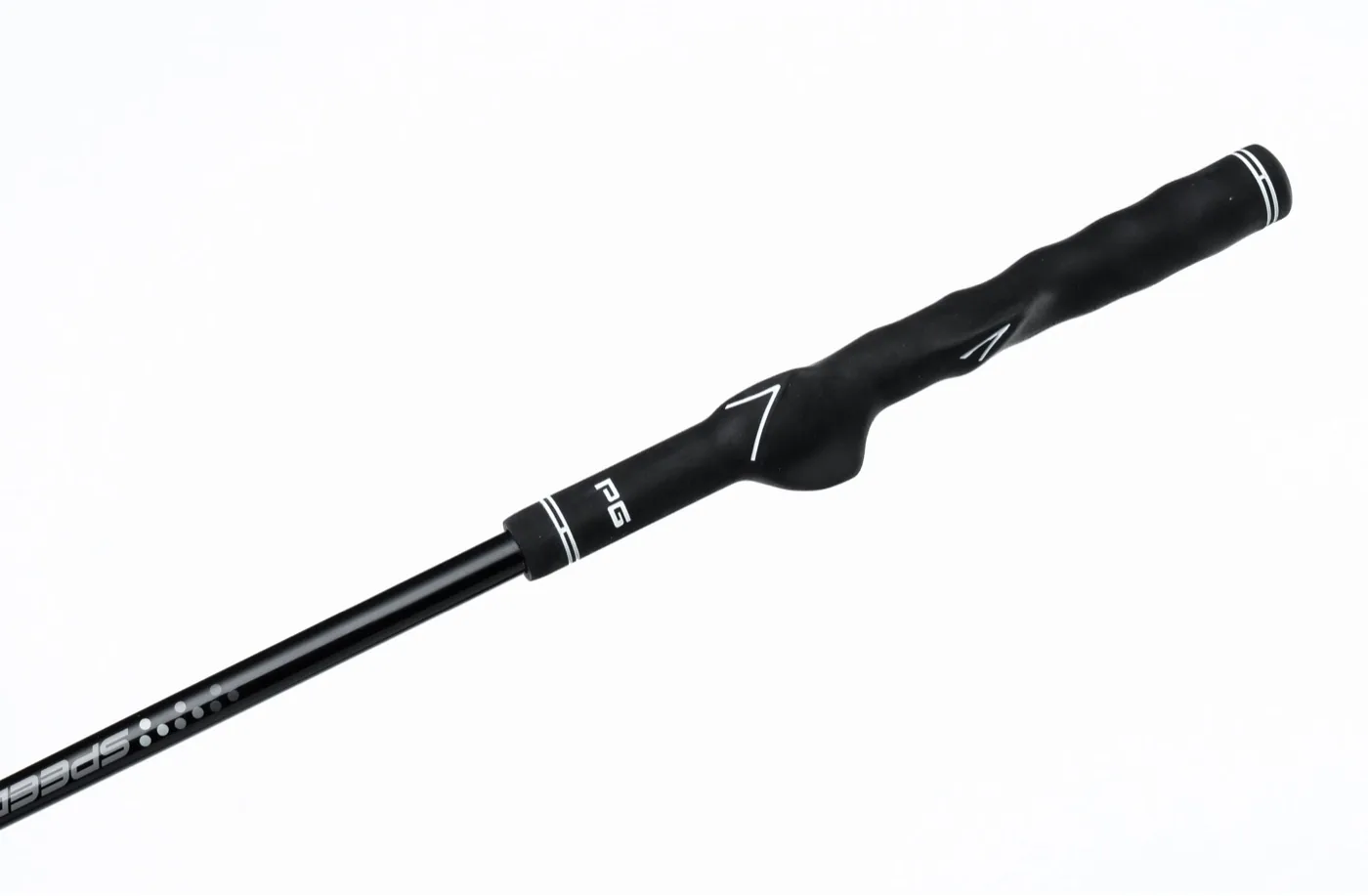
So you aren’t buying a heavy club and swinging it as hard as you can. You can move from light to normal to heavy, then back again, using the same trainer.
And don’t just grab the 255-gram setup because it feels like the hardest workout. Follow the program. The lighter setting has a job. The driver-like setting has a job. The heavier settings have a job. Making everything heavy defeats the reason SpeedTrac gives you four options in the first place.
Performance Golf lists those loads as roughly 18 percent below its reference driver weight, driver-like, then about 18 and 31 percent above it. Your driver may not match that reference exactly. That’s fine. The useful part is the progression inside the trainer.
You always know which direction you’re moving. Lighter when the session calls for speed. Heavier when it calls for load. Then back toward the club you actually play.
For $179, getting that entire progression in one club is a strong value. You don’t need three shafts, three headcovers, or another corner of the garage dedicated to training equipment.
Moving the Weight Gives You 12 Different Setups
The Y-Trac weight can sit in the heel, center, or toe. Combine those three positions with the four head loads and you get 12 configurations.

Now, I wouldn’t bounce through all 12 in the same session. That turns a simple program into a mess. Pick the setup the program gives you, make the swings, and let each change have a purpose.
But I like having the option because you can keep the load the same and move it across the head, or leave it in one position and change the load. Those are two completely different adjustments, and SpeedTrac lets you make either one without changing clubs.
The heel and toe settings are not magic swing fixes. Moving the weight doesn’t rebuild your golf swing or guarantee that your slice disappears. What it does is change where you feel the weight in the head. If you’re somebody who likes to feel what the club is doing, that’s useful.
And if you don’t care about experimenting with head feel, leave it where the program tells you. You still have four training loads in one club. The extra positions are there when you want them.
Ten Swings Makes the Program Easy to Start
The included SpeedTrac program calls for 10 swings per session. That’s probably the smartest thing about the entire package because it removes the excuse that you don’t have time.

You don’t need a bucket of balls, a drive to the range, or a 90-minute workout just to get the session done.
You do need enough room to swing a 43-inch club safely. Clear the area, warm up, and use the schedule inside the program. The sales material mentions both three days and three to four sessions per week, so the instructions in your PG1 account should control the actual routine.
Buying SpeedTrac includes access to its training system through the PG1 member area and app. It does not mean you’re buying the complete PG1 Founders membership. Those are separate products.
The short session is what makes SpeedTrac realistic for most golfers. Pull it out, set the weight, make the 10 swings, and put it away. You can do the ball-striking part of practice later with your driver.
If you’re building a home practice area for that part, our BirdieBall hitting mat review covers the surface under the ball. SpeedTrac itself never touches one.
What I Don’t Love
SpeedTrac doesn’t show you how fast you swung because there’s no radar, screen, or speed number waiting after each rep.
You can absolutely follow the program without one. But if watching your clubhead speed change is part of what keeps you motivated, you’re going to need a separate device that reads practice swings without a ball. Check that before assuming the launch monitor you already own will do it.
You also can’t hit golf balls with SpeedTrac. This is a swing trainer, not a weighted driver. When the speed session is over, put it down and grab the club you actually play.
For me, neither one kills the product. SpeedTrac is built to make the training setup simpler, and it does that. Just understand that the $179 buys the trainer and the program. It doesn’t buy the measurement device too.
Who It’s For
Buy it if:
- You want light, driver-like, and heavy training in one club.
- You prefer seeing a clubface instead of swinging a basic weighted stick.
- You want a short program that tells you which setup to use.
- You like being able to move the weight through the heel, center, and toe.
Skip it if:
- You need speed measurement built into the trainer.
- You want to hit golf balls with the same club.
- You don’t have a safe place to make a full-length swing.
Frequently Asked Questions
What comes with SpeedTrac?
You get the 43-inch SpeedTrac trainer, the components needed for its four head-load setups, a zippered weight pouch, and access to the 10-Swing SpeedTrac Training System through the PG1 member area and app. A separate speed radar is not listed as part of the package.
How do the 12 SpeedTrac configurations work?
SpeedTrac has four head-load setups and three weight positions: heel, center, and toe. Each load can be used in each position, which creates 12 configurations. Follow the included training program when choosing a setup instead of trying to use all 12 at once.
Can you hit golf balls with SpeedTrac?
No. SpeedTrac is made for practice swings only. Use it for the speed session, then switch to your driver or another regular club when you want to work on contact and ball flight.
Do you need a radar to use SpeedTrac?
No. The included program can be completed without a radar. But SpeedTrac does not measure swing speed, so you’ll need a separate radar or compatible launch monitor if you want a number after each swing.
How much does SpeedTrac cost?
The current offer is $179, with $249 shown as the comparison price. Performance Golf also advertises a 365-day money-back guarantee. Check the terms shown with your order.
Final Thoughts: SpeedTrac Review
SpeedTrac makes speed training easier to live with. You get four loads, three weight positions, and an actual club-shaped head in one 43-inch trainer. Then the included program cuts the session down to 10 swings so you’re more likely to pull the thing out and use it.
At $179, I think it’s worth buying for the golfer who wants a dedicated speed trainer without buying several weighted clubs. If you already own something that can measure a practice swing, even better. You have the training and the number covered.
If you need the trainer itself to show your speed or you want to hit balls with it, buy something else. But if you want one club, one short routine, and enough adjustment to keep the program useful, SpeedTrac gets the important part right.

About the author
Paul Liberatore
Paul Liberatore is the founder of Golfers Authority and a former four-year golf gear contributor to Sports Illustrated. He tests golf equipment hands-on to help golfers make better buying decisions.