Golf practice doesn’t have to happen at the range. Let’s talk about something every golfer needs: better practice balls. I’m going to help you separate the good ones from the junk that’s flooding the market.
Sure, practice golf balls might not sound exciting, but they’re game-changers for all of us. Whether you’re working on your swing in the garage, chipping in the backyard, or fine-tuning your short game without driving to the range, the right practice balls make a huge difference.
Most of us don’t have unlimited range access or the luxury of playing three rounds a week. What we do have is the ability to create a decent practice setup at home.
Maybe you’ve got a putting mat in the hallway, a backyard chipping area, or just a net in the garage where you can smack some 7-irons after work. Whatever your setup, using the right practice balls is crucial.
It’s not just about convenience; it’s about building real confidence. When you groove your swing and work on contact with quality practice balls, hitting the course feels natural because you’ve been practicing with purpose.
But here’s the thing: there’s a ton of garbage practice balls out there that don’t feel or perform anything like real golf balls. That’s where I can help.
I’ve put together a list of the 10 best practice golf balls for 2026. You’ll find options for indoor practice, backyard driving, short-game work, and even one that’s compatible with your golf launch monitor.
Let’s dive into the list.
BirdieBall Full-Swing Limited Flight Practice Golf Balls

12-pack for $32.99
The BirdieBall deserves the spotlight. I’ll tell you why: it’s not your average foam ball. This clever little invention actually mimics the feel, flight, and spin of a real golf ball better than anything I’ve seen. Let’s talk about that unique oval shape. Sure, it looks weird at first, but there’s some real genius behind it. When you hit a cut, it’ll tail off just like a real ball. Hook it, and it curves left. Pure it, and you’ll see this beautiful, piercing flight that makes you want to grab another one right away. What’s really cool is how it gives you true ball flight for up to 40 yards. That’s amazing feedback when you’re working with limited space, and I’ve found it invaluable for practicing full swings.
I’m really impressed by how much you can learn from your misses. You’ll feel exactly where you hit it on the clubface, toe it, and you’ll know it. Flush it, and that sweet spot feeling is unmistakable. Most practice balls can’t give you that kind of feedback, and you don’t need a huge space to see what’s happening.
The dense foam material feels surprisingly solid when you hit it. It’s not as hard as a range ball, but it’s way more realistic than those spongy practice balls you might be used to. Plus, it’s totally safe; you can blast these in your backyard or garage without worrying about breaking anything or upsetting the neighbors. They’re tough little things, too. I’ve hit them in hot and cold weather, and they don’t warp or fall apart as some other practice balls do.
If you’re looking to improve your swing at home, I’d say the BirdieBall is worth every penny. Yeah, it costs more than regular practice balls, but for realistic feel and feedback, it’s the best practice golf ball on the market.
Buy BirdieBall Full-Swing Limited Flight Practice Golf Balls? Read our honest review on durability, feel, and distance control before you purchase the best backyard golf training aid.
AlmostGolf Balls

10-pack for $24.99
AlmostGolf balls are the original pioneers of realistic-feeling foam golf balls, and they’ve stuck around for good reason. While they only travel about a third as far as regular golf balls, they feel surprisingly similar to the real thing when you hit them.
I love how these balls give you a bit of spin and make a satisfying sound when they connect with your club face. You’ll definitely know if you’ve hit it perfectly or flubbed it, which is exactly what you want in practice. They’re light enough to be safe but firm enough that you can use them with every club in your bag, making them perfect for backyard practice sessions.
While I wouldn’t say they’re quite as advanced as BirdieBalls when it comes to spin feedback and overall performance, they’re still one of the most reliable foam practice balls you can buy. If you’re looking for a trusted practice ball that won’t break windows or disappear into your neighbor’s yard, these are a solid choice.
I’ve found that even though they don’t match a real golf ball’s performance exactly, they’re close enough to help you develop proper form and confidence in your swing. They’re especially great if you’re just starting or want to practice regularly without heading to the driving range.
Want maximum reps without emptying your wallet? The bulk pack delivers the exact same off-the-face feel and true flight physics as smaller packs, but at a fraction of the cost per ball. It is the smartest investment for golfers committed to daily contact drills.
GoSports Foam Practice Balls

16-pack for $9.99
You won’t find a better value than the GoSports Foam Practice Balls. I love how they’ve got realistic dimples, feel soft in your hands, and they’re just fun to smack around the yard.
While they don’t quite match up to BirdieBall or AlmostGolf in distance or accuracy, they’re perfect for working on your tempo and contact, whether you’re in the backyard or down in the basement. I really appreciate that they come in different colors – it makes finding them in the grass so much easier. They’ve even thrown in a handy carry bag to keep everything organized.
If you’re like me and play casually, or if you’re just looking for an affordable way to keep your swing in shape between rounds, these practice balls are a fantastic budget-friendly choice.
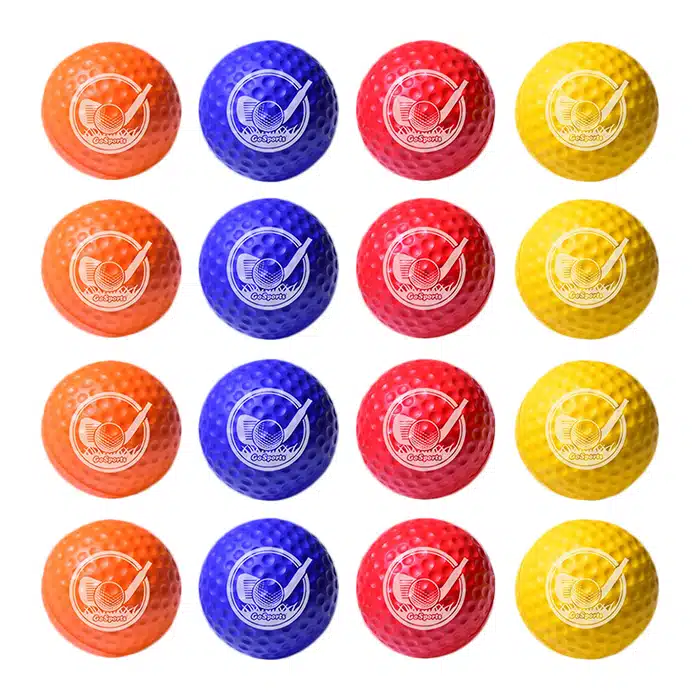
Plastic golf balls crack, crack windows, and fly weird. Discover why GoSports dense foam construction offers a superior, quiet, and ultra-realistic practice alternative.
Joyberg Practice Golf Balls

24-pack for $6.99
I’ve tried quite a few practice golf balls, and these Joyberg wiffle balls are honestly pretty solid. They’re your basic hollow plastic balls with 26 holes punched in them, measuring about 42mm across; that’s what helps them fly somewhat normally through the air.
Look, they don’t feel anything like real golf balls (and I wouldn’t expect them to), but they’re perfect when you want to practice your chipping in a small backyard or limited space. I love that they won’t smash windows or bounce halfway down the street when you miss a shot. Plus, the multicolored pack makes them super easy to spot when they’re sitting in the grass.
I should mention that they’ll get a bit banged up over time; these aren’t the most durable balls you’ll ever use. But for what you’re paying, they’re a fun and budget-friendly way to work on your short game without worrying about breaking stuff or losing expensive balls.

Wet grass can ruin standard practice balls, causing them to waterlog and heavy up. Joyberg’s closed-cell foam keeps them light, bright, and perfectly balanced in any weather condition.
SKLZ Limited-Flight Practice Balls

12-pack for $15.25
SKLZ’s Limited-Flight Impact Balls are a nice step up from your typical plastic practice balls. They’re the same size as real golf balls and have a more solid feel, but they’ll only travel about 45 yards at most.
I’ve found these balls to be surprisingly tough; they don’t dent easily and last longer than I expected. What’s really cool is how they give you better feedback than those wiffle-style balls you might be used to. There’s this neat pop-back feature where the ball squishes on impact, then snaps right back to shape, so you can really tell if you’ve hit it clean or not.
Sure, they’re a bit expensive when you’re buying a dozen, but I’d say they’re worth it if you want something more realistic than plastic balls but aren’t ready for foam ones. They hit that sweet spot right in the middle.
SKLZ Limited-Flight Practice Balls are indestructible, regulation-sized training balls designed for realistic golf practice in small spaces with durable pop-back technology.
Titleist Pro V1 RCT Golf Balls

12-pack for $69.99
You’ll love these balls if you’re using a radar-based launch monitor. The Titleist Pro V1 RCT is a game-changer, thanks to its special radar capture technology that’ll give you crazy-accurate spin and launch data when you’re hitting indoors.
I’ve gotta tell you, these aren’t just some special practice balls – they’re genuine Pro V1s through and through. They feel exactly like the regular ones and perform just as well on the course. The only difference? There’s a clever little marker buried in the core that makes them play nice with radar systems.
Look, I won’t sugarcoat it: they’re not for everyone. If you’re looking for something to smack around in your backyard, these aren’t it. But if you’re a data geek like me who’s serious about indoor training and simulator work, you won’t find anything better. Sure, they’ll put a dent in your wallet, but for the right golfer who’s all about those precise numbers, they’re worth every penny.

Keep your game sharp all winter. Our Titleist Pro V1 RCT golf ball review shows how to get flawless radar tracking during indoor studio practice sessions. Unlock true analytics.
ProActive Sports Pro Flight Practice Balls

6-pack for $5.99
These ProActive Sports Pro Flight Balls are perfect if you’ve got a tiny backyard or need something for indoor practice. They’re super light and simple, which is exactly what you want when space is tight.
I’ll be honest – they only fly about 40 feet, so you won’t get much feedback on your actual ball flight. But if you’re looking to work on your basic swing mechanics and tempo, they’ll do just fine. I like to think of them as training wheels for golfers – they help you build confidence without worrying about breaking windows!
While they’re not the most realistic practice balls I’ve used, they’re a safe bet if you’re just starting out or need something for indoor practice. You won’t feel like you’re hitting real golf balls, but that’s kind of the point when you’re working in limited space.
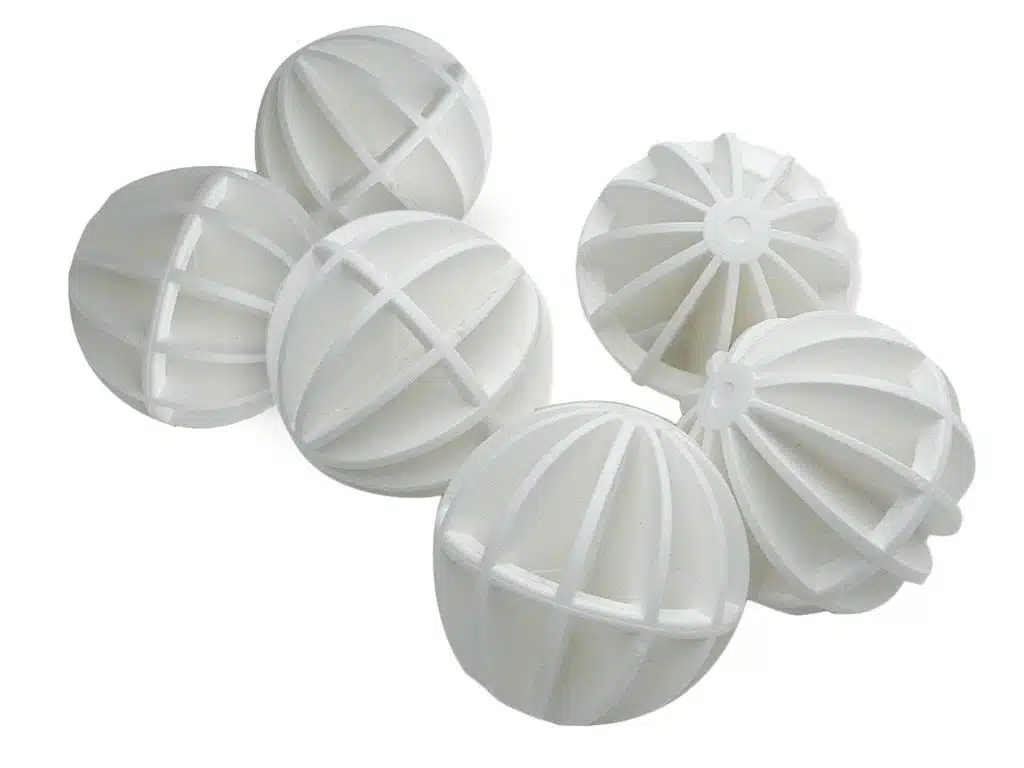
Experience realistic golf practice with ProActive Sports Pro Flight Balls, designed for true flight feel, safe for tight spaces, and perfect for swing perfection.
GoSports Golf Pure Strike Golf Training

24-pack for $9.99
Let me tell you about these clever practice discs that look like golf balls but aren’t. They’re actually flat circular discs designed to help you learn clean ball striking, and I’ve found them really helpful in my own practice.
Here’s what makes them so cool: if you can consistently clip one of these discs off the grass, you’re probably going to make great contact with real golf balls. I especially love using them with my wedges and short irons to work on controlling where my club hits the ground.
You’ll know right away if you’re doing it wrong: chunk it, and you’ll miss completely; thin it, and the disc sits there laughing at you. But when you get it right? Man, there’s nothing like seeing that disc pop up with a satisfying little skip. It’s instant feedback!
While they’re not meant to replace hitting real golf balls, I’d definitely recommend adding these to your practice routine. They’re fun to use, and they’ll help you groove that perfect contact we’re all chasing. Trust me, your golf buddies will want to try them once they see you using them.
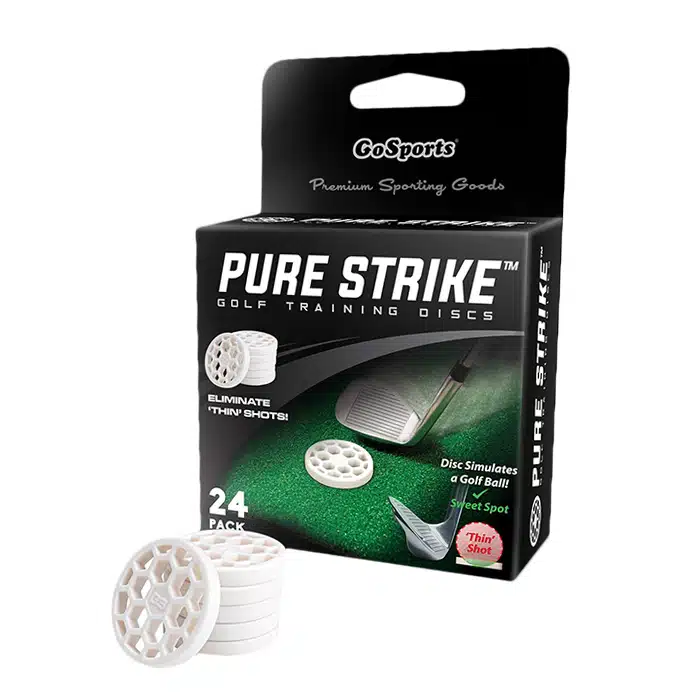
Engineered to eradicate thin and skull shots. These ball-footprint discs offer unforgiving, instant feedback on your low-point control, demanding clean ball-first contact to achieve launch.
Callaway HX Soft Flight Foam Balls

9-pack for $12.99
These foam balls are pretty awesome; they’ve got Callaway’s special HEX dimple pattern that helps them fly way straighter than your typical foam ball. I’ve found they’re the perfect balance: soft enough that you won’t break anything inside, but dense enough to hold their line when you’re practicing outdoors.
You’ll notice they don’t fly quite as far as regular golf balls, about 60-70% of the distance – which is actually perfect for backyard practice when you don’t want to launch balls into your neighbor’s yard. I love that they come with a handy carry pouch, and you can get them in all sorts of bright colors that are easy to spot.
While I’d say they’re not quite as realistic-feeling as BirdieBall, they’re definitely a step up from most practice balls I’ve tried. If you’re looking for something versatile that works both indoors and out, these are a solid choice.
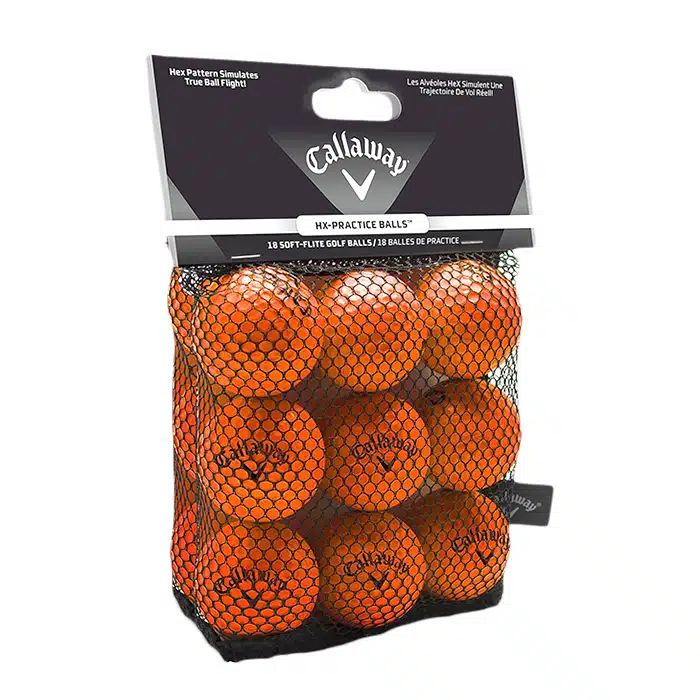
Perfect for low-stress backyard training. The durable soft-flight foam prevents property damage while providing genuine impact feedback. An excellent substitute for real balls when practicing high-velocity iron shots in restricted spaces.
The Big Ball Golf Putting Trainer

$18.98
Let me tell you about the Big Ball; it’s exactly what you’d imagine. We’re talking about a golf ball that’s 25 percent bigger and 30 grams heavier than your regular ball, and I’ve found it’s a fantastic practice tool that makes real putting feel like a breeze.
Think of it this way: if you can sink putts with this chunky ball, you’ll crush it with a normal one. I love how it forces you to really dial in your stroke and pay attention to where you’re aiming. You can’t just half-heartedly tap this thing – you’ve got to commit to every putt.
Now, I won’t promise it’ll turn you into Tiger Woods overnight, but I’ve got to say, for such a simple training aid, it works better than you might expect. It’s like training with weights on your ankles; when you switch back to normal gear, everything feels easier and more natural.
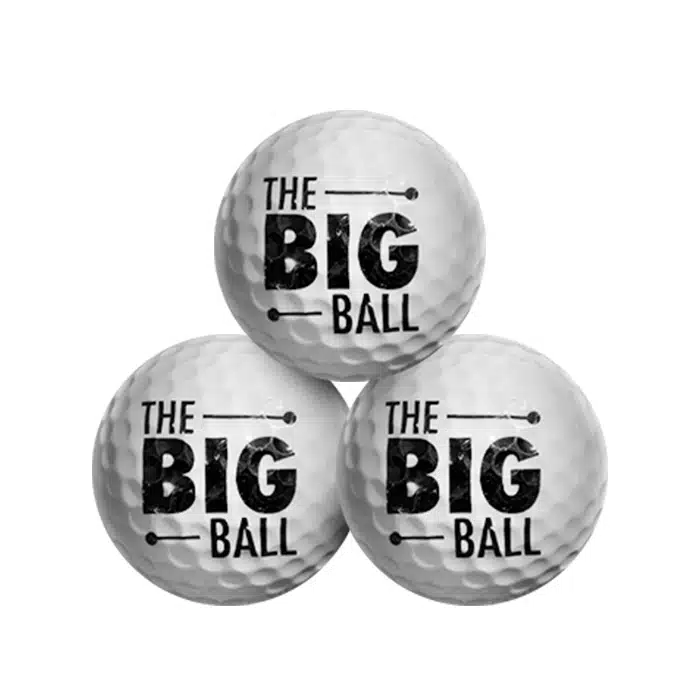
An elegant exercise in perceptual training. By expanding the ball's volume by 25%, it restricts your target margin, forcing elite kinetic focus. Reverting to regulation sizes creates a profound optical illusion: the cup appears massive.
PuttOut Devil Ball Face Angle Trainer

Next up is a training ball that brutally exposes your putter face angle errors by making short putts twice as hard as usual: the PuttOUT Devil Ball Face Angle Trainer.
This little devil of a ball looks like a normal golf ball but has a flat edge on one side that exaggerates any misalignment at impact. When you hit it with an open or closed putter face, it spins off line wildly. Hit it square, and it rolls true. It’s a simple idea, but it forces you to perfect your face angle because even a tiny mistake sends the ball off target. The set comes with two of these balls, an alignment marker, and a travel pouch so you can practice anywhere.
What’s clever is that the ball has three difficulty levels built right in. You rotate it to different positions to make it easier or harder depending on your skill. The size and weight feel just like a regular ball, so it doesn’t feel weird to strike. The alignment marker is handy for outdoor practice on breaking putts, helping you read greens better while you lock down your stroke. Over 29,000 golfers have bought it, and the reviews are solid with over 4 stars on both the brand’s site and Amazon.
While the PuttOUT Devil Ball Face Angle Trainer is a great product, there are a few drawbacks that you need to be aware of:
1. Beginners will find this too punishing to be useful until they have a reasonably consistent stroke. A 2-degree face angle error at 3 feet lips the putt out.
2. The flat-sided design only gives feedback on face angle. It tells you nothing about stroke path or whether you struck the center of the face.
3. If you already own a putting mirror with alignment gates, this tool covers the same ground.
This ball is brutally honest and addictively challenging. It’s not for the faint of heart, but if you want to sharpen your face angle discipline fast, this is one of the best tools you can get your hands on.
Instantly diagnose your putting alignment issues. Our hands-on PuttOUT Devil Ball Face Angle Trainer Review explores how the flat-face physics give you immediate visual feedback. Stop guessing why you miss and start tracking your path to mastery.
Line Lion Putting Trainer

Next up is a putting trainer that gives you instant visual feedback on both your face angle and stroke path at the same time, no setup needed: the Line Lion Putting Trainer.
This little golf ball-sized trainer is pretty clever. You just drop it on any surface, line up the three printed lines to your target, and putt like normal. If your putt is off, the ball wobbles immediately. Strike it right, and it rolls straight with a pure, end-over-end motion. It feels close to a real golf ball in size and weight, which helps keep practice realistic. What’s cool is that it works for both right- and left-handed players without any adjustments, so anyone can pick it up and start using it right away.
The Line Lion makes it easy to see if your face angle or stroke path is wrong because it shows you both at once. That’s a step up from other trainers that only show face angle errors. The instant feedback makes it feel like you’re working with a coach right there with you. Plus, it’s super portable and fits easily in your bag, so you can practice anywhere. The brand says that consistent use can cut your three-putts by almost a third, which sounds promising if you’re serious about shaving strokes.
While the Line Lion Putting Trainer is a great product, there are a few drawbacks that you need to be aware of:
1. It is the most expensive option here at $39.99, and the brand is new with only 54 reviews, so long-term durability is unknown.
2. Its 3.8-star rating on Amazon is the lowest among similar products, showing that a significant number of users were not happy.
3. Because it shows both face angle and stroke path errors at once, beginners cannot tell which one caused the wobble on a bad putt.
All in all, the Line Lion is a versatile and portable training aid that covers more ground than most single-focus tools. The price and newness make it a bit of a gamble, but if you want instant, clear feedback on your putting mechanics, it’s worth a shot.
Master green reading and stroke mechanics using the Line Lion Putting Trainer. Engineered for instant feedback, this essential golf alignment aid corrects bad habits and trains a square putter face. Perfect your game at home, office, or green!
PutterWheel Golf Ball Putting Training Aid

Next up is a putting training aid that shows every flaw in your stroke by wobbling and curving off line when your stroke isn’t pure: the PutterWheel Golf Ball Putting Training Aid.
This little tool is shaped like a tire but weighs and measures just like a real golf ball, so it feels pretty authentic when you putt with it. The magic happens because it doesn’t just roll smoothly like a normal ball. If your stroke is off in any way, whether your face angle is wrong, your stroke path is crooked, or you don’t hit the center of the face, it wobbles, curves, or even topples over. That wobble is your instant feedback showing you exactly where you’re messing up. It’s like having a coach in your hands.
One of my favorite parts is the two-line alignment template that comes with it. You use it to mark your real golf balls with the same width lines as the PutterWheel. That way, you can practice perfect alignment habits on the range and then carry them over to your actual game balls on the course. Plus, the red edges on the wheel help you position your eyes just right. If you see red while looking down, you’re either too close or too far from the ball. This thing works indoors on putting mats, carpet, or outside on the green, so you can practice anywhere. It even comes in a sleeve of three, just like real balls, and has a microfiber pouch to keep it nice.
While the PutterWheel Golf Ball Putting Training Aid is a great product, there are a few drawbacks that you need to be aware of:
1. The sound it makes when struck is loud and hollow and does not resemble a real golf ball, making it unusable in quiet or shared spaces.
2. On putts under six feet, the wobbling is so extreme it stops being useful feedback and becomes confusing noise.
3. The tire shape feels nothing like a real golf ball and takes several sessions before your stroke feels normal with it.
This is one of the most honest feedback tools I’ve seen for putting practice. If you want to expose every little flaw and have a clear way to transfer those improvements to your actual game balls, the PutterWheel is a solid pick.
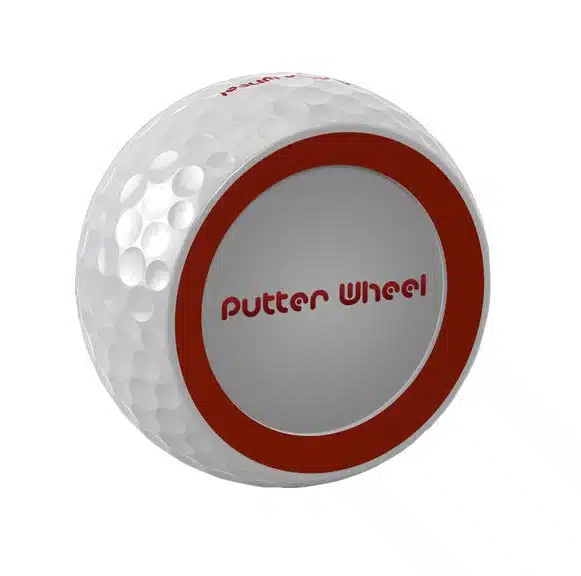
Dial in your stroke with the PutterWheel Golf Ball Putting Training Aid. Its unique wheel design gives instant feedback on your alignment and face angle. If you misstrike, it wobbles! Perfect your roll, build muscle memory, and drain more putts.
Frequently Asked Questions
What makes practice balls different from the real thing?
They’re built to fly shorter and safer while still giving you feedback on your swing. Most use foam or plastic instead of rubber cores, cutting the distance by 30-70% so you can practice without needing a football field.
Which practice balls should I pick?
Depends on your space and goals. Foam balls like BirdieBall give the most realistic feel for full swings. Plastic balls work great for the short game in tight spaces. Range balls are tougher versions of regular balls meant to survive thousands of hits.
How long will practice balls hold up?
Good ones last surprisingly long. Range balls can take thousands of hits. Quality foam balls stay solid for months of regular use. Even plastic balls hold their shape pretty well unless you’re crushing them daily.
What should high-handicappers use versus single-digit players?
Higher handicappers should focus on balls that help with basic contact and forgiveness – something like GoSports foam balls. Better players might want balls that show spin and shot shape more accurately, like BirdieBalls or even real balls into a net.
Practice Smarter, Not Just More
I’ve shown you 13 excellent practice golf balls that’ll transform your game in 2026. Whether you’re working on your swing indoors, practicing chips in the backyard, or perfecting your form in a garage simulator, there’s a perfect ball here to help you improve right at home.
Let’s be real, just hitting more balls won’t make you better. It’s all about practicing with purpose, and that’s where these practice balls really shine. They’ll help you nail down your strike pattern, smooth out your tempo, and build that confidence you need. And hey, they’re actually fun to use – which means you’ll stick with your practice routine longer.
So what are you waiting for? Grab some of these practice balls, get to work, and start seeing real improvement in your game. Trust me, your future self will thank you for putting in the effort today.

About the author
Paul Liberatore
Paul Liberatore is the founder of Golfers Authority and a former four-year golf gear contributor to Sports Illustrated. He tests golf equipment hands-on to help golfers make better buying decisions.